The Floating World: Edo Period Society and the Rise of Ukiyo-e
The Edo period, also known as the Tokugawa period, is the period between 1600 or 1603 and 1868 in the history of Japan, when the country was under the rule of the Tokugawa shogunate and some 300 regional daimyo, or feudal lords. Emerging from the cha...
The Japan of the Edo period (1603-1868) was a realm steeped in paradox – a society rigidly stratified by class yet blossoming with unprecedented artistic expression. Following centuries of internal conflict, Tokugawa Ieyasu’s establishment of the shogunate ushered in an era of relative peace and stability. This newfound tranquility, however, did not equate to social mobility. The chōnin class—merchants, craftsmen, and workers—found themselves at the bottom of the feudal hierarchy, yet it was precisely within this burgeoning urban population that a vibrant culture began to take root. Denied political power, they turned inward, seeking solace and enjoyment in the ephemeral pleasures of everyday life. This pursuit gave rise to the “floating world,” or ukiyo, a realm of kabuki theatre, geisha houses, and captivating prints that would come to define an era.
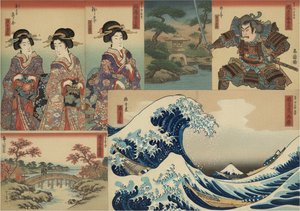
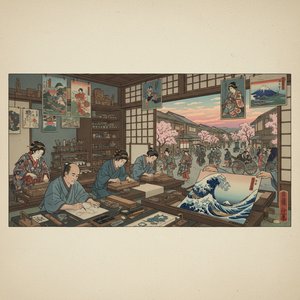
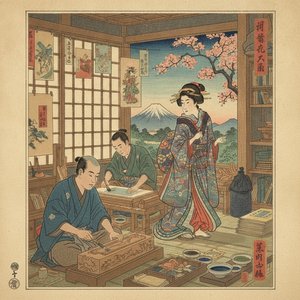
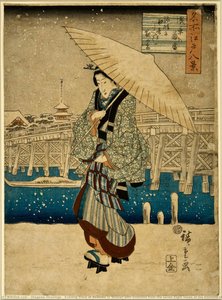
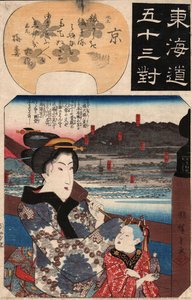
Initially, ukiyo-e – literally “pictures of the floating world” – catered to this desire for entertainment. Early works, emerging in the 17th century with artists like Hishikawa Moronobu, focused on depictions of beautiful women and scenes from popular theatre. These were not grand historical narratives or religious iconography; they were snapshots of contemporary life, accessible and affordable to a growing middle class. The demand for these prints fueled innovation in production techniques, moving from simple monochromatic designs to increasingly sophisticated multi-block color woodcuts. The very nature of the medium – its reproducibility and relatively low cost – democratized art, bringing beauty into the homes of ordinary people.
Hiroshige's Artistic Innovation: Landscapes Beyond Representation
Landscape painting, also known as landscape art, is the depiction in painting of natural scenery such as mountains, valleys, rivers, trees, and forests, especially where the main subject is a wide view—with its elements arranged into a coherent compo...
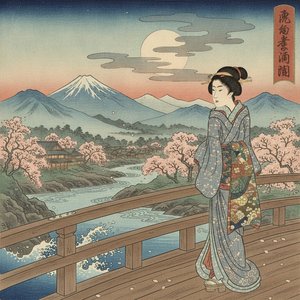
Utagawa Hiroshige (1797-1858) stands as one of the most celebrated masters of ukiyo-e, yet his approach to the genre was subtly revolutionary. While he certainly produced prints depicting courtesans and actors early in his career, it was his landscapes that secured his enduring fame. Hiroshige didn’t simply *represent* landscapes; he captured their essence – the atmosphere, the mood, the fleeting moments of beauty often overlooked. He possessed a remarkable sensitivity to light and weather, employing delicate gradations of color (bokashi) to evoke the feeling of rain, mist, or the warmth of the setting sun.
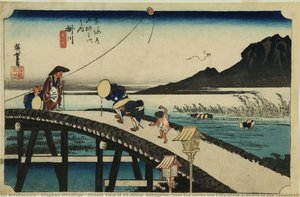
Unlike earlier landscape artists who focused on idealized views, Hiroshige found inspiration in the ordinary – roadside tea houses, bustling riverbanks, and humble scenes from his travels. He wasn’t concerned with topographical accuracy as much as he was with conveying a sense of place and emotion. This focus on subjective experience marked a departure from traditional conventions and paved the way for a more personal and evocative style of landscape painting.
One Hundred Famous Views of Edo: A Journey Through a Changing City
Perhaps Hiroshige’s most iconic work is his series, “One Hundred Famous Views of Edo” (1856-1858). This collection offers a fascinating glimpse into the life and landscape of Edo – modern-day Tokyo – during a period of significant social and economic change. Each print captures a different aspect of the city, from famous landmarks like the Nihonbashi bridge to quieter scenes of everyday life in local neighborhoods.
What sets this series apart is Hiroshige’s masterful use of perspective and composition. He often employed unusual viewpoints, creating dynamic compositions that draw the viewer into the scene. The prints are not merely depictions of places; they are narratives – stories unfolding within a specific time and space. The inclusion of ordinary people going about their daily lives adds a layer of intimacy and realism to the work, making it relatable even centuries later. Prints like “Snow at Shinagawa” beautifully illustrate this, capturing the serene beauty of winter alongside the bustling activity of travelers.
Poetry in Print: The Interplay of Verse and Visual Imagery in Hiroshige’s Work
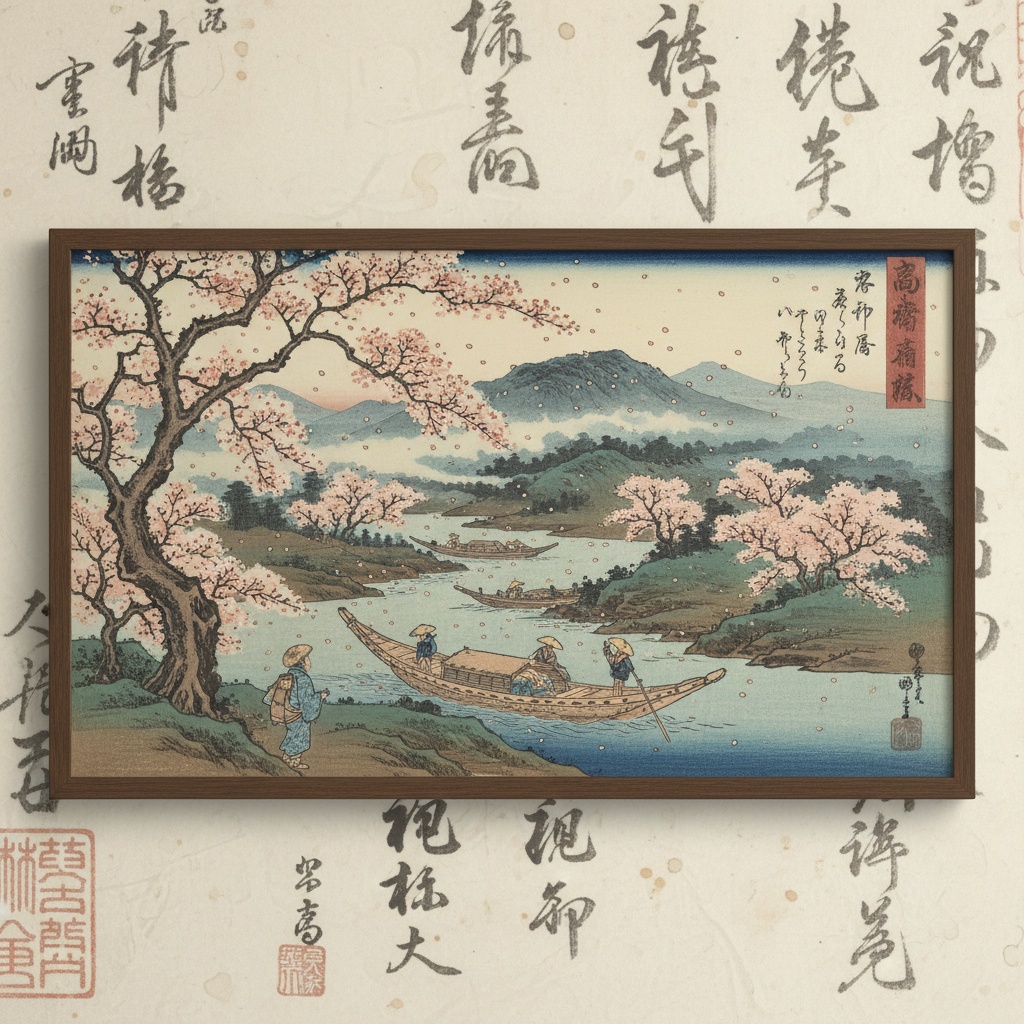
Hiroshige was not only a skilled artist but also a poet, and his prints often feature accompanying verses (haiku) that complement the visual imagery. These poems are not simply decorative additions; they are integral to the overall meaning of the work. They provide context, evoke emotion, and deepen the viewer’s understanding of the scene.
The interplay between verse and image is particularly evident in his landscape series. The haiku often capture a fleeting moment or a subtle detail that might otherwise go unnoticed, adding another layer of depth to the composition. Hiroshige's ability to seamlessly integrate poetry and visual art demonstrates his profound understanding of Japanese aesthetics and his commitment to capturing the essence of the “floating world.” He understood that true beauty lies not just in what is seen but also in what is felt and imagined.
The Influence of Western Perspective and Color Theory on Hiroshige's Style
While deeply rooted in Japanese tradition, Hiroshige’s work was not immune to outside influences. The arrival of Dutch traders in the 17th century brought with it a limited exposure to Western art and techniques, including perspective and color theory. Although direct imitation was rare, these concepts subtly permeated his style.
The use of linear perspective, though not fully adopted, can be observed in some of his compositions, creating a sense of depth and realism. More significantly, the introduction of Prussian blue pigment – imported from Europe – expanded his color palette and allowed him to achieve new levels of atmospheric effect. His masterful blending of colors, particularly in depictions of water and sky, owes much to this newfound access to Western materials. This willingness to embrace innovation while remaining true to Japanese aesthetics is a hallmark of Hiroshige’s genius.
Hiroshige's Enduring Legacy: From Japonisme to Modern Landscape Painting
The impact of Utagawa Hiroshige extends far beyond the borders of Japan. In the late 19th century, his prints captivated Western artists and collectors alike, sparking a phenomenon known as Japonisme. Artists like Vincent van Gogh, Claude Monet, and Edgar Degas were profoundly influenced by his compositions, color palettes, and subject matter.
Van Gogh, in particular, was deeply moved by Hiroshige’s work, copying several of his prints and incorporating elements of Japanese aesthetics into his own paintings. The influence can be seen in Van Gogh's use of bold colors, simplified forms, and emphasis on capturing the emotional essence of a scene. Hiroshige’s legacy continues to resonate today, inspiring artists and art lovers around the world. His ability to capture the beauty of everyday life, combined with his masterful technique and poetic sensibility, ensures his place as one of the greatest landscape painters in history.
At ArtsDot.com, we are proud to offer a stunning collection of handmade oil paintings and museum-quality prints inspired by Hiroshige’s iconic works. Explore our selection today and bring the beauty of Edo period Japan into your home.