 Preview
 Send
Send Share
Share
 Details

 Download
 Similars
 X-Ray
X-Ray Diaporama
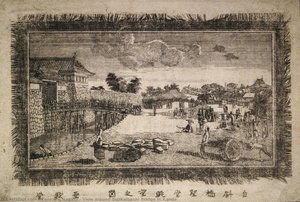
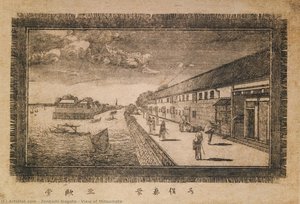
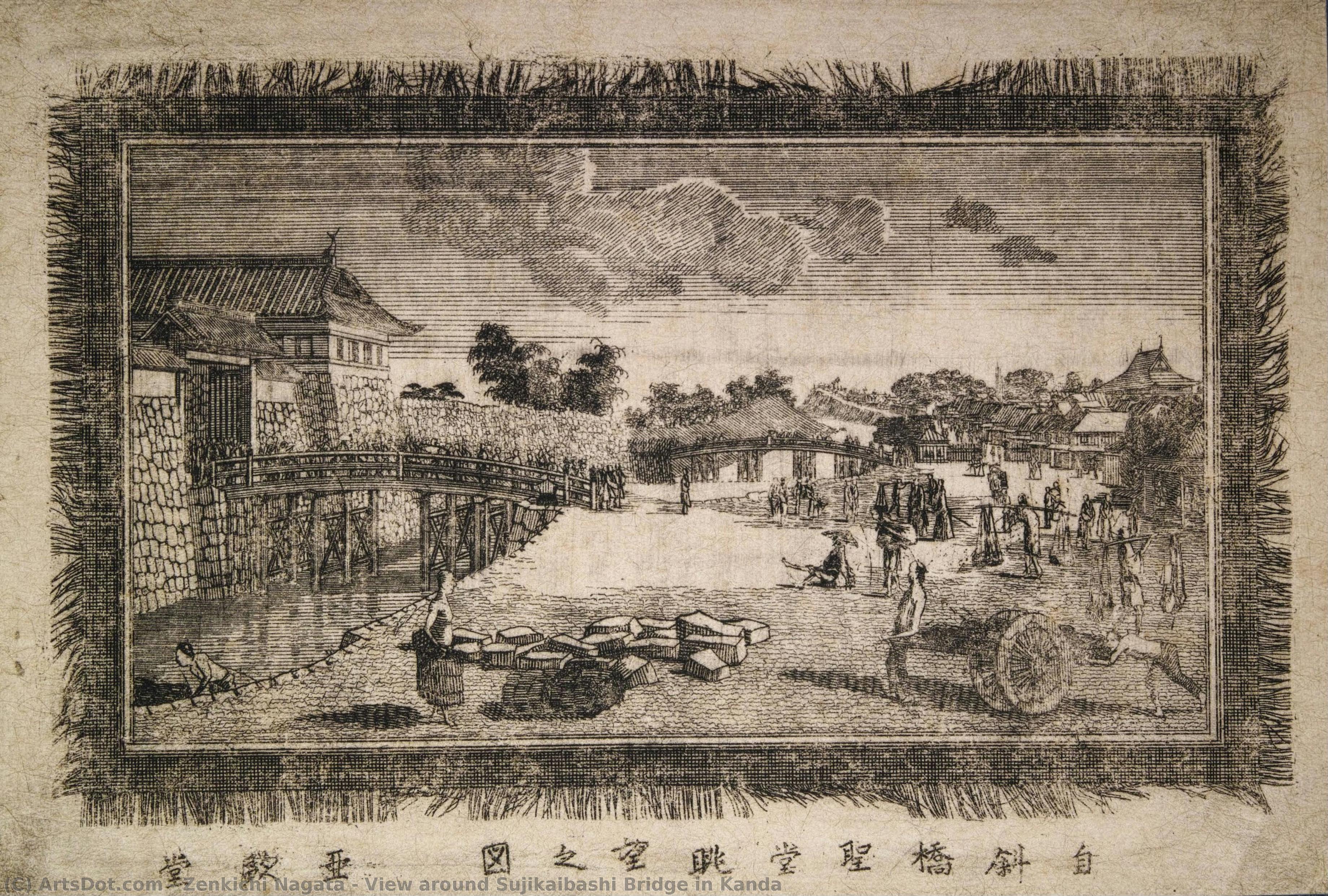
View around Sujikaibashi Bridge in Kanda
 Early Modern
 17.0 x 11.0 cm
 Kobe City Museum
 Read More
Hand Made Oil Reproduction
Hand-painted oil on canvas in your size and frame, made to order by our artists. ( Buy Print Buy Image)




P118B $10

P118H $10

P118W $10

P438Z $10

P508JH $12

P508YH $12

P805H $10

P805Z $10

P919BZ $10

P919G $10

P919XJ $10

P959ZH $10

P968JZ $12

W106C $8

W218G $10

W218JH $8

W218Y $10

W307PJ $10

W316G $10

W316PJ $8

W316Y $10

W398PJ $8

W4111J $10

W500HY $15

W500JH $15

W692G $12

W849H $8

W940BG $15

W953PJ $8




Pick from our preset sizes that match the artwork's original proportions.

You may enter your own dimensions to fit a specific frame or space. If your selected size does not match the original image's proportions, we will either crop the artwork or extend the painting with additional hand-painted elements. A digital mockup will be sent for your approval before production begins.
Please note that the on-screen preview does not reflect the actual cropping or extension. Only the mockup will accurately show the final composition.
While custom sizes are available, we recommend selecting a dimension from the predefined list to preserve the original proportions.
After order, ArtsDot.com team will email client for instructions and provide a mockup preview
Worldwide Delivery () in 3/4 weeks instead of standard 5 weeks. (22 August). No compromise on quality.

Free Worldwide Express Shipping

High-Quality Linen Canvas

Full Shipping Insurance

Customs Tax Refund Guarantee

True Color Matching Guarantee

60-Day Return Policy (Defects Only)

100% Money-Back Guarantee

Bulk Discount Offer
 Glass option is only available in size under 110 CM

View around Sujikaibashi Bridge in Kanda
Reproduction Medium
Reproduction Size
-


Total Price
$ 263
Artwork Description
A Window into Edo: The Visionary World of Zenkichi Nagata
In the delicate interplay of light and shadow captured within "View around Sujikaibashi Bridge in Kanda," we are transported to a vanished era of Japanese history. This exquisite work by Zenkichi Nagata, also known as Aōdō Denzen, serves as more than just a landscape; it is a profound historical document that captures the rhythmic pulse of life during the late Edo period. Through his masterful command of line and tone, Nagata invites the viewer to wander along the banks of a bustling waterway, where the boundaries between human industry and the natural world seem to dissolve into a singular, harmonious existence.
The composition presents a captivating tableau of rural tranquility meeting urban vitality. As our eyes traverse the scene, we encounter a meticulously detailed village life: figures gathered near the water's edge, boats drifting lazily upon the surface, and the presence of livestock that anchors the scene in a sense of pastoral peace. The inclusion of cattle and horses amidst the human activity suggests a time when the pace of life was dictated by the seasons and the steady movement of animals. This sense of coexistence is further enriched by the delicate depiction of birds, some soaring through the sky and others resting quietly, adding a layer of kinetic energy to an otherwise serene atmosphere.
The Convergence of East and West
What truly distinguishes this piece for the discerning collector is Nagata’s revolutionary approach to technique. As a pioneer who introduced Western-style elements to Japanese painting, Nagata utilized perspective and shading in ways that were radical for his contemporaries. In this work, we see the subtle application of depth that pulls the viewer into the distance, creating a three-dimensional space that feels remarkably tangible. This fusion of traditional Japanese sensibilities with Western anatomical and spatial accuracy creates a unique aesthetic tension—a bridge between two worlds, much like the Sujikaibashi Bridge depicted in the subject matter itself.
The monochromatic palette, while seemingly simple, allows for an intense focus on texture and form. The artist uses varying densities of tone to differentiate the shimmering surface of the water from the solid, earthy presence of the animals and the architectural elements of the village. For an interior designer, this piece offers a sophisticated neutrality; its grayscale elegance allows it to integrate seamlessly into modern minimalist spaces while providing a rich, historical soul that anchors a room with intellectual depth.
An Invitation to Timelessness
To possess a reproduction of this work is to hold a fragment of Japan's transformative era. There is an undeniable emotional resonance in Nagata’s ability to capture the "idyllic." In our modern, hyper-connected age, the sight of a peaceful village where man, beast, and nature exist in quiet equilibrium offers a profound sense of respite. The painting does not merely depict a location; it evokes a feeling of stability and grace.
Whether displayed in a private gallery or as a focal point in a curated living space, "View around Sujikaibashi Bridge in Kanda" serves as a conversation piece that celebrates innovation and tradition. It is an ideal acquisition for those who appreciate the nuances of art history and seek to surround themselves with works that possess both technical brilliance and a timeless, evocative spirit.
Related Artworks

Artist Biography
early life and training
zenkichi nagata, also known as aōdō denzen, was a japanese painter and copperplate engraver born in sukagawa, japan in 1748. he was a leading figure in japanese painting during the late edo period and is credited with introducing western painting to japan.artistic style and techniques
aōdō employed western-style painting techniques such as perspective and shading to achieve western-style copperplate engravings. this innovative approach set him apart from his contemporaries and paved the way for future generations of japanese artists.notable works
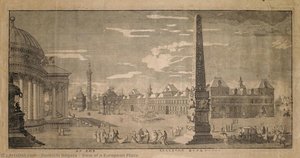
some of zenkichi nagata's notable works include:- view of a european plaza (56 x 30 cm, kobe city museum, japan), showcasing his mastery of western-style painting.
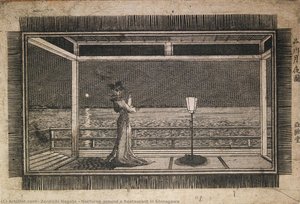
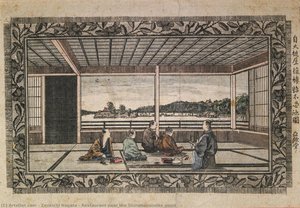
- restaurant near the shinobazunoike pond (16 x 12 cm, kobe city museum, japan), demonstrating his ability to capture everyday scenes with elegance.
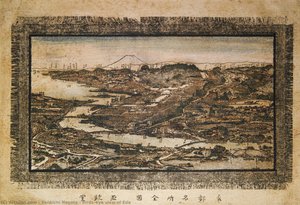
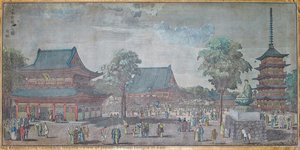
- birds-eye view of edo (16 x 11 cm, kobe city museum, japan), exemplifying his skill in rendering detailed cityscapes.
legacy and influence
zenkichi nagata's contributions to japanese painting are undeniable. his introduction of western techniques paved the way for future artists, such as mori ransai, who continued to push the boundaries of japanese art.- explore more of zenkichi nagata's works on ArtsDot.com.
- learn about the nanga art movement, which influenced many japanese artists.
- discover other notable japanese artists, such as mori ransai, on ArtsDot.com.
conclusion
zenkichi nagata's impact on japanese painting is undeniable. his innovative techniques and beautiful works continue to inspire artists today. as a leading figure in the late edo period, his legacy endures, and his art remains a testament to his skill and vision.- view more of zenkichi nagata's paintings at kobe city museum.
- read about the history of japanese painting on wikipedia.
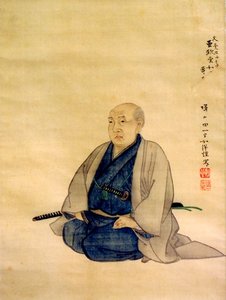
Zenkichi Nagata
1748 - 1822 , Japan
Quick Facts
- Artistic Movement Or Style: Neoclassicism
- Artists Or Movements Influenced By This Artist:
- Anne Louis Girodet
- Ingres
- Artists Who Influenced This Artist:
- François Boucher
- Joseph-Marie Vien
- Date Of Birth: August 30, 1748
- Date Of Death: December 29, 1825
- Full Name: Jacques-Louis David
- Nationality: French
- Notable Artworks:
- Oath of the Horatii
- Death of Marat
- Napoleon Crossing Alps
- Place Of Birth: Paris, France
Related Articles

White on Canvas: 10 Masterpieces & Timeless Elegance for Your Home Decor
Explore 10 iconic white paintings by Monet, Whistler & Rothko! Discover the stories behind these serene masterpieces and their impact on art history. Find museum-quality reproductions for your home decor at .

Hokusai's Masterpieces: 25 Iconic Prints & Paintings for Art Lovers | ArtsDot
Journey through Katsushika Hokusai’s 25 most iconic artworks, including *The Great Wave*. Explore the ukiyo-e master's history, style & timeless Japanese woodblock prints. Find museum-quality reproductions for your home at ArtsDot.com.

John Constable's Masterpieces: Explore 25 Iconic Landscapes for Your Home
Journey through John Constable's 25 most celebrated landscapes. Explore Romanticism, Dedham Vale & his masterful use of light in iconic paintings like 'Hay Wain'. Find museum-quality art reproductions and elevate your home decor on ArtsDot.com.

Cultivating Visions: A Historical Journey Through Rural Landscapes in Art
Explore the rich history of rural landscape painting with ArtsDot. Discover Impressionist masterpieces, key artists & movements. Find your perfect serene artwork and bring nature's beauty home.

Dark Masterpieces: 10 Iconic Paintings Dominated by Black Tones |
Explore 10 iconic paintings dominated by black tones, from Rembrandt’s chiaroscuro to Goya's dark expressions. Discover the stories behind these masterpieces & find museum-quality art reproductions for your home at .