 Preview
 Send
Send Share
Share
 Details

 Download
 Similars
 X-Ray
X-Ray Diaporama
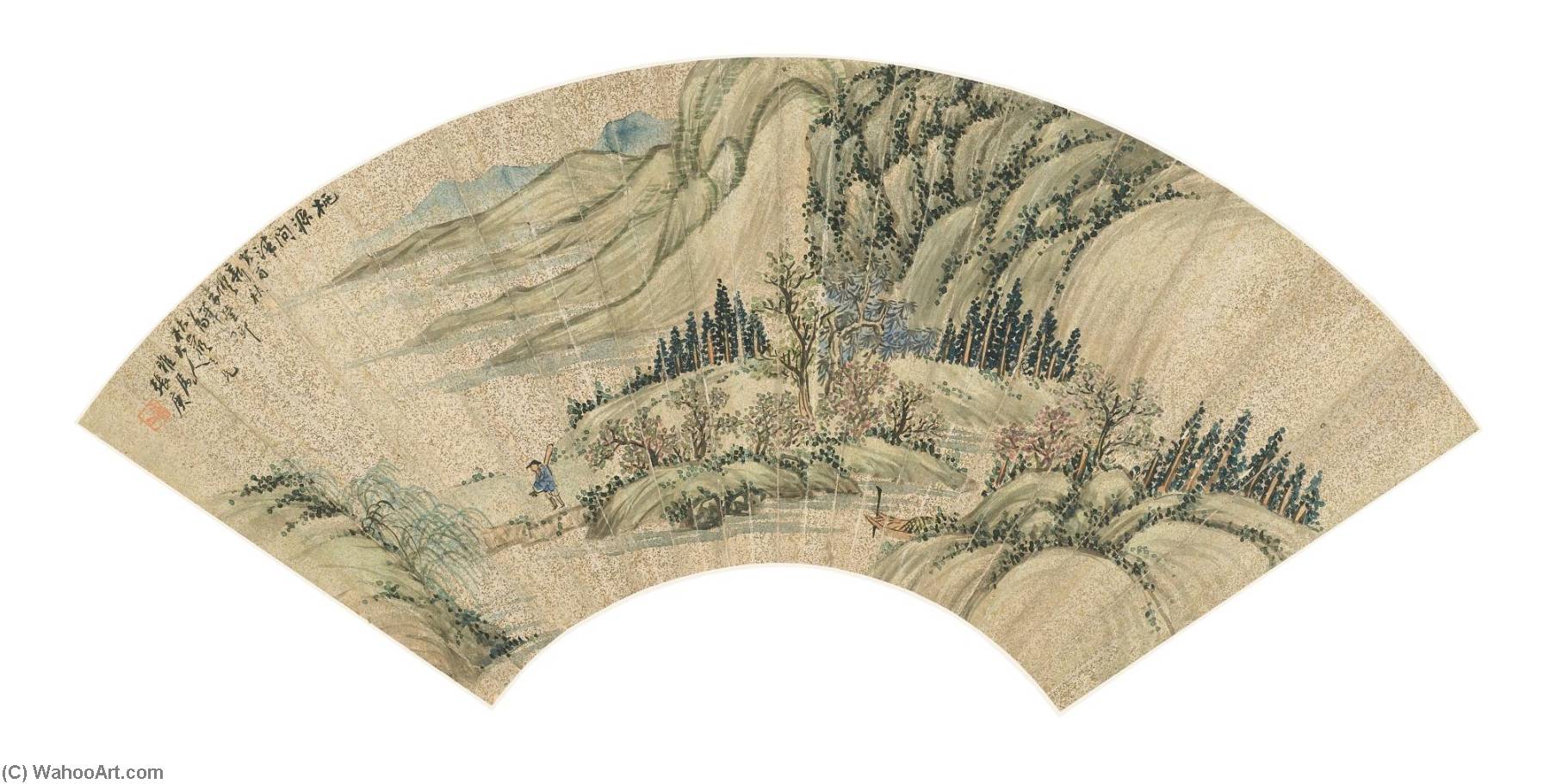
PEACH BLOSSOM SPRING
 17.0 x 52.0 cm
 Read More
Hand Made Oil Reproduction
Hand-painted oil on canvas in your size and frame, made to order by our artists. ( Buy Print Buy Image)




































Pick from our preset sizes that match the artwork's original proportions.

You may enter your own dimensions to fit a specific frame or space. If your selected size does not match the original image's proportions, we will either crop the artwork or extend the painting with additional hand-painted elements. A digital mockup will be sent for your approval before production begins.
Please note that the on-screen preview does not reflect the actual cropping or extension. Only the mockup will accurately show the final composition.
While custom sizes are available, we recommend selecting a dimension from the predefined list to preserve the original proportions.
After order, ArtsDot.com team will email client for instructions and provide a mockup preview
Worldwide Delivery () in 3/4 weeks instead of standard 5 weeks. (26 August). No compromise on quality.

Free Worldwide Express Shipping

High-Quality Linen Canvas

Full Shipping Insurance

Customs Tax Refund Guarantee

True Color Matching Guarantee

60-Day Return Policy (Defects Only)

100% Money-Back Guarantee

Bulk Discount Offer
 Glass option is only available in size under 110 CM

PEACH BLOSSOM SPRING
Reproduction Medium
Reproduction Size
-


Total Price
$ 263
Related Artworks
Artist Biography
Zhang Geng: Echoes of Dong Qichang in the Landscapes of Qing China
The world of 18th-century Chinese painting was a complex tapestry woven with tradition, innovation, and fierce debate. Within this vibrant scene emerged Zhang Geng (1685-1760), a master whose landscapes resonate with both the established wisdom of Dong Qichang and the subtle refinements of Wang Meng, offering a compelling glimpse into the evolving aesthetic sensibilities of the Qing dynasty. Born in Wahoo, Shandong province, Zhang’s artistic journey was shaped by a deep appreciation for nature and a keen understanding of the philosophical currents that informed Chinese art – particularly the emphasis on *qi* (spirit) and *yun* (atmosphere). Unlike many artists of his time who sought to emulate the styles of past masters with slavish imitation, Zhang Geng demonstrated a more nuanced approach, absorbing influences while forging a distinctly personal voice.
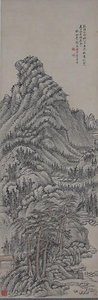
Zhang’s early training remains somewhat shrouded in mystery. While he was formally educated in calligraphy and painting, much of his artistic development is believed to have occurred through independent study and observation. Crucially, Zhang Geng's work demonstrates a profound engagement with the teachings of Dong Qichang (1559-1636), considered by many to be the most influential art critic and theorist of the Ming dynasty. Dong’s concept of “rustic simplicity” – valuing sincerity and emotional resonance over technical virtuosity – profoundly impacted Zhang's approach to landscape painting. Zhang Geng frequently referenced Dong’s writings, particularly his emphasis on capturing the essence of a scene rather than merely reproducing its outward appearance. This is evident in works like "Landscape After Dong Qichang," where the brushstrokes are deliberately understated, prioritizing mood and atmosphere over meticulous detail.
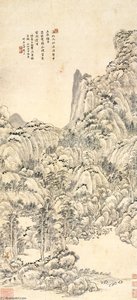
However, Zhang Geng's artistic vision wasn’t solely defined by Dong Qichang. He also drew inspiration from Wang Meng (1528-1634), a contemporary of Dong who championed a more restrained and contemplative style. Wang Meng advocated for a focus on the subtle nuances of light and shadow, and the suggestion of depth through carefully placed brushstrokes. Zhang Geng skillfully integrated these elements into his own work, creating landscapes that possess both a sense of grandeur and an intimate feeling of quiet contemplation. This synthesis is particularly apparent in works like “Landscape After Wang Meng,” where the composition feels less overtly dramatic than some of his contemporaries, yet retains a remarkable sense of serenity and depth.
The Influence of *Pushan Lunhua*
A pivotal text in understanding Zhang Geng’s artistic philosophy is *Pushan Lunhua* (浦山論畫), or “Discourses on Painting from Pushan Mountain,” written in 1734. This treatise, a comprehensive critique of the landscape painting world at the time, reveals Zhang's deep concerns about the fragmentation and sectarianism that were plaguing the artistic community. He vehemently condemned the rigid adherence to established conventions and the tendency for artists to form exclusive cliques, arguing that true artistry demanded a broader understanding of nature and a willingness to embrace diverse influences.
*Pushan Lunhua* is not simply a lament; it’s a call to action. Zhang Geng advocates for a return to fundamental principles – emphasizing weight and substance in brushwork, cultivating an appreciation for the subtle qualities of ink, and prioritizing sincerity over mere imitation. He also acknowledges the value of studying ancient masterpieces, but cautions against becoming trapped by tradition. He famously stated that “a painter must seek his sources in the living, vibrant world,” suggesting a move away from purely academic study towards direct observation and personal experience. This sentiment foreshadows later developments in Chinese landscape painting, signaling a shift toward greater individualism and artistic freedom.
Key Characteristics of Zhang Geng’s Style
Zhang Geng's landscapes are characterized by several distinctive features. Firstly, his compositions often feature expansive vistas – vast mountains, flowing rivers, and distant horizons – creating a sense of scale and grandeur. Secondly, he employed a subtle yet effective use of color, favoring muted tones and atmospheric effects over bright, vibrant hues. Thirdly, his brushwork is remarkably fluid and expressive, conveying both the texture of the landscape and the artist’s emotional response to it. Unlike some of his contemporaries who favored bold, assertive strokes, Zhang Geng's brushstrokes are often delicate and understated, creating a sense of quiet contemplation.
Furthermore, Zhang Geng demonstrated a remarkable ability to capture the essence of light and shadow. He skillfully used variations in tone to create a sense of depth and atmosphere, evoking the changing moods of nature. This mastery of *qi* and *yun*, as emphasized by Dong Qichang, is central to his artistic vision.
Legacy and Historical Significance
Zhang Geng’s work holds significant historical importance for several reasons. Firstly, he represents a crucial link between the traditions of Dong Qichang and Wang Meng, synthesizing their ideas into a uniquely personal style. Secondly, *Pushan Lunhua* provides invaluable insights into the artistic debates and intellectual currents of the Qing dynasty. Thirdly, his landscapes exemplify the evolving aesthetic sensibilities of the period – moving away from purely academic imitation towards greater individualism and emotional expression.
While Zhang Geng may not be as widely celebrated as some of his contemporaries, his work continues to be studied and admired by art historians and collectors alike. His landscapes offer a poignant reminder of the enduring power of nature and the importance of artistic integrity. His legacy lies in his ability to capture the spirit of China’s vast landscapes with both technical skill and profound emotional resonance – a testament to his deep understanding of Chinese painting philosophy and his unwavering commitment to his own artistic vision.
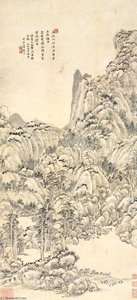
zhang geng
1685 - 1760
Quick Facts
- Artistic Movement Or Style: Traditional Chinese Art, Landscape Painting China
- Artists Who Influenced This Artist:
- Dong Qichang
- Wang Meng
- Date Of Birth: 1685
- Date Of Death: 1760
- Full Name: Zhang Geng
- Nationality: Chinese
- Notable Artworks:
- LANDSCAPE AFTER DONG QICHANG
- 清 張庚 倣王蒙山水圖 軸
- PEACH BLOSSOM SPRING
- Place Of Birth: WahooArt