 Preview
 Send
Send Share
Share
 Details

 Download
 Similars
 X-Ray
X-Ray Diaporama
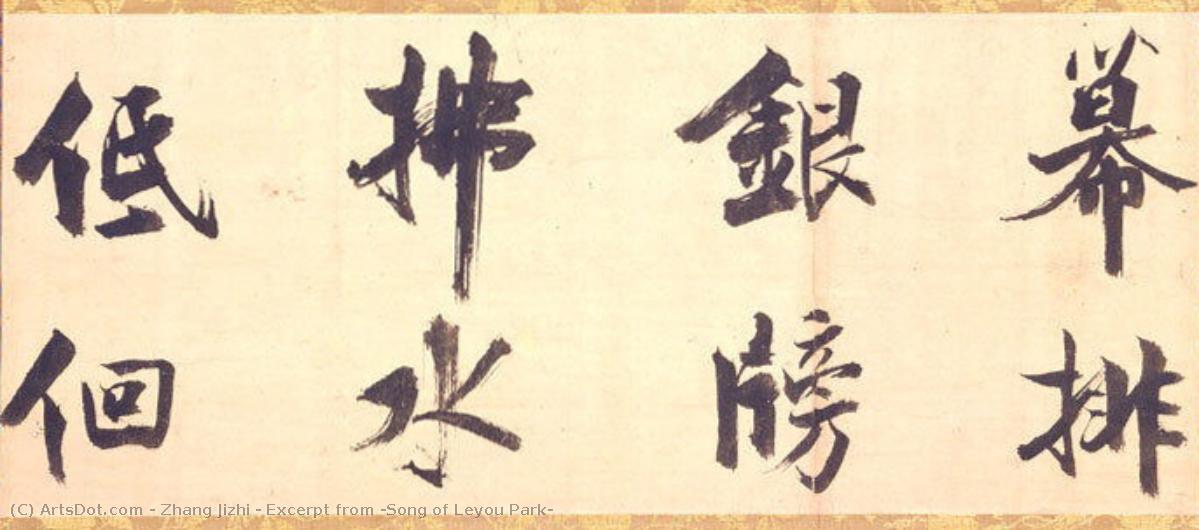
Excerpt from “Song of Leyou Park”
 32.0 x 77.0 cm
 Read More
Hand Made Oil Reproduction
Hand-painted oil on canvas in your size and frame, made to order by our artists. ( Buy Print Buy Image)




































Pick from our preset sizes that match the artwork's original proportions.

You may enter your own dimensions to fit a specific frame or space. If your selected size does not match the original image's proportions, we will either crop the artwork or extend the painting with additional hand-painted elements. A digital mockup will be sent for your approval before production begins.
Please note that the on-screen preview does not reflect the actual cropping or extension. Only the mockup will accurately show the final composition.
While custom sizes are available, we recommend selecting a dimension from the predefined list to preserve the original proportions.
After order, ArtsDot.com team will email client for instructions and provide a mockup preview
Worldwide Delivery () in 3/4 weeks instead of standard 5 weeks. (31 August). No compromise on quality.

Free Worldwide Express Shipping

High-Quality Linen Canvas

Full Shipping Insurance

Customs Tax Refund Guarantee

True Color Matching Guarantee

60-Day Return Policy (Defects Only)

100% Money-Back Guarantee

Bulk Discount Offer
 Glass option is only available in size under 110 CM

Excerpt from “Song of Leyou Park”
Reproduction Medium
Reproduction Size
-


Total Price
$ 263
Related Artworks
Artist Biography
Zhang Jizhi: The ‘New Gentry’ Bridging Tradition and Modernity
Born in Haimen County, Jiangsu Province in 1853, Zhang Jizhi – whose courtesy name was Jizhi and art name Se'an – stands as a fascinating figure of late 19th-century China. Often described as a “new gentry,” he embodied the complex transition between traditional Confucian values and the burgeoning forces of modernization. More than simply an entrepreneur, Zhang Jizhi was a politician, educator, and a pivotal player in shaping the economic and intellectual landscape of his era. His life story is one of ambition, calculated risk, and ultimately, a profound impact on China’s trajectory towards reform.
Initially serving as a staff member under General Wu Changqing, Zhang's early career was rooted in the established order. Following Wu’s death, he returned to his hometown, dedicating himself to agricultural studies while preparing for the rigorous examinations required to enter the civil service. This period of quiet preparation proved crucial; in 1894, he achieved an unprecedented score – the highest in the entire Palace Examination – earning him the prestigious title of Zhuangyuan, a mark of exceptional merit and signaling his potential for advancement.
A Rise Through Imperial Channels and Entrepreneurial Ventures
Zhang’s subsequent career saw him serving at the Hanlin Academy, a traditional institution dedicated to scholarship and governance. However, tragedy struck when he was forced to return home to mourn his father in the same year as his triumph. This event coincided with the aftermath of the First Sino-Japanese War, a period of upheaval and opportunity. Recognizing the need for change, Zhang embarked on a path that blended imperial service with burgeoning entrepreneurial endeavors.
He quickly established himself as a shrewd investor and businessman, driven by a desire to modernize China’s economy. A key moment in his career was the founding of Dah Sun Cotton Mill in Nantong in 1898, financed through a combination of imperial court funds and local merchant investment. This venture wasn't merely about profit; it represented a deliberate effort to introduce modern industrial practices into Jiangsu Province. Beyond textiles, Zhang diversified into land reclamation projects, river conservancy efforts – vital for improving agricultural productivity – and the establishment of modern educational institutions.
Education and Cultural Patronage: Shaping a New Generation
Zhang Jizhi’s vision extended far beyond mere economic development. He recognized the critical importance of education in fostering progress and believed that China needed to cultivate a new generation equipped with both traditional values and modern knowledge. He is credited with establishing several pioneering institutions, including Tongzhou Normal College (1902), one of the first normal schools – designed to train teachers – in modern China, and Nantong Museum (1905), the nation’s first museum on mainland soil. These initiatives demonstrated his commitment to both intellectual advancement and cultural preservation.
Furthermore, Zhang played a significant role in supporting other educational institutions such as Fudan University (1905) and Shanghai Ocean University (1912). His influence extended beyond simply founding these schools; he actively involved himself in their administration and curriculum development, advocating for a balanced approach that combined Western learning with Chinese traditions. His efforts were instrumental in laying the groundwork for China’s burgeoning modern educational system.
A Turbulent Era: Politics, Abdication, and Legacy
Zhang Jizhi's life unfolded during a period of immense political and social upheaval – the decline of the Qing Dynasty and the rise of revolutionary movements. He navigated this turbulent landscape with remarkable skill, often acting as a bridge between conservative forces and those advocating for constitutional reform. He famously declared that “the victory of Japan and the defeat of Russia are the victory of constitutionalism and the defeat of monarchism,” reflecting his evolving political views.
In 1909, he was elected chairman of Jiangsu provincial assembly, initially refusing membership in the Friends of the Constitution but later aligning himself with republican ideals. Notably, he drafted the Edict of Abdication for Puyi, the last emperor of China, a pivotal moment that symbolized the end of imperial rule. He served as Minister of Enterprise and Minister of Agriculture and Forestry in Beiyang Government, though his influence was often limited by political maneuvering.
Despite facing financial difficulties with Dah Sun Cotton Mill, which ultimately led to its liquidation in the 1920s due to mismanagement, Zhang Jizhi’s legacy endures. Xi Jinping has cited him as an example of a patriotic entrepreneur whose principles should be emulated – a testament to his enduring influence on Chinese thought and development. His contributions to education, infrastructure, and economic modernization cemented his place as one of the most significant figures of the “new gentry” era in China.
Exploring Zhang Jizhi’s Art: A Reflection of His Vision
While primarily known for his political and entrepreneurial endeavors, Zhang Jizhi's artistic pursuits offer a fascinating glimpse into his worldview. The artwork "Excerpt from ‘Song of Leyou Park’," available on ArtsDot.com, provides insight into his aesthetic sensibilities and the themes he explored through art. This piece, likely reflecting his appreciation for natural beauty and traditional Chinese landscape painting, embodies the harmonious blend of nature and human endeavor that characterized his life's work.
zhang jizhi
1853 - 1926 , China
Quick Facts
- Artistic Movement Or Style: New Gentry
- Date Of Birth: July 1, 1853
- Date Of Death: August 24, 1926
- Full Name: Zhang Jizhi (张謇)
- Nationality: Chinese
- Place Of Birth: Haimen County, China