 Preview
 Send
Send Share
Share
 Details

 Download
 Similars
 X-Ray
X-Ray Diaporama
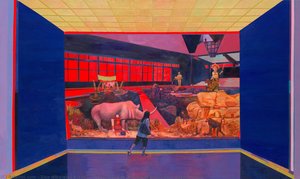
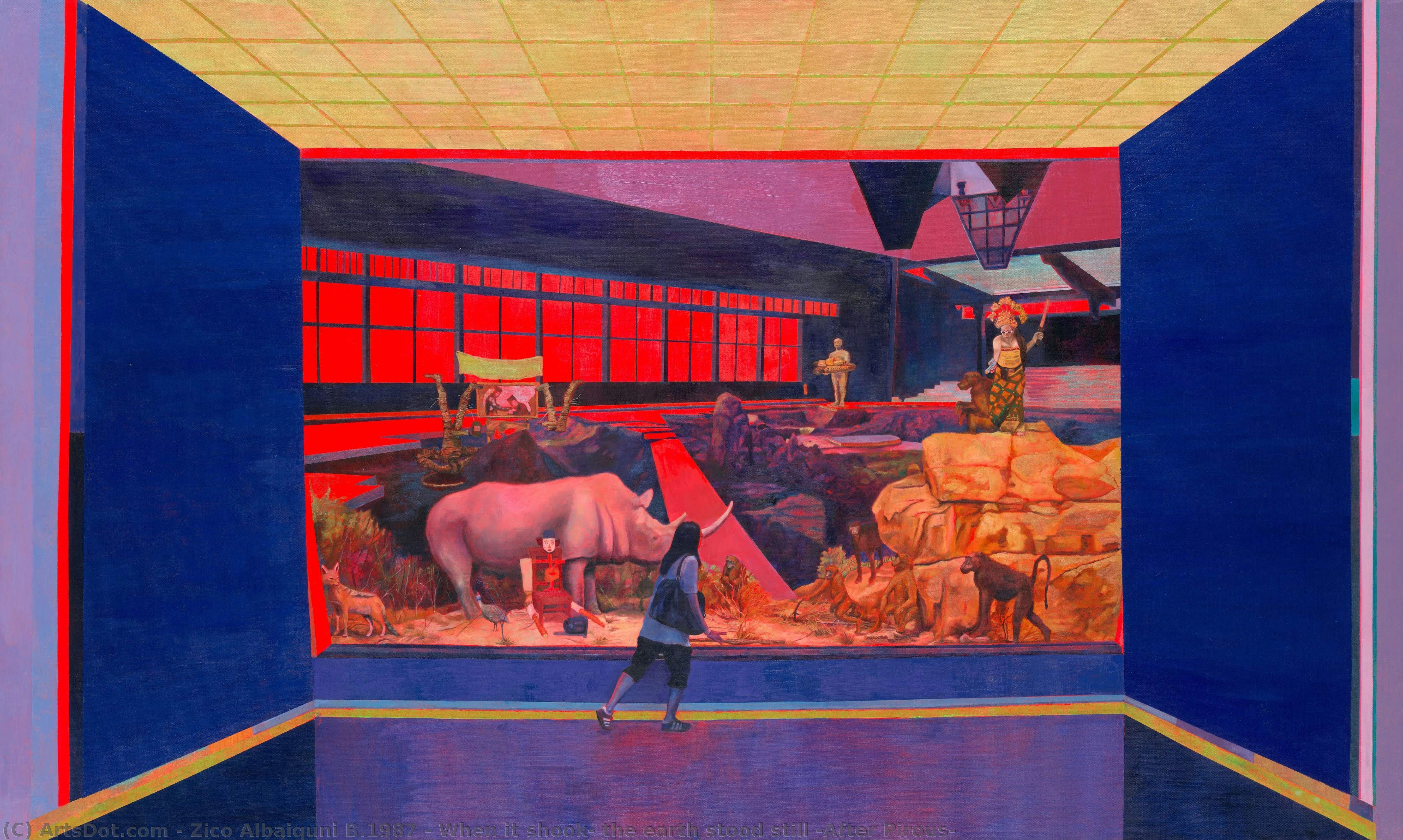
When it shook, the earth stood still (After Pirous)
 Painting
- Contemporary Art
 2018
2018- Contemporary
 120.0 x 200.0 cm
 Queensland Art Gallery | Gallery of Modern Art
 Read More
Hand Made Oil Reproduction
Hand-painted oil on canvas in your size and frame, made to order by our artists. ( Buy Print Buy Image)




































Pick from our preset sizes that match the artwork's original proportions.

You may enter your own dimensions to fit a specific frame or space. If your selected size does not match the original image's proportions, we will either crop the artwork or extend the painting with additional hand-painted elements. A digital mockup will be sent for your approval before production begins.
Please note that the on-screen preview does not reflect the actual cropping or extension. Only the mockup will accurately show the final composition.
While custom sizes are available, we recommend selecting a dimension from the predefined list to preserve the original proportions.
After order, ArtsDot.com team will email client for instructions and provide a mockup preview
Worldwide Delivery () in 3/4 weeks instead of standard 5 weeks. (30 August). No compromise on quality.

Free Worldwide Express Shipping

High-Quality Linen Canvas

Full Shipping Insurance

Customs Tax Refund Guarantee

True Color Matching Guarantee

60-Day Return Policy (Defects Only)

100% Money-Back Guarantee

Bulk Discount Offer
 Glass option is only available in size under 110 CM

When it shook, the earth stood still (After Pirous)
Reproduction Medium
Reproduction Size
-


Total Price
$ 263
A Tapestry of Memory and Motion
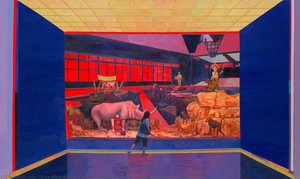
In the expansive, multi-layered canvas of "When it shook, the earth stood still (After Pirous)," Zico Albaiquni invites the viewer into a profound dialogue between Indonesian art history and contemporary ecological anxiety. This large-scale masterpiece, measuring an imposing 120 x 200 cm, functions less like a single image and more like a living archive. At its heart, the work pays homage to A.D. Pirous’ seminal 1991 painting, evoking a sense of structural instability and spiritual resonance. The composition is a breathtakingly complex arrangement where the blue-hued sanctuary of a room meets a golden roof, creating a celestial atmosphere that feels both ancient and urgently modern. As one gazues into the work, the eye is led through a labyrinth of references, from the performance art of Arahmaiani to the installation works of Tisna Santinga, weaving together the disparate threads of the Asia Pacific Triennial legacy.
The painting’s subject matter is a masterful exercise in juxtaposition. Within this dreamlike landscape, a lone figure stands with their back to the viewer, acting as a surrogate for our own contemplation. Surrounding this central presence is a menagerie of life—elephants, horses, and pigs move through the scene, yet they are joined by the haunting presence of taxidermy-like figures of endangered species, including a white rhinoceros, a siamang, and a baboon. This inclusion transforms the piece from a mere historical retrospective into a poignant environmental allegory. The artist uses these creatures to bridge the gap between the "Mooi Indie" colonial aesthetic—characterized by its idealized, beautiful landscapes—and the harsh reality of modern biodiversity loss. It is a visual tension between the beauty of the past and the fragility of our present ecosystem.
Technique and the Alchemy of Color
Albaiquni’s technical prowess is evident in his ability to manipulate different picture planes and perspectives, creating a sense of depth that feels almost architectural. He employs irregular-shaped canvases and intersecting planes to break the traditional boundaries of the frame, much like the exposed earth in Pierre Huyghe’s installations. His palette is particularly striking; he draws from the pigment combinations found in the colonial Mooi Indie genre, yet he recontextualizes these colors to serve a contemporary narrative. The interplay of deep blues and radiant golds creates a luminous quality that captures the light, making the artwork an ideal centerpiece for sophisticated interior spaces.
For the discerning collector or interior designer, this reproduction offers more than just visual splendor; it offers a conversation piece of immense intellectual depth. The way the light interacts with the layered compositions allows the painting to change character depending on the room's lighting, shifting from a somber reflection on loss to a vibrant celebration of cultural heritage. To possess such a work is to hold a fragment of Indonesian identity—a piece that explores the concept of lukisan not just as paint on canvas, but as a sacred object of ritual and exchange. It is an evocative, soul-stirring acquisition for those who seek art that challenges the mind while enchanting the eye.
Related Artworks
Artist Biography
The Canvas of Memory: The Art of Zico Albaiquni
Born in 1987, Zico Albaiquni has emerged as a profound voice in contemporary Indonesian art, weaving a complex tapestry that bridges the gap between historical nostalgia and modern critique. His journey into the heart of painting was not merely a personal choice but an inheritance of spirit; growing up under the influence of his father, the renowned artist Tisna Sanjaya, Albaiquni was immersed in a world where art served as both a witness to history and a tool for social inquiry. While he initially sought refuge in the structured precision of graphic design—perhaps to carve out an identity independent of his father’s formidable legacy—a transformative encounter with the works of Sindudarsono Sudjojono, the pioneer of Indonesian modernism, redirected his path. This moment of revelation ignited a lifelong fascination with how pigments and strokes can capture not just reality, but the very essence of a nation's shifting identity.
Albaiquni’s practice is characterized by a theatrical approach to composition, where he meticulously studies and reinterprets earlier genres to probe the fundamental role of the artist in society. He often draws upon the Mooi Indië (Beautiful Indies) tradition, a colonial-era style known for its romanticized, idyllic depictions of the Indonesian landscape. However, rather than simply replicating this aesthetic, Albai andquni utilizes its distinctive tonal formulas to create an intriguing, vibrant palette that feels both ancient and strikingly contemporary. His works frequently employ trompe l'oeil illusions, challenging the viewer’s perception by disrupting the traditional rectangular borders of the canvas, effectively blurring the line between the painted world and the physical space of the observer.
Intersections of Tradition and Modernity
The brilliance of Albaiquni’s work lies in its ability to act as a site of negotiation. He does not merely paint landscapes; he investigates the commodification of those landscapes. By referencing the links between art, advertising, and the romanticized imagery used to market Indonesia as an exotic destination, he brings urgent contemporary environmental issues to the forefront of his compositions. His paintings are layered with cultural icons and historical references that coalesce across intersecting planes, creating a sense of depth that is both visual and intellectual. In recent years, his experimentation has taken even more radical turns, as he has begun to incorporate his own studio environment into his compositions, effectively turning the act of creation itself into part of the artwork.
This evolution reflects a deep curiosity regarding the context and operation of painting in the 21st century. His achievements are marked by significant international recognition, having showcased his vision on prestigious global stages. Notable milestones include:
- The 9th Asia Pacific Triennial of Contemporary Art (2018-19) at the Queensland Art Gallery | Gallery of Modern Art, Australia.
- Contemporary Worlds: Indonesia at the National Gallery of Australia (2019).
- On the Nature of Botanical Gardens at Framer Framed, Netherlands (2019).
- Extensive exhibitions across Italy, France, Austria, the Netherlands, Hong Kong, and Singapore.
Through his mastery of both figurative and landscape elements, Zico Albaiquni continues to challenge how we perceive the circulation and function of art. He invites us to look beyond the frame, reminding us that every brushstroke is a dialogue with the past and every canvas is a living, breathing participant in the ongoing story of human experience.
Quick Facts
- Date Of Birth: 1987
- Date Of Death: Living
- Full Name: Zico Albaiquni
Related Articles
Slate Blue Masterpieces: 10 Iconic Paintings & Timeless Home Decor Ideas
Immerse yourself in the captivating world of slate blue! Explore 10 iconic paintings by Monet, Van Gogh & Renoir. Discover their stories, techniques & find museum-quality art reproductions for your home at .
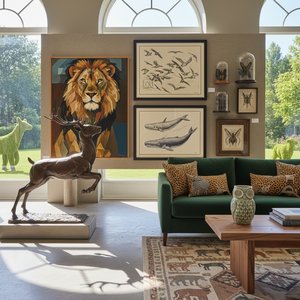
Animalia: Exploring the Enduring Presence of Animals in Art & Interior Design
Explore the rich history of animal symbolism in art, from ancient mythology to modern masterpieces. Discover how animals have inspired artists for centuries and learn how to incorporate these powerful motifs into your home décor.
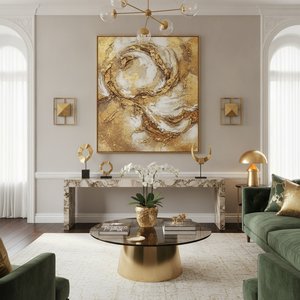
Golden Glow: How to Use Metallic Gold Artworks to Elevate Your Home Decor with Timeless Luxury
Discover how to elevate your home with the timeless elegance of metallic gold artworks. From sculptural metal pieces to gilded oil paintings, learn expert interior design tips for integrating luxurious gold accents into your space with sophistication and grace.
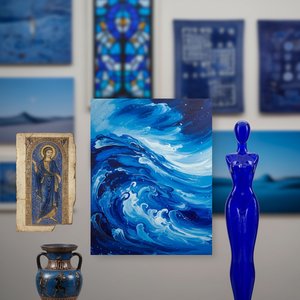
The Allure of Azure: Exploring the Symbolic & Aesthetic Depths of Blue in Art History
Explore the rich history of blue in art! Discover its symbolism, from ancient pigments to modern masterpieces by Kandinsky & Seurat. Uncover the psychological impact and cultural meanings behind this captivating hue.
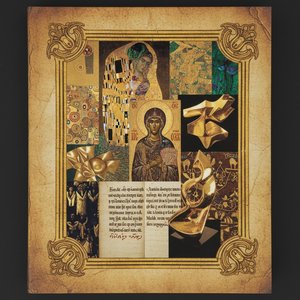
The Allure of Gold in Art History: Symbolism, Technique & Cultural Significance
Explore the rich history of gold in art! Discover symbolism, techniques & cultural significance from ancient civilizations to Klimt's masterpieces. Expert insights for collectors at ArtsDot.