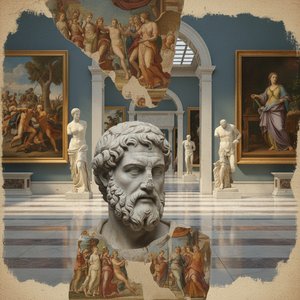
The Foundations of Beauty: Ancient Greek and Roman Idealism
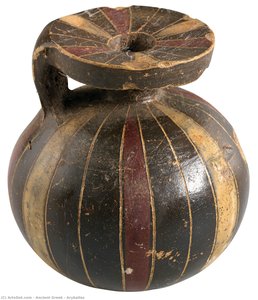 ancient greek
Ancient Greek Art: A Legacy of Beauty and Idealism The art of ancient Greece, spanning roughly from the Mycenaean period (c. 1600 BC) through the Hellenistic era (c. 30 BC), represents a cornerstone of Western civilization’s artistic heritage. More t...
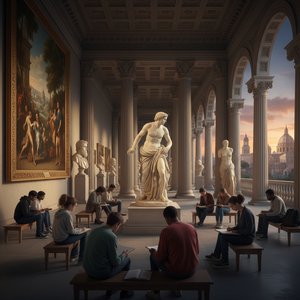
To understand the heartbeat of Western aesthetics, one must first travel back to the sun-drenched landscapes of antiquity. The art of ancient Greece was far more than a mere collection of beautiful objects; it was a profound pursuit of
ideal beauty, rational order, and a deep, spiritual connection with the divine. From the monumental stone citadels of the Mycenaean period to the refined elegance of the Hellenistic era, Greek artists sought to capture not just the human form, but the very essence of perfection. In the Classical period, masters like Polykleitos utilized mathematical precision to define the
Doryphoros, establishing a canon of proportions that would echo through millennia. This was an era where architecture, such as the iconic Parthenon, utilized the Doric and Ionic orders to create a sense of balance and clarity that remains the gold standard for harmony today.
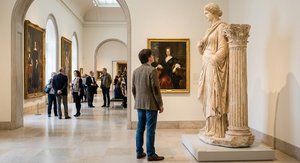
As the torch passed to Rome, this Greek reverence for beauty underwent a magnificent transformation. While the Romans deeply admired the Greek aesthetic, they infused it with a unique spirit of engineering prowess and practical grandeur. Where the Greeks sought the ideal, the Romans embraced the monumental, constructing vast amphitheaters like the Col-osseum and revolutionary aqueducts that showcased their organizational might. The Roman arch became a symbol of an empire that could bend stone to its will, creating spaces of immense scale and narrative power. This era established a continuous dialogue with civilization, setting the standards for taste and proportion that would later inspire the great revivalists of the Renaissance and beyond.
The Rebirth of Light: From Medieval Shadows to Renaissance Mastery
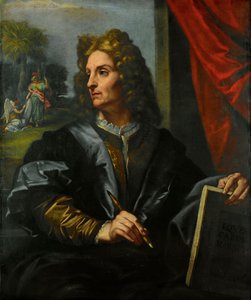 Carlo Maratta
A Roman Master of the Baroque Classicizing Style Carlo Maratta, often known as Maratti, stands as a pivotal figure in 17th-century Italian painting, embodying the transition from the High Baroque to a more refined and classically inspired aesthetic. ...
Following the decline of classical empires, the art of the Middle Ages—often referred to as the Dark Ages—offered a starkly different visual language. This was a period where the focus shifted from the physical perfection of the human body to the spiritual depth of the soul. Art became a vessel for religious devotion, characterized by much more symbolic and less naturalistic forms. Within the dim, flickering light of cathediente interiors, gold leaf and vibrant pigments were used not to mimic reality, but to evoke the celestial realm. The shadows of this era provided a necessary canvas for the eventual explosion of light that would define the Renaissance.
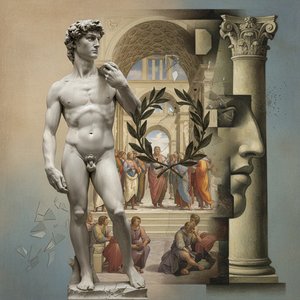
The Renaissance arrived as a breathtaking rebirth, a period where the humanistic ideals of antiquity were rediscovered and breathed into new life. Artists began to look once again at the natural world with an eye for anatomical accuracy and atmospheric depth. This was no longer just about religious iconography; it was about the celebration of human potential and the mastery of perspective. Through the use of
chiaroscuro—the dramatic interplay of light and shadow—painters could create a sense of three-dimensional volume on a flat surface, pulling the viewer into a world that felt tangibly real. This era bridged the gap between the symbolic and the physical, creating a legacy of mastery that remains the cornerstone of fine art education.
Order and Reason: The Grandeur of the Neo-Classical Movement
As history progressed through the ornate complexities of the Baroque and Rococo periods, a new cultural longing emerged: a yearning for order, reason, and a return to simplicity. This was the essence of Neo-Classicism, an 18th-century movement born from the intellectual fires of the Enlightenment. Fueled by the thrilling archaeological discoveries at Pompeii and Herculaneum, artists sought to reject the perceived excess of their predecessors in favor of the clarity found in ancient Rome and Greece. They looked to the past not merely for decoration, but as a model for moral virtue and civic responsibility.
The works of this era are characterized by a profound sense of
symmetry and restraint. Imagine marble sculptures radiating a stoic dignity or canvases depicting scenes from classical mythology rendered with meticulous, almost photographic detail. This movement was about more than just style; it was a cultural response to a world seeking stability through logic and truth. Even in the later years of the 19th century, artists like John William Godward continued this tradition, painting scenes of classical reverie that captured a sense of timeless, idealized beauty. The Neo-Classical spirit reminds us that even in times of great change, there is an enduring power in the pursuit of balance and historical reverence.
Breaking the Mold: The Rise of Impressionism and Modern Expression
Contemporary artContemporary art is generally art created from the 1970s onwards. Contemporary artists work in a globally influenced, culturally diverse, and technologically advancing world. Their art is a dynamic combination of materials, methods, concepts, and sub...
The arrival of the modern age brought with it a radical departure from the established rules of the Academy. As the world became faster and more industrial, artists began to feel that the rigid structures of Neoclassicism could no't capture the fleeting nature of contemporary life. This gave rise to Impressionism, a movement that prioritized the sensory perception of a moment over the precise depiction of a subject. Rather than focusing on sharp outlines, Impressionists like Monet used short, broken brushstrokes to capture the shifting qualities of light and atmosphere.
This revolution was not merely about technique; it was about a new way of seeing. The focus shifted from the "what" to the "how"—how light hits a lily pond, how color changes at dusk, and how movement can be felt on a canvas. This spirit of experimentation paved the way for even more profound breaks with tradition, leading into the bold, emotive landscapes of Post-Impressionism and eventually the fragmented realities of Cubism. Each movement pushed the boundaries of what art could be, challenging the viewer to find meaning not just in the subject matter, but in the very texture and energy of the paint itself.
The Contemporary Dialogue: Postmodernism and the Digital Frontier
 Postmodern art
Postmodern art is a body of art movements that sought to contradict some aspects of modernism or some aspects that emerged or developed in its aftermath. In general, movements such as intermedia, installation art, conceptual art and multimedia, parti...
In our current era, the boundaries of art continue to expand and dissolve. Postmodernism emerged as a complex reaction to the certainties of Modernism, embracing themes of
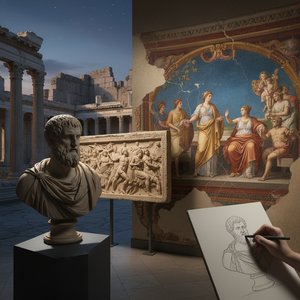
appropriation, collage, and the recycling of past styles. It is an era that celebrates the "remix," where the distinction between high art and popular culture becomes beautifully blurred. Postmodern artists often use text, multimedia, and installation to create immersive experiences that invite the viewer to question the nature of reality and authorship.
Today, we stand at the intersection of human creativity and technological innovation. The digital frontier has introduced tools like AI-driven transformations and digital mockups, allowing us to reimagine historical masterpieces through a modern lens. We can now see our own lives reflected in the styles of the masters, creating a continuous, living dialogue between the past and the present. Art is no longer a static object hanging in a silent gallery; it is a dynamic, evolving conversation that continues to challenge our perceptions and enrich our visual world.
Curating Your Legacy: Bringing Art History into the Modern Home
Bringing the grandeur of art history into your personal space is an act of meaningful decoration. Whether you are drawn to the serene symmetry of a Neo-Classical print or the vibrant, textured energy of an Impressionist oil painting, art has the power to transform a house into a home filled with soul and story. For the modern decorator, the challenge is not just finding something that matches a color palette, but finding a piece that resonates with your personal journey.
At
ArtsDot.com, we believe that fine art should be accessible to everyone. We specialize in creating breathtaking, hand-painted reproductions that allow you to own a piece of history. From custom oil portraits that transform your family milestones into Renaissance-style masterpieces to large-scale murals that recreate the majesty of classical ceilings, our mission is to help you curate a space that inspires. Whether you prefer the tactile depth of a 100% cotton canvas oil painting or the archival precision of a Giclée print, we provide the expertise and craftsmanship to ensure your collection is as enduring as the masters themselves. Explore our collections today and begin your own journey through the ages.