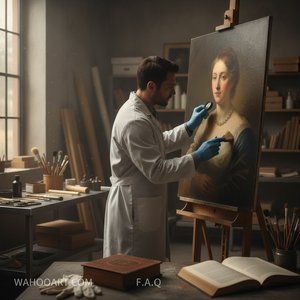
The Science of Permanence: Understanding Pigments, Binders, and Material Integrity
 Art Preservation Guide: Professional Cleaning and Handling for Collectors
The Science of Permanence: Understanding Pigments, Binders, and Material Integrity To gaze upon a classical masterpiece is to witness more than mere aesthetic triumph; it is to observe a profound chemical achievement. The enduring brilliance of the O...
To gaze upon a classical masterpiece is to witness more than mere aesthetic triumph; it is to observe a profound chemical achievement. The enduring brilliance of the Old Masters relies upon a delicate alchemy where pigment meets binder in a dance of molecular stability. At the heart of this permanence lies the medium itself—the much-celebrated oil paint. While we often associate its glory with the European Renaissance, the history of this medium is a testament to human ingenuity stretching back as far as the 7th century in the Bamiyan caves of Afghanistan. Here, early practitioners utilized drying oils like linseed to bind mineral pigments, creating a foundation for murals that have defied the erosion of centuries.
The true revolution occurred when artists such as Jan van Eyck perfected the technique of glazing. By meticulously layering translucent glazes of oil over a prepared surface, these masters achieved an unprecedented luminosity and depth. This process is not merely about color; it is about the structural integrity of the paint film. The chemistry of permanence involves understanding how pigments—the soul of color—interact with drying oils to create a durable, flexible matrix. When we discuss preservation, we are discussing the protection of this molecular bond. Modern conservation science utilizes advanced tools such as X-ray fluorescence and Raman spectroscopy to analyze these very components, ensuring that any intervention respects the original chemical architecture of the work.
The Silent Adversaries: Managing Light, Humidity, and Temperature Fluctuations
 Preserving Masterpieces: The Definitive Guide to the Professional Cleaning and Handling of Fine Art
The Eternal Legacy: Why Preservation Defines the Value of Masterpieces To gaze upon a masterpiece is to engage in a silent, profound dialogue with the past. When we stand before the luminous glazes of a Jan van Eyck or feel the raw, Baroque energy in...
Despite their apparent permanence, oil paintings are subject to a slow, invisible siege by environmental forces. The greatest silent threats to a fine art collection are often those we cannot see. Unlike outdoor artworks, which must endure the rigors of rain, snow, and acid-driven degradation, indoor collections exist in a state of constant vulnerability to micro-climatic shifts. The most pervasive of these is light. While light is the essential medium through which we perceive color, excessive exposure—particularly to ultraviolet (UV) rays—acts as a relentless thief, causing pigments to fade and organic binders to become brittle. This is why many of the world's most precious works are housed in dimly lit galleries; it is a necessary sacrifice to protect the vibrancy of the artist's vision.
Beyond the reach of light, the very air around an artwork can be a source of decay. Fluctuations in humidity and temperature act as a physical weight upon the canvas. As moisture levels rise and fall, the organic supports—be they wood panels or cotton canvases—expand and contract at different rates than the dried paint film above them. This mechanical stress can lead to the formation of cracks or even the complete detachment of pigment from its substrate. Maintaining a stable environment is not merely a matter of comfort for the collector; it is an essential act of stewardship to prevent the slow, structural unraveling of the artwork's physical essence.
Professional Handling Protocols: Protecting Your Investment from Physical Damage
The value of fine art—both culturally and monetarily—is inextricably linked to its survival. A painting is a living entity, a complex arrangement of organic binders and mineral pigments that has endured centuries of environmental shifts. Because of this vulnerability, the way we physically interact with art requires a disciplined approach. The simplest errors in handling can lead to irreversible consequences. To minimize contact and prevent the transfer of oils and salts from human skin to the surface, professional standards suggest wearing cotton gloves during any movement or inspection. Furthermore, accessories such as watches or jewelry should be removed before handling paintings to avoid accidental scratches or punctures to the delicate paint film.
Proper handling extends beyond the act of moving a frame; it involves the careful management of the entire environment surrounding the piece. When installing new acquisitions, one must consider the structural integrity of the mounting. For larger works, such as our multi-panel group sets, ensuring that stretcher bars are properly braced to prevent warping over time is crucial. Whether you are admiring a bespoke handmade oil reproduction or an inherited heirloom, treating the object with the reverence of a museum curator ensures that its physical presence remains uncompromable, preserving the tactile depth and visible brushstrokes that define true fine art.
Preventive Conservation: Best Practices for Long-Term Art Stewardship
 Conservation and restoration of cultural property
The conservation and restoration of cultural property focuses on protection and care of cultural property (tangible cultural heritage), including artworks, architecture, archaeology, and museum collections. Conservation activities include preventive ...
The history of art is, in many ways, a history of successful stewardship. Preventive conservation focuses on the protection and care of tangible cultural heritage through proactive measures rather than reactive repairs. For the modern collector, this involves creating a sanctuary for art that prioritizes stability. This includes using acid-free matting to create an air gap between prints and glass, which prevents moisture-induced damage and ensures pigments remain vibrant for decades. In our own studio, we utilize flexible gesso to prevent cracking and specific oils, such as safflower, for whites to prevent the dreaded yellowing that can cloud a masterpiece over time.
Effective stewardship also involves meticulous documentation and environmental control. Every artwork should be part of a managed collection where its history, condition, and placement are recorded. For those decorating meaningful spaces, this might mean choosing placement away from direct heat sources like radiators or high-moisture areas like bathrooms. By applying these principles of preventive care—protecting the surface with a coat of Damar varnish to shield against dust and atmospheric pollutants—we ensure that the flickering candlelight of a Vermeer or the vibrant landscapes of Monet remain as vivid for future generations as they were on the day the final brushstroke was laid.
Restoration vs. Preservation: When to Call a Professional Conservator
 Conservation and restoration of paintings
The conservation and restoration of paintings is carried out by professional painting conservators. Paintings cover a wide range of various mediums, materials, and their supports (i.e. the painted surface made from fabric, paper, wood panel, fabricat...
There is a profound distinction between preservation and restoration, a nuance that every collector must understand. Preservation is the act of preventing damage before it occurs—the "preventive" side of conservation that focuses on stability and environmental control. Restoration, however, is an active intervention intended to repair existing damage. The goal of professional conservation is to extend the lifespan of the object while maintaining its integrity, adhering to the ethical guideline of minimal intervention and ensuring that all additions are reversible.
When a work shows signs of distress—such as significant craquelure, flaking paint, or structural warping—it is time to consult a professional conservator. These experts use advanced scientific methods to analyze the chemical architecture of the work, ensuring that any treatment respects the artist's original intent. While we take immense pride in the "Master" level brushwork and archival quality of our handmade reproductions at ArtsDot.com, we always advocate for the highest standards of care. Whether you are seeking a free appraisal of an inherited piece or looking to transform a personal photo into a lasting legacy, remember that true art appreciation lies in the commitment to keeping these moments of human genius alive for the ages.