The Revolution of Perspective: Understanding the Cubist Breakthrough
--- title: All about cubism | Tate url: https://www.tate.org.uk/art/art-terms/c/cubism/all-about-cubism hostname: tate.org.uk description: This resource introduces cubist artists, ideas and techniques and provides discussion and activities, perfect f...
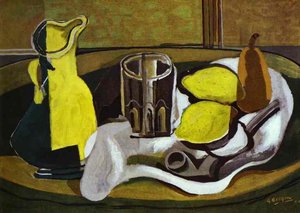
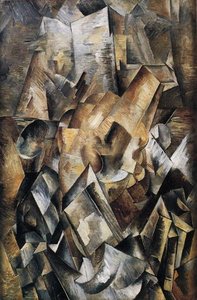
To step into the world of Cubism is to witness a profound shattering of the traditional mirror. For centuries, Western art was anchored by the logic of perspective—a singular, fixed viewpoint designed to create the illusion of depth and reality on a flat surface. However, around 1907, a radical shift began to pulse through the studios of Paris. Artists like Pablo Picasso and Georges Braque dared to ask: why must we view a subject from only one angle? They sought to capture the essence of an object not as it appears to a fleeting glance, but as it exists in the mind, encompassing multiple moments and viewpoints simultaneously. This was not merely a change in style; it was a fundamental reimagining of how human beings perceive the complexity of existence.
This movement emerged during a period of unprecedented global transformation. As technology, science, and philosophy began to reveal hidden layers of the universe, the old ways of seeing felt increasingly inadequate. The Cubist breakthrough offered a new visual vocabulary that mirrored this modern upheaval. By rejecting the "window on the world" approach of the Renaissance, these artists invited the viewer to participate in a more active, intellectual reconstruction of reality. It was a daring leap from representation toward a deeper, more structural truth, setting the stage for the entire trajectory of 20th-century modernism.
Deconstructing Reality: The Visual Language of Shapes and Planes
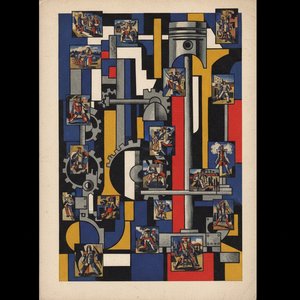 Fernand Léger's Masterpieces: 25 Iconic Paintings & The Machine Age Aesthetic | ArtsDot
Introduction To embark on a journey through the top 25 artworks of Fernand Léger is to enter a world where the human spirit and the mechanical age converge in a symphony of form and color. These paintings aren’t merely representations; they are decla...
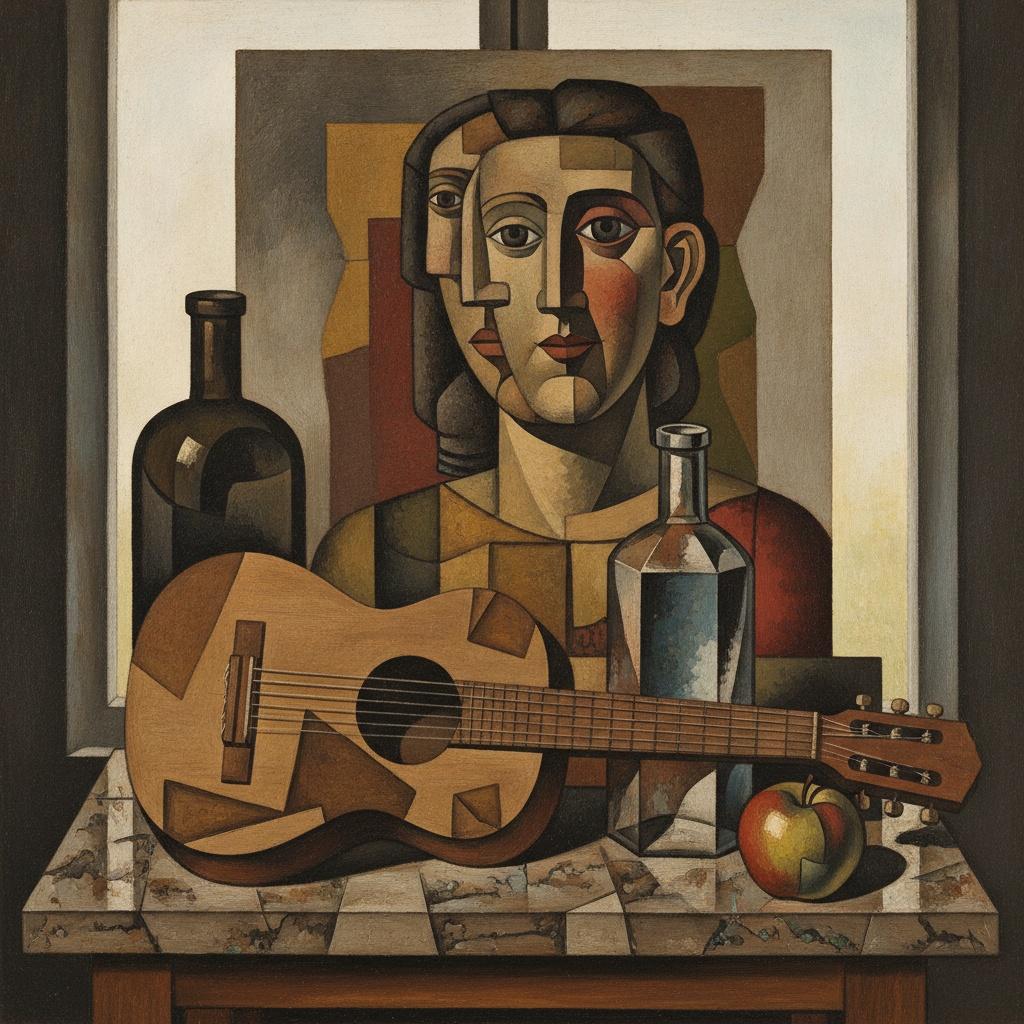
If you look closely at a Cubist composition, you will notice that the familiar boundaries of objects begin to dissolve. What was once a recognizable face or a still life of musical instruments becomes a rhythmic dance of geometric shapes—triangles, rectangles, and interlocking planes. This technique of fragmentation allows the artist to peel back the surface of reality. Instead of using light and shadow to create a soft, realistic volume, Cubists used sharp edges and overlapping facets to build structure. This creates a fascinating tension between what we recognize and what we see; a hint of a guitar string or the curve of a glass remains, yet they are woven into a complex tapestry of form.
This deconstruction serves a much higher purpose than mere decoration. By breaking subjects down into their essential geometric components, artists were able to explore the relationship between space and matter. The distinction between the subject and the background begins to blur, as the very air around an object is treated with the same structural importance as the object itself. This creates a sense of fragmented beauty—a realization that there is profound elegance in the broken, the multifaceted, and the complex. For the discerning collector, this language offers a sophisticated way to engage with art that rewards repeated, contemplative viewing.
From Picasso to Braque: Meet the Pioneers of the Fragmented Aesthetic
An art movement is a tendency or style in art with a specific art philosophy or goal, followed by a group of artists during a specific period of time, (usually a few months, years or decades) or, at least, with the heyday of the movement defined with...
The story of Cubism is inextricably linked to the intense intellectual exchange between its primary architects. Pablo Picasso and Georges Braque worked with such close synergy during the movement's formative years that their works from certain periods are almost indistinguishable in their revolutionary approach. While Picasso brought a raw, emotive energy and a background in classical mastery, Braque contributed a meticulous sense of structure and a profound sensitivity to texture and rhythm. Together, they moved through phases of Analytic Cubism, where forms were dissected into monochromatic, complex layers, toward Synthetic Cubism, which introduced bolder colors and the innovative use of collage.
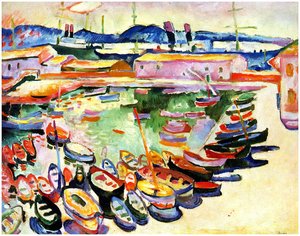
Beyond this central duo, the movement was enriched by a constellation of brilliant minds. Artists like Juan Gris brought a mathematical precision to the style, while others explored how these fragmented forms could be applied to broader landscapes and even portraits. Their collective mission was to move beyond the "pretty" and toward the "true." They were not interested in mimicking the surface of things; they wanted to capture the underlying architecture of our visual experience. To study their work is to walk through a gallery of reimagined worlds, where every brushstroke serves as a building block for a new way of seeing.
Geometric Harmony: How Cubism Influenced Modern Abstract Art
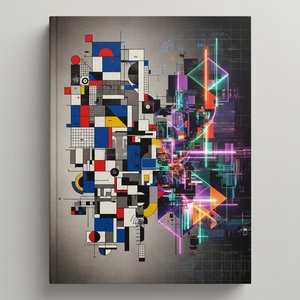 Beyond Form & Color: Geometric Abstraction's Evolution in 20th/21st Century Art
The Genesis of Geometric Abstraction: From Cubism to Suprematism Kazimir Malevich Kazimir Malevich (1878-1935): Ukrainian founder of Suprematism & pioneer of abstract art. Explore iconic works like Black Square, geometric forms, & pure feeling's impa...
The ripples of the Cubist revolution extended far beyond the initial shock of its arrival. By proving that art could exist independently of direct representation, Cubism paved the way for the rise of Geometric Abstraction. The movement’s focus on lines, shapes, and mathematical purity became the foundation for later pioneers like Kazimir Malevich and Piet Mondrian. We see a clear evolution from the fragmented objects of Braque to the pure, unadulltered forms of Suprematism and De Stijl. These artists took the Cubist seed of structural exploration and grew it into a garden of pure abstraction, where color and geometry could communicate directly with the human soul without the need for recognizable subjects.
This lineage is vital for anyone interested in the evolution of modern aesthetics. The transition from the "deconstructed object" to the "pure form" represents one of the most significant shifts in art history. Even today, we see the echoes of this movement in everything from graphic design to architecture and contemporary neo-abstract painting. The Cubist legacy taught us that beauty does not require a literal subject; it can reside in the balance of a line, the vibration of a color, and the perfect arrangement of a geometric plane.
Curating the Edge: Integrating Cubist Masterpieces into Contemporary Interiors
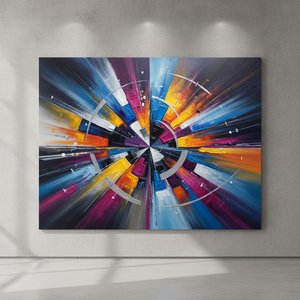 Neo-Abstract Art: The High-Impact Evolution of Modern Visual Energy and Geometric Sophistication
The Neo-Abstract Surge: Why High-Impact Geometry is Dominating Modern Interiors Neo-Abstract Art: Redefining Modern Expression Through Bold Compositions and Geometric Sophistication The Genesis of Neo-Abstraction: Beyond Traditional Boundaries To und...
For the modern homeowner or professional decorator, incorporating Cubist-inspired elements offers a way to inject intellectual depth and visual energy into a space. Because Cubism relies on strong structural lines and a sophisticated interplay of shapes, it serves as an exceptional anchor for contemporary interiors. A large-scale, multi-panel Cubist print can transform a wide, minimalist wall into a focal point of architectural interest, providing a sense of movement that prevents a room from feeling static or overly traditional.
The key to successful integration lies in balance. In a room dominated by clean lines and neutral tones, the bold, fragmented geometry of a Cubist work provides a necessary "edge" and a conversation piece. Conversely, in a more eclectic space, these works can provide a sense of order and cohesion. When selecting pieces, consider how the color palette of the artwork interacts with your existing decor. A monochromatic Cubist study might offer a serene, sophisticated atmosphere, while a more vibrant, multi-colored composition can act as a burst of modern vitality. It is about creating a dialogue between the history of the art and the rhythm of your living space.
The Collector's Journey: Discovering New Dimensions in Art
Entering the world of art collecting can often feel daunting, especially when faced with movements that challenge our traditional notions of beauty. However, the true joy of collecting Cubism—or any form of modern art—lies in the process of discovery. It is a journey of learning to see beyond the surface and finding resonance in the unexpected. Whether you are drawn to the textured, impasto brushstrokes of a handmade oil reproduction or the crisp, clean lines of a high-quality giclée print, each piece you acquire expands your visual vocabulary.
As you build your collection, remember that art is a deeply personal endeavor. There is no right or wrong way to appreciate a fragmented landscape or a geometric portrait; there is only the connection you feel to the work. As technology allows us to reimagine our own lives through AI-restyled masterpieces or custom commissions, the boundaries of what we can collect continue to expand. We invite you to explore the vast library of human creativity and find the pieces that speak to your unique perspective, turning your home into a curated sanctuary of profound beauty and enduring meaning.
Discover your next masterpiece at ArtsDot.com. From breathtaking handmade oil reproductions to personalized custom commissions, we help you bring the power of fine art into your world.