The Golden Glow of Montmartre: Stepping into the Belle Époque Nightlife
 25 Iconic Masterpieces by Henri de Toulouse-Lautrec: The Spirit of Montmartre
Introduction Step into the flickering gaslight of late 19th-century Paris, where the air is thick with the scent of absinthe, tobacco, and the electric energy of a city that never truly sleeps. To wander through the works of Henri de Toulouse-Lautrec...
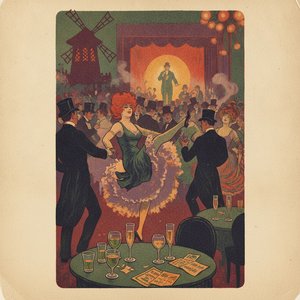
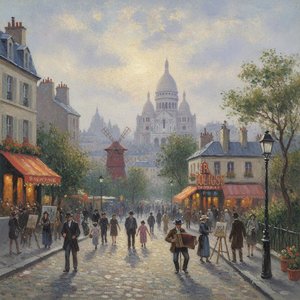
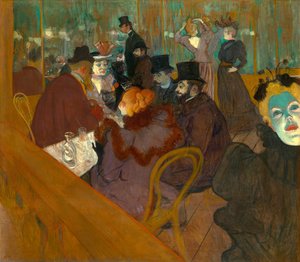
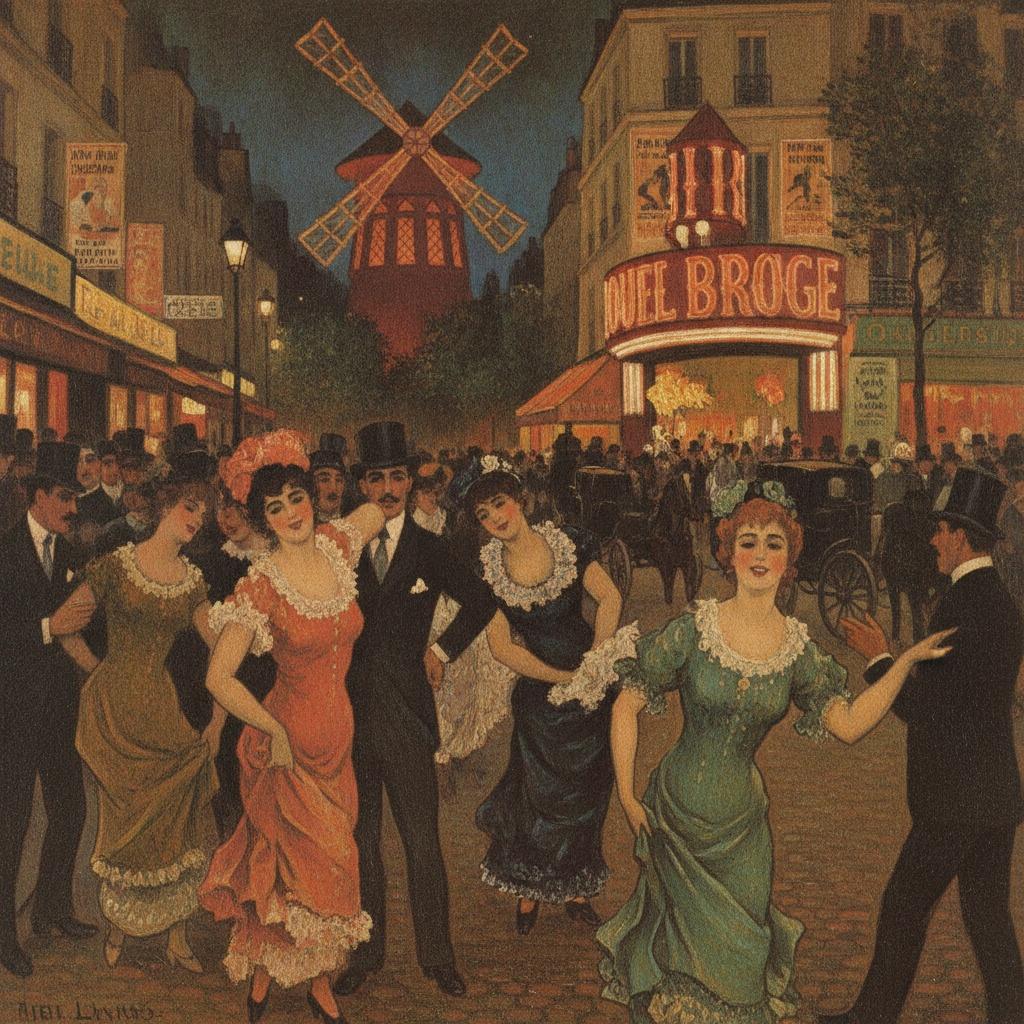
Imagine, if you will, stepping through a heavy velvet curtain and into the flickering gaslight of late 19th-century Paris. The air is thick, almost palpable, with the intoxicating scent of absinthe, rich tobacco, and the electric, unbridered energy of a city that refuses to sleep. This was the world of Henri de Toulouse-Lautrec, a landscape defined by the amber glow of streetlamps and the deep, mysterious shadows of Montmartre’s most intimate cabarets. To wander through his works is not merely to view paintings; it is to slip, unnoticed, into the fever dream of the Belle Époque.
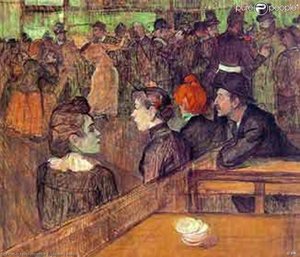
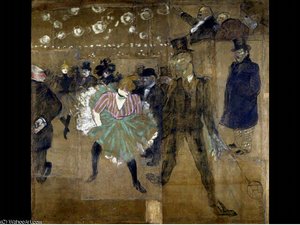
In the labyrinthine streets of the Butte Montmartre, a new kind of energy pulsed through the cafes and dance halls, creating a landscape that was as much psychological as it was physical. Lautrec possessed an unparalleled ability to navigate these nocturnal corridors, capturing the raw, unvarnished vitality of a world that thrived while the rest of the city slumbered. He found profound beauty in the ephemeral—the rhythmic sway of a dancer’s skirt at the Moulin Rouge, or the fleeting intimacy shared between strangers in a crowded room. Through his eyes, the smoky atmosphere of the Chat Noir becomes something we can almost touch, inviting us to witness a moment in history where the boundaries between art and life were being irrevocably redelivered.
Beyond the Canvas: The Soulful Portraits and Intimate Moments of Toulouse-Lautrec
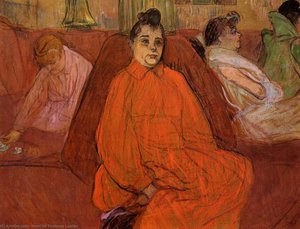 At the Salon, the Divan
Dun, A Gordon Setter Belonging To Comte Alphonse De Toulouse Lautrec Henri Marie Raymond de Toulouse-Lautrec-Monfa’s “Dun,” completed in 1893, stands as a testament to the artist's unparalleled ability to capture both physical form and psychological ...
While many remember Lautrec for the neon pulse of his famous posters, there is a profound tenderness hidden within his more private observations. His gaze was never that of a detached tourist; it was the empathetic eye of an insider who inhabited these spaces. This sensitivity extended far beyond the cabaret stage to the quiet, domestic corners of his life. In works such as “Dun,” a portrait of his beloved Gordon Setter, we see an exploration of companionship and vulnerability. The artist meticulously rendered the texture of the dog's fur with expressive brushstrokes, imbuing the piece with a palpable sense of presence and warmth.
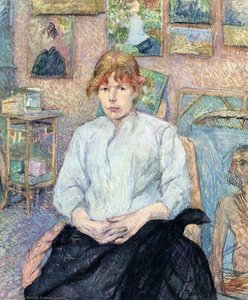
This ability to find beauty in the weary and the marginalized is what makes his portraiture so deeply moving for the modern viewer. Whether he was capturing the dignified composure of his mother, Comtesse Adele Zoë, or the slumped fatigue of a performer behind the scenes, Lautrec sought to distill human experience into its purest essence. He did not look upon the outcasts of Parisian society with judgment, but with a deep understanding of their resilience. In every line and every shadow, there is a celebration of the human spirit, making his portraits feel as much like shared secrets as they do historical records.
Mastery of Line and Light: Exploring Post-Impressionist Techniques and Art Nouveau Influence
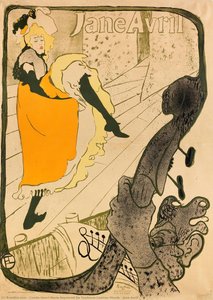 Jane Avril
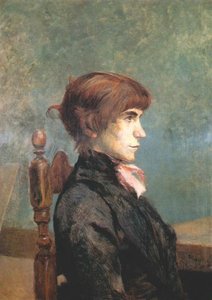
A Portrait of Movement: Toulouse-Lautrec’s Jane Avril Henri de Toulouse-Lautrec's “Jane Avril,” completed in 1893, transcends mere depiction; it embodies the spirit of Montmartre and captures a fleeting moment of artistic brilliance. Created during h...
Technically, Toulouse-Lautrec was a pioneer who bridged the gap between fine art and the pulsing pulse of popular culture. As a key figure in the Post-Impressionism movement, he moved away from the purely naturalistic depictions of light favored by his predecessors. Instead, he embraced a more daring, unconventional style influenced heavily by the bold, graphic energy of Japanese woodblock prints. His work often utilizes a sophisticated manipulation of shadow—a modern evolution of chiaroscuro—to sculpt the atmosphere of the cabaret and create dramatic contrasts between light and darkness.
In his iconic depictions of dancers like Jane Avril, we see the unmistakable embrace of the Art Nouveau movement. He eschewed rigid realism in favor of stylized figures and flowing, undulating lines that mimic natural forms, such as ocean waves. Through meticulous line work combined with hatching and cross-hatching, he achieved a textured surface appearance that lends an etched quality to his compositions. This mastery of line allowed him to create posters that were not just advertisements, but carefully constructed narratives designed to provoke emotion and celebrate the dynamism of the era.
From Aristocracy to Bohemia: The Life and Legacy of a Visionary Artist
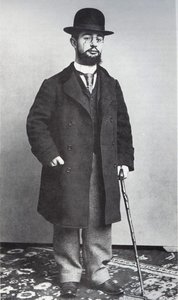 henri de toulouse-lautrec
A Life Etched in Parisian Nights: The World of Henri de Toulouse-Lautrec Henri Marie Raymond de Toulouse-Lautrec-Monfa, forever known simply as Toulouse-Lautrec, remains a captivating figure of the late 19th century. Born into the waning days of Fren...
The story of Toulouse-Lautrec is one of profound transformation. Born into the fading elegance of the French aristocracy in Albi, his early life was marked by both privilege and significant physical challenge. A rare genetic condition halted his growth, leaving him with a disproportionately small lower body—a difference that would profoundly shape his perspective. Rather than retreating into self-pity, he turned toward an intensely observant and empathetic engagement with the world around him.
His formal training under masters like Léon Bonnat provided him with the technical skills of a Salon painter, yet his heart belonged to the bohemian heart of Paris. He rejected the academic focus on historical or mythological subjects, choosing instead to find his soul among the dancers, circus performers, and café singers of Montmartly. This transition from the gilded halls of aristocracy to the smoky, vibrant streets of the nightlife allowed him to produce works that were both technically masterful and culturally revolutionary. His legacy remains etched in the very fabric of modern graphic design and portraiture.
Bringing the Spirit of Paris Home: Curating Toulouse-Lautrec for Modern Interiors
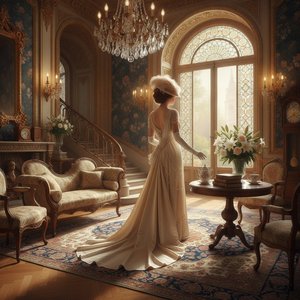 Step into Elegance: Discover the Timeless Beauty and Opulence of Belle Époque Art
The Golden Age of Optimism: Defining the Belle Époque Era Echoes of 1882: Art, Culture & the Belle Époque's Lasting Impression The Dawn of Optimism: Paris Before the Storm (1871-1882) Wikipedia: Belle Époque The Belle Époque (French pronunciation: [b...
For the contemporary art enthusiast, bringing a piece of the Belle Époque into a modern home is an exercise in adding character and soul. A Toulouse-Lautrec reproduction can serve as a stunning focal point, injecting a sense of historical drama and sophisticated color into a room. Whether you are drawn to the bold, graphic impact of his lithographic posters or the textured, emotional depth of his oil paintings, these works offer a way to connect with a bygone era of elegance and rebellion.
When decorating, consider how the chiaroscuro elements of his work can interact with your lighting. A large-scale canvas reproduction, perhaps even split into a multi-panel arrangement for a wide wall, can recreate the expansive feeling of a Parisian salon. At ArtsDot.com, we believe that art should be an accessible discovery. We specialize in transforming these historical masterpieces into hand-painted oil reproductions on 100% cotton canvas, ensuring that the visible brushstrokes and deep tonal ranges are preserved. Whether you are looking to celebrate a personal milestone with a custom portrait or simply wish to adorn your space with the vibrant pulse of Montmartre, we invite you to discover how the timeless beauty of Toulouse-Lautrec can transform your modern living space into a sanctuary of culture.