The Silken Thread: Long Hair as a Symbol of Grace and Vitality
 Long hair
Long hair is a hairstyle where the head hair is allowed to grow to a considerable length. Exactly what constitutes "long hair" can change from culture to culture, or even within cultures. For example, a woman with shoulder-length hair in some culture...
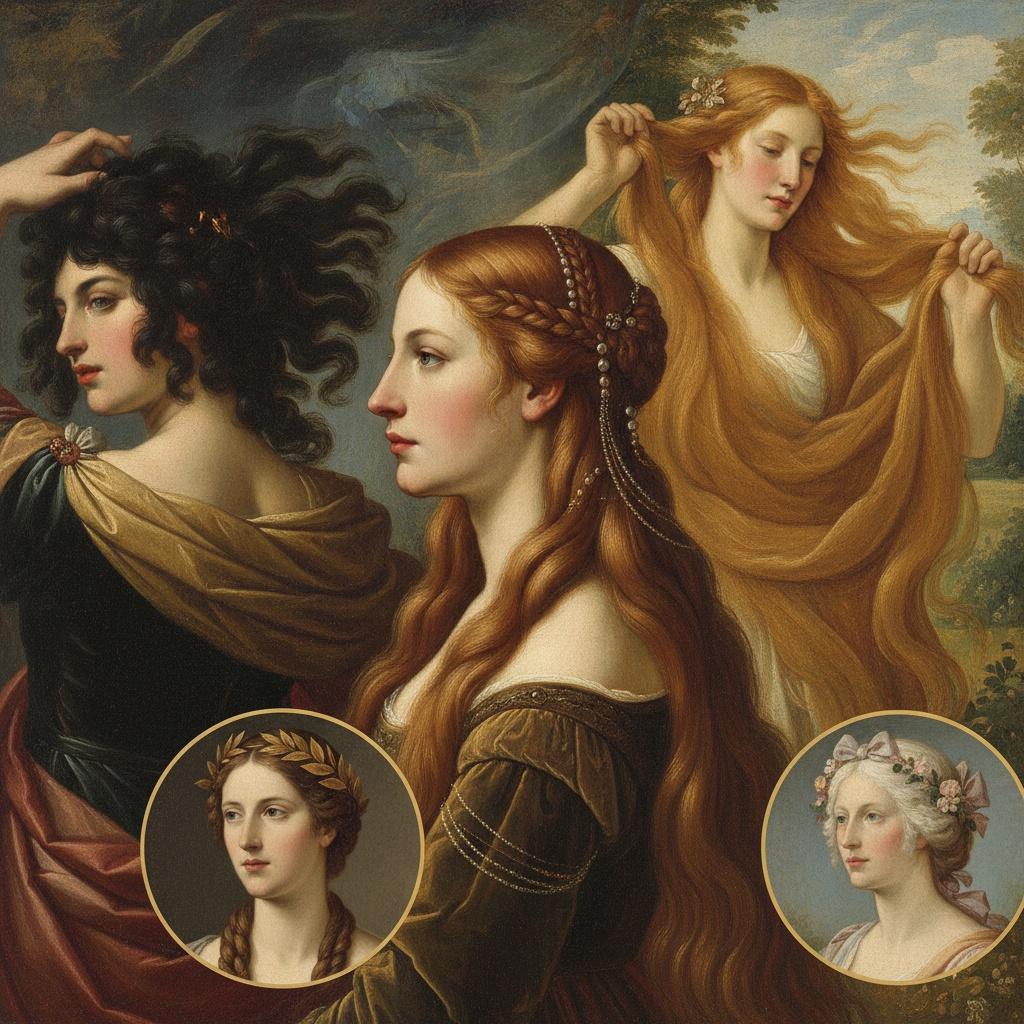
In the grand tapestry of art history, few elements possess the evocative power of flowing hair. It is more than a mere physical attribute; it is a silken thread that weaves through centuries of human expression, acting as a profound symbol of vitality, status, and untamed grace. When we gaze upon a classical portrait, the way a lock of hair falls across a shoulder or cascades down a velvet gown tells a story far deeper than simple aesthetics. In many cultures, long, lustrous hair has been celebrated as a sign of health and reproductive potential, a biological cue of youth that artists have intuitively understood for millennia. To capture such beauty is to capture the very essence of life itself.
Beyond its biological roots, the depiction of unbound hair often serves as a metaphor for the soul's freedom or, conversely, a delicate tension between civilization and nature. In the refined interiors of Neoclassical works, hair might be meticulously bound with ribbons, representing order and social grace, yet even in these structured settings, a single stray strand can evoke a sense of vulnerability and intimacy. This duality—the controlled versus the wild—allows the viewer to connect with the subject on a deeply human level, finding beauty in both the polished perfection of a courtly lady and the raw, natural elegance of a mythological goddess.
Mastering the Tress: Technical Brilliance from Neoclassicism to Impressionism
Classical Realism is an artistic movement in the late-20th and early 21st century in which drawing and painting place as high value upon skills and beauty, combining elements of 19th-century neoclassicism and realism. == Origins == The term Classical...
The technical challenge of rendering hair is one that has tested the mettle of the world's greatest masters. To paint hair is to engage in a complex dance with light and shadow, requiring an artist to move beyond mere lines to create the illusion of volume and weight. In the tradition of Classical Realism, artists like John William Godward demonstrated unparalleled precision. In his exquisite work, Venus Binding Her Hair, we see the pinnacle of meticulous craftsmanship. Here, the artist uses subtle gradations of light and shadow to sculpt the human form, treating each strand not as a separate entity, quite literally painting with light to create a lifelike, almost tactile quality that invites the viewer into a private, contemplative world.
As art transitioned from the structured precision of Neoclassicism toward the more fluid movements of the late 19th century, the approach to hair underwent a breathtaking transformation. The Impressionists moved away from the individual strand to focus on the impression of light hitting a mass of color. They utilized broken brushstrokes to capture the shimmering, ephemeral quality of sunlight filtering through tresses. This shift allowed for a more sensory experience, where the viewer no longer just sees the hair but feels the warmth of the sun and the movement of the breeze. It is this evolution of technique—from the sculptural precision of oil painting to the atmospheric light of the Impressionists—that continues to inspire modern collectors seeking art with true physical presence.
Texture and Light: Capturing the Lustre of Every Strand
 Impasto
Impasto is a technique used in painting where paint is laid on an area of the surface thickly, usually thick enough that the brush or painting-knife strokes are visible. Paint can also be mixed right on the canvas. When dry, impasto provides texture;...
To truly appreciate a masterpiece, one must engage in a sensory dialogue with its surface. The magic of great hair portraiture lies in the interplay of texture and light. When an artist employs techniques such as impasto—the thick, sculptural application of paint—the canvas ceases to be a flat surface and becomes a living landscape. Imagine the way light catches the raised ridges of a heavy brushstroke, creating tiny shadows that mimic the depth of a thick braid or the chaotic beauty of curls. This tactile dimension is what separates a mere print from a hand-painted oil reproduction; it provides a luminous depth that shifts as you move through the room.
Achieving this lustre requires a deep understanding of the chemistry of art. Master painters use specific oils, such as safflower, to ensure that the whites remain pure and do not yellow over time, preserving that pristine, silken sheen for generations. Whether it is the heavy, textured shadows found in the works of David Moreau or the soft, ethereal glow seen in a Renoir portrait, the goal remains the same: to create a surface where light does not just hit the paint but gets lost within its layers. This creates a sense of chromatic harmony, where the hair appears to possess its own internal radiance, pulling the viewer into a state of meditative wonder.
Intimate Portraits: The Emotional Resonance of Unbound Beauty
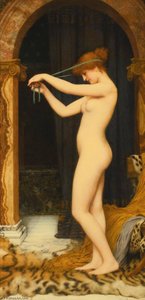 venus binding her hair
Subject and Composition This exquisite artwork captures an intimate moment of a young woman in a refined interior setting, embodying both classical beauty and subtle vulnerability. The subject, a slender, nude woman with a graceful posture, is depict...
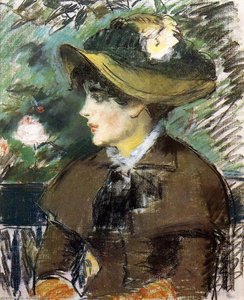
There is an undeniable intimacy in portraits where hair is left unbound. These works often strip away the formal armor of society, revealing a subject in a moment of quiet self-awareness or profound introspection. When we see a figure depicted in profile, their downward gaze accompanied by the gentle movement of hair, we are invited into a private sanctuary. This sense of subtle vulnerability is what makes portraiture so enduringly powerful. The hair acts as a frame for the face, drawing our eyes to the expression, the softness of the skin, and the emotional truth held within the subject's eyes.
This emotional resonance extends to the very way we perceive these figures today. In an age dominated by the fleeting and the digital, encountering a portrait that celebrates such timeless, human qualities offers a grounding experience. Whether it is a custom commission that transforms a personal milestone into a classical masterpiece or a rediscovered treasure from a museum collection, these images remind us of the enduring power of visual emotion. The unbound hair serves as a bridge between the subject's era and our own, a continuous thread of beauty woven through the fabric of time.
Bringing the Masterpiece Home: Curating Timeless Elegance in Your Space
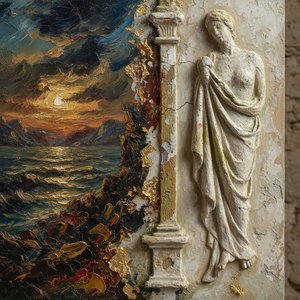 The Power of Texture: Exploring Impasto and Plaster in the World's Greatest Masterpieces
The Tactile Dimension: Defining Physical and Visual Texture in Fine Art Texture (visual arts) In the visual arts, texture refers to the perceived surface quality of a work of art. It is an element found in both two-dimensional and three-dimensional d...
Integrating such profound works into a modern interior is an art form in itself. For the contemporary decorator, a painting celebrating flowing elegance can serve as a breathtaking focal point, adding both texture and soul to a room. Whether you choose a large-scale multi-panel set to span a wide hallway or a single, intimate portrait for a study, the key is to consider the mood and color palette of your space. A piece with deep, soulful tones can anchor a room with gravity, while a lighter, more ethereal work can breathe air and light into a contemporary setting.
At ArtsDot.com, we believe that art should be an accessible discovery rather than a daunting challenge. We specialize in helping newcomers build their collections with confidence, offering everything from hand-painted oil reproductions that capture the heavy impasto of the masters to exquisite Giclée prints for those seeking high-quality decor. Our professional digital mockup service allows you to see how a masterpiece will look on your specific wall before the paint even touches the canvas. Whether you are looking to "remix" history by having a modern photo painted in the style of Van Gogh, or searching for a museum-quality centerpiece, we invite you to embark on your own visual journey and bring the timeless elegance of the masters into your home.