 Preview
 Send
Send Share
Share
 Details

 Download
 Similars
 X-Ray
X-Ray Diaporama
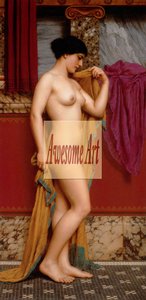
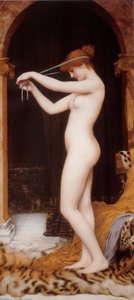
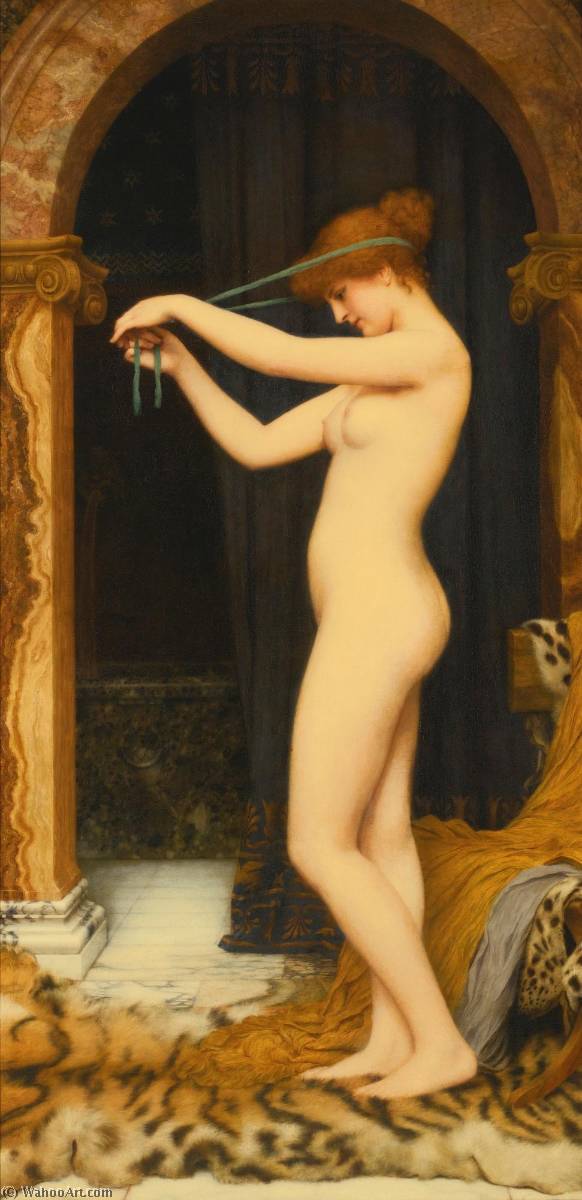
venus binding her hair

 Read More
Hand Made Oil Reproduction
Hand-painted oil on canvas in your size and frame, made to order by our artists. ( Buy Print Buy Image)




P118B $10

P118H $10

P118W $10

P438Z $10

P508JH $12

P508YH $12

P805H $10

P805Z $10

P919BZ $10

P919G $10

P919XJ $10

P959ZH $10

P968JZ $12

W106C $8

W218G $10

W218JH $8

W218Y $10

W307PJ $10

W316G $10

W316PJ $8

W316Y $10

W398PJ $8

W4111J $10

W500HY $15

W500JH $15

W692G $12

W849H $8

W940BG $15

W953PJ $8




Pick from our preset sizes that match the artwork's original proportions.

You may enter your own dimensions to fit a specific frame or space. If your selected size does not match the original image's proportions, we will either crop the artwork or extend the painting with additional hand-painted elements. A digital mockup will be sent for your approval before production begins.
Please note that the on-screen preview does not reflect the actual cropping or extension. Only the mockup will accurately show the final composition.
While custom sizes are available, we recommend selecting a dimension from the predefined list to preserve the original proportions.
After order, ArtsDot.com team will email client for instructions and provide a mockup preview
Worldwide Delivery () in 3/4 weeks instead of standard 5 weeks. (16 August). No compromise on quality.

Free Worldwide Express Shipping

High-Quality Linen Canvas

Full Shipping Insurance

Customs Tax Refund Guarantee

True Color Matching Guarantee

60-Day Return Policy (Defects Only)

100% Money-Back Guarantee

Bulk Discount Offer
 Glass option is only available in size under 110 CM

venus binding her hair
Reproduction Medium
Reproduction Size
-


Total Price
$ 263
Artwork Description
Subject and Composition
This exquisite artwork captures an intimate moment of a young woman in a refined interior setting, embodying both classical beauty and subtle vulnerability. The subject, a slender, nude woman with a graceful posture, is depicted in profile as she gently binds her hair with a ribbon. Her downward gaze and delicate gesture evoke a sense of introspection and quiet self-awareness. The composition emphasizes her natural elegance, drawing viewers into a private, contemplative world that celebrates feminine grace and inner serenity.Style and Technique
Created in the tradition of Neo-Classical realism, this painting showcases meticulous craftsmanship and attention to detail. The artist employs a refined technique of oil painting, blending subtle gradations of light and shadow to sculpt the human form with lifelike precision. Textures are rendered with remarkable realism—from the smoothness of her skin to the plush fur rug beneath her feet, and the ornate architectural elements framing her figure. The use of chiaroscuro enhances the three-dimensionality of the scene, creating a luminous, almost tactile quality that invites viewers to appreciate the craftsmanship and artistry involved.Historical Context and Artistic Significance
Although the exact date of creation remains unknown, the work aligns with the Neo-Classical revival of the late 19th and early 20th centuries, a period marked by a fascination with classical antiquity and idealized beauty. The artist, r.b.a. John William Godward, was renowned for his detailed depictions of women set against classical architecture, reflecting a romanticized view of ancient civilizations. This painting exemplifies the era’s emphasis on harmony, proportion, and the celebration of feminine elegance, making it a timeless piece that bridges Victorian ideals with modern appreciation for classical aesthetics.Symbolism and Emotional Impact
The act of binding her hair with a ribbon can be interpreted as a symbolic gesture of restraint, preparation, or self-care—an intimate moment of personal grooming that hints at themes of modesty, beauty, and self-awareness. Her contemplative expression and gentle posture evoke a sense of tranquility and introspection, inviting viewers to reflect on themes of femininity, identity, and inner strength. The warm, rich palette of earth tones and soft lighting enhances the emotional depth, creating a calming yet evocative atmosphere that resonates with viewers on a personal level.Interior and Decorative Appeal
Designed to elevate any interior space, this artwork’s luxurious setting—featuring ornate architecture, rich drapery, and a plush fur rug—embodies timeless elegance. Its detailed realism and classical motifs make it an ideal centerpiece for sophisticated homes, galleries, or interior designs seeking a touch of historical refinement. Whether displayed as a standalone statement or part of a curated collection, this piece offers both aesthetic beauty and a compelling narrative that enriches any environment.A Collector’s Treasure and Artistic Inspiration
Perfect for art lovers, collectors, and interior designers alike, this high-quality reproduction captures the essence of Victorian Neo-Classical artistry. Its enduring appeal lies in the harmonious blend of technical mastery, symbolic depth, and emotional resonance. Owning or displaying this work not only celebrates classical beauty but also inspires a deeper appreciation for the timeless themes of femininity, introspection, and artistic excellence. It is a refined addition to any collection, promising both aesthetic pleasure and cultural significance.Related Artworks
Artist Biography
John William Godward: A Victorian Neo-Classical Master
Early Life and Background
- Born: August 9, 1861, Wimbledon, England.
- Died: December 13, 1922, London, England.
- John William Godward was the eldest of five children born to John Godward, an investment clerk, and Sarah Eboral.
- His early life was marked by a reclusive nature, largely attributed to his parents’ overbearing personalities. This introversion profoundly influenced his artistic sensibilities.
Artistic Development and Influences
- Early Training: Godward received formal art training, though specific details remain scarce due to the destruction of his personal papers.
- Key Influences: He was heavily influenced by Sir Lawrence Alma-Tadema and Frederic Leighton, both prominent figures in Victorian Neo-Classicism.
- Like Alma-Tadema, Godward demonstrated a meticulous attention to detail in rendering classical architecture and textures. However, he developed his own distinct style characterized by vibrant colors and idealized depictions of beauty.
Career and Major Works
- Royal Academy Exhibitions: Godward first exhibited at the Royal Academy in 1887, marking the beginning of his public recognition.
- Notable Paintings:
- Dolce far Niente (1904): Perhaps his most famous work, purchased by Andrew Lloyd Webber in 1995.
- When the Heart is Young (1902): Exemplifies Godward’s ability to capture youthful innocence and beauty.
- The Mirror (1899): Showcases his skill in contrasting textures and creating a sense of depth.
- In the Tepidarium (1913): A semi-nude figure demonstrating his versatility within the Neo-Classical genre.
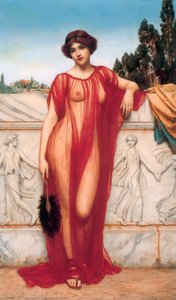
- Athenais: A stunning example of his idealized female figures in classical settings.
- Move to Italy: In 1912, Godward moved to Rome with one of his models, a decision that led to estrangement from his family.
Style and Themes
- Neo-Classical Style: Godward’s work is characterized by its adherence to classical forms, themes, and aesthetics.
- Recurring Motifs: He frequently depicted beautiful women in classical attire, often engaged in moments of repose or contemplation.
- Technical Mastery: Godward was renowned for his meticulous attention to detail, particularly in rendering textures such as marble, fur, and fabrics. His use of vibrant colors further distinguished his style.
- He is often described as a ‘High Victorian Dreamer’ due to the idealized and romanticized nature of his paintings.
Tragic End and Legacy
- Death: Godward tragically took his own life in 1922 at the age of 61.
- Family Reaction: His family, ashamed of his suicide, destroyed his papers and attempted to erase his memory.
- Historical Significance: Despite the attempts to suppress his legacy, Godward’s work has experienced a resurgence in popularity. He remains a significant figure in Victorian Neo-Classicism, celebrated for his technical skill, idealized beauty, and evocative depictions of classical themes.
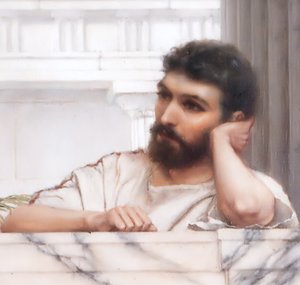
r.b.a john william godward
1861 - 1922
Quick Facts
- Birth Date: 1861
- Death Date: 1922
- Influenced By:
- Sir Lawrence Alma-Tadema
- Frederic Leighton
- Movement: Neo-Classicism, Victorian painting
- Name: John William Godward
- Nationality: British
- Notable Works:
- Dolce far Niente
- When the Heart is Young
- The Mirror
- In the Tepidarium
- Athenais
- Expectancy
Related Articles
The Enduring Allure of the Nude: A Historical & Artistic Exploration of the Human Form
Explore the captivating history of nude art! Discover iconic paintings & artists from classical to modern eras. Uncover symbolism, techniques & find museum-quality reproductions at ArtsDot.
Timeless Elegance: A Curator's Guide to Decorating with Classical Nude Figure Artworks
Transform your space with the enduring beauty of classical nude studies. Our elegant guide offers expert advice on selecting hand-painted reproductions and custom commissions to create a sophisticated home gallery. Discover meaningful art curation at ArtsDot.com.
Neo-Classicism's Greatest Hits: 10 Masterpieces for Your Home |
Journey through Neo-Classicism's finest! Explore 10 iconic masterpieces by David, Ingres & Canova. Discover art history, techniques & timeless beauty – perfect for inspiring your home decor. Find museum-quality reproductions at
The Enduring Legacy of Classicism: Principles, Evolution & Influence in Western Art
Explore the enduring legacy of Classicism in Western art! Discover its historical context, key principles, iconic masterpieces & lasting influence. Learn about Renaissance and Neoclassical movements with ArtsDot.
The Eloquent Form: A Historical & Aesthetic Exploration of the Nude in Art
Explore the captivating history of the nude in art! From ancient Greece to modern masters, discover its evolving symbolism, techniques & enduring beauty. Expert insights for collectors and enthusiasts.