The Planographic Revolution: Beyond Carving and Incising
 Lithography Explained: A Professional Guide to Stone and Plate Printing for Interior Designers
The Fundamentals of Planographic Printing: Understanding Surface vs. Relief The Alchemy of Stone and Ink: A Collector's Definitive Guide to the Art of Lithography The Planographic Revolution: Understanding the Essence of Lithography Lithography stand...
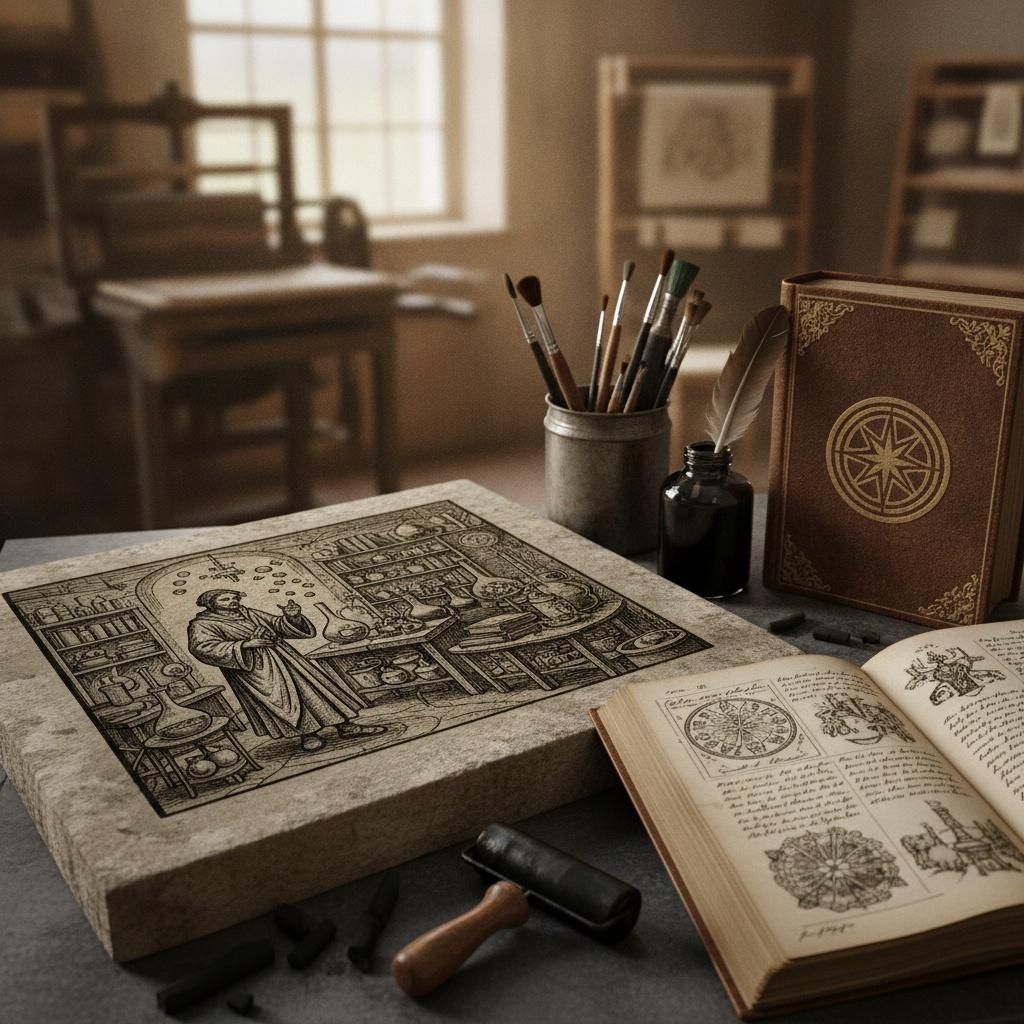
To step into the world of printmaking is to enter a realm of profound physical labor, where for centuries, artists were bound by the resistance of their materials. Before the late eighteenth century, the art of the print was defined by struggle—the aggressive carving of woodblocks in relief or the painstaking incision of metal plates in intaglio. These ancestral traditions demanded a certain structural confrontation; to create an image, one had to physically remove material, leaving behind trenches or raised surfaces that would catch the ink. It was a medium of depth and physical exertion, where every line was a testament to the artist's strength against wood or copper.
However, a quiet revolution arrived in 1796, courtesy of the German author Alois Senefelder, who introduced a method that would forever alter the trajectory of visual expression. This was lithography, a term born from the Greek lithos for stone and graphō to write. Unlike its predecessors, lithography is a planographic process. It does not rely on physical depth or the removal of material to manifest an image; instead, it exists upon a flat surface, much like the very paper it eventually graces. This shift from the sculptural to the planar offered a profound departure from the labor of carving, allowing for a level of spontaneity and fluid detail that felt less like a battle and certainly more like a dance.
The Chemical Romance: The Science of Oil and Water Repulsion
 Lithography
Lithography (from Ancient Greek λίθος (líthos) 'stone' and γράφω (gráphō) 'to write') is a planographic method of printing originally based on the immiscibility of oil and water. The printing is from a stone (lithographic limestone) or a metal plate ...
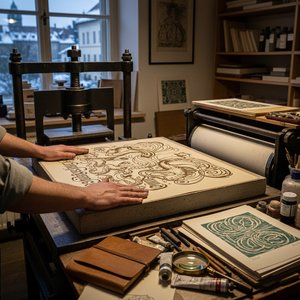
At the very heart of this beautiful medium lies a fundamental, eternal tension: the natural refusal of oil and water to mix. This scientific principle, known as immiscibility, is the true soul of the lithographic process. It is a quiet, chemical miracle that occurs upon a slab of limestone, where the artist engages in a subtle dialogue with surface tension rather than physical force. The magic begins when a design is drawn onto a prepared stone or metal plate using a greasy substance, such as an oil-based crayon, fat, or wax.
The alchemy continues through a meticulous treatment of the stone's surface. By applying a mixture of weak acid and gum arabic, the artist "etches" the stone—not by carving it, but by making the non-image areas more hydrophilic, or water-attracting. When the stone is later moistened during the printing process, the water adheres only to these etched, thirsty areas, creating a barrier that repels oil. When the ink roller passes over the surface, the oil-based ink finds its home only where the original greasy drawing resides, clinging to the fat and fleeing from the water. It is a delicate equilibrium of chemistry, a romantic tug-of-war between elements that results in a perfectly transferred image.
From Stone to Studio: The Artist's Spontaneous Dialogue with Limestone
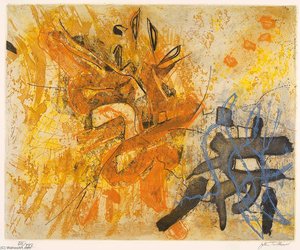 john talleur
John Talleur: A Kansas Visionary of Print Born in Chicago in 1925 and passing away in Lawrence, Kansas, in 2001, John Joseph Talleur was more than just a printmaker; he was a restless spirit who infused his art with a potent blend of nature’s raw bea...
For the artist, lithography offers a freedom that is rarely found in other traditional printmaking techniques. Because the medium allows for drawing directly onto the polished limestone with the ease of sketching on paper, the resulting impressions often retain the raw, emotive energy of an unmediated thought process. There is no structural struggle against the grain of wood or the hardness of metal; instead, there is a profound sense of immediacy. The artist can capture the softest smudge of a crayon, the delicate nuance of a brushstroke, or the most frantic, energetic line with breathtaking fidelity.
This fluidity allows for a level of detail and atmospheric depth that mimics the qualities of a painting. Collectors often find themselves drawn to lithographs because they offer a window into the artist's hand—the subtle textures and tonal ranges feel remarkably personal. Whether it is the surreal, visionary imagery found in the works of artists like John Talleur or the striking movement captured in contemporary prints, the medium preserves the soul of the original gesture. It is an art form where the stone does not merely carry the image but actively participates in its creation, translating the artist's breath and touch into a permanent, reproducible masterpiece.
A Collector's Eye: Distinguishing Fine Art Lithographs from Commercial Prints
 Offset printing
Offset printing (offset lithography) is a common printing technique in which the inked image is transferred (or "offset") from a plate to a rubber blanket and then to the printing surface. When used in combination with the lithographic process, which...
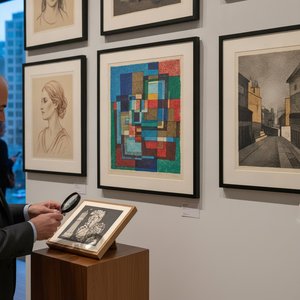
As one begins to curate a collection, it is vital to distinguish between the fine art lithograph and modern commercial printing. In the contemporary era, the term "lithography" is often used loosely to describe offset printing—a common technique used for mass-produced posters and magazines. While offset lithography is an incredible feat of modern engineering, utilizing rubber blankets to transfer images from plates to paper, it lacks the tactile intimacy of the traditional stone process. To the discerning eye, a true fine art lithograph possesses a depth and texture that commercial prints simply cannot replicate.
When evaluating a piece for your home, look for the characteristic "soul" of the print. Fine art lithographs often exhibit a richer tonal range and a subtle, physical presence on the paper. For those seeking the ultimate in luxury, one might even look toward hand-painted giclée, where an artist applies oil paint over a high-quality print to reintroduce the impasto texture and visible brushstrokes that define a true masterpiece. Whether you are investing in a vintage stone lithograph or a bespoke reproduction, understanding the distinction between a flat digital image and a textured, layered work of art is the first step toward building a meaningful collection.
Timeless Textures: Integrating Lithographic Aesthetics into Modern Interiors
 The Alchemy of Stone and Ink: A Collector's Guide to the Timeless Magic of Lithography
The Alchemy of Stone: Understanding the Planographic Soul of Lithography To truly appreciate the magic of a print, one must first understand the quiet, chemical miracle that occurs upon a slab of limestone. Unlike the aggressive carvings of woodcuts ...
Integrating the aesthetic of lithography into a modern living space offers an unparalleled opportunity for sophisticated design. Because lithographic prints can range from the stark, dramatic black and white of a contemporary graphic print to the soft, light-drenched tones reminiscent of Impressionism, they are incredibly versatile. For the professional decorator or the enthusiastic homeowner, these prints provide an effortless elegance that can anchor a room. Their ability to mimic the delicate nuances of a sketch makes them perfect for creating a sense of calm and understated luxury in a bedroom or study.
In larger architectural projects, such as hotel lobbies or expansive living areas, the impact of printmaking can be magnified through multi-panel arrangements. Splitting a single, powerful image across three, four, or five panels creates a modern, rhythmic flow that draws the eye across wide walls and staircases. When paired with custom framing—perhaps a rich gold leaf or a deep espresso wood—these works become more than mere decoration; they become architectural elements. By choosing pieces that celebrate the textured, organic beauty of the lithographic tradition, you bring a sense of history and a profound, tactile warmth into the modern home.
Discover more about bringing timeless art into your life at ArtsDot.com.