



The Alchemical Glow: Understanding the Unique Physics of Oil on Copper
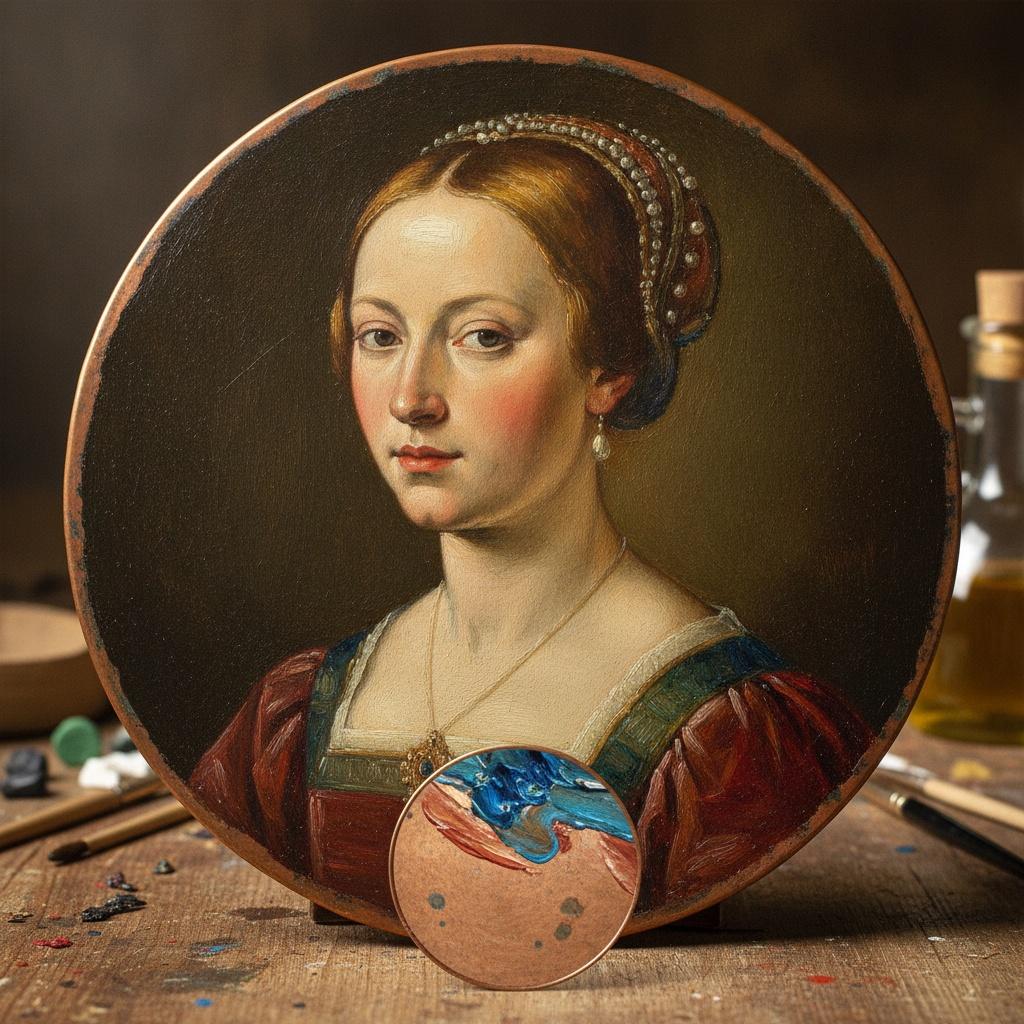
To behold an oil painting on copper is to witness a phenomenon that transcends the traditional boundaries of pigment and canvas. While the familiar texture of cotton canvas offers a soft, absorbent embrace for oil, copper presents a surface that is fundamentally different—non-porous, smooth, and inherently reflective. This creates what connoisseurs often describe as an alchemical glow. Because the metal substrate does not soak up the oil, the paint sits atop the surface in incredibly thin, translucent layers. This allows light to pass through the pigment, strike the polished metallic base, and bounce back toward the viewer’s eye.
This interplay of light creates a depth that is almost supernatural. In a standard canvas work, the light is often absorbed by the weave of the fabric; however, on copper, the luminosity is amplified. The result is a jewel-like brilliance where colors appear more saturated and shadows possess a crystalline clarity. It is a medium of pure light, where every brushstroke contributes to a shimmering, multidimensional effect that seems to pulse with an inner life, making it a favorite for those who seek art that truly captivates the room.
A Journey Through Time: From Renaissance Masters to Cabinet Paintings
The history of this medium is inextricably linked to the heights of the Northern Renaissance and the evolution of the "cabinet painting." During the 16th and 17th centuries, as the art world moved toward greater intimacy and detail, the demand for smaller, highly finished works grew. Artists such as the German master Hans Rottenhammer utilized copper to achieve a level of precision that was simply impossible on larger, more textured surfaces. These were not merely paintings; they were precious objects, often intended for the private collections of scholars and nobility, meant to be viewed closely in the soft light of a study or a private chamber.
These small-scale masterpieces, often referred to as cabinet paintings, allowed for a blending of German precision with the lush, atmospheric styles of the Italian Renaissance. The medium encouraged a meticulous approach to mythological and religious scenes, where every glint of sunlight on a landscape or the delicate fold of a silk garment could be rendered with microscopic accuracy. To collect such works is to participate in a historical tradition of intimacy, bringing the same sense of wonder and scholarly contemplation into the modern home that once graced the private libraries of Europe's elite.
The Artist's Precision: Why Copper Demands a Different Level of Mastery
Painting on copper is an exercise in extreme discipline. Unlike canvas, which is forgiving and allows for significant impasto and heavy texture, copper demands a much more controlled hand. The surface offers no "tooth" to grip the brush, meaning the artist must master the delicate balance of medium and pigment to prevent the paint from sliding or pooling unevenly. It requires a technique rooted in glazing—the application of multiple, transparent layers that build color slowly and deliberately.
This level of mastery is why works on copper are often regarded with such reverence. The artist must possess an intimate understanding of how different oils interact with the metal surface to ensure longevity and clarity. There is no room for error; a single misplaced stroke can disrupt the seamless, glass-like finish that defines the medium. It is this very difficulty that imbue these works with their value. When you encounter a painting on copper, you are seeing the culmination of academic excellence and a profound respect for the rigorous traditions of fine art academies.
Luminosity and Longevity: The Enduring Beauty of Metallic Substrates
Beyond the immediate visual splendor, there is a scientific elegance to the longevity of oil on copper. One of the greatest challenges in art preservation is the degradation of the support material—the canvas rotting, the wood warping, or the paper yellowing. Copper, being an inorganic and incredibly stable substrate, offers a level of permanence that is rare in the art world. When properly sealed with a protective varnish, such as Damar, the metal remains a steadfast foundation for centuries.
Furthermore, the chemistry involved in high-quality copper painting is designed to prevent the common pitfalls of aging. By using specific oils, such as safflower for whites to prevent yellowing, and flexible gessoes to ensure the paint layers remain integrated, the brilliance of the work is preserved. This creates a legacy piece—an artwork that does not merely endure but maintains its original, vibrant character across generations. For the discerning collector, this represents an investment in both beauty and permanence.
Bringing History Home: How to Curate Rare Mediums in Modern Interiors
Integrating such a rare and luminous medium into a contemporary space is an act of sophisticated curation. Because oil on copper acts as a focal point of light, it works beautifully in rooms that benefit from a touch of drama or elegance. In a modern, minimalist setting, the jewel-like intensity of a small copper painting can provide a much-needed soul and warmth, breaking the monotony of flat surfaces with its multidimensional glow.
When decorating, consider the "mood" of your room. A piece with deep, dark tones on copper can add a sense of mystery to a library or study, while lighter, more landscape-oriented works can bring an airy, ethereal quality to a dining area. At ArtsDot.com, we believe that art should be a discovery—a way to connect your personal style with the grandeur of history. Whether you are looking to transform a modern photo into a classical masterpiece or seeking a reproduction that captures the light of the Old Masters, the goal is to create a space that feels meaningful, curated, and timeless.