The Soul of the Canvas: Understanding Abstract Art as an Emotional Anchor
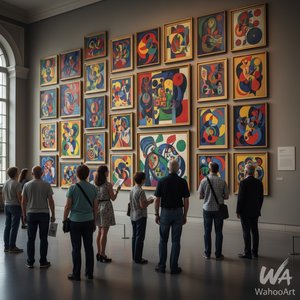 Kandinsky's Masterpieces: 25 Paintings That Define Abstract Art | ArtsDot
Introduction To embark on a journey through the top 25 artworks of Wassily Kandinsky is to enter a realm where color sings, form dances, and spirit takes flight. These paintings are not merely canvases adorned with pigment; they are windows into an i...
To step into a room adorned with abstract art is to enter a conversation that requires no spoken words. Unlike representational painting, which seeks to mirror the physical world through landscapes or portraits, contemporary abstraction invites us to look inward. For the discerning decorator, an abstract piece is far more than a decorative accent; it is an emotional anchor that grounds a room’s atmosphere. When we encounter works that move away from literal imagery, we are presented with a landscape of pure feeling. This movement, which gained profound momentum in the early 20th century, allows the viewer to find their own meaning within the brushstrokes.
Consider the pioneering spirit of artists like Wassily Kandinsky, whose work serves as a window into a spiritual realm where color sings and form dances. His approach was never about depicting an object, but rather expressing an inner necessity—a way to communicate the unseen depths of human consciousness. When you select an abstract piece for a client or your own home, you are not just choosing a visual element; you and the viewer are participating in a shared moment of transcendence. The power of abstraction lies in this very ambiguity, offering a sanctuary for contemplation and a profound connection to the universal truths expressed through rhythm and movement.
Color Theory for Decorators: Using Vibrant Hues to Define Room Moods
 john howard jephcott
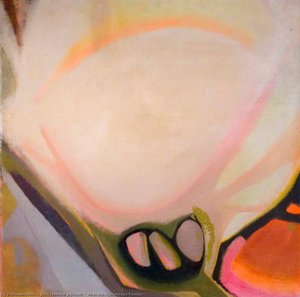
Early Life and Artistic Foundations John Howard Jephcott, born in 1910 and passing away in 1984, was a British artist whose work embodies the spirit of mid-20th century abstraction. While biographical details remain somewhat elusive—a characteristic ...
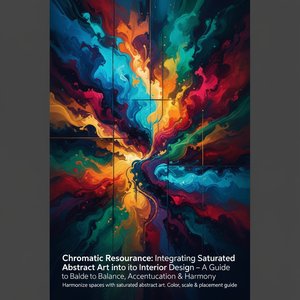
In the realm of interior design, color is perhaps the most potent tool at our disposal, and abstract art provides the ultimate palette. For a decorator, understanding how hues resonate psychologically is essential to creating a cohesive environment. Abstract works often utilize color as an independent element, capable of altering the very temperature of a room. A canvas dominated by deep teals and oceanic blues can instill a sense of tranquility and depth in a bedroom, while a burst of energetic oranges and yellows can invigorative a social lounge or dining area.
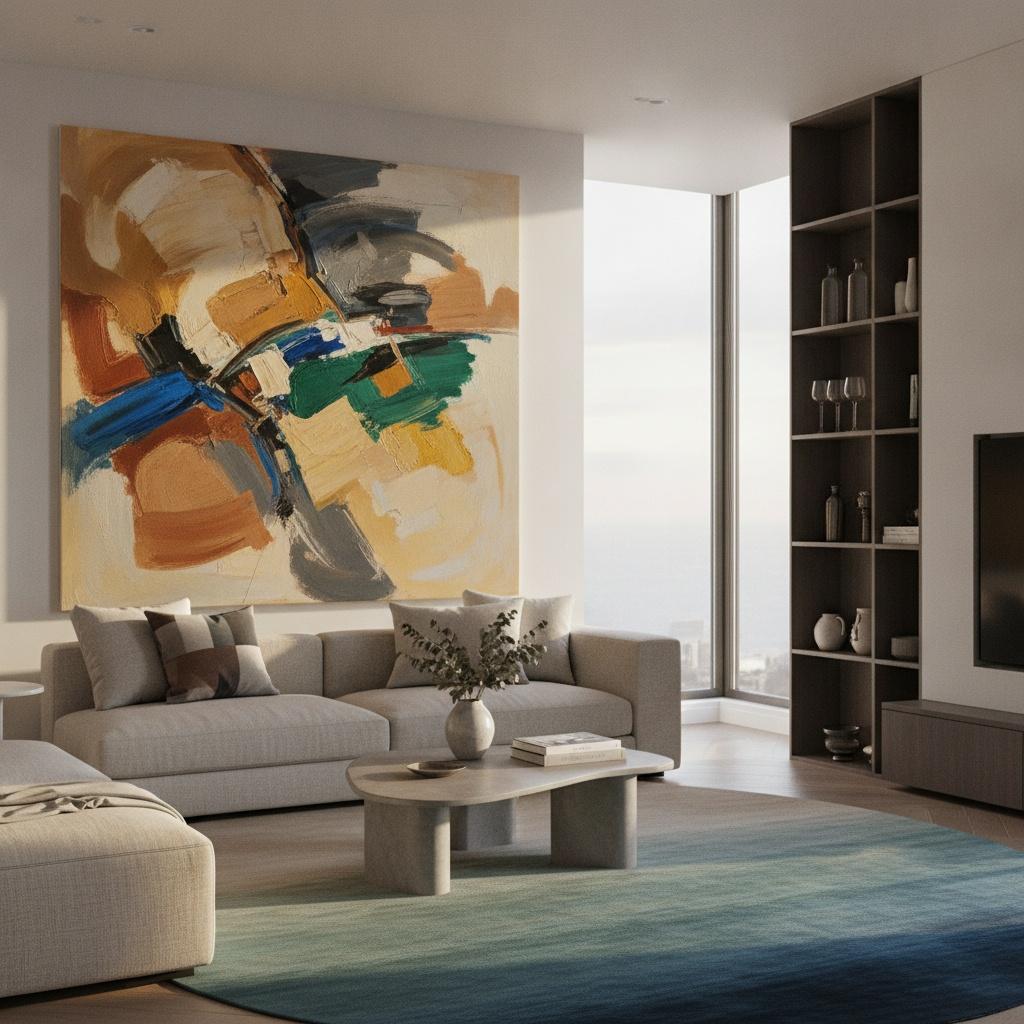
The magic happens when we use these paintings to bridge the gap between architectural elements and personal expression. One might look to the luminous landscapes of John Howard Jephcott, where thick impasto and carefully chosen palettes evoke the ethereal light of nature without needing to depict a specific forest or field. By identifying the primary color themes within an artwork—perhaps a subtle sage or a bold crimson—you can pull those tones into your textiles, cushions, and wall treatments. This creates a curated, intentional look where the art does not merely sit upon the wall but breathes life into the entire composition of the space.
Geometry and Grace: Integrating Structured Abstraction into Classic Interiors
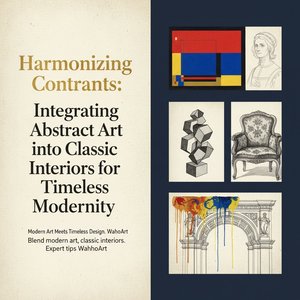 Harmonizing Contrasts: Integrating Abstract Art into Classic Interiors for Timeless Modernity
The Enduring Appeal of Classic Interiors: Why Abstract Art Complements Timeless Design Harmonizing Eras: Classical & Modern Art for Timeless Interiors Explore the art of blending classical & modern aesthetics for timeless interiors. Discover key arti...
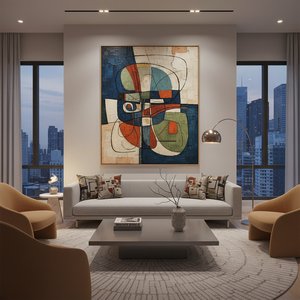
There is a common misconception that abstract art belongs exclusively to ultra-modern, minimalist settings. In reality, one of the most sophisticated design moves a decorator can make is the harmonious blending of classical and modern aesthetics. This technique, often referred to as harmonizing contrasts, allows for the creation of timeless interiors that feel both established and fresh. The symmetry and refined materials found in classic design provide a perfect stage for the dynamic energy of geometric abstraction.
The structured language of geometry—lines, shapes, and mathematical purity—can act as a subtle rebellion against the predictable. Artists like Auguste Herbin demonstrated how the exploration of form and color could lead to a profound sense of order and balance. When placed within a room featuring traditional moldings, antique furniture, or rich textures, a geometric abstract piece provides a focal point that prevents the space from feeling stagnant. It introduces a conversation between eras, injecting a contemporary pulse into historical continuity and ensuring the interior feels like a living, evolving masterpiece rather than a museum period piece.
From Minimalist Lines to Organic Forms: Selecting Styles for Every Space
 Geometric Abstraction's 10 Defining Masterpieces | Art for Your Home - ArtsDot
Introduction Imagine a world stripped bare to its essential forms – lines, colors, and shapes resonating with an almost mathematical purity. This is the realm of Geometric Abstraction, a movement that dared to abandon representational art in favor of...
Every room in a home possesses its own unique personality and function, and the style of abstraction you choose should respect that identity. In a minimalist study or a high-tech office, clean, minimalist lines and monochromatic palettes can reinforce a sense of focus and intellectual clarity. These works, stripped to their essential forms, offer a space for thought free from visual clutter. Conversely, in more intimate or creative spaces, organic abstraction offers a much softer touch.
Curating with Confidence: Practical Tips for Sizing, Texture, and Placement
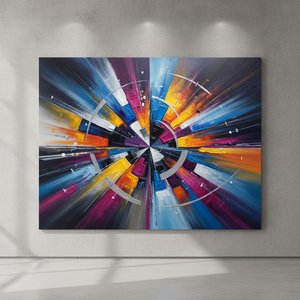
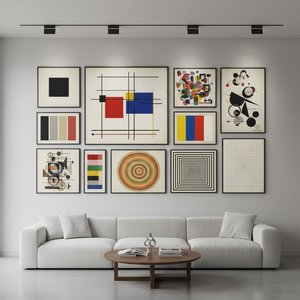
The final step in mastering abstract curation is the technical execution of placement and scale. A common mistake is selecting a piece that is too small for its intended wall, which can make the artwork appear lost or disconnected from the architecture. For large-scale walls or grand staircases, consider the modern trend of multi-panel or group set paintings. Splitting a single composition across three, four, or even five panels creates a sweeping, architectural effect that anchors wide spaces and directs the eye through the room.
Texture is another vital consideration. While a flat print may suffice for certain subtle accents, a hand-painted oil reproduction offers a tactile depth that cannot be replicated by digital means. The visible brushstrokes and the physical presence of impasto create shadows and highlights that change as the light in the room shifts throughout the day. When selecting art, consider how the texture will interact with your lighting—whether it is natural sunlight or soft, recessed lamps. By paying attention to scale, texture, and the interplay of light, you transform a simple wall into a curated gallery, building confidence in your ability to create spaces that are not just decorated, but truly composed.