Early Life & Education: Foundations of an Art Critic
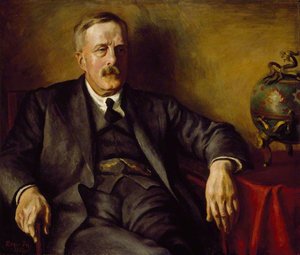
Alan Francis Clutton-Brock (8 October 1904 – 18 December 1976) was an English art critic and essayist. Clutton-Brock was born in Weybridge, Surrey, the son of Arthur Clutton-Brock. He was educated at Eton and King's College, Cambridge. He was art cri...
Alan Francis Clutton-Brock, born in 1904 into a family already steeped in intellectual pursuits – his father, Arthur Clutton-Brock, was a prominent writer on religious and social themes – seemed destined for a life engaged with ideas. His formative years at Eton College and King’s College, Cambridge, were not merely about academic rigor but an immersion in a world of aesthetic sensibility. While the specifics of his early artistic inclinations remain somewhat elusive, it's clear that these institutions fostered a critical mind capable of discerning nuance and complexity. Crucially, his time at Westminster School of Art provided a practical grounding often absent in purely theoretical studies; this experience would prove invaluable when he later turned his attention to evaluating the work of others. This early exposure wasn’t simply about learning *about* art, but beginning to understand its language – a foundation upon which his future career as one of Britain's most respected critics would be built.
Clutton-Brock at The Times: Shaping Post-War Artistic Discourse
The appointment of Clutton-Brock as art critic for The Times in 1945 placed him at the very heart of a nation grappling with the aftermath of war and a shifting cultural landscape. This wasn’t merely a reporting role; it was an opportunity to actively shape public perception, to guide tastes, and to articulate a vision for the future of British art. Post-war Britain was eager to redefine itself, and Clutton-Brock became a key voice in that conversation. He championed a restrained, intellectually rigorous approach, often favoring artists who prioritized form and substance over flamboyant expressionism. His essays weren’t sensationalist pronouncements but carefully considered analyses, steeped in historical context and informed by a deep understanding of artistic technique. He wasn't afraid to challenge prevailing trends, advocating for a return to classical principles while simultaneously acknowledging the importance of modern innovation.
The Pursuit of Atmosphere: Clutton-Brock’s Critical Lens on Landscape Painting
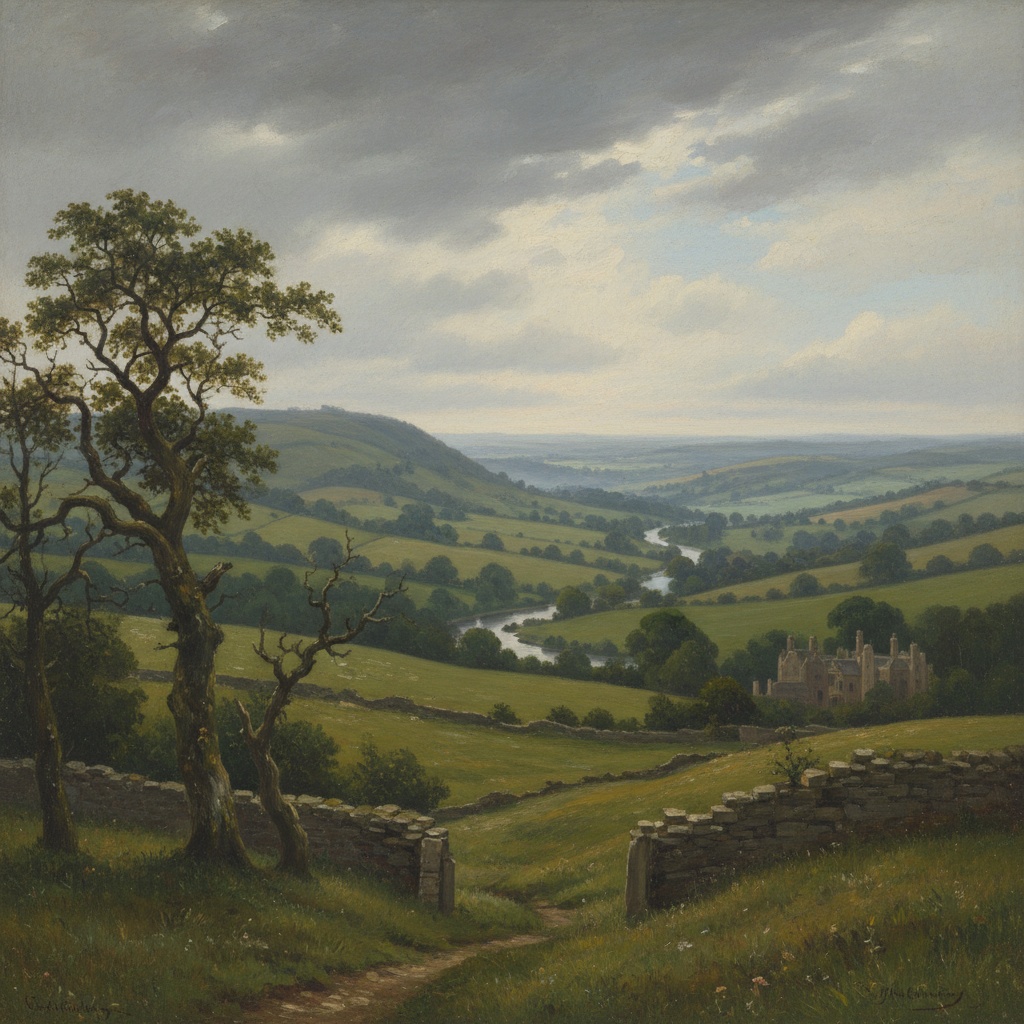
Aerial perspective, or atmospheric perspective, is the effect the atmosphere has on the appearance of an object as viewed from a distance. As the distance between an object and a viewer increases, the contrast between the object and its background de...
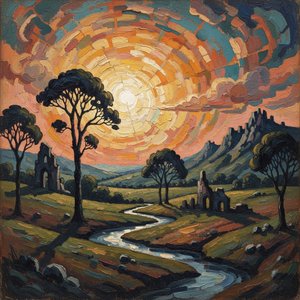
While his critical scope was broad, encompassing Italian and French painting alongside British art, it was landscape that consistently drew Clutton-Brock's attention. He wasn’t interested in picturesque prettiness or superficial realism; rather, he sought out works that captured the *essence* of a place – its light, its mood, its very atmosphere. He valued paintings that conveyed not just what was seen, but how it felt to be present within the scene. This fascination led him to explore the concept of aerial perspective, understanding how artists manipulated color and tone to suggest depth and distance, creating a sense of immersion for the viewer. He admired those who could evoke the subtle nuances of weather, the play of light on water, and the quiet dignity of the natural world. For Clutton-Brock, landscape wasn’t simply a subject matter; it was a vehicle for exploring deeper philosophical questions about perception, memory, and the human relationship to nature.
Roger Fry's Influence and the Englishness of Vision
Landscape painting, also known as landscape art, is the depiction in painting of natural scenery such as mountains, valleys, rivers, trees, and forests, especially where the main subject is a wide view—with its elements arranged into a coherent compo...
The profound influence of Roger Fry, the visionary art critic and curator, cannot be overstated when considering Clutton-Brock’s development. Fry, a family friend, instilled in him a belief in the importance of formal analysis – the careful examination of composition, color, and brushwork – as the key to understanding artistic merit. Fry's emphasis on Post-Impressionism also shaped Clutton-Brock’s aesthetic sensibilities, encouraging him to look beyond representational accuracy towards a more subjective and expressive approach. However, Clutton-Brock wasn’t simply a disciple of Fry; he developed his own distinct voice, one that was deeply rooted in the English tradition. He sought to define what constituted an Englishness of vision – a subtle restraint, a preference for understated beauty, and a deep connection to the land. This pursuit is evident in his championing of artists who captured the unique qualities of the British countryside, its gentle hills, its muted light, and its melancholic atmosphere.
Beyond Criticism: Blake, Murder Mysteries & a Life in Academia
Clutton-Brock’s intellectual curiosity extended far beyond the realm of contemporary art. His biography of William Blake, published in 1933, demonstrated his ability to engage with complex historical figures and offer fresh insights into their work. Perhaps surprisingly, he also penned a detective novel, “Murder at Liberty Hall” (1941), revealing a playful side and a keen understanding of narrative structure. This foray into fiction suggests a mind that appreciated the power of storytelling and the importance of carefully constructed detail. His appointment as Slade Professor of Fine Art at Cambridge from 1955 to 1958 further solidified his position as a leading intellectual figure, allowing him to mentor generations of aspiring artists and scholars. This period saw him actively shaping artistic education, promoting his values of rigorous analysis and thoughtful observation.
Clutton-Brock’s Legacy: A Champion of Subtle Realism
Alan Clutton-Brock died in 1976, leaving behind a substantial body of critical writing that continues to resonate today. He wasn't a revolutionary figure who sought to overthrow established norms; rather, he was a discerning advocate for quality, subtlety, and intellectual honesty. His legacy lies in his ability to articulate the nuances of artistic vision, to champion artists who prioritized form over fashion, and to remind us of the enduring power of landscape painting. He encouraged viewers to look beyond the surface, to appreciate the delicate interplay of light and shadow, and to find beauty in the quiet dignity of the natural world. His work serves as a powerful reminder that true artistic merit lies not in sensationalism or novelty, but in the ability to capture the essence of experience with grace and intelligence.