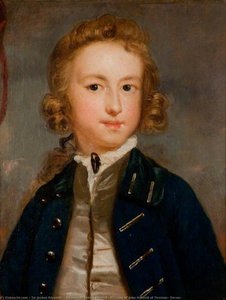
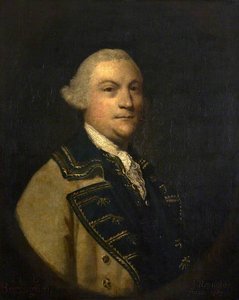
The Rise of Hoppner: From Royal Chorister to Leading Portraitist
 Wikipedia: John Hoppner
John Hoppner (4 April 1758 – 23 January 1810) was an English painter, much influenced by Joshua Reynolds, who achieved fame as a colourist. == Early life == Hoppner was born in Whitechapel, London, the son of German parents – his mother was one o...
John Hoppner’s ascent within the competitive world of late 18th and early 19th-century British portraiture is a story steeped in both talent and fortunate circumstance. Born in Whitechapel, London, in 1758, his origins were somewhat unusual for an artist who would become so closely associated with the aristocracy. His parents, German émigrés employed at the royal palace – his mother as one of George III’s attendants – provided a crucial early connection to the court. Rumours, though unsubstantiated, even hinted at a paternal link to the King himself, adding an intriguing layer to his biography and perhaps contributing to the patronage he would later receive. This initial proximity afforded young Hoppner opportunities unavailable to many aspiring artists; he was educated as a chorister at the royal chapel, receiving a solid foundation that nurtured both discipline and an appreciation for refined aesthetics.
However, it was his demonstrable artistic inclination that ultimately shaped his destiny. In 1775, Hoppner entered the Royal Academy, embarking on formal training under the established conventions of the time. His early work showed promise, culminating in a silver medal awarded in 1778 for drawing from life – a significant achievement signaling his burgeoning skill. While initially drawn to landscape painting, the practical realities of earning a livelihood soon steered him towards portraiture, a genre that offered more immediate and consistent financial rewards. This transition proved remarkably successful; within a short period, Hoppner began attracting commissions from increasingly prominent sitters, establishing himself as a rising star in a field dominated by established masters like Joshua Reynolds.
Patronage and Position: Navigating the Georgian Court
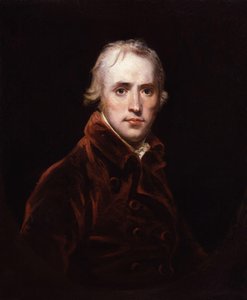 John Hoppner
John Hoppner (1758-1810) was a celebrated English portrait painter known for his vibrant colors & depictions of British royalty, women, and children. Explore his masterpieces & legacy at ArtsDot.
The Georgian court was a complex ecosystem of power, influence, and social maneuvering. For an artist to thrive, securing the favor of key patrons was paramount. Hoppner proved adept at navigating this intricate landscape, cultivating relationships with members of the royal family and the upper echelons of British society. The Prince of Wales (later George IV) became a particularly enthusiastic supporter, commissioning numerous portraits and actively promoting Hoppner’s work within his circle. This association was not merely transactional; it reflected a genuine appreciation for Hoppner's artistic abilities and a shared sensibility regarding style and presentation.
Beyond the royal family, Hoppner attracted commissions from influential figures such as Lord Rodney and Lord Nelson – men whose military achievements embodied British national pride. These portraits weren’t simply representations of individuals; they were carefully constructed statements of status, power, and allegiance. Hoppner understood this implicitly, imbuing his subjects with a dignity and authority that resonated with their public image. His success wasn't solely due to royal connections; he possessed an innate ability to capture the essence of his sitters, conveying not just physical likeness but also personality and social standing. This talent made him highly sought after by those eager to project a particular image to the world.
Hoppner’s Style: Colour, Technique, and Reynolds' Influence
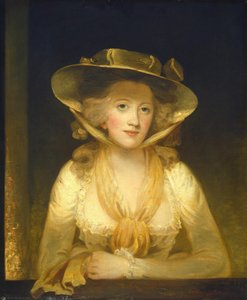 Lady Cunliffe
Admire John Hoppner’s ‘Lady Cunliffe,’ a stunning 1782 neoclassical portrait. Explore its rich colors, elegant details & historical significance – a captivating piece of art history.
John Hoppner’s artistic style was deeply rooted in the traditions established by Joshua Reynolds, yet he developed a distinctive voice that set him apart. Like Reynolds, Hoppner prioritized elegance, refinement, and a flattering portrayal of his sitters. However, while Reynolds often emphasized grand historical narratives or allegorical symbolism, Hoppner focused primarily on capturing the individual character and social presence of those he painted.
His mastery of colour was particularly noteworthy. He employed a vibrant palette, skillfully layering tones to create luminous skin textures and rich fabrics. This emphasis on colour, combined with his fluid brushwork, resulted in portraits that possessed a remarkable sense of life and immediacy. While some critics later noted the deterioration of certain works due to the mediums he used, contemporary accounts consistently praised the brilliance and harmony of his colouring. Hoppner’s technique involved a delicate balance between smooth, polished surfaces and more textured passages, creating a dynamic interplay of light and shadow that drew the viewer's eye. He wasn’t afraid to experiment with different approaches, adapting his style to suit the individual characteristics of each sitter.
Representing Society: Portraits as Reflections of Status and Identity
The portraits produced by John Hoppner offer a fascinating glimpse into the social fabric of late Georgian Britain. His sitters were predominantly members of the aristocracy, military elite, and wealthy merchant classes – individuals who defined the cultural landscape of the era. These paintings weren’t merely decorative objects; they served as powerful symbols of status, wealth, and lineage.
Consider Lady Cunliffe, painted in 1782. The neoclassical elegance of her pose, attire, and setting speaks volumes about her social standing and refined taste. Similarly, his portrait of Beilby Porteus, a respected clergyman, conveys an air of intellectual authority and moral gravitas. Even portraits like that of William Pitt the Younger, Prime Minister, are less about individual personality and more about projecting an image of strength, leadership, and national importance. Hoppner’s ability to capture these nuances – the subtle gestures, the carefully chosen accessories, the expressive gaze – elevated his work beyond mere representation. He understood that a portrait was not simply *of* someone; it was a statement *about* them.
Beyond Likeness: Hoppner’s Contribution to British Artistic Culture
John Hoppner's influence extended beyond the individual portraits he created. His success helped solidify the position of British portraiture on the European stage, demonstrating that artists working within Britain could rival their continental counterparts in terms of skill and sophistication. He fostered a sense of national artistic pride, contributing to a growing appreciation for homegrown talent.
His dedication to capturing the essence of his sitters, combined with his mastery of colour and technique, left an indelible mark on British art history. While he may not have achieved the same level of theoretical renown as Reynolds, Hoppner’s portraits remain compelling testaments to a bygone era – windows into the lives, values, and aspirations of those who shaped Georgian Britain. His legacy continues to resonate today, inspiring artists and captivating collectors with their enduring elegance and refined beauty.
Collecting Hoppner Today: A Legacy of Elegance and Refinement
For discerning collectors, acquiring a work by John Hoppner represents more than simply owning a beautiful painting; it’s an investment in a significant piece of British cultural heritage. His portraits offer a unique insight into the social dynamics and aesthetic sensibilities of the late Georgian period, providing a tangible connection to a fascinating era.
The enduring appeal of Hoppner's work lies in its ability to transcend time. The vibrant colours, elegant compositions, and masterful technique continue to captivate viewers centuries after their creation. As interest in British art continues to grow, Hoppner’s paintings are increasingly recognized for their artistic merit and historical significance. ArtsDot.com offers a curated selection of high-quality reproductions of his masterpieces, allowing collectors to experience the beauty and elegance of Hoppner's work firsthand. Whether you seek a striking centrepiece for your home or a valuable addition to your collection, John Hoppner’s portraits are sure to inspire and delight.