Early Life & Artistic Foundations: A Noble Lineage
Alexei Petrovich Bogolyubov, born in 1824 into a family steeped in Russian intellectual and artistic tradition, was destined for a life intertwined with beauty and observation. His lineage—descended from the writer Alexander Radishchev, a figure known for his critiques of societal injustice—instilled within him a sensitivity to the world around him, a quality that would profoundly shape his artistic vision. Unlike many artists who rose from humble beginnings, Bogolyubov’s privileged upbringing afforded him access to education and experiences that nurtured his talent from an early age. This foundation wasn't merely one of comfort; it was imbued with a sense of responsibility, a subtle call to reflect the realities of his time through the lens of aesthetic expression. His initial artistic training began privately, laying the groundwork for a career that would seamlessly blend meticulous realism with the emotive power of Romanticism.
From Maritime Scenes to Volga River Views: Bogolyubov’s Evolving Style
A landscape is the visible features of an area of land, its landforms, and how they integrate with natural or human-made features, often considered in terms of their aesthetic appeal. A landscape includes the physical elements of geophysically define...
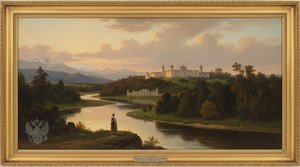
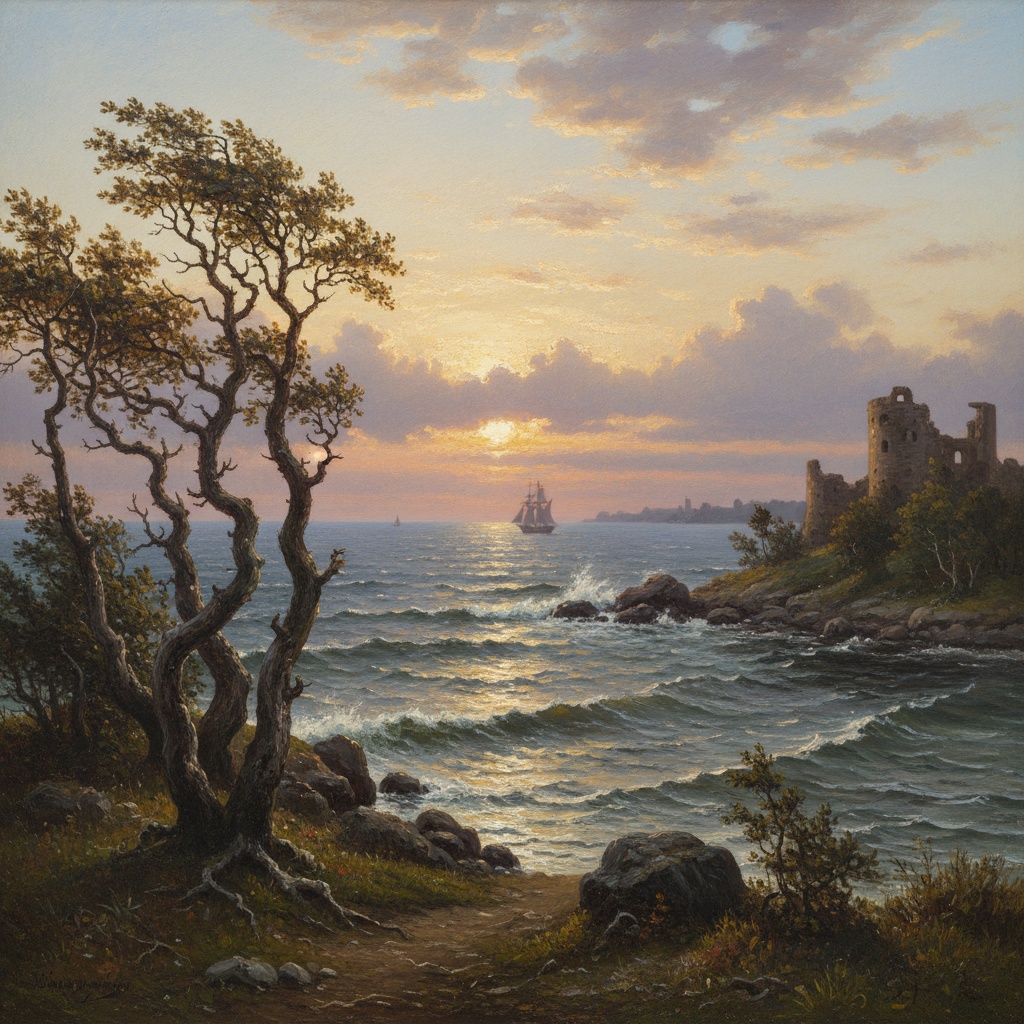
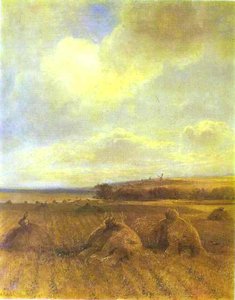
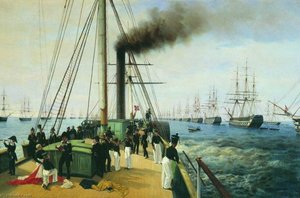
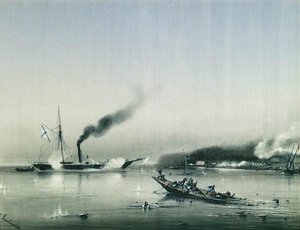
Bogolyubov's artistic journey wasn’t defined by immediate mastery but rather by a gradual evolution, a deepening understanding of light, form, and atmosphere. He initially gravitated towards maritime scenes, perhaps influenced by his own involvement as a professional sailor and military hydrographer. These early works demonstrate a remarkable technical skill—a precise rendering of ships, waves, and the interplay of sunlight on water. However, it was his later focus on the landscapes of the Volga River that truly cemented his reputation. The Volga, Russia’s great river, became more than just a subject; it was a symbol of national identity, a source of spiritual resonance, and a canvas upon which Bogolyubov painted not merely what he *saw*, but how he *felt*. His paintings from this period are characterized by a quiet dignity, a sense of vastness that captures the soul of the Russian countryside. The transition wasn’t abrupt; rather, it was a natural progression—a move from depicting the dynamic energy of the sea to capturing the serene majesty of inland Russia.
The Influence of the Barbizon School & European Travels
Magical realism, magic realism, or marvelous realism is a style or genre of fiction and art that presents a realistic view of the world while incorporating magical elements, often blurring the lines between speculation and reality. Magical realism is...
While firmly rooted in Russian artistic traditions, Bogolyubov actively sought inspiration abroad. His travels through Italy, Switzerland, and Germany exposed him to a wealth of artistic styles, but it was his time in France that proved particularly transformative. There, he forged connections with the artists of the Barbizon School—a group renowned for their plein air painting and their commitment to depicting nature with honesty and directness. Figures like Eugène Isabey and Andreas Achenbach became mentors, guiding Bogolyubov towards a more nuanced understanding of light and color. The influence of Jean-Baptiste-Camille Corot is particularly evident in his later works—a shared appreciation for atmospheric perspective and the subtle gradations of tone that evoke mood and emotion. This wasn’t simply imitation; Bogolyubov absorbed these European techniques, adapting them to his own unique vision and infusing them with a distinctly Russian sensibility.
Realism, Romanticism, and the Russian Landscape: Defining Characteristics
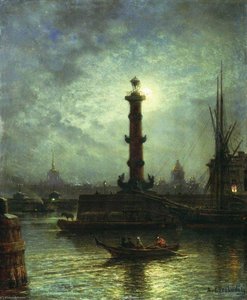
Defining Bogolyubov's style as strictly ‘Realist’ or ‘Romantic’ feels inadequate. He existed in a fascinating space *between* these movements, skillfully synthesizing their strengths. His paintings are undeniably realistic—meticulously detailed depictions of ships, buildings, and natural elements. Yet, they transcend mere documentation. There is an emotional depth, a sense of longing and nostalgia that speaks to the Romantic sensibility. His landscapes aren’t simply representations of places; they are imbued with feeling. The muted tones, the soft lighting, and the careful composition all contribute to this evocative quality. He wasn't interested in grand narratives or dramatic gestures; instead, he focused on capturing the quiet beauty of everyday life—a coastal mill scene, a bustling harbor, a tranquil riverbank. This ability to find poetry in the mundane is what sets him apart. The Russian landscape itself played a crucial role. It wasn’t merely a backdrop but an active participant in his art—a source of inspiration and a reflection of national identity.
Bogolyubov's Legacy: A Bridge Between Traditions & Lasting Impact
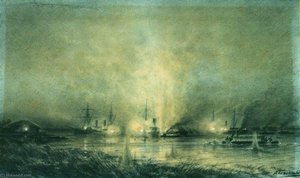
Alexei Bogolyubov’s contribution to Russian art extends beyond the beauty of his paintings. He was not only an accomplished artist but also a dedicated collector, educator, and founder of the Society of Russian Artists in Paris—an organization that played a vital role in promoting Russian art abroad. His extensive series of battle paintings, renowned for their historical accuracy and dramatic flair, remain unsurpassed in their depiction of naval warfare. More importantly, he bridged the gap between academic traditions and the emerging trends of plein air painting, influencing generations of artists to come. Bogolyubov’s work continues to resonate today—a testament to his skill, sensitivity, and enduring vision. His paintings offer a glimpse into 19th-century Russia, capturing not just its physical beauty but also its spirit and soul. Discover the captivating world of Alexei Bogolyubov at ArtsDot, where you can explore high-quality reproductions of his masterpieces and bring the timeless elegance of Russian art into your home.