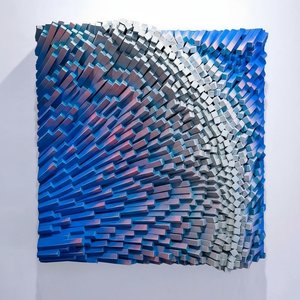
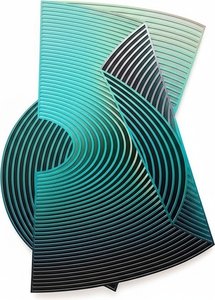
Defining Contemporary Abstraction: From Geometric Precision to Emotional Expression
Abstract art uses visual language of shape, form, color, and line to create a composition which may exist with a degree of independence from visual references in the world. Abstract art, non-figurative art, non-objective art, and non-representational...
To understand the profound impact of contemporary abstract art within a professional interior, one must first grasp its departure from the literal. Unlike representational art, which seeks to mirror the visible world through perspective and anatomical accuracy, abstraction utilizes a specialized visual language of shape, form, color, and line to create compositions that exist with independence from external references. This movement represents a spectrum of human experience, ranging from the mathematical purity of Geometric Abstraction to the visceral, uninhibited energy of Abstract Expressionism.
In the realm of geometric abstraction, artists like Auguste Herbin and Sol LeWitt pioneered a world stripped to its essential forms. Here, lines and shapes resonate with a structural logic, offering a sense of universal order and intellectual rigor. This style is particularly effective in modern corporate environments where clarity, balance, and stability are paramount. Conversely, the Abstract Expressionist tradition—emerging from the post-war New Naz York School with figures such as Jackson Pollock and Mark Rothko—embraces subjectivity and emotion. These works act as a visceral outpouring of the human spirit, utilizing spontaneous brushwork and monumental scales to invite a primal, emotional connection from the viewer. For the designer, choosing between these two poles is not merely an aesthetic decision but a strategic one, defining whether a space should evoke contemplative calm or dynamic energy.
Strategic Integration: Utilizing Large-Scale Abstract Works in Hotel and Corporate Design
![Abstract Composition [triptych]](/media/artworks/images/thumbnails/e5/3d/e53db42ea02644b9a8e722f9d4dd3742.jpg) Abstract Composition [triptych]
Abstract Composition [triptych]Abstract Composition [Triptych] by Vaclav Vytlacil (1937). Explore this dynamic black & white triptych featuring bold lines, textures & geometric shapes. A key example of American modernism.
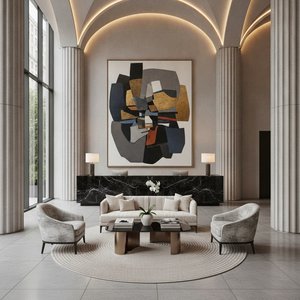
For the hospitality professional, art serves as more than decoration; it is a fundamental component of brand identity and spatial navigation. Large-scale abstract works possess the unique ability to anchor expansive lobbies, define corridors, and transform sterile corporate halls into curated experiences. When integrated thoughtfully, these pieces act as focal points that command attention without overwhelming the senses, providing a sophisticated backdrop that complements modern architectural elements.
The strategic use of abstraction allows for a level of versatility that figurative art often lacks. Because abstract compositions are not tethered to specific narratives or recognizable figures, they can seamlessly adapt to various interior themes—from the minimalist Scandinavian aesthetic to the opulent textures of Art Deco. In hotel design, where the goal is often to create a sanctuary from the chaos of travel, the clean lines of geometric abstraction can provide a much-needed sense of architectural stability. For corporate spaces, the ability to use color and form to influence mood—using deep forest greens for focus or vibrant ochres for creativity—turns the walls themselves into tools of environmental psychology.
Texture and Dimension: The Impact of Relief, Impasto, and 3D Abstract Panels
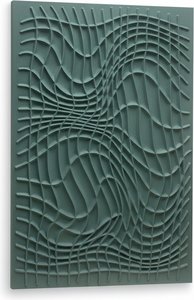
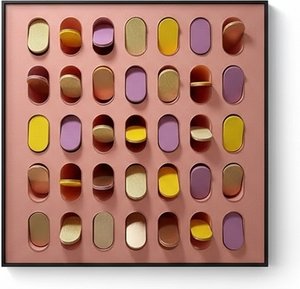 Elegant Abstract Relief Wall Art - Handmade MDF Wooden Decorative Painting | Modern Geometric Canvas Print for Living Room Bedroom Home Decor
Modern Geometric Relief Wall Art – A Celebration of Texture and Color This striking piece embodies the elegance of minimalist design infused with tactile richness. Crafted from sustainably sourced MDF (Medium Density Fiberboard) and adorned with acry...
The true luxury of a hand-painted reproduction lies in its tactile richness. In an era dominated by flat, digital prints, the introduction of physical depth through texture can elevate a room from standard to extraordinary. Contemporary abstract art frequently utilizes relief techniques and impasto to create a three-dimensional dialogue with light and shadow. When light hits a textured surface—such as a handmade MDF relief or an oil painting with heavy, visible brushstrokes—it creates a shifting landscape of highlights and lowlights that changes throughout the day.
Modern decorative panels, such as those featuring 3D wave-like shapes or geometric grids, offer a sophisticated way to introduce movement into a space. These pieces, often crafted from durable materials like MDF or specialized composites, provide an invitation to visual curiosity. The interplay between smooth acrylic resin finishes and the rugged grain of textured surfaces adds an unexpected dimension to contemporary interiors. For designers working with high-end hospitality projects, selecting works that offer this level of tactile complexity ensures that the art remains a captivating, living element of the architecture rather than a static ornament.
Curating for Scale: Multi-Panel Layouts and Architectural Mural Solutions
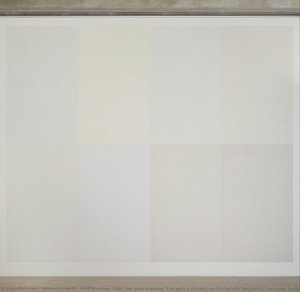 Wall drawing #338: Two part drawing. The wall is divided vertically into two parts. Each part is divided horizontally and vertically into four equal parts. 1st part: Lines in four directions, one direction in each quarter. 2nd part: Lines in four dir....
Sol LeWitt’s Wall Drawings: A Blueprint for Conceptual Minimalism The wall drawing “Wall Drawing #338” embodies the core tenets of Solomon Lewitt's groundbreaking artistic philosophy—a movement that irrevocably altered the landscape of 20th-century a...
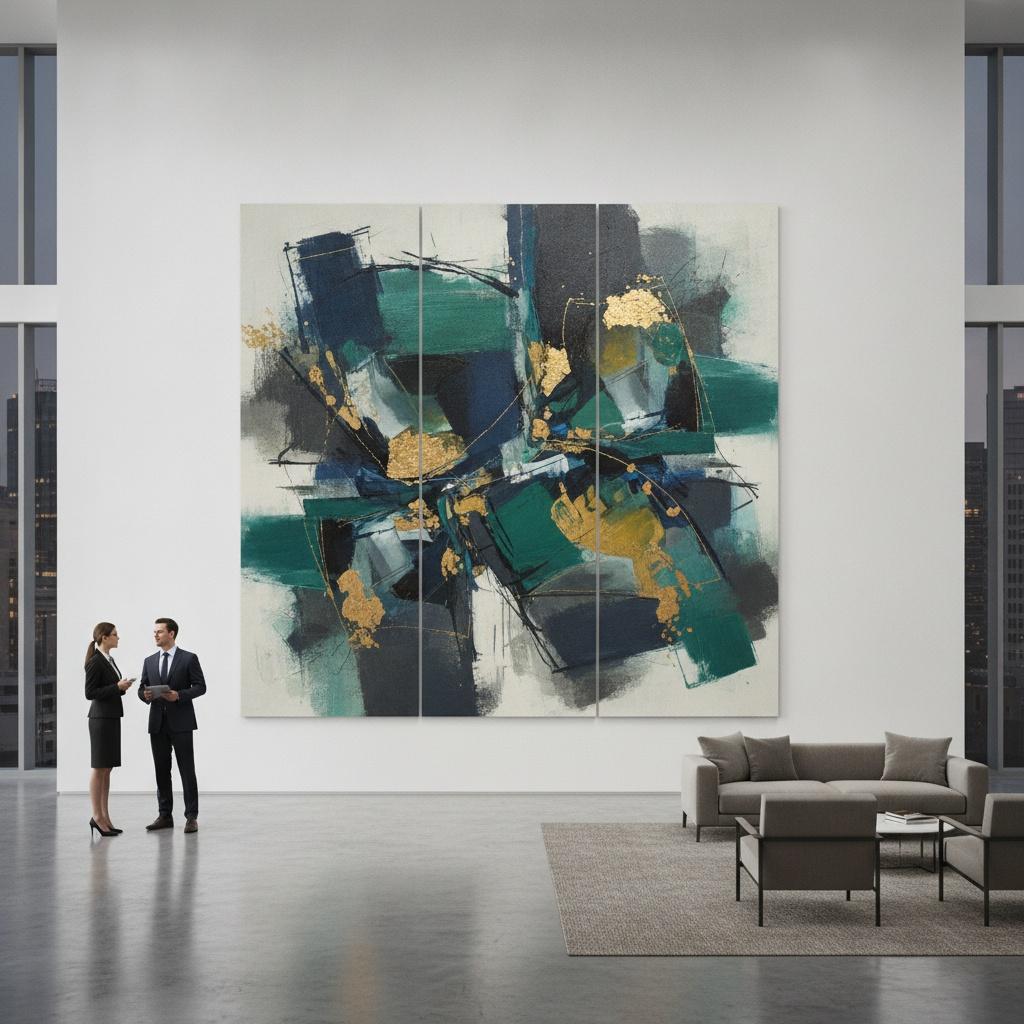
One of the most significant challenges in large-scale interior design is the management of vast, uninterrupted wall surfaces. A single painting, no matter how grand, can sometimes feel isolated on an expansive hotel wall or a wide corporate mezzanine. This is where the multi-panel trend becomes an essential tool for the professional curator. By splitting a singular abstract composition across three, four, or even five panels, a designer can create a rhythmic, cohesive flow that guides the eye across the architecture.
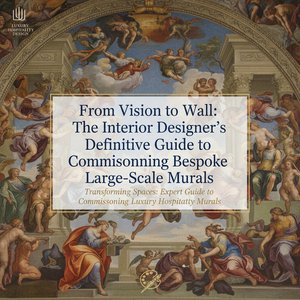
These multi-panel arrangements are particularly effective in staircases or long corridors, where they mimic the movement of the viewer. Furthermore, for truly monumental requirements, architectural murals and ceiling frescoes offer a way to completely redefine a space. These large-format works, painted on massive canvas rolls, allow for the recreation of historical grandeur—such as the intricate beauty of a Renaissance ceiling—within a modern context. Whether through the structured elegance of a multi-panel geometric set or the immersive nature of a custom mural, scaling art to match the architectural volume is key to achieving a professional, high-end finish.
Procurement Essentials: Selecting Between Hand-Painted Oils, Giclée Prints, and Studio Collectibles
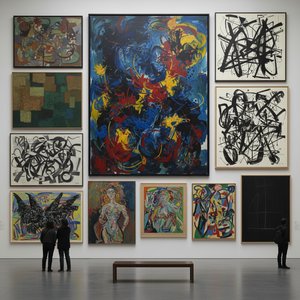 Abstract Expressionism's 10 Defining Masterpieces |
Introduction To gaze upon these ten canvases is to step into a realm where emotion reigns supreme, where the very act of painting became a visceral outpouring of the human spirit. The Abstract Expressionist movement, born in the aftermath of World Wa...
From a procurement perspective, selecting the right medium requires balancing aesthetic intent with budgetary and logistical realities. The choice between Handmade Oil Reproductions and Giclée Prints is a decision regarding the "soul" of the space. A hand-painted oil reproduction, executed on 100% cotton canvas by trained artists, offers the incomparable depth of real pigment, visible brushstrokes, and an impasto texture that digital printing simply cannot replicate. These are bespoke pieces, created to order, offering the highest level of prestige for signature suites or executive boardrooms.
In contrast, Giclée prints provide a highly accurate, durable, and cost-effective solution for high-volume requirements across larger areas, such as guest room corridors or secondary lounge spaces. While they lack the tactile depth of oil, their archival quality ensures longevity. For those seeking a middle ground, Studio Art Collectibles offer curated, ready-to-ship pieces that maintain rigorous academic standards while allowing for faster dispatch. Each procurement manager must weigh the need for the unique, textured presence of an oil painting against the efficiency and scalability of high-quality prints to meet project timelines and budget constraints.
Operational Logistics: Managing Bulk Orders, Custom Sizing, and Global Delivery
For the hospitality professional, the success of an art installation depends as much on operational reliability as it does on aesthetic quality. Managing large-scale projects requires a supplier capable of handling complex logistics, including custom sizing, multi-panel coordination, and international shipping. A reliable partner must provide clear documentation, such as VAT-compliant invoices and customs support, to ensure seamless integration into corporate accounting and global supply chains.
Efficiency in the procurement flow—from the initial digital mockup for color matching to the final delivery via trusted carriers like DHL or FedEx—is critical. The ability to track orders in real-time and approve pre-shipment photographs ensures that the final product meets the exact specifications of the design plan, reducing the risk of costly on-site errors. In a professional landscape where time is a premium, the hallmark of a superior art supplier is the ability to deliver large-scale, high-quality, and customized solutions with predictable timelines and global reach, ensuring that the vision of the designer is realized without operational friction.