




Strategic Scale: Using Large-Format Art to Create the Illusion of Depth
 Navigating Scale and Perception: Abstract Art Strategies for Maximizing Impact in Compact Interior Spaces
The Illusion of Space: Mastering Scale & Proportion with Abstract Art Omega 5 (Traps) Paul Klee’s ‘Omega 5 (Traps)’ – a surreal 1927 oil painting blending abstraction & expressionism. Layered reds, symbolic forms, and unique texture create a captivat...
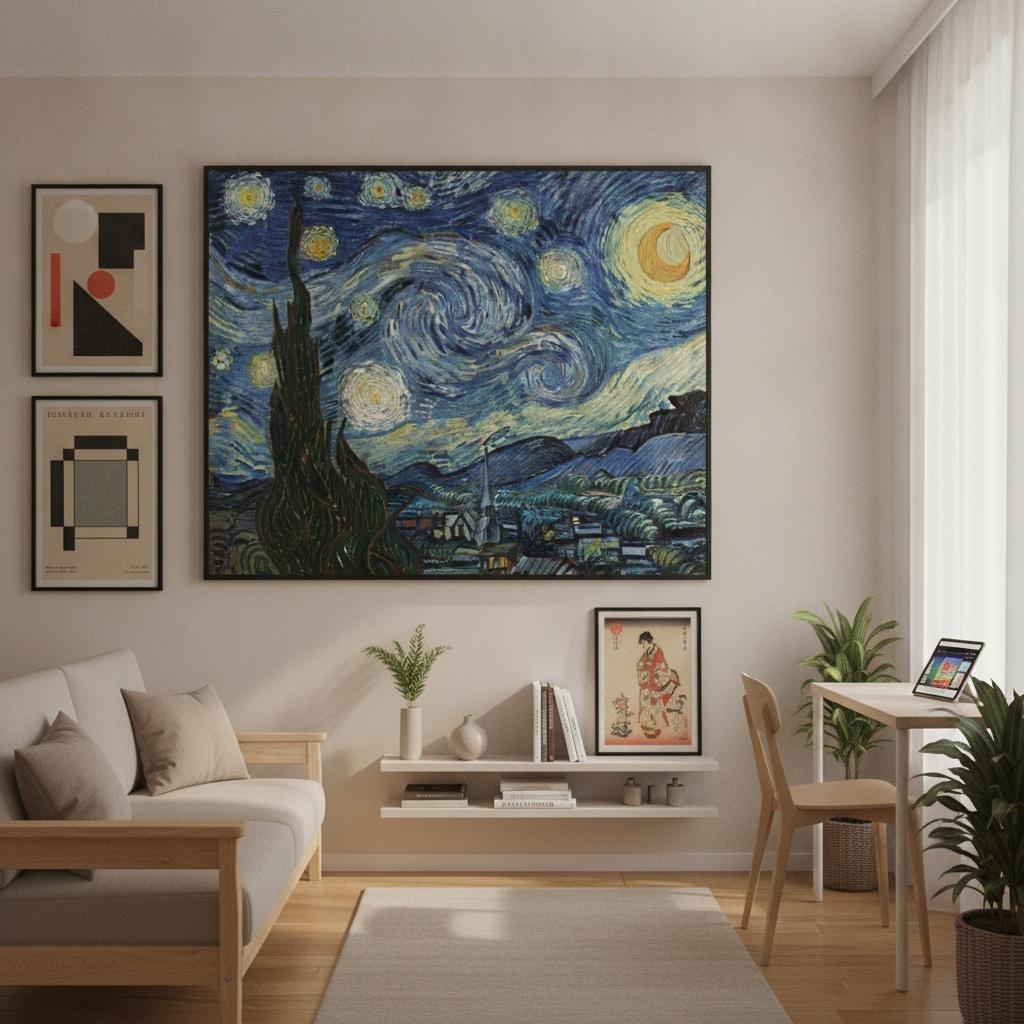
In the delicate architecture of a studio apartment, where boundaries between sleeping, dining, and living quarters are often blurred, the decorator’s greatest challenge is the management of perception. A common misconception suggests that small rooms demand diminutive decor; however, true mastery lies in the strategic use of scale to manipulate the viewer's sense of distance. By introducing large-format art reproductions, a designer can effectively push back the perceived limits of a wall, creating a window into an expanded reality. This technique draws inspiration from the historical use of perspective in Renaissance frescoes, where expansive vistas were used to transform enclosed spaces into boundless landscapes.
When a single, commanding canvas is placed on a primary focal wall, it acts as an anchor for the entire room, preventing the eye from feeling trapped by the physical constraints of the floor plan. A substantial landscape or a sweeping abstract piece provides a destination for the gaze, offering a sense of liberation. For the professional decorator managing high-volume projects, selecting pieces that utilize deep tonal ranges and atmospheric perspective is essential. This approach does not merely decorate a surface; it redefines the room's volume, turning a compact urban dwelling into a space that feels curated, intentional, and significantly more expansive than its square footage suggests.
Texture and Dimension: Incorporating Relief and Sculptural Wall Panels
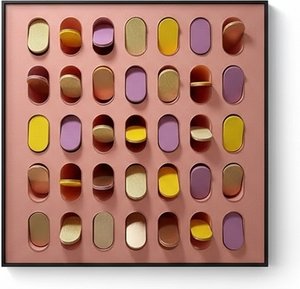 Elegant Abstract Relief Wall Art - Handmade MDF Wooden Decorative Painting | Modern Geometric Canvas Print for Living Room Bedroom Home Decor
Modern Geometric Relief Wall Art – A Celebration of Texture and Color This striking piece embodies the elegance of minimalist design infused with tactile richness. Crafted from sustainably sourced MDF (Medium Density Fiberboard) and adorned with acry...
Beyond the mere manipulation of scale, the introduction of tactile richness can prevent a small space from feeling visually flat or claustrophobic. In contemporary interior practice, the boundary between two-dimensional painting and three-dimensional sculpture is increasingly fluid. Modern geometric relief wall art, for instance, utilizes materials such as MDF and acrylic resin to create a play of light and shadow that breathes life into static surfaces. These textured elements—ranging from subtle impasto brushstrokes in oil reproductions to the structured precision of rose gold stainless steel geometric panels—add a layer of sensory complexity that engages the inhabitant on a deeper level.
The interplay of light across a textured surface creates a dynamic environment that changes throughout the day, mirroring the shifting natural light within an apartment. For those seeking to elevate a minimalist aesthetic, relief works offer a sophisticated way to introduce interest without the clutter of physical objects. The tactile nature of these pieces—the velvety smoothness of resin or the sharp, clean lines of metalwork—provides a necessary counterpoint to the smooth surfaces typical of modern urban furniture. By integrating art that possesses physical depth, the decorator creates a multi-sensory experience that makes even the most modest studio feel like a gallery of curated textures.
The Multi-Panel Advantage: Utilizing Triptychs and Polyptychs for Wide Walls
 Wall drawing #338: Two part drawing. The wall is divided vertically into two parts. Each part is divided horizontally and vertically into four equal parts. 1st part: Lines in four directions, one direction in each quarter. 2nd part: Lines in four dir....
Sol LeWitt’s Wall Drawings: A Blueprint for Conceptual Minimalism The wall drawing “Wall Drawing #338” embodies the core tenets of Solomon Lewitt's groundbreaking artistic philosophy—a movement that irrevocably altered the landscape of 20th-century a...
One of the most effective tools in the professional decorator's repertoire for managing long, narrow walls is the multi-panel arrangement. The trend of splitting a singular, cohesive image across three, four, or even five panels—known as triptychs or polyptychs—serves a dual purpose: it accommodates wide architectural spans and introduces a rhythmic, modern energy to the room. This method allows for a grander visual impact than a single frame could achieve, effectively breaking up the monotony of a long wall without overwhelming the limited floor space with heavy furniture.
These multi-panel configurations are particularly adept at guiding the eye along a path, creating a sense of movement that mimics the flow of a larger hall. From a technical standpoint, ensuring that colors and brushstrokes transition seamlessly across every panel is paramount to maintaining the integrity of the composition. This architectural approach to art allows for a customized fit, where the artwork can be scaled to match the specific proportions of a staircase or a dining alcove. For large-scale projects, such as hospitality or corporate interiors, this modularity offers unparalleled flexibility in achieving a cohesive, high-impact aesthetic that feels both contemporary and structurally integrated.
Curating Color Palettes: Selecting High-Impact Tones for Compact Interiors
 Impressionistic Landscapes: 10 Masterpieces That Changed Art & Decor
Introduction To gaze upon these ten canvases is to step directly into a world transformed by light, color, and an unprecedented embrace of the fleeting moment. The Impressionistic Landscape movement wasn’t merely a shift in painting technique; it was...
Color serves as the emotional heartbeat of any interior design, and in a studio apartment, its application must be handled with extreme precision. The selection of a color palette can either compress a room or expand it. Cool tones, such as soft blues, muted greens, and airy greys, are traditionally utilized to recede into the background, creating an atmosphere of tranquility and openness. Conversely, high-impact, warm tones—rich ochres, deep terracottas, or vibrant golds—can be used strategically to create focal points that command attention and inject vitality into a neutral environment.
A sophisticated approach involves using art to bridge the gap between the room's permanent fixtures and its decorative accents. By selecting reproductions that echo the existing color scheme of the furniture while introducing subtle, unexpected pigments, a decorator can achieve a sense of "total design." This requires an eye for color analysis, ensuring that the vibrancy of a piece does not clash with the surrounding architecture but rather enhances it. Whether through the light-drenched Impressionistic palettes of Monet or the bold, saturated tones of modern abstract works, the right color choice transforms art from a mere accessory into a fundamental component of the room's atmospheric identity.
Customization and Integration: Tailoring Art to Specific Architectural Layouts
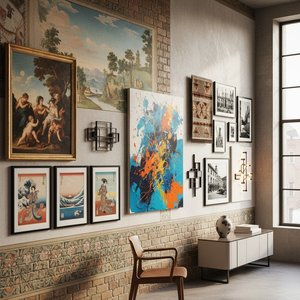 Transforming Spaces: A Comprehensive Exploration of Wall Decor Through Art History & Contemporary Practice
The Historical Canvas: Wall Decor from Ancient Frescoes to Victorian Papers Wikipedia: Interior design Interior design is the art and science of enhancing the interior of a building to achieve a healthier and more aesthetically pleasing environment f...
The pinnacle of professional decorating is the seamless integration of art into the very fabric of the architecture. This level of customization goes beyond selecting from a catalog; it involves the "remixing" of history and personal narrative to suit a specific site. Through advanced services such as digital mockups, decorators can visualize how a custom-sized commission or a transformed portrait will interact with the unique lighting and dimensions of a client's space before a single drop of paint touches the canvas. This eliminates the uncertainty often associated with large-scale art acquisitions.
From the creation of massive, room-spanning murals that mimic historical ceiling frescoes to the "Period Shift" technique—where modern imagery is reimagined in the style of a 17th-century master—the possibilities for architectural integration are limitless. This bespoke approach allows for the creation of environments that are not only aesthetically pleasing but also deeply personal and historically resonant. For the professional managing large-scale procurement, the ability to rely on a consistent, high-quality supply chain of customizable, hand-painted works ensures that every project, regardless of scale or complexity, can be executed with unparalleled precision and artistic excellence.