The Rebellion Against Tradition: The Birth of the Pre-Raphaelite Brotherhood
 The Pre-Raphaelite Brotherhood: Rediscovering Romanticism, Mythological Depth, and Vivid Detail in Victorian Art
The Rebellion Against Tradition: The Birth of the Pre-Raphaelite Brotherhood In the mid-19th century, the rigid corridors of the British Royal Academy felt increasingly stifling to a group of young, fervent visionaries. Driven by a profound dissatisf...
In the mid-19th century, the rigid corridors of the British Royal Academy felt increasingly stifling to a group of young, fervent visionaries. As revolutions swept across continental Europe in 1848, a different kind of uprising was brewing within London’s art establishment. A small circle of artists—including figures like William Holman Hunt, John Everett Millais, and Dante Gabriel Rossebtti—felt a profound dissatisfaction with the formulaic, dark, and overly academic compositions favored by their predecessors. They viewed the prevailing aesthetic as a decline in artistic standards, a polished but sterile imitation of the masters that had lost its soul to academic artifice.
This group, known as the Pre-Raphaelite Brotherhood (PRB), sought to stage a revolution by looking backward to move forward. Their rebellion was not a rejection of skill, but a yearning for the raw, unadulterated sincerity found in the era before Raphael. They aimed to bypass the idealized, often artificial conventions of the Renaissance and return to the abundant detail and spiritual depth of the Quattrocento. By challenging the Academy's preference for muted tones and staged compositions, these artists sought to reintroduce a sense of moral truth and artistic renewal into the heart of Victorian culture.
Aesthetic Foundations: Meticulous Detail and the Pursuit of Truth to Nature
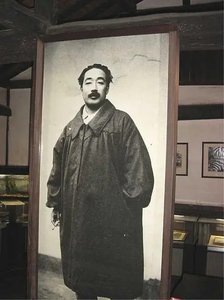 kitahara shikajiro
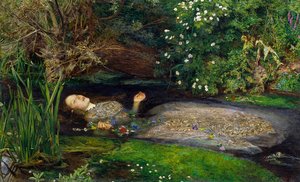
John Everett Millais: A Pre-Raphaelite Pioneer of Light and Nature Born in Southampton on June 8, 1829, John Everett Millais was a pivotal figure in the burgeoning art world of Victorian England. His early life, marked by a prodigious talent nurtured...
At the core of the Pre-Raphaelite mission was an unwavering commitment to "truth to nature." This was not merely a stylistic choice but a moral imperative. Where the Academy encouraged artists to generalize landscapes and figures into idealized forms, the Pre-Raphaelites practiced meticulous observation. Every leaf, every petal, and every ripple in a stream was rendered with an almost unsettling realism. This dedication to detail required a profound engagement with the natural world, treating the canvas as a window into a hyper-vivid reality where nothing was too small to be significant.
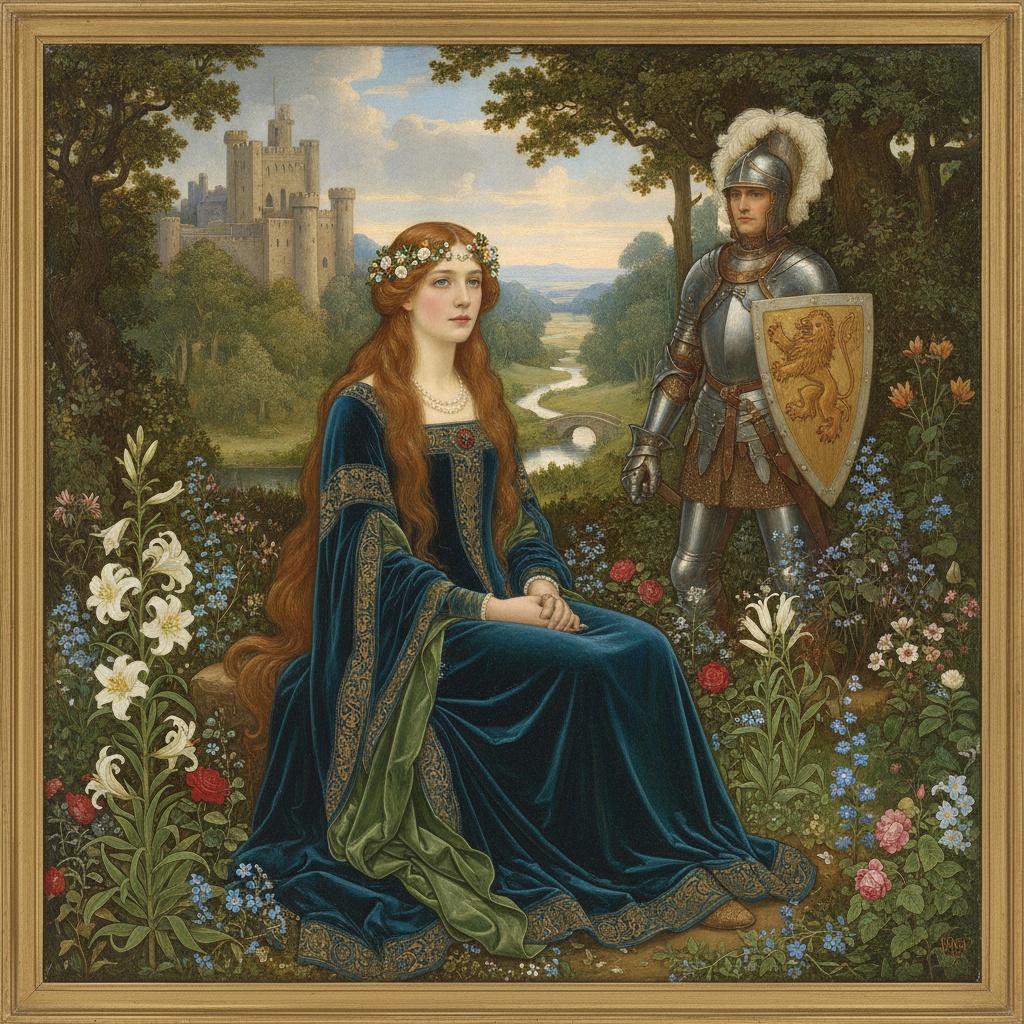
This precision extended beyond the botanical to the human form and texture. The artists employed a technique that prioritized luminous skin tones and the incredibly detailed rendering of fabrics, much like the work seen in Edward Coley Burne-Jones’s later interpretations of mythological scenes. By capturing the subtle gradations of light and the tactile quality of materials—from shimmering golds to heavy velvets—they created works that breathed with a quiet intensity. This level of craftsmanship ensured that their paintings were not just images, but immersive environments that invited the viewer to linger on every meticulously placed brushstroke.
Medievalism and Myth: Reclaiming the Romance of the Past
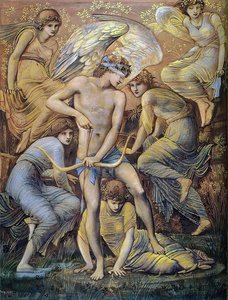 Cupid's Hunting Fields
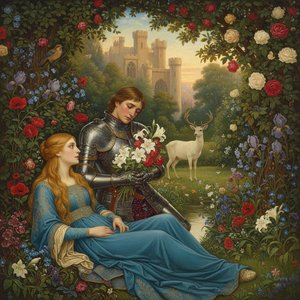
Cupid's Hunting Fields: A Pre-Raphaelite Reverie Edward Coley Burne-Jones’s “Cupid’s Hunting Fields” is more than simply a depiction of a mythological scene; it’s an immersion into the very heart of Pre-Raphaelite ideals – a yearning for beauty, a re...
To escape the industrial grime of the Victorian age, the Pre-Raphaelites turned toward the enchantment of the medieval and mythological worlds. Their art became a portal into a realm where knights, legends, and gods intertwined amidst landscapes of idyllic serenity. This fascination with the past was more than mere nostalgia; it was a way to explore universal themes of love, innocence, and spiritual longing. Works like Burne-Jones’s Cupid’s Hunting Fields exemplify this reverence for medieval art, creating a timeless space where the boundaries between the mortal and the divine are blurred.
This romantic fascination with history allowed artists to weave complex narratives into their canvases. They drew inspiration from the poetry of Dante Alighieri, the legends of King Arthur, and classical antiquity to create works steeped in symbolism. These paintings often featured enigmatic female figures—muses who embodied both earthly sensuality and ethereal beauty—serving as vessels for deep emotional and psychological exploration. Through this lens of medievalism, the Pre-Raphaelites were able to address the tensions of their own era, using the legends of old to comment on the shifting social and moral landscapes of the 19th century.
Mastering Color and Light: The Technical Brilliance of the Pre-Raphaelite Style
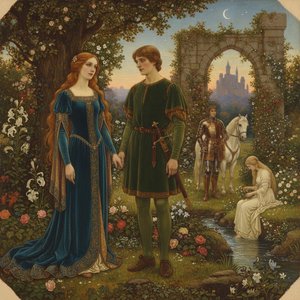 The Pre-Raphaelite Brotherhood: Rediscovering Beauty, Romance, and Medieval Magic in Victorian Art
The Rebellion Against the Academy: A New Vision for Truth and Beauty In the mid-19th century, a quiet storm was brewing within the hallowed halls of the British art establishment. While the Royal Academy of Art stood as a formidable guardian of tradi...
The visual impact of Pre-Raphaelite art is defined by its extraordinary use of color and light. Rejecting the dark, muddy palettes of the academic tradition, these artists embraced a rich, saturated spectrum. They utilized deep greens, warm reds, and brilliant golds to evoke a sense of opulence and otherworldly beauty. This vibrant palette was often achieved through careful layering, ensuring that the colors remained luminous and clear, even in the most complex compositions.
The interplay of light within their works adds a layer of profound mystery and depth. Whether it is the soft shadows that enhance the graceful poses of figures in a mythological scene or the way light drapes over a landscape to suggest a fleeting moment of beauty, the mastery of illumination is a hallmark of the movement. This technical brilliance allowed them to create atmospheres that are at once dreamlike and deeply affecting, using light not just to illuminate subjects, but to evoke specific emotional states—ranging from the quiet intensity of a contemplative stillness to the radiant energy of a sun-drenched garden.
The Legacy of Romanticism: From Rossetti to Waterhouse
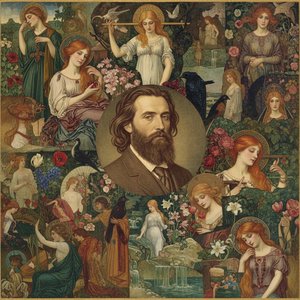 Dante Gabriel Rossetti's 25 Masterpieces: A Journey Through Victorian Art & Symbolism | ArtsDot
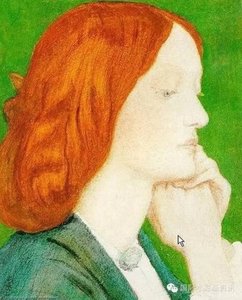
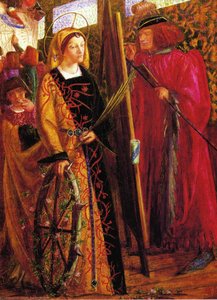
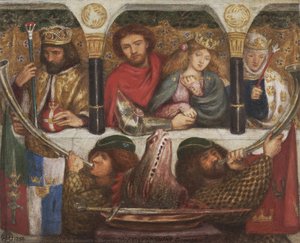
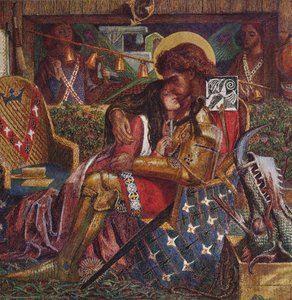
Introduction To embark on a journey through the top 25 artworks of Dante Gabriel Rossetti is to enter a world steeped in beauty, longing, and a profound sense of mystery. These paintings are not merely images; they are portals into the soul of a Vict...
The influence of the Pre-Raphaelite movement extended far beyond its original members, evolving into a broader aesthetic that shaped much of late 19th-century art. The movement’s emphasis on symbolism and emotional honesty paved the way for Aestheticism, a movement that championed "art for art's sake." Figures like Dante Gabriel Rossetti became icons of this new era, with his works serving as bridges between Romanticism and Symbolism, blending literature and painting into a seamless, evocative experience.
As the decades progressed, the principles of the Brotherhood were refined and carried forward by "modern" Pre-Raphaelites such as John William Waterhouse. His works, like Diogenes or Gathering Summer Flowers in a Devonshire Garden, demonstrate how the movement's core values—vivid detail, mythological depth, and a romanticized view of nature—could endure long after the original Brotherhood had disbanded. The legacy of the Pre-Raphaelites remains visible today in any art that dares to prioritize imagination, individual emotion, and a profound reverence for the beauty of the natural and historical worlds.
Discover the Timeless Beauty of the Masters at ArtsDot.com
At ArtsDot.com, we specialize in bringing these extraordinary historical visions into the modern space. Whether you are a professional decorator furnishing a luxury hotel or a collector seeking a centerpiece for a private estate, our studio offers unparalleled access to museum-quality reproductions. Our master artists hand-paint every oil reproduction on 100% cotton canvas, ensuring that the visible brushstrokes and deep tonal ranges of the Pre-Raphaelite masters are preserved with absolute fidelity. From large-scale architectural murals to custom multi-panel sets for grand staircases, we provide reliable, high-volume solutions for all your fine art needs.