Introduction
To step into the world of Hans Holbein the Younger is to encounter a gaze that never blinks. There is a profound, quiet intensity in his work, a sense that every thread of silk, every glint of gold, and every subtle shadow in a subject's eye has been captured with an almost supernatural precision. As we journey through these twenty-five masterworks, we are not merely looking at portraits; we are witnessing the Northern Renaissance at its most psychologically acute. Holbein did not just paint faces; he mapped the very soul of the Tudor court and the intellectual pulse of Europe.
Born in the artistic crucible of Augsburg and refined in the scholarly atmosphere of Basel, Holbein’s career reached its zenith in the English court of Henry VIII. This was an era of monumental shifts—religious upheaval, political intrigue, and the dawn of humanism. Within this volatile landscape, Holbein acted as a visual chronicler. His brush possessed the unique ability to render the heavy textures of velvet and fur with tactile realism, while simultaneously capturing the fleeting, often guarded, expressions of kings, diplomats, and scholars. He brought a sense of permanence to a world in flux.
These artworks remain deeply meaningful today because they transcend the boundaries of their sixteenth-century origins. In an age of digital snapshots and transient images, Holbein’s commitment to verisimilitude —the pursuit of truth in appearance—offers a grounding experience. We find ourselves drawn to the way he balances the physical weight of his subjects with their internal complexities. There is a haunting, human dignity in his compositions that speaks to our universal desire to be truly seen and remembered.
In the following selection, we will explore the breadth of his genius, from his most iconic royal commissions to his more intimate, character-driven studies. Each piece serves as a window into a vanished world, inviting you to observe the meticulous craftsmanship and the enduring emotional depth that define one of history's greatest masters of portraiture.
Double Portrait of Jean de Dinteville and Georges de Selve (also known as The Ambassadors) - Hans Holbein the Younger
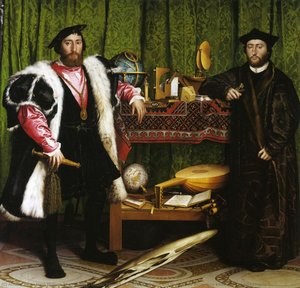 Double Portrait of Jean de Dinteville and Georges de Selve (also known as The Ambassadors) - Hans Holbein the Younger
To stand before a masterpiece is to witness the intersection of human ambition and the inevitable passage of time. In 1533, Hans Holbein the Younger captured this tension perfectly in his Double Portrait of Jean de Dinteville and Georges de Selve (also known as The Ambassadors) . This work stands as a cornerstone of the top 25 artworks of Hans Holbein the Younger due to its unparalleled complexity and technical bravado.
The painting is a sensory feast of Northern Renaissance precision; one can almost feel the heavy weight of the luxurious furs, the cold smoothness of the celestial globes, and the intricate textures of the scientific instruments resting upon the ornate table. Holbein uses a dramatic light source to illuminate the vibrant silks and deep velvets, creating a profound sense of physical presence. Yet, beneath this display of worldly power lies a haunting memento mori —the famous anamorphic skull that challenges our perception. It is a profound meditation on knowledge, religious upheaval, and mortality. Even today, this painting possesses a quiet prestige, capable of transforming any professional or private space into a gallery of deep contemplation and historical grandeur.
Portrait of Nikolaus Kratzer - Hans Holbein the Younger
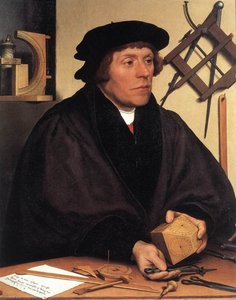
In the Portrait of Nikolaus Kratzer , Hans Holbein the Younger offers far more than a mere likeness; he provides a profound window into the intellectual pulse of the Northern Renaissance. This masterpiece earns its place among the top 25 artworks of Hans Holbein the Younger through its extraordinary ability to merge scientific precision with human intimacy. As we observe the German mathematician immersed in his work, surrounded by the geometric beauty of polyhedral sundials and drafting instruments, we witness the very dawn of modern empirical inquiry.
Holbein’s technical mastery is palpable in the way light dances across the wooden textures and the muted, scholarly palette of deep browns and blacks. The painting invites us to reflect on the dignity of dedicated intellect and the beauty found in meticulous craftsmanship. For the modern collector or professional decorator, this work serves as a timeless anchor for a curated space, bringing an atmosphere of quiet contemplation, historical depth, and sophisticated academic elegance to any contemporary interior.
The Body of the Dead Christ in the Tomb - Hans Holbein the Younger
 The Body of the Dead Christ in the Tomb - Hans Holbein the Younger
To stand before The Body of the Dead Christ in the Tomb is to confront the raw, unshielded reality of mortality. In this haunting masterpiece, Hans Holbein the Younger moves beyond mere portraiture to capture a profound moment of stillness and vulnerability. The painting’s power lies in its unflinching Northern Renaissance realism; the pale, emaciated flesh of Christ, rendered with anatomical precision against dark, earthy tones, creates a visceral tension that is both unsettling and deeply spiritual. It remains a cornerstone of his top 25 works because it transcends religious iconography to touch upon the universal human experience of loss and the heavy silence of death.
The dramatic interplay of light and shadow, highlighting the textures of the wooden tomb and the weight of the deceased figure, offers a masterclass in composition. At ArtsDot.com, we specialize in preserving this intense emotional depth through our handmade oil reproductions. Our artists use meticulous brushwork on 100% cotton canvas to ensure that the somber atmosphere and striking physical textures of Holbein’s original vision are faithfully brought into your professional or private space.
Darmstadt Madonna - Hans Holbein the Younger
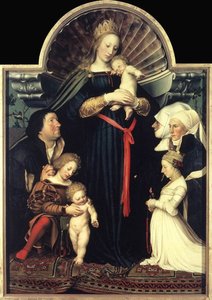 Darmstadt Madonna - Hans Holbein the Younger
There is a profound stillness in the Darmstadt Madonna that transcends its religious origins. Created around 1526, this masterpiece by Hans Holbein the Younger does more than depict the Holy Family; it serves as a window into a moment of eternal devotion. The composition follows a classic pyramidal structure, anchored by the Virgin Mary and the infant Jesus, yet it is the surrounding figures—the family of Jakob Meyer zum Hasen—that breathe human intimacy into the sacred scene.
As you observe the work, notice how Holbein uses chiaroscuro to sculpt flesh and fabric from the shadows. The warm earth tones and shimmering gold highlights create a sense of tactile reality, where every fold of heavy drapery and every subtle facial expression feels present. There is a gaze in this painting that follows you—not with judgment, but with an understanding of human connection. It is a mirror reflecting themes of faith, family, and the continuity of life. To bring a high-quality oil reproduction of this Renaissance treasure into your space is to invite a sense of reverence and historical depth into your daily environment.
The Ambassadors - Hans Holbein the Younger
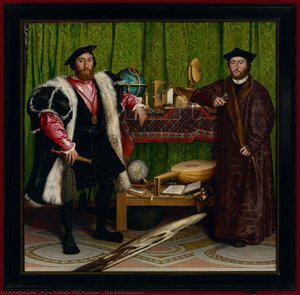 The Ambassadors - Hans Holbein the Younger
To study The Ambassadors by Hans Holbein the Younger is to witness the pinnacle of Northern Renaissance precision. The materiality of this 1533 masterpiece is found in its staggering textures: the heavy, fur-trimmed weight of Dinteville’s black robes and the delicate, shimmering silk of Selve’s attire are rendered with a hyper-realistic clarity that feels almost tactile. Holbein’s revolutionary use of symbolism—from the celestial globes to the haunting, anamorphic skull serving as a memento mori —transforms a diplomatic portrait into a profound philosophical inquiry into mortality and power.
The technical virtuosity required to execute such intricate detail, including the subtle tension of a broken lute string, defines its place among the top 25 artworks of Hans Holbein the Younger. At ArtsDot.com, our mission is to preserve this exact three-dimensional quality for the discerning collector. Through our hand-painted oil reproductions on 100% cotton canvas, we capture every visible brushstroke and tonal depth, ensuring the intellectual majesty and physical presence of Holbein’s genius are brought into your professional or private space with uncompromising authenticity.
Edward, Prince of Wales - Hans Holbein the Younger
 Edward, Prince of Wales - Hans Holbein the Younger
Completed in 1543, the very year of his death, Edward, Prince of Wales stands as a hauntingly beautiful final testament to Hans Holbein the Younger’s unparalleled mastery. This oil on wood masterpiece does more than capture a royal likeness; it freezes a moment of Tudor history with breathtaking precision. As you gaze upon the striking crimson of the Prince's jacket and the crisp, stark white of his collar, you are witnessing the pinnacle of Northern Renaissance realism. Holbein’s technical genius is evident in the way light interacts with the subject's facial features and the subtle, naturalistic inclusion of birds in the background, which adds a layer of organic life to the regal composition.
The meticulous attention to texture and the profound psychological depth found in this work make it a cornerstone among the top 25 artworks of Hans Holbein the Younger . For the modern professional, such a piece serves as more than decoration; the disciplined focus and historical weight required to execute this portrait can inspire an atmosphere of profound sophistication and quiet authority within a high-end home office or executive study.
Christina of Denmark, Ducchess of Milan - Hans Holbein the Younger
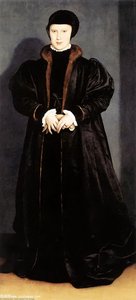 Christina of Denmark, Ducchess of Milan - Hans Holbein the Younger
In the quiet, somber depths of Christina of Denmark, Duchess of Milan , one encounters a soul preserved in the amber of history. Hans Holbein the Younger captures more than a mere likeness; he presents a gaze of indomitable strength and composed dignity. As a widow, Christina is rendered with a psychological depth that serves as a universal mirror of human resilience, making this work an essential pillar among the top 25 artworks of Hans Holbein the Younger .
The painting is a masterclass in texture and subtle storytelling. Holbein’s meticulous technique allows the eye to wander over the heavy, voluminous black mourning fabrics, the tactile softness of a fur collar, and the delicate gold embroidery that catches the light like a whispered memory. The muted palette of blacks, greys, and deep browns directs all emotional energy toward her face, illuminated by a soft, diffused light. For the discerning collector, integrating this powerful emotional resonance into a room can transform a personal sanctuary into a space for profound reflection and calm, providing a sophisticated focal point that commands respect through its quiet, regal power.
An Allegory of the Old and New Testaments - Hans Holbein the Younger
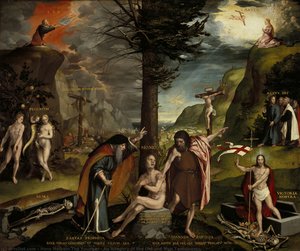 An Allegory of the Old and New Testaments - Hans Holbein the Younger
There is a profound weight in An Allegory of the Old and New Testaments by Hans Holbein the Younger that transcends mere paint on canvas; it is an immersive theological landscape. This masterpiece does not simply depict a scene; it orchestrates a complex visual symphony of human fallibility and divine promise. As you navigate the intricate composition, your eyes move from the vulnerable figures of Adam and Eve to the symbolic serpent coiled around the Tree of Knowledge, eventually finding solace in the distant, heavenly promises of redemption.
Holbein utilizes a rich, earthy palette punctuated by highlights of gold and deep purple to create a somber, contemplative mood. The meticulous Northern Renaissance detail—from the textured rocky outcrops to the haunting presence of a skeleton symbolizing mortality—invites a sensory engagement with the divine. To possess a reproduction of this work is to bring more than just decor into your space; it is to invite a mirror of human history that reminds us of our shared narrative of sin and grace. It remains a cornerstone in any collection of the top 25 artworks of Hans Holbein the Younger.
Jane Seymour, Queen of England - Hans Holbein the Younger
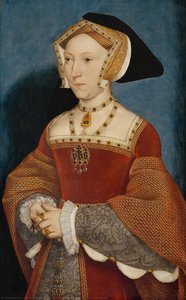 Jane Seymour, Queen of England - Hans Holbein the Younger
In the silent gaze of Jane Seymour, Queen of England by Hans Holbein the Younger, time itself seems to hold its breath, capturing a moment of profound, quiet majesty. As one of the most significant entries in our collection of the top 25 artworks of Hans Holbein the Younger, this portrait transcends mere royal documentation; it is an emotional study of a woman navigating the precarious shadows of the Tudor court. Holbein utilizes a strikingly restrained technique, eschewing heavy shadows for an almost photographic realism that brings the textures of her crimson gown and the delicate porcelain of her skin to life.
The painting’s power lies in its subtle symbolism—the meticulous rendering of fabric and the solemnity of her expression evoke a sense of duty and historical weight. For the modern collector, integrating such a masterpiece into a professional or residential space introduces an unparalleled layer of sophistication and historical depth. The work's balanced composition and rich, saturated tones offer a focal point of calm dignity, making it an ideal selection for those seeking to infuse contemporary interiors with the enduring elegance of the Northern Renaissance.
Sir Brian Tuke - Hans Holbein the Younger
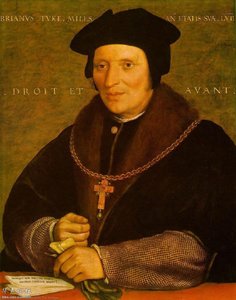
In Sir Brian Tuke , Hans Holbein the Younger achieves a profound psychological clarity that defines his place among the top 25 artworks of his career. This 1527 masterpiece does more than record a likeness; it captures the weight of Tudor responsibility through a masterful interplay of texture and shadow. The deep, commanding blacks of Tuke’s robe, contrasted against the tactile softness of the fur collar, showcase Holbein's unparalleled ability to render material reality with almost tactile precision.
As a cornerstone of Northern Renaissance portraiture, this work serves as a masterclass in symbolic storytelling. The inclusion of the book and parchment provides a window into the intellectual rigor required of a royal secretary, grounding the subject in his administrative power. For the modern collector or interior designer, such a piece brings an air of historical gravity and sophisticated permanence to a space. Its somber palette and structured composition offer a timeless elegance that complements contemporary corporate environments and classic study interiors alike, proving that Holbein’s legacy of realism remains as impactful today as it was in the 16th century.
Thomas Cromwell - Hans Holbein the Younger
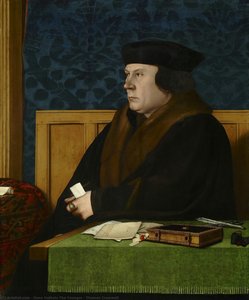 Thomas Cromwell - Hans Holbein the Younger
In Thomas Cromwell by Hans Holbein the Younger, there is a gaze that follows you—not with judgment, but with a profound, piercing understanding . This 1533 masterpiece transcends mere historical documentation; it acts as a mirror to the soul of Tudor England. As one of the most significant entries in our collection of the top 25 artworks of Hans Holbein the Younger, this portrait captures the chilling intensity of the King's chief advisor through a masterful use of Northern Renaissance realism.
Holbein utilizes deep, somber tones and meticulous glazing to render the heavy black robes and the tactile textures of the era. The dimly lit atmosphere, punctuated by the symbolic presence of a book and the silent ticking of a background clock, creates a sense of mounting political tension. Now, imagine that unwavering gaze in your own space. It does not merely watch you; it reminds you that you are part of a much larger, enduring story. To possess such a work is to bring the weight of history and the beauty of psychological depth into the modern room.
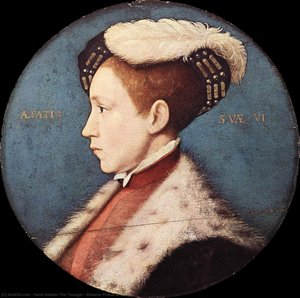
Edward VI (1537–1553), When Duke of Cornwall - Hans Holbein the Younger
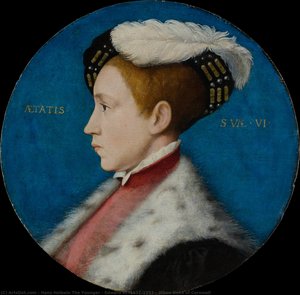 Edward VI (1537–1553), When Duke of Cornwall - Hans Holbein the Younger
What story does the regal atmosphere of Edward VI (1537–1553), When Duke of Cornwall by Hans Holbein the Younger tell about the fragile stability of the Tudor dynasty? This striking portrait, captured in a classical roundel format, emerges from an era of profound religious upheaval and political transition. As one of the top 25 artworks of Hans Holbein the Younger, this piece stands out for its ability to transform a six-year-old boy into a symbol of Protestant idealism and royal legitimacy.
Holbein utilizes a masterful palette of gold and deep blues, contrasting the vibrant red and white of the young Duke’s attire against a luminous background. The meticulous layering of oil glazes creates a palpable psychological presence, capturing a solemnity that belies his youth. For the modern collector, integrating such a masterpiece into a curated space offers more than mere decoration; it provides a sophisticated escape into the grandeur of the Northern Renaissance, bringing the weight of history and the elegance of classical humanism directly into the contemporary home.
Noli me tangere - Hans Holbein the Younger
 Noli me tangere - Hans Holbein the Younger
In Noli me tangere , Hans Holbein the Younger captures a profound moment of spiritual threshold. The Latin title, meaning “Touch me not,” references the pivotal encounter between the risen Christ and Mary Magdalene. There is a tension in this work that follows you—a delicate balance between the desire for physical connection and the necessity of spiritual recognition. As you observe the subtle gradations of light falling upon Mary’s dark robes and the luminous, commanding presence of Jesus, you are witnessing the Northern Renaissance at its most psychologically acute.
Holbein utilizes a masterful command of oil technique to render textures so vivid they feel tactile, from the heavy drapery to the soft, emerging dawn in the background. The rising sun serves as a symbol of renewal, contrasting with the somber shadows of the tomb. This isn't merely a biblical illustration; it is an exploration of faith and the transition from the earthly to the divine. To possess a reproduction of this masterpiece is to invite a sense of profound stillness and eternal hope into your professional or private space.
Henry VIII and the Barber Surgeons - Hans Holbein the Younger
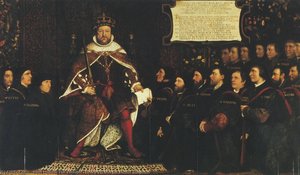 Henry VIII and the Barber Surgeons - Hans Holbein the Younger
In Henry VIII and the Barber Surgeons , the sheer materiality of Holbein’s technique is breathtaking; one can almost feel the heavy, tactile weight of the King's embroidered robes and the cold, sharp precision of the surgical instruments. Holbein utilized a masterful glazing technique on panel, layering translucent oils to create a luminous depth that captures the interplay of light on velvet and skin. This meticulous attention to texture—from the glint of the royal crown to the subtle, anxious expressions of the surgeons—is precisely why this work earns its place among the top 25 artworks of Hans Holbein the Younger .
At ArtsDot.com, we specialize in preserving this profound three-dimensional quality for your collection. Our hand-painted oil reproductions are crafted to honor the original's physical soul, ensuring that every visible brushstroke and rich tonal gradation is transferred to your space. We bring the commanding presence of the Tudor court into the modern interior, providing a high-end, textured experience that transcends the flatness of a mere print.
Passion - the passion (detail) - Hans Holbein the Younger
 Passion - the passion (detail) - Hans Holbein the Younger
To encounter Passion - the passion (detail) by Hans Holbein the Younger is to step directly into a visceral moment of Northern Renaissance drama. This arresting detail from his 1525 masterpiece transcends mere biblical illustration; it is a profound exploration of human suffering and spiritual intensity. Holbein utilizes a masterful application of oil on panel to create a texture so lifelike that one can almost feel the rough bark of the central tree and the heavy, worn fabrics of the mourning figures.
The artist employs a striking use of chiaroscuro , casting dramatic light upon the pivotal scene to heighten the sense of pathos and vulnerability. As you observe the diverse crowd—some kneeling in prayer, others lost in disbelief—the composition pulls you into a psychological landscape of faith and grief. The subtle inclusion of a horse in the background adds a layer of imperial complexity, grounding this divine tragedy in a tangible, historical reality. For those seeking to transform their space with works from the top 25 artworks of Hans Holbein the Younger, this piece offers an unparalleled emotional depth that turns any room into a true gallery of the soul.
oberried altarpiece (detail) - Hans Holbein the Younger
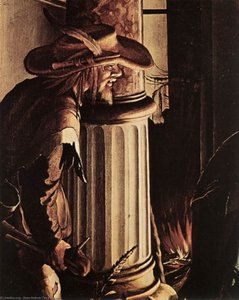 oberried altarpiece (detail) - Hans Holbein the Younger
The Oberried Altarpiece (detail) by Hans Holbein the Younger serves as a profound window into the Northern Renaissance, capturing an intimate moment of psychological tension and spiritual contemplation. As one of the most significant entries in our collection of the top 25 artworks of Hans Holbein the Younger, this fragment showcases his unparalleled ability to blend meticulous realism with deep symbolic storytelling. The artist’s precision is breathtaking; every fold of fabric and the subtle, searching gaze of the central figure invite the viewer into a world where the divine and the earthly collide.
In this detail, the striking presence of a man in a horned hat—a potent symbol of worldly temptation—creates a dramatic focal point that resonates with modern sensibilities regarding character and complexity. For contemporary collectors and interior designers, the piece offers a sophisticated interplay of light and shadow, making it an ideal anchor for spaces that demand historical depth and a sense of mystery. Its enduring legacy lies in how Holbein transforms a single, focused moment into a timeless exploration of human emotion and the complexities of faith.
untitled (799) - Hans Holbein the Younger
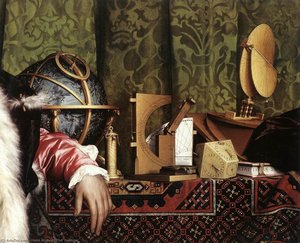 untitled (799) - Hans Holbein the Younger
In the prestigious collection of the top 25 artworks of Hans Holbein the Younger, untitled (799) stands as a profound study of intellectual ambition and Renaissance gravity. This masterpiece transcends simple portraiture, utilizing a rich palette of deep crimsons and shadowed tones to evoke an atmosphere of quiet authority. The central figure, draped in a luxurious red robe, is anchored by the presence of globes and a meticulous clock, symbols that speak to the era's expanding geographical horizons and the relentless march of time.
Holbein’s mastery of chiaroscuro creates a sculptural depth that remains strikingly relevant for modern interior curation. The painting’s interplay of light and shadow offers a sophisticated focal point for corporate offices or stately libraries, where its themes of knowledge and strategic contemplation can enhance a professional ambiance. For collectors seeking the legacy of the Northern Renaissance, this work provides a tactile connection to history through its incredible precision—from the texture of aged wood to the luminous sheen of the oil pigments—making it an essential piece for any serious gallery of historical significance.
Principles of a schoolmaster, teaching scene for children - Hans Holbein the Younger
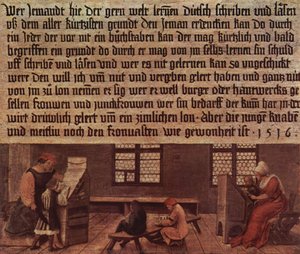 Principles of a schoolmaster, teaching scene for children - Hans Holbein the Younger
Step into the quiet, sun-drenched warmth of a sixteenth-century classroom with Principles of a Schoolmaster, Teaching Scene for Children . In this 1516 masterpiece, Hans Holbein the Younger captures a tender, cinematic moment of intellectual awakening. The air feels thick with the scent of old parchment and the focused silence of study. Through delicate tempera strokes on wood, we witness a schoolmaster guiding a young pupil toward a lectern, while a tutor directs another child’s gaze, creating a tableau of disciplined grace.
Holbein’s mastery is found in the tactile reality of the scene: the heavy texture of woolen tunics, the soft glow of light hitting a wooden bench, and the concentrated expressions of the students. This work stands as a profound testament to Northern Renaissance humanism, celebrating the structured beauty of learning. For the modern collector or professional decorator, integrating such a piece into a library, study, or corporate lounge offers more than mere decoration; it introduces an atmosphere of timeless wisdom, stability, and quiet reflection, elevating any architectural space with historical depth.
Benedikt von Hertenstein, oil on paper mounted - Hans Holbein the Younger
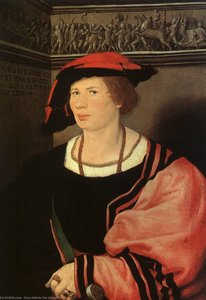 Benedikt von Hertenstein, oil on paper mounted - Hans Holbein the Younger
In the portrait of Benedikt von Hertenstein , a deep, commanding crimson from the subject's feathered hat anchors the composition, casting a mood of profound authority and Renaissance dignity. This striking use of red, paired with the subtle, luminous gradations achievable through Holbein’s innovative technique of oil on paper, showcases why this work is essential among the top 25 artworks of Hans Holbein the Younger . The artist masterfully balances the vibrant pigment against darker, shadowed tones using chiaroscuro, creating a sense of sculptural weight and psychological depth.
For the modern interior designer or collector, integrating a reproduction of this masterpiece can transform a dining room or executive office. The rich, warm palette provides an ideal foundation for sophisticated lighting schemes, where soft amber glows can highlight the textures of velvet and silk depicted in the work. By utilizing the painting's dramatic contrast, you can curate a space that feels both historically grounded and intellectually stimulating, bringing the prestigious atmosphere of the Tudor court into a contemporary architectural setting.
erasmus - Hans Holbein the Younger
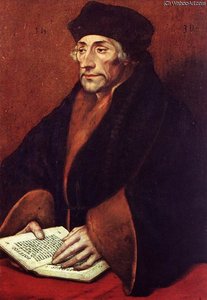 erasmus - Hans Holbein the Younger
Acquiring a reproduction of Erasmus by Hans Holbein the Younger is an investment in a profound legacy of intellectual taste and historical prestige. As one of the top 25 artworks of Hans Holbein the Younger, this portrait serves as a cornerstone for any serious collection, representing the pinnacle of Northern Renaissance humanism. The work captures the scholar not as a static icon, but as a living mind, poised over his desk with quill in hand, surrounded by the rich textures of velvet and aged leather. Holbein’s mastery is visible in the subtle play of light across the furrowed brow and the deep, somber ochres that define the scholarly atmosphere.
The painting's enduring market value and influence stem from its ability to bridge the gap between historical gravity and aesthetic beauty. For the modern collector, this piece offers unparalleled prestige; a high-quality oil reproduction brings the same authoritative presence and dignified solemnity to luxury interiors, commanding attention in corporate boardrooms or sophisticated private studies with its timeless, scholarly elegance.
Erasmus of Rotterdam - oil on wood - Hans Holbein the Younger
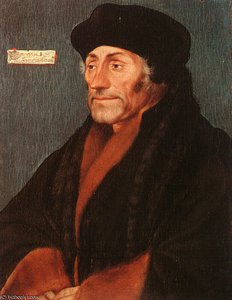 Erasmus of Rotterdam - oil on wood - Hans Holbein the Younger
In the quiet intensity of Erasmus of Rotterdam , we encounter more than just a likeness; we enter the very mind of the Northern Renaissance. Holbein does not merely paint light—he composes it, using subtle tones to sculpt the scholar's contemplative gaze and the heavy, tactile weight of his crimson robes. This masterpiece is a profound window into humanism, where every meticulously rendered wrinkle and the crisp texture of the paper held in hand serve as a language of intellectual fervor.
The light in this work does not just reflect off the surface; it invents a sense of historical gravity, turning the deep blue background into an atmospheric portal. As you observe the surgical accuracy of the facial contours, you feel the stillness of a moment frozen in time. For collectors and decorators seeking to infuse a space with wisdom and prestige, this portrait offers a commanding presence that transforms any wall into a gateway for scholarly reflection and timeless inspiration.
self portrait - Hans Holbein the Younger
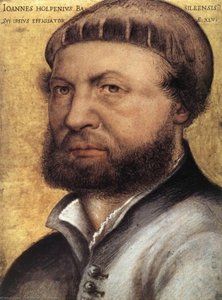 self portrait - Hans Holbein the Younger
To encounter Hans Holbein the Younger's Self-Portrait is to engage in a silent, profound dialogue with the Northern Renaissance itself. This work is far more than a mere likeness; it is a meticulously crafted window into the soul of a master. Painted around 1530, the portrait captures a moment of intense intellectual ferment, presenting Holbein in a three-quarter pose that commands the viewer's attention through a direct, piercing gaze. His features—the strong jawline, the precisely rendered beard, and those intelligent, searching eyes—are executed with an unflinching realism that defines his legendary technique.
The subtle gradations of light and shadow across his white shirt and dark attire demonstrate a command of oil paint that borders on the miraculous, utilizing soft edges to create a lifelike depth. With the inclusion of symbolic books and a decorative background, Holbein presents himself not just as an artisan, but as a humanist scholar. Owning this piece from the top 25 artworks of Hans Holbein the Younger isn’t simply a purchase; it is an inheritance of a lineage of taste, bringing the dignified intensity of the Tudor era directly to your walls.
De Vos van Steenwijk - Hans Holbein the Younger
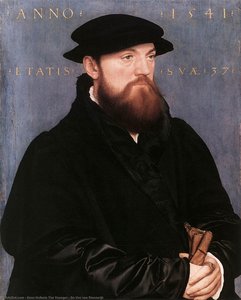 De Vos van Steenwijk - Hans Holbein the Younger
In the 16th-century landscape of Northern Europe, few works capture the intersection of social prestige and psychological depth as effectively as De Vos van Steenwijk by Hans Holbein the Younger. This masterpiece stands prominently in our selection of the top 25 artworks of Hans Holbein the Younger because it transcends simple documentation; it is a profound study of controlled power. The stark, dramatic contrast between the subject’s deep black velvet attire and the enveloping, regal blue background creates a visual tension that commands immediate attention.
Holbein’s technical mastery is on full display through the meticulous rendering of textures—from the soft, dense cascade of the man's beard to the subtle sheen of his heavy robes. This level of anatomical precision and light manipulation offers a window into the era's rigid courtly rituals while inviting modern viewers to reflect on the permanence of human dignity. For collectors and designers, integrating such a powerful portrait into a curated space provides a timeless conversation between historical gravity and contemporary sophistication, making it an essential anchor for any high-end interior.
virgin and child with the family of burgomaster - Hans Holbein the Younger
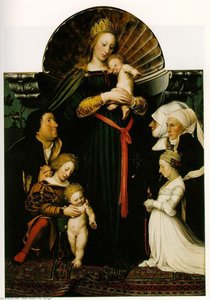 virgin and child with the family of burgomaster - Hans Holbein the Younger
To encounter the Virgin and Child with the Family of Burgomaster by Hans Holbein the Younger is to step into a masterclass of Northern Renaissance precision, where every brushstroke serves as a window into a vanished era of prestige. This profound work secures its place among the top 25 artworks of Hans Holbein the Younger through its unparalleled ability to blend sacred devotion with the tangible opulence of Tudor-era social standing. Holbein captures the serene Madonna and Christ Child not in isolation, but woven into the intimate, richly textured domestic life of Burgomaster Wilhelm Vorperg’s family.
The painting radiates a sense of warmth and togetherness, achieved through a masterful use of light that sculpts velvet draperies and polished wood with breathtaking realism. For the discerning collector or decorator, this piece offers more than historical significance; it provides a timeless aesthetic anchor. Its sophisticated interplay of shadow and light, combined with the deep, soulful textures of Holbein’s technique, brings an atmosphere of intellectual depth and enduring luxury to any refined interior, making it a cornerstone of classical art curation.
Lady Lee (Margaret Wyatt, born about 1509) - Hans Holbein the Younger
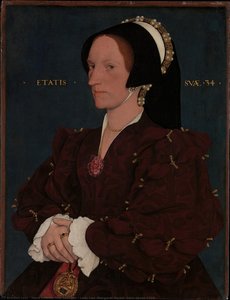 Lady Lee (Margaret Wyatt, born about 1509) - Hans Holbein the Younger
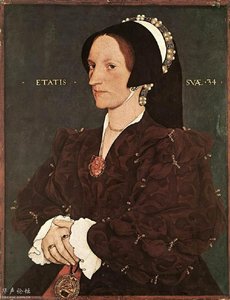
In Lady Lee (Margaret Wyatt) , the mastery of Hans Holbein the Younger is felt through the profound tactile contrast of textures. The painting’s power lies in the interplay between the heavy, midnight-black fabric of the gown and the crisp, sculptural brilliance of the white collar. Every brushstroke serves to render the weight of the Tudor textiles and the delicate glint of the gold necklace, creating a sensory experience that transcends mere portraiture. This meticulous attention to material wealth—the way light catches a ring or defines a lace edge—is what secures its place among the top 25 artworks of Hans Holbein the Younger .
At ArtsDot.com, we specialize in preserving this three-dimensional soul. Our handmade oil reproductions utilize authentic impasto techniques to recreate the visible brushwork and physical depth found in the original Northern Renaissance masterpieces. For the discerning collector or decorator, our high-end reproductions bring the commanding presence and historical grandeur of the Tudor court into a modern space, ensuring the tactile beauty of Holbein's precision is never lost in translation.
Conclusion
To walk through the visual legacy of Hans Holbein the Younger is to encounter more than mere historical documentation; it is to engage in a silent, profound dialogue with the faces and textures of a vanished era. These masterpieces do not exist solely within the hushed corridors of museums, frozen in time, but continue to breathe as living presences that shape our modern perception of identity and truth. Each stroke of his brush serves as a bridge across centuries, connecting the psychological depth of the Tudor court to the contemporary spaces we inhabit today. When these works find their way into a home or a professional gallery, they do more than decorate a wall—they infuse a room with a sense of permanence, dignity, and an enduring human connection that transcends the fleeting nature of trends.
At ArtsDot.com , we believe that such profound beauty should be accessible to those who seek to surround themselves with greatness. We strive to ensure that the soul of Holbein’s meticulous realism is reborn in every hand-painted reproduction we create. Our skilled artists honor the original's intricate textures and commanding gazes, meticulously layering oil on canvas to capture the very essence of his craftsmanship. Whether you are looking to anchor a corporate suite with a sense of authority or add a layer of historical warmth to a hospitality space, our collection allows you to bring these timeless treasures into the tangible present. We invite you to explore the full collection and discover how the enduring spirit of the Northern Renaissance can become a lasting part of your own environment.