
The Precision of the Northern Renaissance: An Introduction to Holbein’s Vision
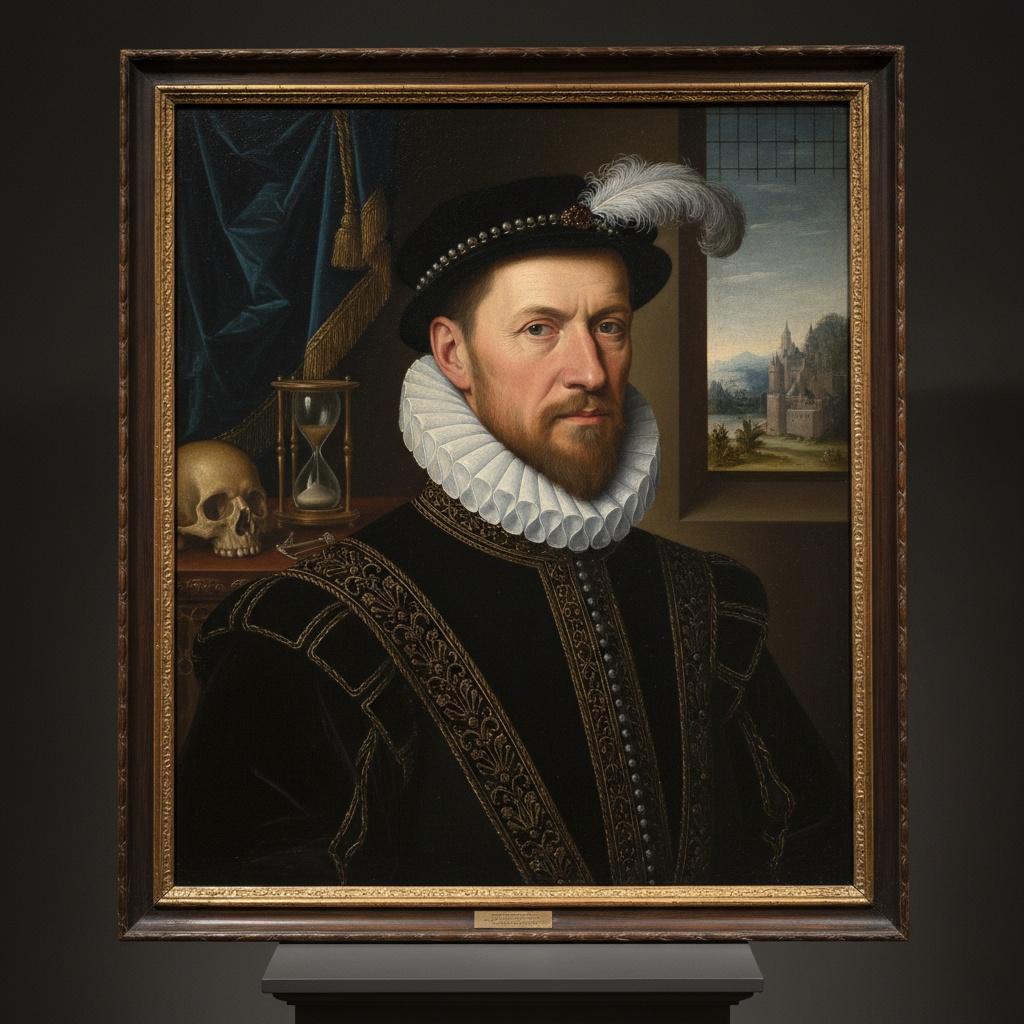
To step into the world of Hans Holbein the Younger is to enter a realm where the boundary between reality and representation dissolves under the weight of meticulous observation. As a preeminent figure of the Northern Renaissance, Holbein did not merely paint subjects; he captured the very essence of their existence through an almost supernatural command of detail. Unlike the idealized, sweeping forms often found in the Italian Renaissance, the Northern tradition—and Holbein specifically—found its soul in the minute, the tangible, and the hyper-realistic. Every crease in a velvet sleeve, every glint of light on a gemstone, and every subtle shadow cast by a heavy drapery serves as a testament to a vision that sought to honor the physical world with uncompromising truth.
This era was defined by a profound fascination with the material world, a period where the discovery of new textures and the mastery of oil glazes allowed artists to simulate the tactile sensations of life. Holbein stood at the pinnacle of this movement, utilizing the slow-drying properties of oil to build layers of depth that seem to breathe within the frame. His work invites the viewer not just to look, but to linger—to trace the fine lines of a scholar’s hand or to lose oneself in the complex geometry of a Renaissance interior. It is a style that demands patience and rewards the discerning eye with a sense of profound discovery.
The Architect of Identity: Portraiture and the Tudor Court
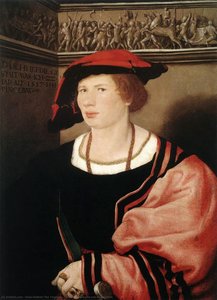
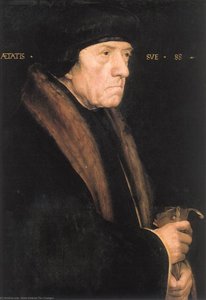
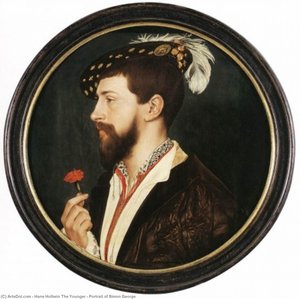
Nowhere is Holbein’s mastery more evident than in his role as the visual biographer of the Tudor court. In an age where political power was inextricably linked to image, Holbein became the architect of royal identity. His portraits of figures such as Henry VIII and Jane Seymour are far more than mere likenesses; they are carefully constructed narratives of authority, grace, and even vulnerability. Through his brush, the heavy regalia of the English monarchy is rendered with such weight and splendor that one can almost feel the oppressive grandeur of the court itself.
Consider his depictions of the Tudor royalty, where the sitter's status is communicated through a sophisticated language of costume and posture. In works like Jane Seymour, we see a delicate balance between the regal and the intimate. Holbein possessed the rare ability to capture the psychological depth of his subjects, peering beneath the ermine and silk to reveal the human being within the icon. His portraits served as a vital tool of diplomacy and legacy, freezing moments of historical significance in a state of eternal, dignified permanence. To study these faces is to engage in a silent dialogue with the past, feeling the tension and the triumphs of a transformative era.
Materiality and Symbolism: Decoding the Intricate Details in Holbein's Still Life
Beyond the human face, Holbein’s genius extended into the quiet, often overlooked corners of the domestic sphere. He had an unparalleled ability to imbict inanimate objects with profound symbolic meaning, turning a simple tabletop into a complex theological or social allegory. In masterpieces such as Jane Seymour’s Cup, the artist utilizes the precision of his technique to elevate objects of utility—a silver gilt cup, a fine linen cloth—into vessels of storytelling. The way light interacts with the polished metal or the translucent quality of a glass vessel is not merely a display of technical virtuosity; it is an invitation to decode the hidden messages embedded in the scene.
In the Northern Renaissance tradition, every element within a composition often carries a dual purpose. A piece of fruit might represent fertility or the fleeting nature of life; a specific flower might signify purity or mortality. Holbein’s meticulous rendering of these textures—the cold hardness of silver, the soft weave of embroidery, the organic roughness of wood—grounds these lofty symbols in a palpable reality. This marriage of the physical and the metaphysical creates a tension that keeps the viewer perpetually engaged, searching for meaning within the exquisite craftsmanship of the still life.
Beyond the Surface: The Technical Mastery of Light, Texture, and Form
The true magic of Holbein’s work lies in his technical approach to light and form. He understood that light is not merely something that illuminates a subject, but something that defines its very shape. By masterfully manipulating highlights and deep, velvety shadows, he achieved a three-dimensional quality that defies the flatness of the canvas. This mastery of chiaroscuro within the Northern context allowed him to create textures that are almost tactile; one can sense the heavy weight of brocade, the crispness of parchment, and the softness of human skin.
This level of detail was achieved through a disciplined, layered process. The application of multiple thin glazes allowed light to pass through the upper layers of paint and reflect off the base colors, creating an inner luminosity that characterizes his greatest works. This technique ensures that even the smallest detail—a single thread in a tapestry or the reflection in an eye—possess a brilliance that feels alive. It is this technical rigor that allows his art to transcend the era of its creation, offering a sensory experience that remains as potent today as it was in the sixteenth century.
Preserving the Legacy: Bringing Renaissance Grandeur into the Modern Interior
In our contemporary world, characterized by rapid change and digital ephemeralness, there is a profound longing for the permanence and depth found in the Old Masters. The works of Hans Holbein offer a sanctuary of stability and beauty. Integrating such classical grandeur into a modern home is not merely an act of decoration; it is an act of curation that honors the continuity of human creativity. Whether through a large-scale oil reproduction that serves as a focal point in a grand hall or a delicate print that adds a layer of historical texture to a study, Holbein’s aesthetic can transform any space.
At ArtsDot.com, we believe that the majesty of the Renaissance should be accessible to all who appreciate its soul. Our dedication to preserving this legacy is seen in our meticulous hand-painted reproductions, where skilled artists use traditional methods—applying multiple layers of oil paint on heavy-duty cotton canvas—to recreate the tactile brushstrokes and three-dimensional textures of the original masterpieces. By bridging the gap between historical museum pieces and modern living spaces, we ensure that the captivating world of Holbein continues to inspire, educate, and enchant generations to come.