
Introduction: The Quiet Narratives of Benjamin Haughton
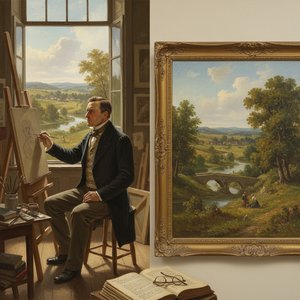
Benjamin Haughton, a name perhaps less immediately recognizable than some of his Victorian contemporaries, nevertheless occupies a significant and compelling space within the landscape of 19th-century British art. His paintings are not grand historical pronouncements or flamboyant displays of artistic virtuosity; rather, they offer intimate glimpses into the lives of ordinary people, rendered with a meticulous realism that belies a deeper engagement with the social currents of his time. Haughton’s work invites us to pause, to observe, and to contemplate the quiet dramas unfolding within the everyday scenes he so skillfully captured. He wasn't merely recording life; he was interpreting it, subtly commenting on its complexities through carefully chosen details and nuanced compositions.
Genre Painting in Victorian England: A Reflection of Daily Life
Genre painting (or petit genre) is the painting of genre art, which depicts aspects of everyday life by portraying ordinary people engaged in common activities. One common definition of a genre scene is that it shows figures to whom no identity can b...
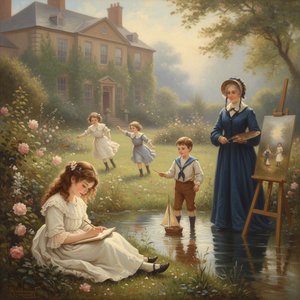
To understand Haughton’s artistic choices, one must first appreciate the context of genre painting within Victorian England. Following in a tradition established by Dutch Masters like Vermeer and Steen, artists increasingly turned their attention to scenes of domesticity, rural life, and the working class. This shift wasn't simply an aesthetic preference; it reflected a growing interest in social issues and a desire to represent the realities experienced by a broader segment of society. William Makepeace Thackeray observed this trend with approval, noting a move away from “heroic” subjects towards “a gentle sentiment, an agreeable, quiet incident.” Genre painting offered a relatable accessibility that appealed to a burgeoning middle class eager to see their own lives reflected in art. However, it was rarely *just* about representation. Artists often imbued these scenes with moral undertones or subtle critiques of societal norms.
Haughton's Artistic Style: Realism, Detail, and Rural Idylls
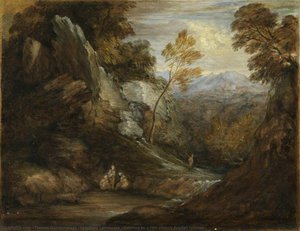
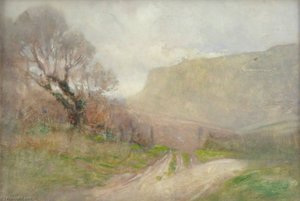 Road to the Moor
Admire 'Road to the Moor' by Benjamin Haughton (1865-1924), a stunning British landscape painting. Hand-painted reproductions available in various sizes. Discover realism & rural beauty.
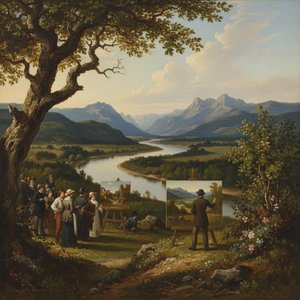
Haughton’s paintings are characterized by a remarkable degree of realism. He possessed an exceptional ability to capture light, texture, and the minute details that bring his subjects to life. Consider “Road to the Moor,” where the play of sunlight on the landscape evokes a sense of tranquility and invites the viewer into the scene. Or examine “Girl Tending a Garden,” a work brimming with vibrant color and detailed brushwork; the delicate rendering of foliage, the soft glow on the girl’s face – these are hallmarks of Haughton's technique. While his landscapes often lean towards idyllic portrayals of rural life, they aren’t saccharine or overly romanticized. There is an honesty in his depictions, a sense that he observed and faithfully reproduced what he saw. This commitment to realism wasn’t merely technical; it was integral to the emotional impact of his work.
Social Undercurrents: Examining the Subtext in Haughton’s Works
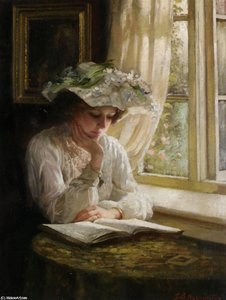
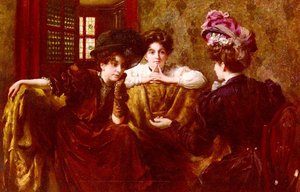 No Gossip
Explore 'No Gossip' by Thomas Benjamin Kennington – a Victorian realist painting of women in conversation. Discover its rich colors & nuanced social dynamics.
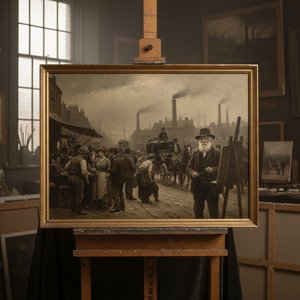
Although not overtly political, Haughton's paintings often hint at deeper social concerns. While he doesn’t present scenes of abject poverty or overt hardship, a closer examination reveals subtle commentaries on class dynamics and the changing nature of rural life. His focus on the dignity of labor, even in seemingly simple tasks, suggests a respect for the working class that was not universally shared during his time. Paintings like “No Gossip” (by Thomas Benjamin Kennington, a contemporary whose work shares stylistic similarities with Haughton’s) demonstrate this nuanced approach – the women depicted are engaged in conversation, but their expressions and body language hint at complex social relationships and unspoken anxieties. Haughton's skill lies in allowing these undercurrents to surface organically, inviting viewers to draw their own conclusions about the lives of his subjects.
Beyond the Canvas: Haughton’s Life and Contextual Influences
 Wikipedia: Benjamin Haughton
Benjamin Haughton (1855–1932) was an Irish businessman from Cork city, who was an independent member of Seanad Éireann from 1922 to 1928. He was from the Cork branch of a Quaker family whose Carlow branch included social reformer James Haughton and ...
Born in 1865, Benjamin Haughton came from a Quaker family with a history of social reform. This background likely influenced his sensitivity to the plight of ordinary people and his desire to represent their lives authentically. Interestingly, his biography also reveals involvement in Irish politics during a turbulent period, seeking conciliation between differing factions. While this aspect of his life doesn’t directly translate into overt political statements within his art, it suggests a broader commitment to social harmony and understanding. His family's mercantile background may have also informed his appreciation for the rhythms of daily life and the importance of community. Understanding these contextual influences provides valuable insight into the motivations behind his artistic choices.
The Enduring Appeal of Benjamin Haughton’s Vision
Benjamin Haughton’s paintings continue to resonate with audiences today because they offer a timeless glimpse into the human condition. His meticulous realism, combined with his subtle social commentary, creates works that are both beautiful and thought-provoking. They remind us of the importance of observing the world around us, appreciating the dignity of everyday life, and recognizing the complexities inherent in even the simplest scenes. For those seeking to connect with a quieter, more contemplative side of Victorian art – one that prioritizes observation over spectacle – Benjamin Haughton offers a rich and rewarding experience. Explore his works further at ArtsDot.com, where high-quality reproductions allow you to bring these captivating narratives into your own home.