The Weaver's Legacy: Defining Textile Art as a Fine Art Medium
To contemplate the loom is to witness the very genesis of human narrative. For centuries, the interlacing of warp and weft has served as more than a mere method of construction; it is an intricate vocabulary of existence. While traditional fine arts such as oil painting or marble sculpture often command the eye through pigment and mass, textile art invites a deeper, more visceral engagement. It possesses a unique ability to bridge the gap between the ephemeral and the enduring, using the softness of fiber to articulate the hardest truths of our history.
The medium transcends its physical components—yarn, thread, silk, and wool—to become a vessel for symbolic expression. When we observe a masterfully executed piece, we are not merely looking at fabric; we are witnessing a tactile symphony where every knot represents a moment in time and every tension in the weave reflects the structural integrity of the artist's vision. This profound intersection of craft and concept is what elevates textile art from the realm of decorative ornament to the prestigious heights of fine art, demanding respect for its technical rigor and emotional depth.
Threads of History: The Evolution from Utilitarian Craft to Museum-Grade Masterpiece
The lineage of textiles is inextricably linked to the history of human necessity. In the earliest epochs, weaving was a fundamental survival skill, producing the garments that protected us and the blankets that warmed us. However, as civilizations flourished, so too did the aesthetic complexity of their fibers. We see this progression documented in the most venerable institutions, such as Drexel University’s Robert and Penny Fox Historic Costume Collection, where over 14,000 garments serve as a testament to how art, culture, and design are woven through the very fabric of dress.
The transition from the functional to the monumental was not an overnight revolution but a gradual ascent. The evolution moved from the domestic sphere—where quilts were crafted for warmth and communal storytelling—to the curated halls of museums like the Textile Museum St. Gallen in Switzerland. Here, the exquisite precision of lace and embroidery is celebrated not for its utility, but for its sheer artistic transcendence. This historical trajectory demonstrates that as our mastery over materials grew, so did our ability to transform the utilitarian into the sublime, turning everyday threads into museum-grade masterpieces that capture the essence of entire eras.
The Sculptural Thread: Exploring Texture, Materiality, and the Tactile Dimension
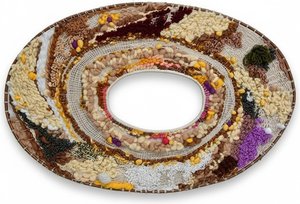
One cannot discuss the brilliance of textile art without addressing its most captivating attribute: materiality. Unlike the relatively flat surface of a canvas, textile art exists in a state of constant three-dimensional dialogue with its environment. It possesses a sculptural quality that allows it to manipulate light and shadow through texture alone. Consider the profound impact of an organic textile sculpture, such as a handwoven tapestry that integrates seeds, yarn, and dried grasses into a single, cohesive work. Such pieces do not merely hang upon a wall; they breathe life into it, offering a sensory experience that is both rugged and refined.
This tactile dimension is achieved through a deliberate exploration of weight, density, and surface tension. The artist utilizes the interplay between smooth silks and coarse linens to create a visual rhythm that guides the viewer's eye across the composition. By embracing the organic irregularities of natural fibers, textile artists can evoke landscapes, emotions, or architectural forms, creating a sense of depth that invites the observer to reach out and touch the very soul of the work. It is this sculptural presence that allows fiber art to occupy space with an unparalleled intimacy and grace.
Pioneable of the Stitch: Renowned Artists Who Redefined Fiber Artistry
The landscape of modern textile art has been irrevocly shaped by visionaries who dared to treat the needle as a paintbrush and the stitch as a stroke of genius. Among these luminaries, Mariska Karasz stands as a monumental figure. A pioneer of modern stitchery, her work masterfully blended the warmth of folk art with the sophisticated abstractions of contemporary design, proving that embroidery could hold the same weight as any avant-garde painting. Her ability to weave vibrant, abstract narratives through thread redefined the boundaries of what was possible within the medium.
Similarly, the contributions of artists like Beryl Christina Woodhall have been essential in elevating contemporary craft. Through her intricate needlework and exploration of everyday design, she demonstrated how the meticulous application of stitch could transform simple materials into complex works of art. These artists did not merely refine existing techniques; they reimagined the very purpose of the fiber, moving away from the constraints of tradition to embrace a new, limitless frontier of artistic expression. Their legacies continue to inspire a new generation of creators to view the thread as an instrument of profound aesthetic change.
A Modern Tapestry: Integrating Textile Art into Contemporary Architectural Spaces
In the contemporary architectural landscape, there is a growing movement toward softening the rigid lines of modernism with the warmth and texture of textile art. Large-scale tapestries and fiber installations are increasingly used to define spaces, providing acoustic benefits while acting as focal points of immense beauty. Whether it is a massive mural in a luxury hotel or an intimate piece within a private residence, the integration of textiles allows for a more humanized, emotionally resonant environment.
This modern application of textile art celebrates the continuity of human creativity. As we look to preserve and appreciate these magnificent works, platforms like ArtsDot.com play a vital role in connecting enthusiasts with the profound beauty of art history. By fostering an appreciation for both the classical masters and the innovative textures of the modern era, we ensure that the vibrant, tactile world of textile art continues to weave its way into the heart of our homes and our collective cultural memory.