

Introduction
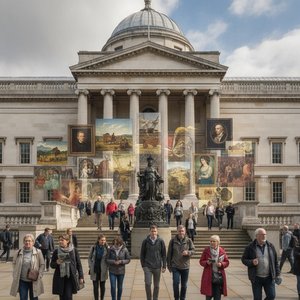
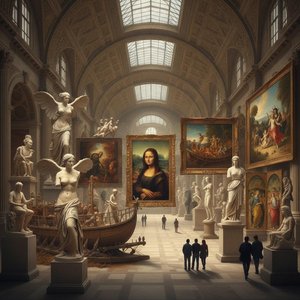
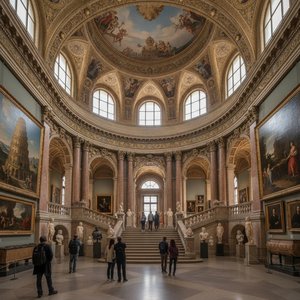
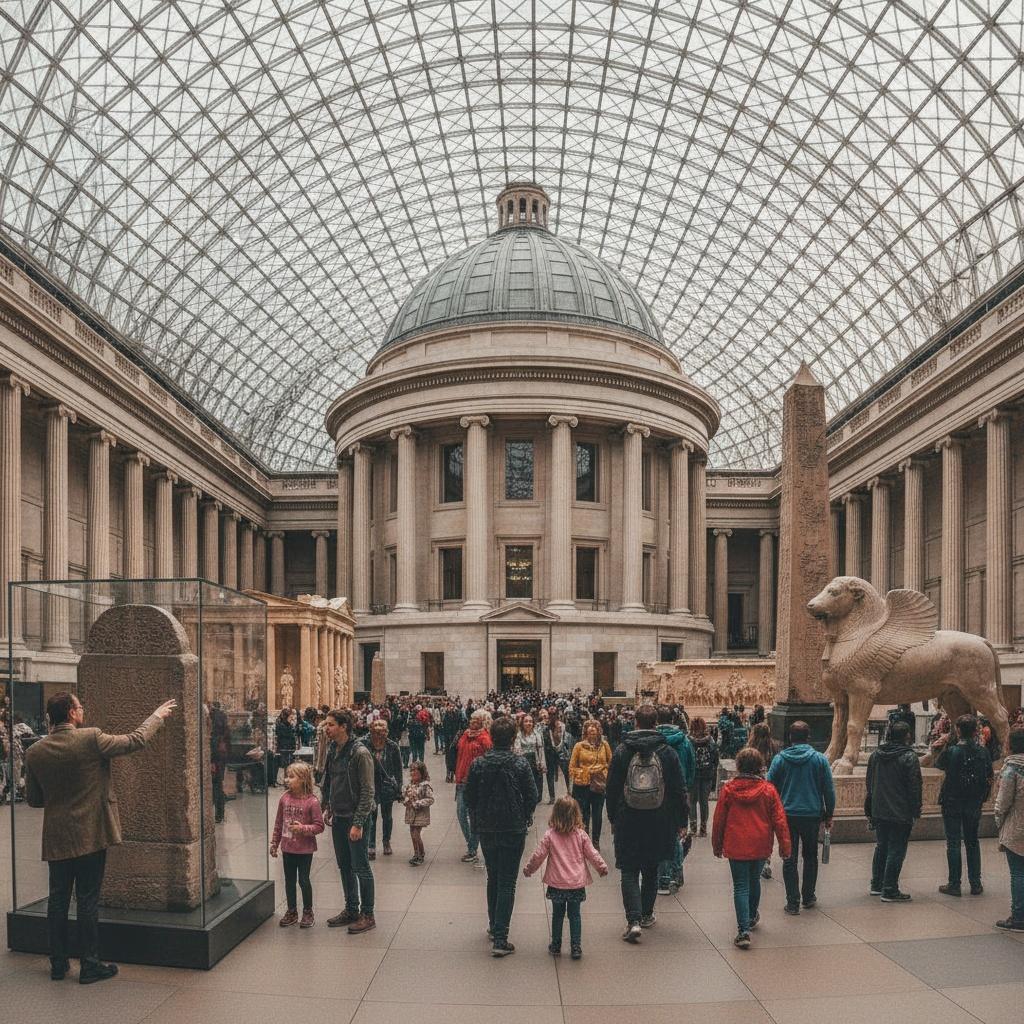
Stepping into the British Museum isn't just a walk through a London landmark; it is a high-voltage jump through time itself. Imagine standing beneath the soaring, light-drenched glass canopy of the Great Court, where the modern brilliance of Norman Foster’s architecture meets the heavy, silent weight of human history. This isn't your typical dusty archive. It is a living, breathing collision of eras—a place where the ancient whispers of forgotten empires meet the sharp, electric energy of the present day.
From its origins as a private collection of curiosities to its status as a global powerhouse of culture, the museum holds the blueprints of civilization. Within these walls, the boundaries between continents dissolve. You aren't just looking at objects; you are witnessing the raw, unfiltered soul of humanity. Whether it is the cryptic, stone-carved secrets of the Rosetta Stone or the intricate, masterful inkwork that has survived millennia, each piece serves as a vital link in our collective story. These works remain profoundly meaningful today because they reflect our eternal obsession with identity, power, and the drive to leave a mark on the world.
As we prepare to dive into this curated journey, forget the dry timelines of textbooks. We are here to hunt for the icons—the pieces that possess that unmistakable visual punch and emotional gravity. Get ready to explore our selection of the top 25 artworks that define the British Museum, each one a masterpiece of design, drama, and pure human impact.
Rome: The Colosseum - Joseph Mallord William Turner
 Rome: The Colosseum - Joseph Mallord William Turner
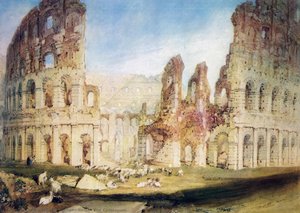
What story does the swirling, sun-drenched atmosphere in Rome: The Colosseum by Joseph Mallord William Turner tell about the fleeting nature of empire? As one of the top 25 artworks in British Museum, London , this 1820 watercolor transcends mere architecture to capture a visceral, emotional pulse. Emerging from the height of the Romantic movement, Turner breaks away from rigid topographical detail, instead using loose, expressive brushstrokes and a luminous palette of ochre, gold, and hazy blue to evoke the sublime.
The scene is a masterclass in contrast; while the Colosseum stands as a heavy silhouette of ancient power, scattered sheep and soft light introduce a sense of peaceful vulnerability. For the modern collector seeking a curated escape, this piece offers more than just decor—it brings the dramatic, light-drenched soul of Italy into your space. It is an invitation to experience history not as a static relic, but as a living, breathing impression of light and shadow that transforms any contemporary interior into a window onto the eternal.
Study of the Madonna and Child with a Cat - Leonardo da Vinci
 Study of the Madonna and Child with a Cat - Leonardo da Vinci
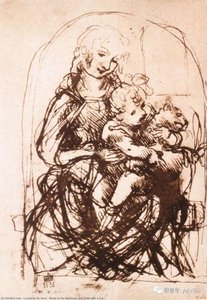
What story does the quiet, domestic intimacy of Study of the Madonna and Child with a Cat by Leonardo da Vinci tell us about the human heart? Beyond the grand scale of the British Museum's most iconic treasures, this 1478 masterpiece offers a rare, unfiltered glimpse into the Renaissance mind. It isn't just a sketch; it is a profound exploration of connection, where the tender weight of an infant and the playful presence of two cats create a scene of unparalleled warmth.
Leonardo uses masterful pen and ink to layer light and shadow, showcasing the early seeds of his legendary sfumato technique. The delicate interplay of anatomy and emotion breaks ground, moving away from stiff iconography toward a living, breathing reality. For the modern collector seeking an escape, this piece brings a sense of historical soul into the home. Integrating such a work into your space evokes a curated atmosphere of peace and timelessness, making it a standout selection among the top 25 artworks in the British Museum, London.
Crucified Christ with Mary and John - Michelangelo Buonarroti
 Crucified Christ with Mary and John - Michelangelo Buonarroti
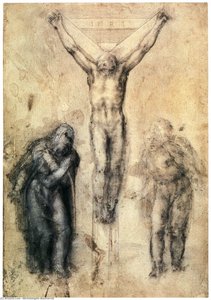
When you stand before Michelangelo’s Crucified Christ with Mary and John at the British Museum, London, you aren't just viewing a Renaissance sketch; you are witnessing a moment of raw, spiritual intensity frozen in chalk. This isn't mere academic study—it is an encounter with the divine. Through masterful hatching and cross-hatching, Michelangelo breathes life into the paper, using light and shadow to sculpt anatomical precision that feels almost tactile.
The composition pulls you into a heavy, sacred atmosphere where the sorrow of Mary and the devotion of Saint John amplify the profound weight of the crucifixion. Every line vibrates with the humanist ideals of the era, blending classical sculptural beauty with deep theological emotion. To experience this piece is to understand why Michelangelo remains a titan; he doesn't just depict a scene, he captures the very pulse of human suffering and redemption. For those seeking to surround themselves with true genius, this work stands as a monumental testament to the power of art to transform a space into a gallery of the soul.
The Entombment - Hieronymus Bosch
 The Entombment - Hieronymus Bosch
What shadows linger within the psyche when confronted with the profound weight of mortality? In Hieronymus Bosch’s The Entombment , the atmosphere is thick with a somber, almost claustrophobic intensity that transcends its 1507 origins. As one of the most striking pieces in the British Museum, London, this work serves as a haunting precursor to Surrealism, trading traditional Renaissance serenity for an unsettling, monochromatic meditation on grief and sacrifice.
The etching utilizes a masterful dance of fine lines and cross-hatching to sculpt deep shadows, pulling the viewer into a crowded, emotional ritual centered around the figure of Christ. The stark contrast between the light hitting the crown of thorns and the surrounding gloom creates a visceral, sensory experience. For the modern collector seeking more than mere decoration, this piece offers a powerful 'escape' into historical depth. It is not just an artwork; it is a window into the anxieties of an era, providing a high-impact, soulful focal point that brings the heavy, beautiful drama of the Northern Renaissance directly into a contemporary space.
Study for an Annunciation (recto) - Michelangelo Buonarroti
 Study for an Annunciation (recto) - Michelangelo Buonarroti
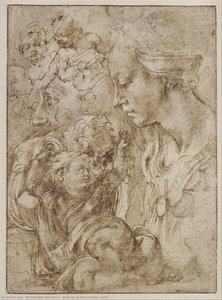
Before the monumental scale of the Sistine Chapel, there was the raw, electric intimacy of the sketch. In Study for an Annunciation (recto) , Michelangelo Buonarroti strips away the heavy marble to reveal the soul of a master in motion. This isn't just a preparatory drawing; it is a profound meditation on divine connection captured through the delicate, tactile energy of chalk.
The composition pulls you into a private, celestial dialogue: a seated man, caught in a moment of quiet revelation as an angel hovers behind him. There is a gaze here that follows you—not with judgment, but with understanding . The way the light catches the contours of the face and the subtle, feathered shading creates a sense of movement so vivid it feels like a heartbeat on paper. As one of the top 25 artworks in the British Museum, London, this piece acts as a mirror for the viewer; it reminds us that even in the most fleeting, quiet moments, we are part of a much larger, divine story. To possess such a study is to hold a fragment of the Renaissance's very breath.
Sitting Male Nude (recto) - Michelangelo Buonarroti
 Sitting Male Nude (recto) - Michelangelo Buonarroti
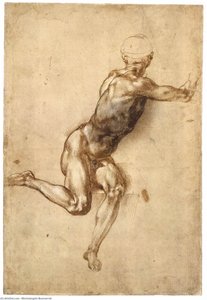
What if I told you that Sitting Male Nude (recto) by Michelangelo Buonarroti was born from a moment of pure, anatomical rebellion? This isn't just a sketch; it is a masterclass in raw human power. Created around 1504, this study captures the heavy, muscular energy of the Renaissance at its most intense. As part of the legendary preparations for The Battle of Cascina , Michelangelo uses precise pen strokes to sculpt light and shadow directly onto paper, turning anatomy into high drama.
Its inclusion in the top 25 artworks in the British Museum, London, is non-negotiable because it redefined how we perceive the strength and vulnerability of the human form. The way the dark, heavy lines define every sinew creates a sense of movement that feels almost alive. At ArtsDot.com, we believe this kind of visceral impact shouldn't be locked behind museum glass. Imagine this level of iconic, sculptural energy reimagined as a bold statement piece in your own studio or loft. Bringing the spirit of Michelangelo into your space transforms a mere wall into a sanctuary of timeless, muscular grace.
Head of a Satyr - Michelangelo Buonarroti
 Head of a Satyr - Michelangelo Buonarroti
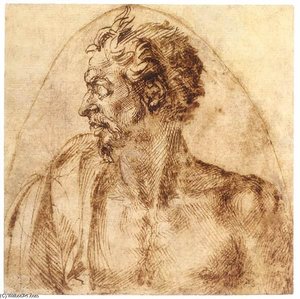
In Michelangelo’s Head of a Satyr , the dominant mood is anchored by deep, charcoal shadows and stark, monochromatic contrasts that evoke an atmosphere of intense, brooding drama. This isn't just a sketch; it is a masterclass in using light and dark to sculpt emotion directly onto paper. The heavy use of black ink and intricate cross-hatching creates a rhythmic, textured depth that captures the raw, primal energy of the subject, earning its place among the top 25 artworks in British Museum, London .
For the modern design enthusiast, this piece offers a blueprint for high-impact, moody interiors. The stark interplay of light and shadow can be used to inspire dramatic accent lighting or a sophisticated, minimalist color palette in a contemporary study or lounge. Integrating the gritty, anatomical realism of this Renaissance masterpiece allows you to curate a space that feels both intellectually profound and visually commanding—perfect for those looking to bring a sense of historical weight and sculptural intensity to their urban sanctuary.
Photograph of a drawing of Quiriguá taken by A.P. Maudslay - alfred percival maudslay
 Photograph of a drawing of Quiriguá taken by A.P. Maudslay - alfred percival maudslay
Owning a piece of history like the Photograph of a drawing of Quiriguá taken by A.P. Maudslay is an investment in a legacy of discovery and unparalleled taste for the discerning collector. As one of the top 25 artworks in 'British Museum, London', this 1894 masterpiece transcends mere documentation; it is a high-impact visual portal into the heart of Mayan civilization. Through Maudslay’s pioneering dry plate photography, we witness the raw, textured grandeur of Guatemala's ancient ruins, captured with a sharp, monochromatic precision that feels strikingly modern.
The provenance of this work lies in its role as a scientific revolution, preserving the intricate stone carvings and monumental pyramids before the passage of time could erode them. Its presence in the museum’s elite collection confirms its immense cultural value and aesthetic authority. For those curating high-end, design-conscious spaces, a high-quality reproduction of this work brings a sophisticated, archival mood to modern luxury interiors. It serves as a powerful focal point, injecting an atmosphere of intellectual depth and timeless prestige into any contemporary architectural setting.
The Lamentation of Christ (recto) - Michelangelo Buonarroti
 The Lamentation of Christ (recto) - Michelangelo Buonarroti
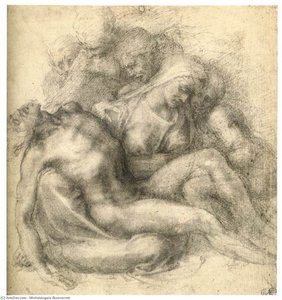
Before he was the titan of the Sistine Chapel, Michelangelo was a master of the raw, monochromatic power found in line and shadow. In The Lamentation of Christ (recto) , we witness a profound moment of Renaissance intensity that transcends mere sketching. This work isn't just a drawing; it is a visceral exploration of grief, where the stark contrast of black and white captures the heavy, somber atmosphere of a funeral procession. The way the figures cluster around the fallen Christ creates a rhythmic, almost sculptural depth on a flat surface, showcasing the technical genius that would later define his marble masterpieces.
As one of the top 25 artworks in British Museum, London , this piece serves as a masterclass in focus and emotional precision. There is an undeniable gravity in Michelangelo’s hand—a disciplined energy that commands attention. Bringing the spirit of such monumental dedication into your own space can transform a modern home office or study into a sanctuary of high-impact creativity and sophisticated, undistracted thought.
Antique Warrior - Leonardo da Vinci
 Antique Warrior - Leonardo da Vinci
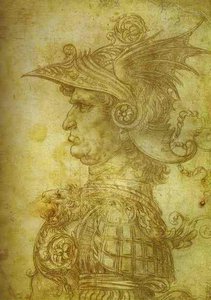
What if I told you that Antique Warrior by Leonardo da Vinci was born from a moment of pure, experimental rebellion? This isn't just an early sketch; it is a high-impact manifesto of a genius in the making. Standing as a pivotal entry in our list of the top 25 artworks in the British Museum, London, this piece captures the raw energy of the Renaissance before it became polished perfection. The striking silhouette of the horned helmet and the intense, shadowed gaze of the warrior command attention, utilizing early sfumato to create a moody, cinematic atmosphere that feels incredibly modern.
Its inclusion in the British Museum’s elite collection is demanded by its technical audacity—a precursor to the legendary Mona Lisa . At ArtsDot.com, we believe this kind of visual power shouldn't be locked behind museum glass. Imagine this enigmatic figure reimagined as a bold, hand-painted oil masterpiece in your own studio or loft. Bringing this level of historical grit into your space turns a simple wall into a curated statement of strength and timeless design.
The Sixth Month (Right) - Utagawa Kuniyoshi
 The Sixth Month (Right) - Utagawa Kuniyoshi
In Utagawa Kuniyoshi's 1849 masterpiece, The Sixth Month (Right) , the eye is immediately captured by the crisp, intentional linework and the rich, saturated pigments characteristic of high-level ukiyo-e woodblock printing. The texture of the print reveals a sophisticated interplay of light; lanterns cast a warm, amber glow across autumnal silks, while the delicate rendering of seasonal elements—like the weight of a pumpkin held by a central figure—creates a profound sense of presence. This work stands among the top 25 artworks in the British Museum, London, because Kuniyoshi revolutionized the genre by blending traditional Japanese motifs with an almost theatrical use of Western-inspired perspective and dramatic lighting.
At ArtsDot.com, we are obsessed with capturing this exact level of narrative depth and material soul. While a standard print feels flat, our hand-painted oil reproductions aim to recreate the tactile, three-dimensional energy of Kuniyoshi’s vision. We bring the museum experience into your space by emphasizing visible brushstrokes and tonal range, ensuring that the fleeting beauty of the Edo period is preserved with high-impact, contemporary prestige for the modern collector.
Profile of a warrior in helmet - Leonardo da Vinci
 Profile of a warrior in helmet - Leonardo da Vinci
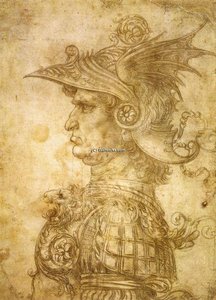
Look closer. The lines in Profile of a Warrior in Helmet by Leonardo da Vinci aren’t merely drawn; they are choreographed . This silverpoint masterpiece from 1472 is not just a portrait; it is a dance frozen in time, capturing the precise moment where Renaissance engineering meets raw human emotion. As you navigate the top 25 artworks in British Museum, London, this piece stands out for its incredible technical precision and enigmatic mood.
Da Vinci uses the delicate silverpoint technique to weave a narrative of strength and mystery. The warrior’s face, partially veiled by the intricate visor, invites you into a world of shadows and light. Every fine stroke on the prepared surface feels intentional, creating a sense of rhythm that makes the heavy armor feel almost weightless. It is a study in balance—where the sharp detail of the metalwork meets the soft, human gaze. What if your own space could hold this same tension? What if your walls could breathe rhythm and command attention with such quiet, powerful grace?
Small Passion: 6. Christ's Entry into Jerusalem - Albrecht Dürer
 Small Passion: 6. Christ's Entry into Jerusalem - Albrecht Dürer
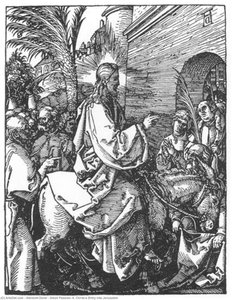
What story does the bustling, high-contrast world of Christ's Entry into Jerusalem by Albrecht Dürer tell? Emerging from the intellectual explosion of the Northern Renaissance in 1511, this woodcut is far more than a religious illustration; it is a masterclass in visual energy. As one of the top 25 artworks in the British Museum, London, this piece broke ground by using incredibly precise cross-hatching to sculpt light and shadow out of mere black ink, creating a three-dimensional depth that was revolutionary for its time.
Dürer orchestrates a symphony of movement, where the textures of stone walls and swaying palms feel almost tactile. For the modern collector seeking a curated escape, this print offers a profound sense of historical gravity. The dramatic interplay of velvety blacks and brilliant whites provides a sophisticated visual anchor, perfect for bringing a layer of soulful, old-world intensity to a contemporary space. It is an invitation to pause and lose oneself in the intricate, rhythmic pulse of history.
Pattern from the Series of Six Knots 3 - Albrecht Dürer
 Pattern from the Series of Six Knots 3 - Albrecht Dürer
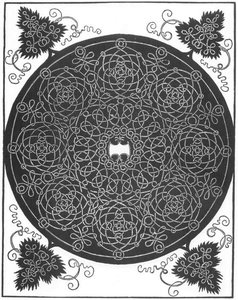
A hypnotic dance of ink and precision, Pattern from the Series of Six Knots 3 by Albrecht Dürer feels like a mathematical spell frozen in time. As one of the most striking graphic achievements within the British Museum’s collection, this 1505 woodcut transcends mere decoration to become a masterclass in geometric soul. Dürer strips away the distraction of color, leaving only a high-impact, monochromatic symphony where black lines weave through white space with surgical intensity.
The composition is anchored by a monumental central circle, an eternal loop of interlocking knots that pulse with rhythmic energy. Each carved line carries the tactile weight of the Renaissance craftsman, creating a visual texture that feels both ancient and incredibly modern. For the contemporary design enthusiast, this piece offers more than historical depth; its stark, architectural symmetry provides a blueprint for sophisticated, minimalist aesthetics. It is a profound exploration of order amidst complexity, proving that even five centuries later, Dürer’s disciplined, graphic brilliance continues to command the room with unmatched visual authority.
King David Playin a Psaltery - Fra Angelico
 King David Playin a Psaltery - Fra Angelico
Imagine the quiet hum of a celestial melody captured in a single, frozen moment of devotion. Fra Angelico’s King David Playing a Psaltery is not just a relic of the Early Renaissance; it is a masterclass in spiritual atmosphere. As one of the top 25 artworks in the British Museum, London, this piece earns its place through its profound ability to blend Florentine opulence with deep, meditative stillness. The way the light catches the intricate embroidery of David’s royal robes and the delicate strings of his instrument creates a visual rhythm that feels both ancient and eternally fresh.
This masterpiece stands out in our collection because it transcends simple portraiture, using symbolic depth to evoke themes of righteousness and musical praise. In today's fast-paced world, the serene, earthy tones and contemplative mood of Angelico’s work offer a much-needed sanctuary for the modern soul. At ArtsDot.com, we believe such transformative beauty should not be confined to museum walls. Through our high-fidelity, hand-painted oil reproductions, you can bring this profound sense of peace and historical grandeur into your own home or office, turning any personal space into a curated gallery of timeless emotion.
Mosaic of a Double-headed Serpent - aztec empire
 Mosaic of a Double-headed Serpent - aztec empire
To encounter the Mosaic of a Double-headed Serpent is to witness a high-voltage transmission from the heart of the Aztec Empire directly into the modern era. This isn't just ancient craftsmanship; it is a masterclass in visual duality. The sinuous, serpentine form—rendered in a mesmerizing palette of deep turquoise and electric blues—pulses with a raw, rhythmic energy that feels strikingly contemporary. Each tiny tessera acts like a pixel in a prehistoric digital display, creating a textured, undulating surface that captures light and shadow with hypnotic precision.
Beyond its striking aesthetic, the piece embodies the profound Aztec philosophy of balance: the interplay between opposing forces like life and death or order and chaos. In today’s design landscape, where bold, graphic patterns and symbolic storytelling dominate curated spaces, this mosaic stands as a definitive icon. It remains a vital talking point among the top 25 artworks in British Museum, London , offering a heavy-hitting fusion of sacred myth and avant-garde geometry that continues to haunt and inspire the modern eye.
Christian II of Denmark - Albrecht Dürer
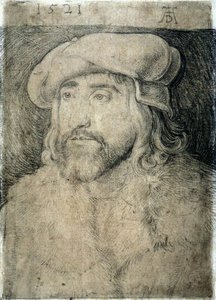 Christian II of Denmark - Albrecht Dürer
To stand before a masterpiece is to witness a moment of history frozen in time, where the weight of a crown meets the vulnerability of the human soul. In Christian II of Denmark by Albrecht Dürer , we encounter this tension with startling clarity. As one of the top 25 artworks in the British Museum, London, this 1521 portrait transcends mere royal documentation; it is a psychological deep-dive into a monarch navigating political chaos. Dürer, the titan of the German Renaissance, utilizes a jewel-toned palette of deep reds and shimmering golds to construct an image of absolute authority, yet his brushwork reveals a more haunting truth.
The tactile precision is breathtaking—from the heavy, velvet textures of the royal attire to the meticulous rendering of the king’s facial hair. Through subtle sfumato , Dürer softens the edges of reality, allowing a sense of atmospheric anxiety to seep into the king's intense, brooding gaze. This painting remains essential because it captures the duality of power: the outward splendor of empire versus the inward shadow of uncertainty. It is a profound reminder of how high-impact art continues to command any space, transforming walls into windows of emotional depth.
Scene from Shakespeare's Winter's Tale - John Opie
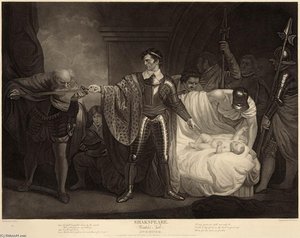 Scene from Shakespeare's Winter's Tale - John Opie
In the high-stakes drama of John Opie’s 1790 engraving, Scene from Shakespeare's Winter's Tale , we find a masterclass in tension and cinematic storytelling. This isn't just a static print; it is a frozen moment of psychological warfare. As part of the top 25 artworks in the British Museum, London, Opie’s work captures that electric friction between authority and plea, rendered through the sharp, meticulous lines of late 18th-century etching. The interplay of light and shadow—reminiscent of a Rembrandt noir—highlights the glint of armor and the heavy textures of a royal court, pulling you directly into the conflict.
For the modern design enthusiast, this piece resonates with today’s obsession with dark academia and moody, narrative-driven aesthetics. The way Opie uses subdued lighting to amplify the emotional weight of Ariel’s gesture speaks to our current cultural fascination with the 'unspoken' and the atmospheric. It remains a vital talking point in curated spaces, proving that even centuries later, the raw, graphic impact of Shakespearean drama can still command a room with its profound, brooding elegance.
Studies of grotesque heads - Michelangelo Buonarroti
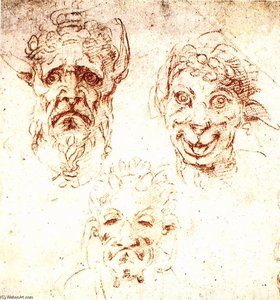 Studies of grotesque heads - Michelangelo Buonarroti
There is something raw and deeply human about witnessing the Studies of grotesque heads by Michelangelo. It isn't just a drawing; it is a visceral exploration of the extremes of the human psyche. In these chalk strokes, we see the spectrum of existence—from a furrowed, displeased brow to a haunting, distorted grin. This piece captures that universal moment when emotion breaks through our polished exteriors, revealing the beautiful chaos underneath.
As one of the top 25 artworks in the British Museum, London, this work is essential because it marks the shift into Mannerism, where Michelangelo moved beyond classical perfection to embrace psychological intensity and anatomical drama. The way the chalk captures light and shadow creates a palpable sense of movement and tension that has mesmerized collectors for centuries. At ArtsDot.com, we celebrate this same raw energy. Our handmade oil reproductions are designed to bring this level of profound emotion and textured depth into your modern space, preserving the unmistakable soul and masterful brushwork of the Renaissance masters for your own collection.
Small Passion: 2. Expulsion from the Paradise - Albrecht Dürer
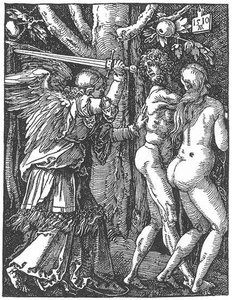 Small Passion: 2. Expulsion from the Paradise - Albrecht Dürer
A heavy sense of sorrow and divine tension hangs in the air within Small Passion: 2. Expulsion from Paradise by Albrecht Dürer. This woodcut is not just a print; it is a masterclass in high-contrast drama, where every sharp, carved line vibrates with the weight of human fallibility. As one of the top 25 artworks in the British Museum, London, this piece earns its place through Dürer’s unparalleled ability to use monochromatic depth to evoke raw emotion—capturing the exact moment innocence dissolves into shame.
The composition pulls you into a whirlwind of movement, using diagonal tension between the commanding angel and the retreating Adam to create a visual pulse that feels incredibly modern. Its intricate textures and symbolic shadows offer a sophisticated, moody aesthetic that transcends its 1510 origins. For the contemporary collector, this work serves as a profound focal point; through high-fidelity reproductions, you can bring this transformative, cinematic presence into your own home or office, injecting a sense of historical prestige and deep, soulful storytelling into your personal gallery.
Death and the Landsknecht - Albrecht Dürer
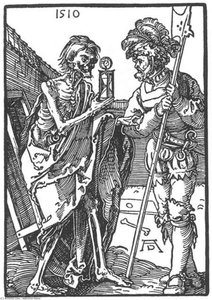 Death and the Landsknecht - Albrecht Dürer
In the shadows of the British Museum’s legendary collection, Albrecht Dürer’s Death and the Landsknecht hits with the raw, high-contrast energy of a modern graphic novel. This isn't just a woodcut; it is a visceral confrontation between worldly swagger and the inevitable end. Dürer uses a stark, monochrome palette to stage a cinematic standoff: a skeletal figure thrusting an hourglass toward a richly armored warrior, freezing a moment of futile defiance against the ticking clock of mortality.
The technical execution is pure masterclass. Through intricate cross-hatching and sharp, directional lighting, Dürer creates a textured landscape that feels as rugged and unforgiving as the themes it portrays. For the modern viewer, this piece resonates with today’s obsession with dark aesthetics and memento mori motifs found in street art and contemporary design. As one of the top 25 artworks in the British Museum, London, it remains a powerful cultural touchstone, reminding us that even the most opulent displays of status are ultimately transient against the relentless flow of time.
The Plum-Pudding in Danger - james gillray
 The Plum-Pudding in Danger - james gillray
To encounter The Plum-Pudding in Danger by James Gillray is to witness the sharp, satirical pulse of the Regency era captured in a single, biting moment. As one of the standout pieces within the top 25 artworks in British Museum, London , this etching transcends mere caricature; it is a masterclass in political storytelling and visual wit. While Gillray was the undisputed king of the political cartoon, here he uses his razor-sharp line to dissect the geopolitical tensions of 1805, turning a shared dessert into a high-stakes metaphor for imperial ambition.
The composition vibrates with an energy that feels surprisingly modern—a precursor to today's graphic and street art movements. For the contemporary collector, this piece offers more than historical insight; it brings a punchy, intellectual edge to a curated space. Its ability to blend biting social commentary with intricate, fine-lined detail makes it a timeless choice for those looking to anchor a luxury interior with works that possess both narrative depth and a bold, unmistakable visual identity.
Solicitudo Rustica (Country Concerns) - Pieter Bruegel the Elder
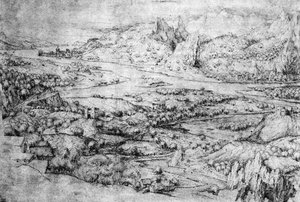 Solicitudo Rustica (Country Concerns) - Pieter Bruegel the Elder
To encounter Solicitudo Rustica (Country Concerns) by Pieter Bruegel the Elder is to witness a masterclass in atmospheric tension, a rare moment where the raw grit of Northern Renaissance life meets high-concept visual storytelling. As one of the top 25 artworks in the British Museum, London, this piece transcends simple landscape; it is a cinematic, monochrome exploration of human vulnerability. Bruelar uses intricate pen-and-ink hatching to build a world that feels both immense and claustrophobic, where a gathering storm mirrors the economic and religious anxieties of the 16th century.
The composition pulls you into a panoramic odyssey, using a sophisticated atmospheric perspective that makes distant mountains recede into ghostly greys. For the modern collector, there is an undeniable edge to this work—its stark, graphic intensity and moody, tonal depth resonate perfectly with contemporary minimalist or industrial aesthetics. It isn't just a depiction of rural toil; it is a timeless, high-impact statement on resilience against an indifferent universe, making it an essential cornerstone for any serious appreciation of art history’s most profound visual legacies.
Laughing Peasant Woman - Albrecht Dürer
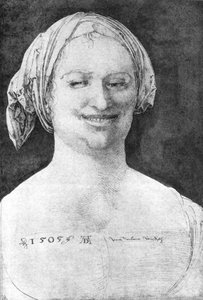 Laughing Peasant Woman - Albrecht Dürer
To witness Albrecht Dürer’s “Laughing Peasant Woman” is to experience the sheer alchemy of ink and intention. Up close, the artwork reveals a breathtakingly intricate web of hatching and cross-hatching , where every fine, rhythmic line serves to sculpt volume from the void. Dürer eschews heavy pigments for a masterful use of pen and brown ink, creating a graphic texture that captures the soft folds of a headscarf and the weathered, joyful contours of a face in mid-laughter. This technical precision is what secures its place among the top 25 artworks in the British Museum, London; it is a revolutionary moment where Renaissance realism meets raw, human vitality.
At ArtsDot.com, we believe this tactile energy should not be confined to museum archives. Our mission is to translate this incredible materiality—the visible depth of every stroke and the soulful interplay of light and shadow—into high-end, hand-painted oil reproductions. We bring the three-dimensional spirit of Dürer’s mastery into your personal space, ensuring the unpretentious grace and infectious warmth of this 1505 masterpiece remain a living, breathing part of your modern collection.
Landscape with a Goatherd - claude lorrain (claude gellée)
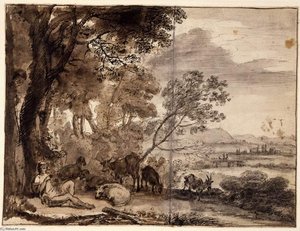 Landscape with a Goatherd - claude lorrain (claude gellée)
Step into a world where time slows to the rhythm of grazing sheep and dappled sunlight. In Landscape with a Goatherd , Claude Lorrain orchestrates a cinematic masterclass in atmosphere. This isn't just a pastoral scene; it is an immersive escape into the 17th-century Arcadian ideal . As you gaze at the canvas, your eyes wander through layers of lush, verdant foliage and textured greenery, following the soft movement of a solitary goatherd tending his flock.
Lorrain’s technical genius lies in his ability to manipulate light, creating a luminous glow that feels almost ethereal as it filters through ancient tree canopies. The interplay of deep shadows and radiant highlights gives the landscape a profound sense of depth and life. For the modern collector or design enthusiast, bringing this piece into a contemporary space offers more than just prestige; it provides a soulful focal point of tranquility. Whether anchoring a minimalist loft or a grand study, this work from the British Museum’s collection infuses any interior with a sense of eternal peace and classical elegance.
Conclusion
As the shadows lengthen over the Great Court and the echoes of footsteps fade within the museum's grand halls, we are left with more than just a memory of stone and pigment. The masterpieces housed within the British Museum are not merely relics of a distant past or static displays behind glass; they are living, breathing pulses of human emotion that refuse to be silenced by time. Each stroke of paint and every carved line carries a fragment of the soul—a testament to our universal, unyielding desire to capture beauty, to tell our stories, and to find meaning in the chaos of existence.
To witness these works is to engage in a silent dialogue with history, but the true magic happens when that inspiration leaves the museum walls and enters your daily life. Imagine bringing that same light, texture, and profound gravity into your own sanctuary. By surrounding yourself with these iconic visions, you transform a mere room into a space of reflection and power, turning your home into a gallery of human grace where every glance at a canvas serves as a daily reminder of the creativity that defines us.
Whether it is the bold energy of a contemporary reimagining or the deep, soulful resonance of a classical tribute, let these works move you, shape your environment, and inspire your own creative journey. We invite you to explore the full collection and discover how these timeless treasures can become a permanent part of your personal story.