Early Life & Artistic Training: From Carpenter to Academy
Charles Martin Hardie (16 March 1858 – 3 September 1916) was a Scottish artist and portrait painter. Born in East Linton in East Lothian in Scotland, the son of Mary née Martin (1817–1901) and John Hardie (1820–1870), a Master Carpenter, Charles Mart...
The story of Charles Martin Hardie is one of fortunate redirection, a testament to the power of familial influence and the allure of artistic expression. Born in 1858 in the quiet East Lothian village of East Linton, Scotland, young Charles initially followed in his father’s footsteps, apprenticed as a carpenter – a practical trade befitting a hardworking family. However, fate intervened through his marriage to Mary Lewis, whose connection to the artist John Pettie proved pivotal. It was Pettie who recognized Hardie's latent talent and encouraged him to pursue formal training at the prestigious Trustees' Academy in Edinburgh. This transition from shaping wood for functional purposes to manipulating it as a medium for artistic vision would define the course of his life and ultimately establish him as a significant figure in British art.
The Trustees’ Academy, though not known for radical innovation, provided Hardie with a solid foundation in drawing, painting, and composition. It was here that he began to hone the skills that would later characterize his distinctive style – a meticulous attention to detail, a sensitivity to light and atmosphere, and an innate ability to capture the essence of Scottish life. While the Academy curriculum likely encompassed traditional portraiture and landscape techniques, it was Hardie’s inherent inclination towards narrative storytelling that set him apart.
The Scottish Landscape & Narrative Themes in Hardie’s Work
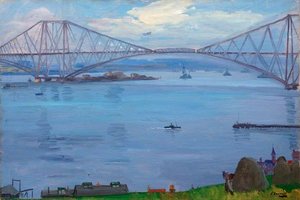
Hardie's artistic heart belonged to Scotland. His paintings are imbued with a deep reverence for the country’s rugged beauty – its rolling hills, ancient castles, and dramatic skies. But he wasn’t content merely to depict these scenes; he sought to populate them with life, with history, with *meaning*. His landscapes aren't simply views; they are stages upon which stories unfold. This penchant for narrative is particularly evident in his depictions of Scottish country life, where everyday moments are elevated through a romanticized lens, often hinting at deeper social or historical contexts.
He wasn’t a painter of grand, sweeping vistas in the manner of Turner; rather, Hardie focused on intimate scenes – gatherings around hearths, figures traversing moorlands, and quiet moments of contemplation. These works evoke a sense of nostalgia for a bygone era, a time when community bonds were strong and traditions held sway. The careful rendering of costumes, architecture, and everyday objects speaks to his dedication to authenticity, even as he imbued these scenes with an idealized quality.
Hardie's Mastery of Portraiture: Burns, Scott and Beyond
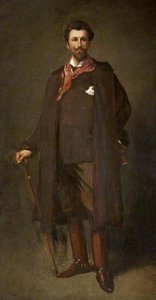
Charles Martin Hardie, 1858–1916, British, Scottish, Mr Abraham Howling, Master of Trinity House (1901–1902), Image credit: Historic Environment Scotland.
While Hardie’s landscapes are captivating, it was his portraits that initially garnered him recognition. He specialized in depictions of two iconic Scottish literary figures – Robert Burns and Sir Walter Scott – but these were rarely straightforward representations. Instead, he placed them within imagined historical scenes, breathing life into the legends surrounding their lives. These weren't simply likenesses; they were interpretations, dramatic reconstructions designed to capture the spirit of the poet or novelist.
Beyond Burns and Scott, Hardie also undertook commissions for portraits of prominent individuals, such as Mr Abraham Howling, Master of Trinity House (a work held by Historic Environment Scotland). These portraits demonstrate his technical skill – a keen eye for detail, a mastery of oil paint, and an ability to convey personality through subtle nuances of expression. However, even in these more conventional portrait settings, Hardie’s narrative sensibility shines through, often incorporating symbolic elements or carefully chosen backgrounds that hint at the sitter's character or profession.
A Pioneer of Colour Woodcut: Technique and Innovation
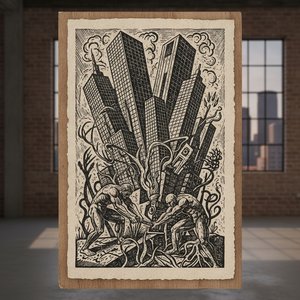
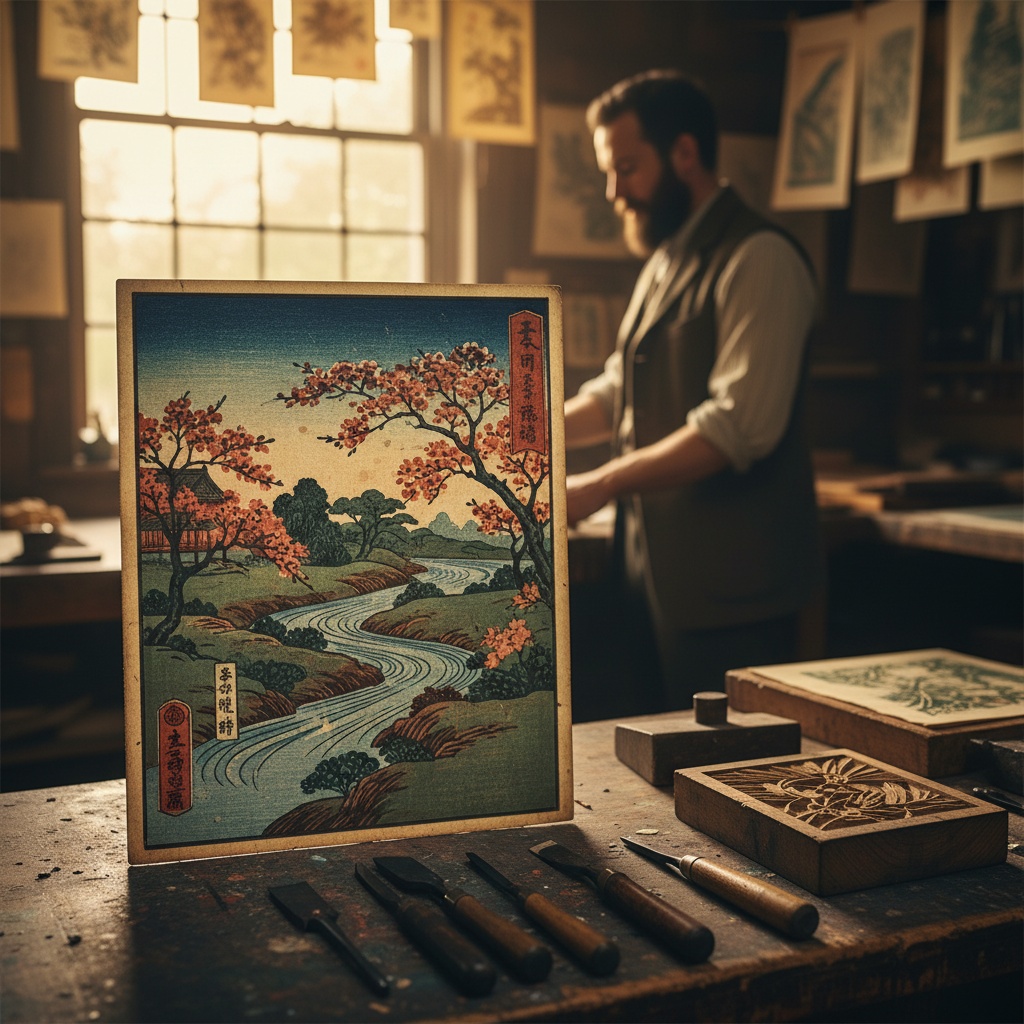
Woodcut is a relief printing technique in printmaking. An artist carves an image into the surface of a block of wood—typically with gouges—leaving the printing parts level with the surface while removing the non-printing parts. Areas that the artist ...
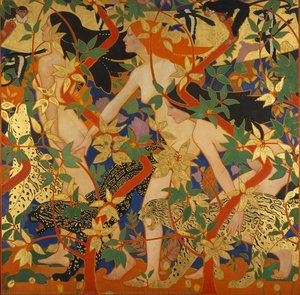
Though primarily known as a painter, Charles Martin Hardie also made significant contributions to the revival of colour woodcut in Britain. This technique, rooted in Japanese *ukiyo-e* prints, involved carving an image into a block of wood, applying ink, and transferring it to paper – a process demanding both artistic skill and technical precision. Hardie’s embrace of this medium was particularly noteworthy during a period when printmaking was often considered secondary to painting.
He wasn't simply replicating existing designs; he experimented with colour layering, complex compositions, and innovative carving techniques. The “Presentation Prints” produced by the Woodcut Society, featuring Hardie’s work, showcased the potential of this medium for creating vibrant, expressive images. His woodcuts often echoed the themes found in his paintings – Scottish landscapes, historical scenes, and portraits – but with a distinct graphic quality that appealed to a wider audience.
Recognition & Legacy: The Royal Scottish Academy & Enduring Influence
Hardie’s talent did not go unnoticed. He was elected an Associate of the Royal Scottish Academy (ARSA) in 1886, and a full member (RSA) in 1895 – accolades that solidified his position within the established art world. Throughout his career, he exhibited widely at prestigious venues including the Royal Academy, the Royal Hibernian Academy, and the Royal Institute of Painters in Water Colours.
Despite personal setbacks—including a divorce following his wife’s elopement with an actor—Hardie continued to paint prolifically until his death in 1916. Today, at least eight of his artworks reside within the collection of the National Galleries of Scotland, and his portrait of Julius Drewe hangs proudly in Castle Drogo. While perhaps not a household name, Charles Martin Hardie remains a significant figure in Scottish art history – a skilled painter, a pioneering printmaker, and a chronicler of a vanishing way of life.
Collecting Charles Martin Hardie Today
For collectors seeking to acquire works by Charles Martin Hardie, opportunities exist across various price points. Oil paintings command higher values, reflecting their scale and technical complexity. However, his colour woodcuts offer an accessible entry point into his oeuvre, providing a glimpse of his artistic vision at a more affordable cost. Auction records demonstrate consistent demand for both mediums, with prices ranging from approximately €1,400 to €2,500 depending on size, subject matter, and condition.
When considering a purchase, it’s important to assess the provenance of the artwork – its history of ownership – as well as its overall condition. Works in good original condition, with vibrant colours and minimal restoration, are particularly desirable. ArtsDot.com offers a curated selection of high-quality reproductions of Hardie's paintings and prints, allowing art enthusiasts to experience the beauty and narrative power of his work firsthand. Explore our collection today and discover the enduring appeal of this remarkable Scottish artist.