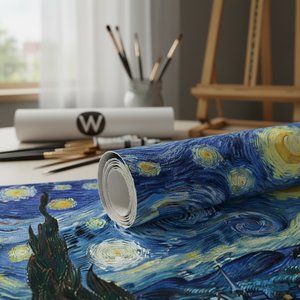
Defining Giclée: The Science and Artistry Behind High-Fidelity Reproductions
The term Giclée—pronounced zhee-KLAY—carries an air of French sophistication that belies its technical origins. Emerging in the 1990s from a period of rapid innovation in inkjet technology, the word was bestowed upon a new era of printmaking to distinguish it from mere commercial reproductions. At its heart, a Giclée is not simply a print; it is a high-resolution, fine art inkjet process designed to capture the very soul of an original masterpiece. Unlike standard printing methods that may rely on dye-based inks and mass-market papers, the Giclée process utilizes specialized printers capable of depositing microscopic droplets of pigment with surgical precision. This allows for a level of color depth and tonal range that mimics the subtle transitions found in oil paintings or watercolor washes. For the collector, this represents a bridge between the inaccessible original and a high-fidelity medium that honors the artist's intent through technological mastery.
The Anatomy of Excellence: Pigment-Based Inks and Museum-Grade Substrates
To understand why Giclée prints are held in such high regard within museum circles, one must look beneath the surface at the chemistry of their creation. The true distinction lies in the use of pigment-based inks rather than traditional dyes. While dyes can be vibrant, they are often susceptible to fading when exposed to light over time. In contrast, pigment-based inks consist of tiny, solid particles of color suspended in a liquid, which bond more deeply with the substrate. This technical choice ensures that the hues remain remarkably true and resistant to the ravages of UV exposure. Furthermore, the choice of substrate is paramount; these prints are typically rendered on museum-grade papers or heavy-duty cotton canvases. These materials are acid-free and pH-neutral, preventing the yellowing or brittleness that plagues lesser reproductions. When these two elements—stable pigments and archival substrates—converge, the result is a work of art that possesses a profound sense of presence and structural integrity.
Giclée vs. Traditional Prints: Distinguishing Quality for the Disconting Collector
For the discerning eye, distinguishing between a standard art print and a Giclée requires an understanding of both resolution and materiality. A common commercial print often suffers from "banding" or a loss of detail in the darkest shadows and brightest highlights, creating a flat, lifeless appearance. A Giclée, however, operates at a much higher DPI (dots per inch), allowing for a seamless transition of color that preserves the intricate textures of a brushstroke or the delicate grain of a canvas. There is also a tactile dimension to consider; while a standard print may feel like mere paper, a high-quality Giclée on cotton rag or textured canvas offers a physical depth that invites closer inspection. While it lacks the three-dimensional impasto of a handmade oil reproduction, the Giclée provides an unparalleled level of accuracy for those seeking to curate a collection of historical masterpieces with modern precision and accessibility.
Longevity and Preservation: Ensuring Decades of Color Accuracy and Vibrancy
The true value of any art acquisition lies in its ability to endure. A primary concern for collectors is the concept of lightfastness—the ability of a pigment to resist fading under light. Giclée technology is engineered specifically to address this challenge, with many prints rated to last between 75 and 100 years without noticeable degradation. This longevity transforms a decorative piece into a lasting legacy. However, even the most advanced printing technology requires proper stewardship. To protect this investment, collectors should consider environmental factors such as humidity and direct sunlight. Utilizing acid-free matting to create an air gap between the print and the glass of a frame can prevent moisture-induced damage, ensuring that the vibrant blues of a Van Gogh or the soft light of a Monet remain as striking in a century as they are today.
Enhancing Your Collection: Custom Framing and Textured Finishes for Added Depth
The final metamorphosis of a Giclée print from a digital output to a gallery-ready masterpiece occurs during the framing and finishing stages. To elevate a flat reproduction, many connoisseurs opt for textured prints, where an artist manually applies a clear acrylic gel over the surface to simulate the physical relief of paint. This technique introduces a "living" quality to the work, catching the light in ways that mimic traditional oil techniques. Furthermore, the choice of framing can fundamentally alter the artwork's impact within an interior space. Whether utilizing a heavy gold-leaf frame for a classical aesthetic or a sleek, modern black wood frame for contemporary settings, the frame acts as the window through which the art is experienced. By combining high-fidelity printing with bespoke craftsmanship, one can create a collection that feels both historically significant and architecturally integrated into the modern home.
At ArtsDot.com, we are dedicated to preserving human creativity by offering these museum-quality reproductions to a global audience. From our extensive library of 465,000 paintings to our specialized services in custom oil commissions, our mission is to ensure that the beauty of the Old Masters and modern legends remains accessible, durable, and breathtakingly accurate for collectors in every corner of the world.