The Pastoral Ideal: Origins and Evolution
The pastoral genre of literature, art, or music depicts an idealised form of the shepherd's lifestyle – herding livestock around open areas of land according to the seasons and the changing availability of water and pasture. The target audience is t...
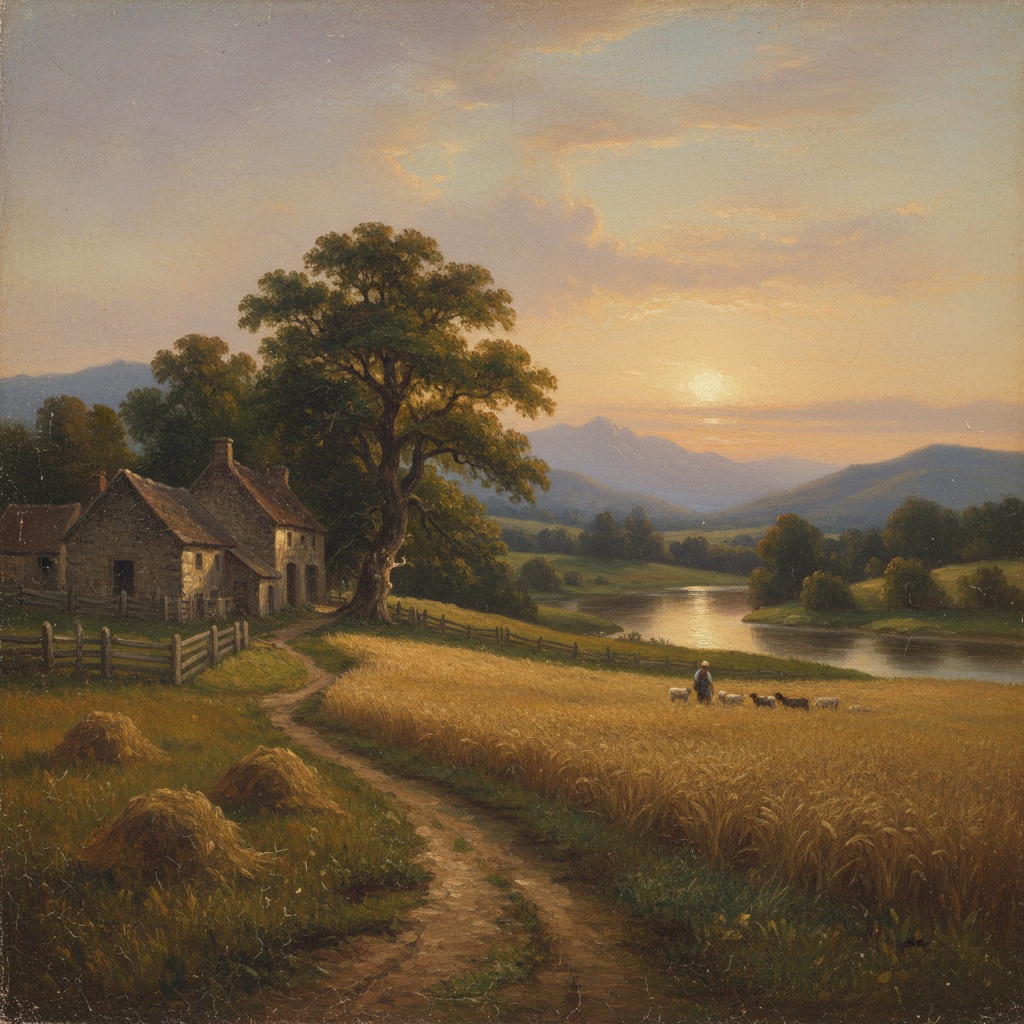
The allure of rural life has captivated artists for centuries, manifesting as a powerful current throughout art history known as the pastoral tradition. Rooted in ancient Greece – specifically Virgil’s idealized depictions of shepherds and idyllic landscapes – the pastoral wasn't merely a celebration of country existence; it was an escape. A yearning for simplicity, harmony, and a perceived purity lost amidst the complexities of urban life. This initial impulse, born from a world increasingly shaped by empire and societal pressures, established a template that would be revisited and reimagined across epochs. Early pastoral works often served as subtle critiques of courtly excess or political turmoil, using the bucolic setting as a foil to highlight the perceived corruption of civilization. The very notion of an “Arcadia,” a mythical paradise, became synonymous with this longing for a simpler time, influencing not only visual art but also literature and music.
The genre’s enduring appeal lies in its inherent ambiguity. It's rarely a literal representation of rural life, but rather a carefully constructed fantasy – a locus amoenus, or beautiful place, populated by idealized figures engaged in timeless pursuits. This deliberate artificiality is key; the pastoral isn’t about accurately portraying the hardships of farming, but about evoking an emotional response, offering a respite from the anxieties of the modern world. The shepherds and shepherdesses themselves often embody grace, beauty, and innocence, serving as allegorical representations of virtue or lost potential.
Dutch Masters and the Golden Age of Rural Scenes
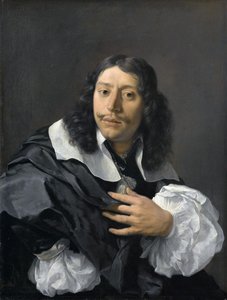 Karel Dujardin
Discover Karel Dujardin (1626-1678), a Dutch Golden Age master renowned for idyllic Italian landscapes, charming genre scenes & detailed animal studies.
The 17th-century Dutch Golden Age witnessed a remarkable flourishing of pastoral painting, though with a distinctly different sensibility than its classical predecessors. Artists like Karel Dujardin didn’t necessarily seek to escape reality; instead, they brought a newfound realism and attention to detail to their depictions of the countryside. While still imbued with a sense of tranquility, these scenes often featured working farmers, livestock, and meticulously rendered landscapes that reflected the Dutch countryside's actual appearance. Dujardin, in particular, became renowned for his idyllic Italianate landscapes populated by charming genre scenes – a testament to the growing middle class’s desire for accessible and relatable imagery.
This period also saw a rise in animal studies, with cows frequently appearing as symbols of prosperity and contentment. The detailed observation of light and shadow, characteristic of Dutch painting, further enhanced the sense of realism, grounding these pastoral scenes in a tangible world. Artists like Jan Asselijn masterfully captured dramatic moments within these landscapes – such as ‘The Threatened Swan’ – adding a layer of narrative tension to otherwise peaceful compositions. The focus shifted from purely allegorical representations to a more nuanced portrayal of rural life, acknowledging both its beauty and its inherent challenges.
Realism's Embrace: Courbet and the Depiction of Peasant Life
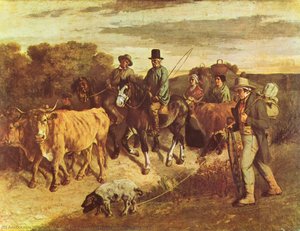
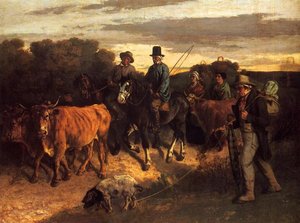 The Peasants of Flagey Returning from the Fair, Ornans
Gustave Courbet's 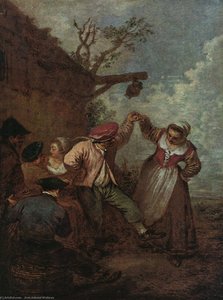 Peasant Dance
Admire Jean-Antoine Watteau’s ‘Peasant Dance’! A Dutch Golden Age masterpiece depicting rustic joy & social interaction. Explore its detailed oil painting style & timeless charm.
While Courbet embraced realism, other artists continued to explore the more idyllic aspects of rural life, albeit with a distinctly romantic sensibility. Jean-Antoine Watteau’s “Peasant Dance” exemplifies this approach – a charming depiction of rustic joy and social interaction. Watteau's delicate brushwork, vibrant colors, and graceful figures create an atmosphere of lightheartedness and elegance. The scene isn’t necessarily about the hardships of peasant life; it’s about celebrating the simple pleasures of community and connection.
Later in the 19th century, Anton Mauve continued this tradition, becoming a leading Dutch Realist known for his evocative landscapes and rural scenes. Mauve's art, heavily influenced by the Hague School, captured the beauty of the Dutch countryside with a poetic sensibility. His paintings often featured intimate moments – families working in the fields, cattle grazing in peaceful meadows – evoking a sense of nostalgia and tranquility. Mauve’s work played a key role in shaping modern painting, influencing artists like Van Gogh who admired his ability to capture the emotional essence of rural life.
Beyond Arcadia: Exploring Social Commentary in Rural Paintings
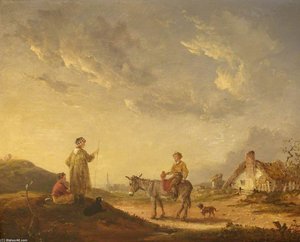 Gossip By The Wayside
Explore 'Gossip By The Wayside' by Edmund Bristow – a charming 18th-century landscape painting depicting rural life in Britain. Discover its warm tones & detailed genre scene.
The pastoral tradition wasn't always solely about escapism or romanticization. Throughout history, artists have used rural settings as a vehicle for social commentary, subtly critiquing political injustices or economic inequalities. Edmund Bristow’s “Gossip By The Wayside,” for example, while seemingly idyllic, hints at the complexities of village life – the subtle power dynamics, the exchange of information, and the potential for both community and conflict. The warm tones and detailed genre scene belie a deeper exploration of human interaction.
The very act of depicting rural life could be seen as a political statement, particularly during periods of rapid industrialization or social upheaval. By focusing on the simplicity and authenticity of country existence, artists often implicitly criticized the perceived corruption or alienation of urban society. This subtle form of protest allowed them to engage with important social issues without directly confronting authority.
The Enduring Appeal of Rural Landscapes
Today, the allure of rural landscapes remains as strong as ever. Whether it’s a nostalgic yearning for a simpler time or a desire to reconnect with nature, the pastoral tradition continues to resonate with audiences worldwide. Artists continue to explore this theme, reimagining classic motifs and incorporating contemporary perspectives.
At ArtsDot.com, we celebrate this enduring legacy by offering high-quality reproductions of masterpieces from across art history – allowing you to bring the beauty and tranquility of rural life into your own home. From Dutch Golden Age scenes to Courbet’s powerful realism, our collection offers a diverse range of styles and perspectives. Explore our selection today and discover the timeless appeal of pastoral painting. We provide not only exceptional reproductions but also a gateway to understanding the rich cultural history embedded within these captivating works.