Early Life & Artistic Foundations: From Stained Glass to Royal Academy
 Wikipedia: Frank O. Salisbury
Francis Owen Salisbury CVO (18 December 1874 – 31 August 1962) was an English artist who specialised in portraits, large canvases of historical and ceremonial events, stained glass and book illustration. In his heyday he made a fortune on both sides ...
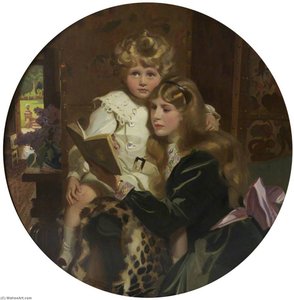
Francis Owen Salisbury, a name synonymous with the grandeur of Victorian portraiture, began his artistic journey not amidst oils and canvases, but within the intricate world of stained glass. Born in 1874 in Harpenden, Hertfordshire, young Frank’s early life was one of modest beginnings. His father, a plumber and glazier, instilled a practical understanding of materials and light – skills that would later profoundly shape his painting style. Apprenticed to his brother's stained-glass workshop at the age of fifteen, Salisbury quickly demonstrated an exceptional aptitude for detail and color, honing a precision that foreshadowed his future mastery. However, it was a scholarship to the Royal Academy in 1892 that truly ignited his passion for painting. There, he excelled, winning silver medals and ultimately securing the prestigious Landseer Scholarship in 1896, which afforded him the invaluable opportunity to study the Renaissance frescos of Italy. This exposure proved pivotal, fostering an appreciation for large-scale compositions and a nuanced understanding of atmospheric effects – elements that would become hallmarks of his distinctive aesthetic.
The Rise to Prominence: Painting Society’s Elite and Transatlantic Success
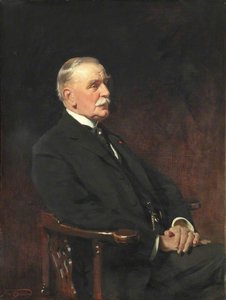
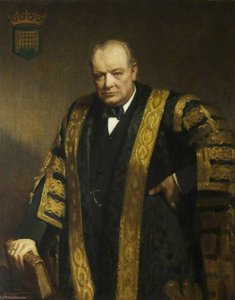
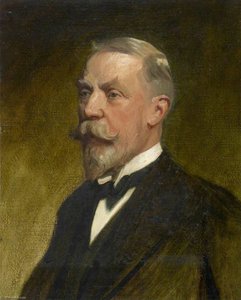 James Lowther, 1st Viscount Ullswater, Speaker
Discover Frank O. Salisbury’s portrait of James Lowther, 1st Viscount Ullswater. A realistic oil painting showcasing dignified character & subtle detail. Explore traditional style & late 19th/early 20th art.
Salisbury's ascent within the art world was remarkably swift. He quickly established a reputation for capturing not merely likenesses, but the very essence of his sitters. Initially focusing on portraits of local gentry and members of the Harpenden Methodist Church, he soon attracted the attention of Lord Wakefield, a prominent philanthropist who became an important patron. This connection opened doors to London society, introducing Salisbury to a world of wealth, influence, and discerning taste. A fortuitous encounter led to a commission for the portrait of Boy Cornwell, a young hero of the Battle of Jutland, catapulting him into national prominence. His talent soon crossed the Atlantic; encouraged by John W. Davis, the American Ambassador to London, Salisbury ventured to the United States, where his portraits were met with enthusiastic acclaim. He became adept at navigating both sides of the ocean, painting prominent figures in both Britain and America, solidifying his position as a highly sought-after artist.
Mastering Realism & Atmospheric Perspective: Salisbury's Signature Style
What distinguished Salisbury’s work was not simply technical skill – though he possessed that in abundance – but rather his ability to imbue his portraits with a sense of palpable presence. He achieved this through a meticulous attention to detail, rendering fabrics, textures, and expressions with astonishing accuracy. However, it was his masterful use of atmospheric perspective that truly set him apart. Inspired by the Italian Renaissance masters he studied in his youth, Salisbury understood how light and shadow could create depth and volume, lending a three-dimensional quality to his canvases. He subtly softened edges and muted colors as they receded into the distance, creating an illusion of space and realism that captivated viewers. This technique wasn’t merely about visual accuracy; it was about conveying mood and character, drawing the eye towards the focal point – the sitter's face – and revealing their inner life.
Portraits of Power: Capturing Statesmen, Royalty, and the American Presidents
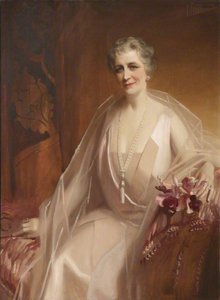
Salisbury became known as “Britain’s Painter Laureate” for a reason. He painted an extraordinary array of influential figures, including five British Prime Ministers and five US Presidents. His portraits weren't simply records of appearance; they were carefully constructed statements about power, authority, and national identity. He understood the symbolic weight of his commissions, meticulously crafting each image to convey the dignity and gravitas befitting his subjects. He painted James Lowther, 1st Viscount Ullswater, Speaker with a dignified realism that emphasized his character and subtle intelligence. Frank Campbell Wilson, Lord Mayor of Liverpool, was rendered in striking detail, capturing both his authority and approachability. His ability to capture the nuances of personality – the strength, wisdom, or determination of each individual – made him an indispensable chronicler of his time. He famously painted Winston Churchill on numerous occasions, including iconic images like “The Siren Suit” and “Blood, Sweat and Tears”, becoming inextricably linked with the wartime leader’s image.
Beyond Portraiture: Murals, Stained Glass, and a Conservative Artistic Vision
While celebrated for his portraits, Salisbury's artistic output extended far beyond this genre. He undertook numerous large-scale mural projects, adorning public buildings with scenes of historical and ceremonial events. He never abandoned his early love of stained glass, continuing to create intricate designs throughout his career. However, it was his unwavering commitment to traditional artistic values that perhaps best defined him. Salisbury was a staunch conservative in his aesthetic beliefs, vehemently opposing the burgeoning Modern Art movements of his time – particularly the works of Picasso, Chagall, and Mondrian. He believed in representational art, meticulous technique, and the importance of conveying moral and patriotic themes. This steadfastness, while earning him criticism from some quarters, resonated with a public that valued order, clarity, and beauty.
Legacy and Influence: Britain’s ‘Painter Laureate’ in Historical Context
Francis Owen Salisbury died in 1962, leaving behind a vast body of work that continues to captivate audiences today. His paintings offer a unique window into the social and political landscape of the late Victorian and early 20th centuries, providing invaluable insights into the lives of those who shaped the era. His influence can be seen in the continued popularity of traditional portraiture and his techniques continue to inspire artists seeking to master realism and atmospheric perspective. Though often overlooked by contemporary art critics, Salisbury’s enduring appeal lies in his ability to create images that are both technically brilliant and emotionally resonant – a testament to his skill, dedication, and unwavering artistic vision. His works, readily available through platforms like ArtsDot.com, allow modern audiences to experience the grandeur and artistry of a bygone era.