Early Life & Artistic Foundations: From Warrington to Royal Academy Training
 Wikipedia: Luke Fildes
Sir Samuel Luke Fildes (3 October 1843 – 28 February 1927) was a British painter and illustrator born in Liverpool and trained at the South Kensington and Royal Academy Schools. He was the grandson of the political activist Mary Fildes. == Illustr...
Sir Samuel Luke Fildes, a name synonymous with the compassionate realism that defined much of Victorian painting, began his artistic journey far from the grand salons and appreciative audiences he would eventually captivate. Born in 1843 in Liverpool, a bustling port city steeped in both opportunity and hardship, young Luke’s early exposure to the complexities of life undoubtedly shaped his later work. His initial training at the Warrington School of Art provided a foundational grounding, but it was his move to the South Kensington Art School that truly ignited his passion and set him on a path toward artistic excellence. There, he encountered figures like Hubert von Herkomer and Frank Holl, artists who were themselves grappling with new approaches to representation – an approach increasingly focused on depicting the realities of contemporary life rather than idealized historical scenes.
The influence of Frederick Walker proved particularly pivotal. Walker, a leader in the social realist movement, championed a style that prioritized truthfulness and emotional depth over academic polish. This resonated deeply with Fildes, who shared a growing concern for the plight of the less fortunate. His subsequent studies at the Royal Academy Schools further refined his technical skills, providing him with the mastery of form and composition necessary to translate his observations into compelling visual narratives. However, it was not merely technical proficiency that distinguished Fildes; it was an innate ability to imbue his subjects with a profound sense of humanity.
The Graphic Years: Social Realism & Fildes’s Commitment to Depicting Victorian Society
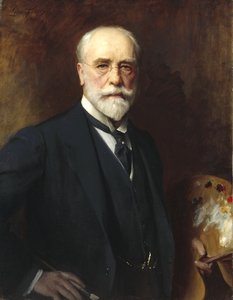 Samuel Luke Fildes
Sir Samuel Luke Fildes (1843-1927): Victorian painter & illustrator known for Social Realism, poignant scenes like 'The Doctor,' and illustrating Dickens' works.
In 1869, Fildes joined the staff of The Graphic, an illustrated weekly newspaper founded by William Luson Thomas. This marked a turning point in his career and solidified his commitment to social realism. Thomas, a dedicated social reformer, believed passionately in the power of visual imagery to effect change, and he assembled a team of artists who shared this conviction. Fildes quickly became a key contributor, producing powerful wood-engravings that exposed the harsh realities of Victorian London – poverty, homelessness, and injustice.
His illustrations weren’t simply reportage; they were deeply empathetic portrayals of individual lives caught in the web of societal problems. One particularly striking example was his response to Charles Dickens' death, an image of the author’s empty chair that resonated globally and even inspired Vincent van Gogh’s famous painting, The Yellow Chair. This demonstrates not only Fildes’s artistic skill but also his ability to capture a moment of collective grief and translate it into a universally understood symbol. His work for The Graphic wasn't merely about documenting hardship; it was about fostering compassion and prompting social action, a testament to the artist’s deeply held beliefs.
Venetian Interludes: A Shift in Focus and the Pursuit of Atmospheric Beauty
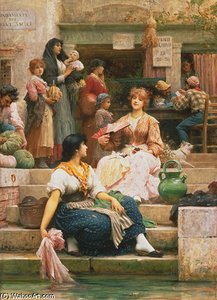 Venetians
Explore Samuel Luke Fildes’ ‘Venetians,’ a realistic oil painting capturing 19th-century Venetian life. Admire its depth, detail & nostalgic charm – a glimpse into a bygone era.
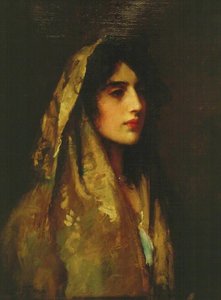
While Fildes remained committed to portraying the human condition throughout his career, he also sought respite from the grim realities of London life through travels abroad. His visits to Venice proved particularly transformative. Unlike the stark social commentary of his earlier work, these Venetian paintings – such as “Venetians” and “A Venetian Flower Girl” – exude a sense of atmospheric beauty and nostalgic charm. These works showcase a shift in focus towards capturing light, color, and the everyday moments of life in this captivating city.
However, even within these seemingly idyllic scenes, Fildes’s characteristic attention to detail and sensitivity remain evident. He wasn't simply painting pretty pictures; he was meticulously observing and rendering the nuances of Venetian life – the textures of fabrics, the play of light on water, the expressions on people’s faces. Paintings like “An Al Fresco Toilette” (1889) beautifully illustrate this balance, showcasing social life and classical beauty with a remarkable degree of realism and compositional skill. These Venetian interludes allowed Fildes to explore different facets of his artistic talent while still maintaining the core values that defined his work.
‘The Doctor’ and Beyond: Exploring Themes of Loss, Compassion, and Domesticity
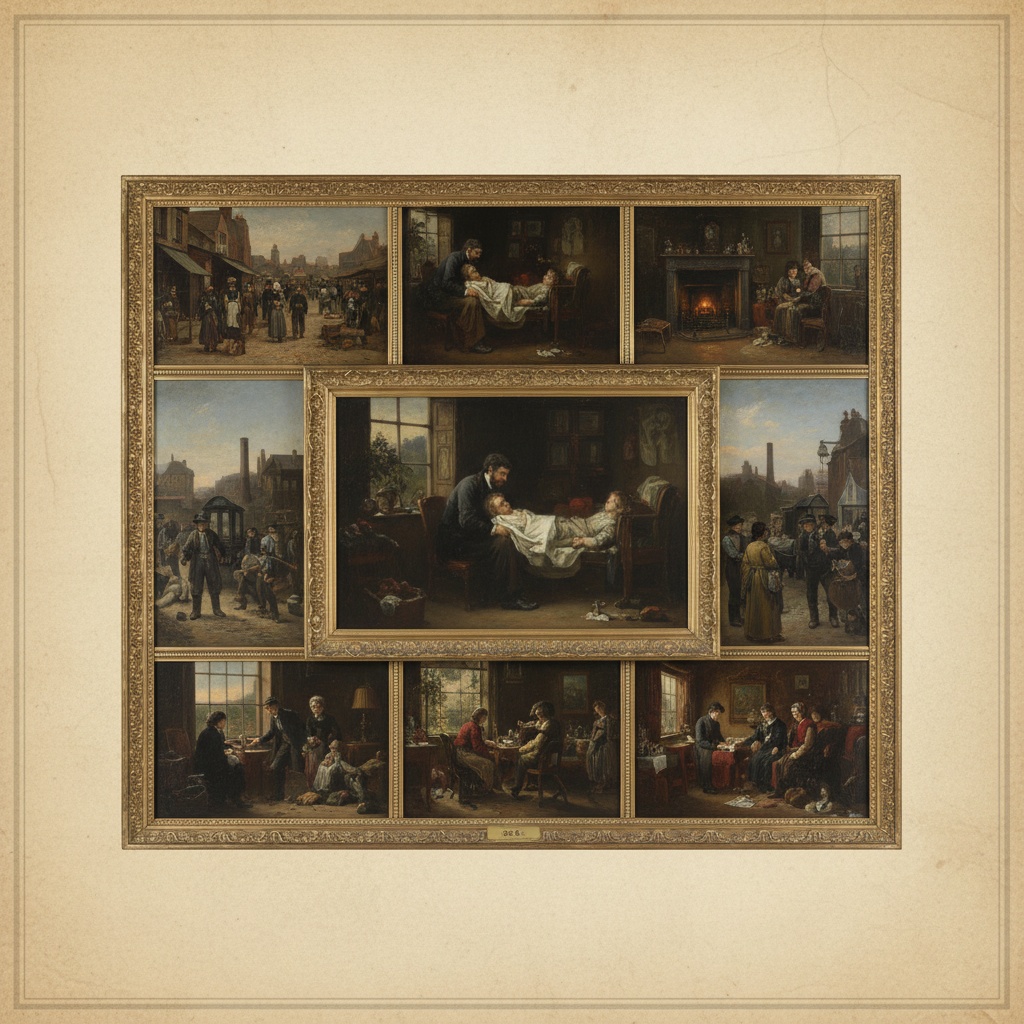
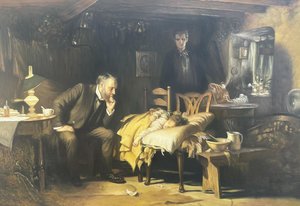
Perhaps Fildes's most iconic painting, “The Doctor” (1891), encapsulates the artist’s profound empathy and masterful storytelling. Inspired by the death of his own son Philip from typhoid fever, the work depicts a doctor attending to a sick child in the dead of night. The scene is rendered with heartbreaking realism – the exhausted faces of the parents, the quiet intensity of the doctor's examination, the dimly lit room conveying a sense of anxiety and vulnerability. It’s not merely a depiction of illness; it’s a powerful meditation on loss, compassion, and the unwavering dedication of medical professionals.
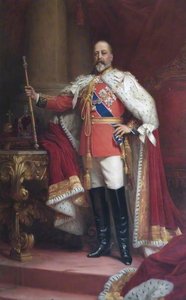
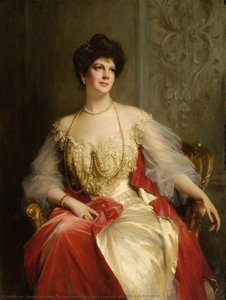
Beyond “The Doctor”, Fildes continued to explore themes of domesticity and human connection in works like The Widower (1876) and The Village Wedding (1883). These paintings often depict moments of quiet intimacy, revealing the complexities of family life and the emotional bonds that connect us. His portraits, too, were notable for their psychological depth, capturing not just physical likeness but also the inner character of his sitters. Fildes’s ability to convey such nuanced emotion is a testament to his exceptional skill as an observer and storyteller.
Fildes' Legacy: Influence on British Painting & Enduring Appeal
Sir Samuel Luke Fildes left an indelible mark on British painting, bridging the gap between social realism and a more refined aesthetic sensibility. Elected an Associate of the Royal Academy in 1879 and a full Royal Academician in 1887, he achieved widespread recognition for his poignant scenes and technical mastery. His influence can be seen in the work of subsequent generations of British artists who sought to combine realism with emotional depth.
Today, Fildes’s paintings continue to resonate with audiences worldwide. His ability to capture the complexities of human experience – joy, sorrow, loss, and compassion – transcends time and cultural boundaries. His works offer a glimpse into Victorian society, not as a distant historical period but as a world populated by individuals grappling with universal emotions. At ArtsDot.com, we are proud to offer high-quality reproductions of Fildes’s masterpieces, allowing you to bring the beauty and emotional power of his art into your own home. Explore our collection today and discover the enduring legacy of this remarkable artist.