 Preview
 Send
Send Share
Share
 Details

 Download
 Similars
 X-Ray
X-Ray Diaporama
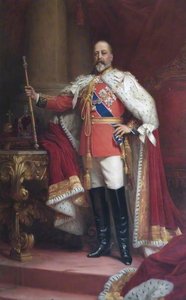
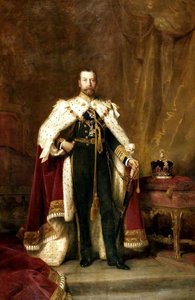
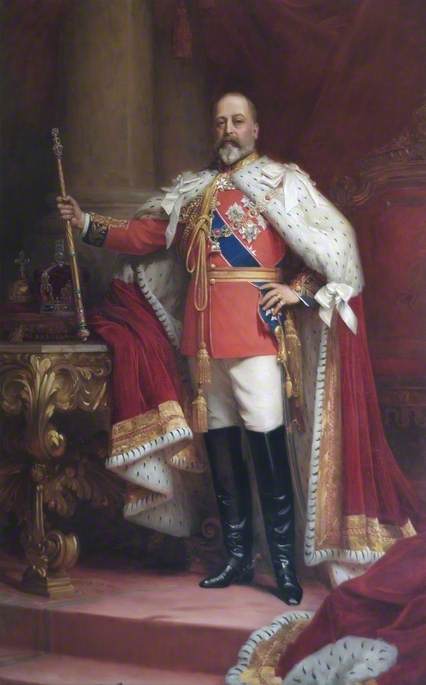
Edward VII (1841–1910)
 Oil On Canvas
- WallArt
- Social Realism
 1901
1901 259.0 x 216.0 cm
 st Bartholomew’s Hospital Museum And Archive
 Read More
Hand Made Oil Reproduction
Hand-painted oil on canvas in your size and frame, made to order by our artists. ( Buy Print Buy Image)




P118B $10

P118H $10

P118W $10

P438Z $10

P508JH $12

P508YH $12

P805H $10

P805Z $10

P919BZ $10

P919G $10

P919XJ $10

P959ZH $10

P968JZ $12

W106C $8

W218G $10

W218JH $8

W218Y $10

W307PJ $10

W316G $10

W316PJ $8

W316Y $10

W398PJ $8

W4111J $10

W500HY $15

W500JH $15

W692G $12

W849H $8

W940BG $15

W953PJ $8




Pick from our preset sizes that match the artwork's original proportions.

You may enter your own dimensions to fit a specific frame or space. If your selected size does not match the original image's proportions, we will either crop the artwork or extend the painting with additional hand-painted elements. A digital mockup will be sent for your approval before production begins.
Please note that the on-screen preview does not reflect the actual cropping or extension. Only the mockup will accurately show the final composition.
While custom sizes are available, we recommend selecting a dimension from the predefined list to preserve the original proportions.
After order, ArtsDot.com team will email client for instructions and provide a mockup preview
Worldwide Delivery () in 3/4 weeks instead of standard 5 weeks. (17 August). No compromise on quality.

Free Worldwide Express Shipping

High-Quality Linen Canvas

Full Shipping Insurance

Customs Tax Refund Guarantee

True Color Matching Guarantee

60-Day Return Policy (Defects Only)

100% Money-Back Guarantee

Bulk Discount Offer
 Glass option is only available in size under 110 CM

Edward VII (1841–1910)
Reproduction Medium
Reproduction Size
-


Total Price
$ 263
Artwork Description
A Regal Portrait: Samuel Luke Fildes’ Masterful Depiction of Edward VII
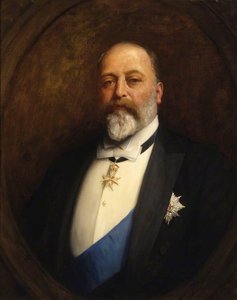
Samuel Luke Fildes' 1901 portrait of King Edward VII stands as more than just a royal likeness; it is a meticulously crafted tableau of power, tradition, and the quiet dignity of a monarch at the height of his reign. Commissioned during a period of significant imperial expansion and domestic reform, this oil-on-canvas masterpiece by the Victorian artist offers a profound glimpse into the sensibilities of Edward VII’s court and the evolving role of the British monarchy. Fildes, known for his keen observation of social realities alongside his formal portraiture, expertly balances realism with symbolic representation, creating an image that resonates both historically and aesthetically.
The painting immediately commands attention through its carefully orchestrated composition. Centered within a richly detailed setting – a deep crimson curtain hinting at the grandeur of Buckingham Palace – stands Edward VII himself. His posture is one of measured authority, his gaze direct yet not confrontational, suggesting a thoughtful presence rather than overt dominance. The strategic placement of the scepter in his right hand and the crown subtly visible behind him powerfully reinforce his sovereignty, while the table laden with royal regalia—crowns, sceptres, and other ceremonial objects—underscores the weight of his office and the continuity of British tradition.
A Symphony of Color and Texture
Fildes’ masterful use of color is central to the painting's impact. The palette is dominated by deep reds, opulent golds, crisp whites, and grounding blacks – a combination that evokes both regal splendor and understated formality. The vibrant red tunic worn by the King contrasts beautifully with the intricate gold embroidery adorning his attire, while the white fur trim adds a touch of luxurious softness. Beyond color, Fildes demonstrates remarkable technical skill in rendering texture. From the smooth sheen of the scepter to the plushness of the fur and the subtle folds of the curtain, each element is depicted with meticulous detail, inviting the viewer to almost reach out and feel the richness of the scene.
The lighting plays a crucial role in shaping the painting’s mood. A soft, diffused light source from the left illuminates the King's face, highlighting his features and creating subtle shadows that define form and depth. This careful manipulation of light not only enhances the realism of the portrait but also contributes to its overall sense of gravitas and solemnity.
Symbolism and Historical Context
Beyond its aesthetic qualities, the portrait is rich in symbolism. The scepter, a potent emblem of sovereignty, firmly establishes Edward VII’s authority. The crown, prominently displayed, represents his kingship and the enduring legacy of the British monarchy. The inclusion of royal regalia speaks to the continuity of tradition and the importance of ceremony within the realm. Considering the painting's creation in 1901, it reflects a period of significant social and political change in Britain – the dawn of the Edwardian era, marked by imperial expansion, technological advancements, and growing calls for reform.
Further research reveals that this portrait was part of a series commissioned to commemorate the King’s coronation. The meticulous attention to detail and the formal style reflect the prevailing artistic conventions of the time, yet Fildes imbues the image with a remarkable sense of immediacy and human presence. The painting's creation coincided with a period when Victorian values were being re-evaluated, and the monarchy was grappling with its role in a rapidly changing world.
A Timeless Masterpiece – Available as a High-Quality Reproduction
Samuel Luke Fildes’ portrait of Edward VII is a testament to his artistic skill and his ability to capture the essence of a historical figure. Its enduring appeal lies not only in its technical brilliance but also in its evocative portrayal of power, tradition, and human dignity. Today, this iconic image can be experienced anew through meticulously crafted hand-painted reproductions – a perfect addition to any art collection or a striking centerpiece for interior design. The reproduction faithfully captures the painting’s rich colors, intricate details, and profound emotional impact, allowing you to bring this timeless masterpiece into your home.
Related Artworks

Artist Biography
A Life Etched in Realism: The World of Samuel Luke Fildes
Born amidst the bustling port city of Liverpool in 1843, Samuel Luke Fildes emerged as a pivotal figure bridging Victorian illustration and painting. His lineage hinted at a life steeped in both artistry and social consciousness; he was the grandson of Mary Fildes, a dedicated political activist whose commitment to reform would subtly permeate his own artistic vision. Early experiences shaped young Luke’s path – a childhood spent observing the vibrant energy and underlying hardships of maritime Liverpool, followed by formal training that began at Warrington School of Art in 1860. This foundational period led him to South Kensington (later the Royal College of Art) and the prestigious Royal Academy Schools, where he forged lasting connections with fellow artists like Hubert von Herkomer and Frank Holl. However, it was the influence of Frederick Walker, a leading light of the social realist movement, that truly ignited Fildes’ artistic direction, instilling in him a desire to depict life as it *was*, not merely as it appeared to be. The young artist absorbed Walker’s commitment to portraying everyday struggles with honesty and empathy, a principle that would define much of his early work.
From Graphic Detail to Painted Narrative
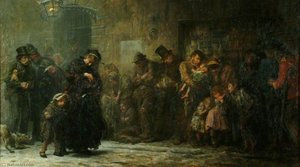
Fildes initially found his voice – and an audience – through illustration. In 1869, he joined the staff of The Graphic, a groundbreaking illustrated newspaper edited by William Luson Thomas. This wasn’t merely a job; it was immersion in a world where art served as a powerful tool for social commentary. The Graphic's commitment to exposing societal ills resonated deeply with Fildes, and he quickly became known for his unflinching depictions of poverty and injustice. His work during this period wasn’t simply about documenting hardship; it was about humanizing those often rendered invisible by society. A pivotal moment arrived when Charles Dickens himself commissioned Fildes to illustrate the unfinished novel The Mystery of Edwin Drood, following a particularly poignant illustration of Dickens' empty chair after his death – an image that captured the nation’s grief and established Fildes’ reputation. This commission, alongside illustrations for other prominent periodicals like The Sunday Magazine, The Cornhill Magazine, and The Gentleman's Magazine, solidified his position as a leading illustrator of his time. The wood-engraving “Houseless and Hungry,” depicting the desperate plight of London’s homeless, brought him to Dickens’ attention and became emblematic of his early commitment to social realism. It was a stark reminder of the realities faced by many in Victorian England, and Fildes’ ability to convey this with such raw emotion set him apart.
A Shift in Medium: Embracing Oil and Expanding Vision
By 1870, Fildes felt a growing pull towards oil painting, a medium that allowed for greater nuance and depth than illustration. This transition marked a turning point in his career, as he began to establish himself not just as a skilled recorder of social realities but as a painter capable of capturing the complexities of human emotion and experience. He quickly rose through the ranks of the English art world, gaining recognition for works like The Casual Ward (1874), a stark portrayal of life within a workhouse; The Widower (1876), a deeply moving depiction of grief and loss; and The Village Wedding (1883), which offered a more optimistic, yet still grounded, view of rural life. His artistic horizons expanded beyond social commentary to encompass scenes of Venetian life – reflecting a growing fascination with light, color, and atmosphere – and an increasingly sought-after talent for portraiture. He became particularly renowned for his portraits commemorating the coronation of King Edward VII and Queen Alexandra, demonstrating his ability to capture both regal dignity and individual character. This period saw Fildes masterfully blending realism with a more refined aesthetic sensibility, showcasing his versatility as an artist.
Recognition, Legacy, and Lasting Influence
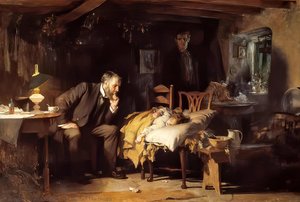
Fildes’ artistic achievements were met with increasing acclaim throughout his career. He was elected an Associate of the Royal Academy (A.R.A.) in 1879 and a full Royal Academician (R.A.) in 1887, solidifying his position within the established art world. In 1906, he received the honor of knighthood from King Edward VII, and later, in 1918, was appointed Knight Commander of the Royal Victorian Order (KCVO) by King George V. Beyond official recognition, Fildes also explored a lighter side to his artistry, producing caricatures under the pseudonym “Elf” for Vanity Fair. He became recognized as a leader of the Neo-Venetian school alongside Henry Woods, showcasing a shared passion for capturing the unique atmosphere and light of Venice. His personal life was equally fulfilling; he married Fanny Woods, sister to his friend Henry, in 1874, and together they had two sons, Philip and Sir Paul Fildes – the latter becoming an eminent scientist. Perhaps one of the most striking examples of his enduring influence is the inspiration his illustration of Dickens’ empty chair provided to Vincent van Gogh, leading to the creation of Van Gogh's iconic painting The Yellow Chair. Even in later years, his work continued to resonate – notably when his 1891 masterpiece, The Doctor, was used in a 1949 American Medical Association campaign, demonstrating the power of art to shape public discourse. Samuel Luke Fildes left behind a legacy not only as a gifted painter and illustrator but as an artist who dared to confront social realities while simultaneously celebrating the beauty and complexity of human life. His work continues to resonate with audiences today, offering a poignant glimpse into Victorian society and the enduring power of art to inspire empathy and understanding.
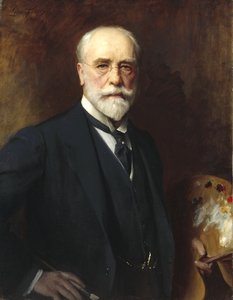
Samuel Luke Fildes
1843 - 1927 , United Kingdom
Quick Facts
- Artistic Movement Or Style: Social Realism
- Artists Or Movements Influenced By This Artist: ['Vincent van Gogh']
- Artists Who Influenced This Artist: ['Frederick Walker']
- Date Of Birth: 1843
- Date Of Death: 1927
- Full Name: Samuel Luke Fildes
- Nationality: British
- Notable Artworks:
- The Doctor
- The Casual Ward
- The Widower
- Houseless and Hungry
- Place Of Birth: Liverpool, UK
Related Articles
Edward Hopper's Masterpieces: 25 Iconic Paintings & Their Enduring Legacy | ArtsDot
Explore 25 iconic Edward Hopper paintings & their stories. Discover American realism, urban loneliness, and timeless beauty through his masterpieces. Find museum-quality art reproductions & curated decor ideas at ArtsDot.com.
Samuel Luke Fildes: Capturing Victorian Life Through Narrative & Social Realism
Explore the poignant world of Samuel Luke Fildes, a master of Victorian Social Realism. Discover his iconic paintings like 'The Doctor' and delve into his artistic journey with ArtsDot.

Edward Wilkins Waite: A Victorian Vision of Surrey's Serene Landscapes & Artistic Legacy
Explore the serene landscapes of Edward Wilkins Waite (1854-1924), a prolific Victorian painter celebrated for his depictions of Surrey's countryside. Discover his artistic influences, career highlights & collecting guide.

Samuel Walters: Capturing Victorian Maritime Life with Precision & Artistry
Explore the exquisite maritime paintings of Samuel Walters (1811-1882). Discover his mastery of detail, historical scenes & influence on Victorian art. Learn about collecting his works and find high-quality reproductions at ArtsDot.
Sir Edward Poynter: Aestheticism, Archaeology & Victorian Identity
Explore the captivating world of Sir Edward Poynter, a leading figure of Aestheticism & Victorian art. Discover his archaeological narratives, iconic paintings like 'Day Dream Fine,' and lasting influence on British art history.