Introduction: The Radical Vision of Franz Marc
 Wikipedia: Franz Marc
Franz Moritz Wilhelm Marc (8 February 1880 – 4 March 1916) was a German painter and printmaker, one of the key figures of German Expressionism. He was a founding member of Der Blaue Reiter (The Blue Rider), a journal whose name later became synonymou...
Franz Marc remains a captivating figure in the landscape of early 20th-century art, not merely for his strikingly vibrant canvases populated by animals, but for the radical spiritual and philosophical undercurrents that fueled his unique Expressionist vision. Born in Munich in 1880, Marc wasn’t simply depicting creatures; he was attempting to unlock a deeper truth about existence itself, believing animals possessed a purity and connection to nature lost to humankind. His brief yet intensely productive career, tragically cut short by the horrors of World War I, left an indelible mark on modern art, challenging conventional notions of representation and paving the way for a more emotionally resonant approach to painting.
The Blue Rider & Early Influences: Forging an Expressionist Path
Expressionism is a modernist movement, initially in poetry and painting, originating in Northern Europe around the beginning of the 20th century. Its typical trait is to present the world solely from a subjective perspective, distorting it radically ...
Marc’s artistic journey began with academic training, initially focused on realistic depictions. However, his encounter with Impressionism during a trip to Paris in 1903 sparked a shift towards brighter colors and looser brushwork. The true turning point came with his association with Wassily Kandinsky and the formation of Der Blaue Reiter (The Blue Rider) in 1911. This wasn’t merely an artistic collective; it was a spiritual brotherhood united by a desire to move beyond purely representational art, seeking instead to express inner emotional states and a deeper connection to the unseen world. Influenced by artists like Vincent van Gogh, Marc began to simplify forms and intensify colors, moving away from precise anatomical accuracy towards a more subjective interpretation of reality. He found kinship with August Macke, sharing a passion for vibrant palettes and exploring themes of innocence and harmony.
Animals as Spiritual Vessels: Marc’s Pantheistic Philosophy
Central to understanding Marc's work is his profound belief in pantheism – the idea that God is immanent within nature. He saw animals not as separate entities, but as integral parts of a unified cosmic consciousness. In essays and letters, Marc articulated his disgust with modern civilization’s alienation from this natural order, viewing humans as having lost touch with their spiritual roots. Animals, in contrast, embodied a primal purity, untouched by the corrupting influences of society. This conviction led him to elevate animals to the status of symbolic representations of deeper truths. He wasn't interested in painting *about* animals; he wanted to paint *as* an animal, attempting to capture their unique perception of the world. He believed that through them, one could access a more authentic and spiritual understanding of existence.
Color and Form as Emotional Language: Decoding Marc's Palette
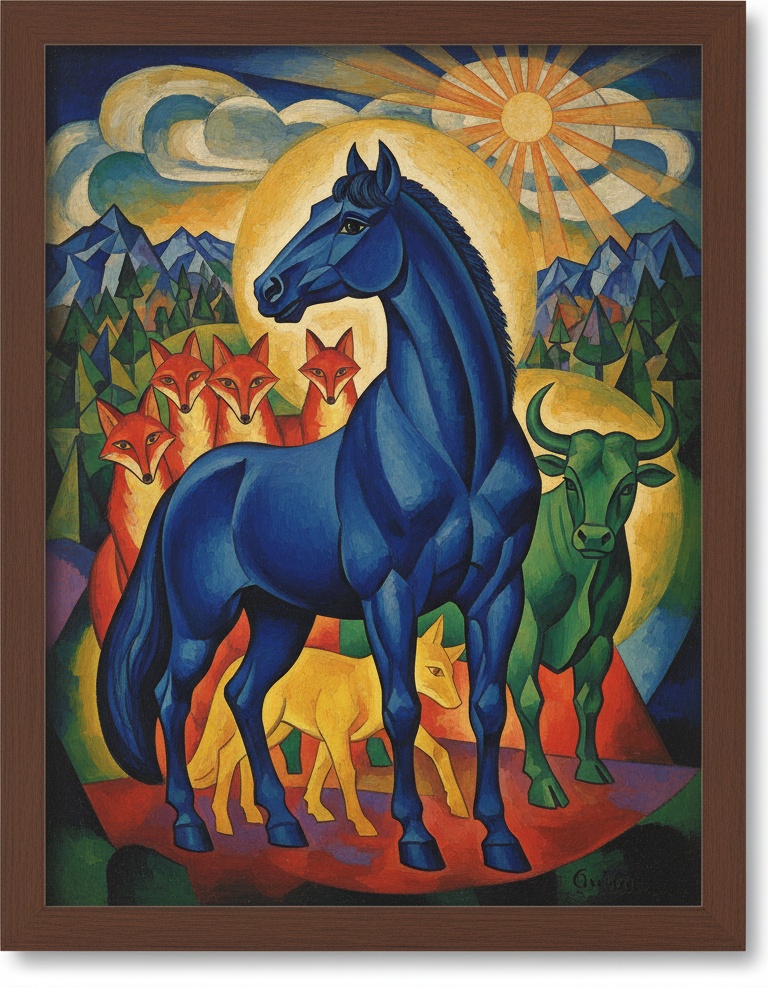
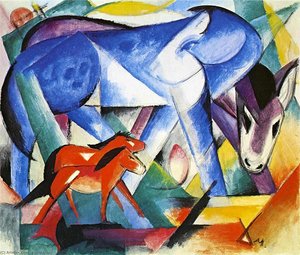
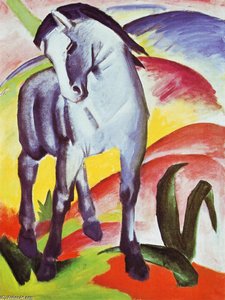
Marc developed a sophisticated system of color symbolism, assigning specific meanings to different hues. Blue represented masculinity, spirituality, and the infinite; yellow signified femininity, joy, and sensuality; red embodied violence, materiality, and earthly passion. These weren’t arbitrary choices but rather a deliberate attempt to create an emotional language that transcended literal representation. As his style evolved, Marc increasingly abstracted forms, moving towards geometric shapes and flattened perspectives. This wasn't about Cubism in the traditional sense – he wasn’t interested in fracturing objects from multiple viewpoints – but rather about simplifying them to their essential essence. The vibrant colors weren’t merely decorative; they were integral to conveying the emotional weight of his subjects and the spiritual forces at play within them. Consider, for example, the intensity of the reds in works depicting conflict or the soothing blues and yellows that evoke a sense of pastoral harmony.
Key Works and Artistic Evolution: From Pastoral Scenes to Wartime Visions
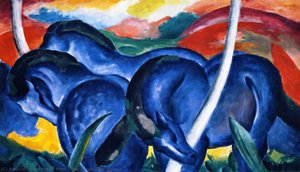
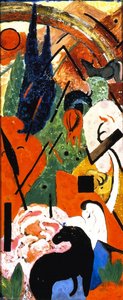
Early paintings like “The World Cow” (1910) demonstrate Marc’s initial exploration of color and form, portraying animals within idyllic landscapes. “Blue Horses” (1911), a seminal work, showcases his growing abstraction and symbolic use of color, with the horses embodying a sense of spiritual energy. As he delved deeper into his pantheistic beliefs, works like “The Large Blue Horses” (1911) became increasingly fragmented and dynamic. However, the outbreak of World War I profoundly impacted Marc’s art. The idyllic scenes gave way to more fractured compositions reflecting the chaos and violence of the conflict. His final paintings, such as “Fate of the Animals” (1913), are imbued with a sense of foreboding and anxiety, foreshadowing his own tragic death at Verdun in 1916.
Legacy & Influence: The Enduring Power of Animal Symbolism
Franz Marc’s legacy extends far beyond the confines of Expressionism. His exploration of animal symbolism continues to resonate with contemporary audiences, prompting reflection on our relationship with nature and the spiritual dimensions of existence. His bold use of color and form paved the way for abstract art, influencing generations of artists who sought to express inner emotions rather than simply replicate external reality. The Franz Marc Museum in Kochel am See provides a unique opportunity to immerse oneself in his world, offering a comprehensive collection of his works and insights into his artistic philosophy. Marc’s paintings are not merely beautiful objects; they are windows into a radical vision – a call for a return to nature, a celebration of innocence, and a profound meditation on the interconnectedness of all things. At ArtsDot, we strive to make these powerful works accessible, offering high-quality reproductions that capture the essence of Marc’s unique artistic spirit. Explore our collection today and experience the enduring power of his animal symbolism.