Early Life & Artistic Training: Foundations of a Transatlantic Vision
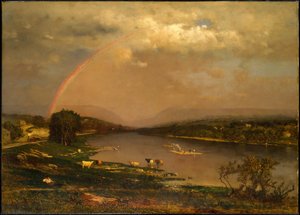
The Hudson River School was a mid-19th-century American art movement embodied by a group of landscape painters whose aesthetic vision was influenced by Romanticism. Early on, the paintings typically depicted the Hudson River Valley and the surroundi...
George Harvey, though often overshadowed by his more celebrated contemporaries, occupies a fascinating position within the narrative of 19th-century American art. His story isn’t one of immediate recognition but rather of a dedicated artist forging a unique path between the established traditions of European painting and the burgeoning aesthetic sensibilities of the New World. Born around 1800 in Tottenham, England, Harvey's early training remains somewhat elusive; however, evidence suggests an initial grounding in miniature portraiture – a demanding discipline that honed his meticulous attention to detail and sensitivity to light. This period, spanning roughly two years after immigrating to the United States in 1820, instilled in him a remarkable technical proficiency which would later serve as the bedrock for his more ambitious landscape work. He wasn’t merely replicating forms; he was capturing likenesses with an almost photographic precision, a skill that foreshadowed his later fascination with atmospheric effects and the nuances of natural illumination.
Harvey's initial foray into the American art scene saw him traveling extensively through Ohio and Michigan, sketching the frontier landscapes. This period wasn’t simply about documenting topography; it was an immersion in a new visual language – the vastness of the American wilderness, the quality of light unlike anything he had experienced in England. By 1827, Harvey had settled in Brooklyn, establishing himself as a working artist and gaining entry into the prestigious National Academy of Design. This affiliation signaled his commitment to professional standards and provided access to a network of artists and patrons who would shape his career.
The American Years: Capturing the Essence of the Hudson River Valley
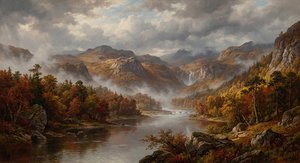
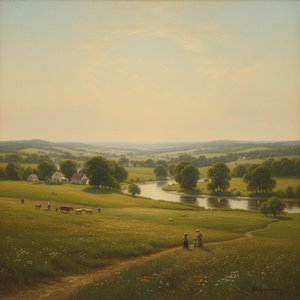
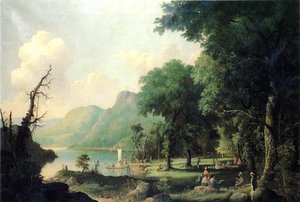 A Day on the Hudson
Admire 'A Day on the Hudson' by George Henry Durrie! This idyllic landscape painting captures serene beauty & rural life. Hand-painted reproduction available.
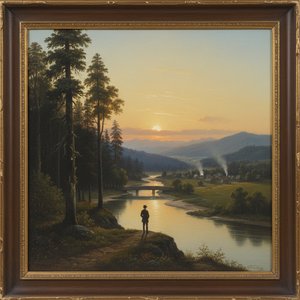
A pivotal moment arrived in 1834 when Harvey purchased twenty acres in Hastings-on-Hudson, New York. This wasn’t merely an acquisition of property; it was a deliberate retreat – a search for a sanctuary where he could dedicate himself to his artistic pursuits and, crucially, study the interplay of light and atmosphere. He named his estate Woodbank, and it became both home and studio, a laboratory for observing the subtle shifts in color and tone that defined the Hudson River Valley’s beauty. This period marked a turning point in Harvey's work; he moved away from portraiture and focused almost exclusively on landscapes, driven by a desire to capture not just *what* he saw but *how* he saw it.
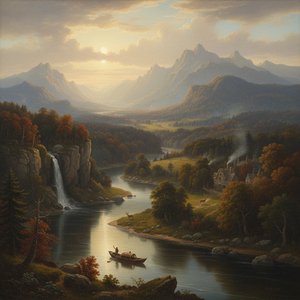
The Hudson River Valley, with its dramatic vistas, rolling hills, and the majestic presence of the river itself, provided an inexhaustible source of inspiration. Harvey wasn’t alone in his fascination; this region was already attracting a cohort of artists who would come to be known as the Hudson River School. However, Harvey distinguished himself through his unique approach – a meticulous observation combined with a poetic sensibility that imbued his landscapes with a sense of tranquility and spiritual resonance. He sought to convey not just the physical beauty of the scene but also the emotional impact it had on the viewer.
Harvey’s ‘Atmospherical Landscapes’: A Pioneering Series and its Ambitions
Driven by this pursuit, Harvey embarked on an ambitious project in the 1830s: a series of forty “atmospherical” watercolor views intended for engraving and serial publication. This was a bold undertaking, conceived as a means of fostering greater understanding between England and the United States through shared appreciation of American scenery. He envisioned a meticulously documented visual record of the seasons and times of day, each painting accompanied by detailed commentary. The first installment, *Harvey’s Scenes of the Primitive Forest of America, at the Four Periods of the Year*, appeared in 1841, showcasing Bennett's hand-colored aquatints based on Harvey’s watercolors.
Unfortunately, the series never reached its full potential. Despite Harvey’s tireless promotion and accompanying magic lantern shows – a popular form of entertainment that brought his landscapes to a wider audience – it failed to gain widespread traction. The logistical challenges of publication, coupled with shifting tastes in art, hampered its success. Yet, the ambition behind the project remains significant. It represents an early attempt to combine artistic observation with scientific inquiry, exploring the effects of climate and atmosphere on the landscape and, by extension, on human perception.
Luminism and Beyond: Harvey's Influence on American Landscape Painting
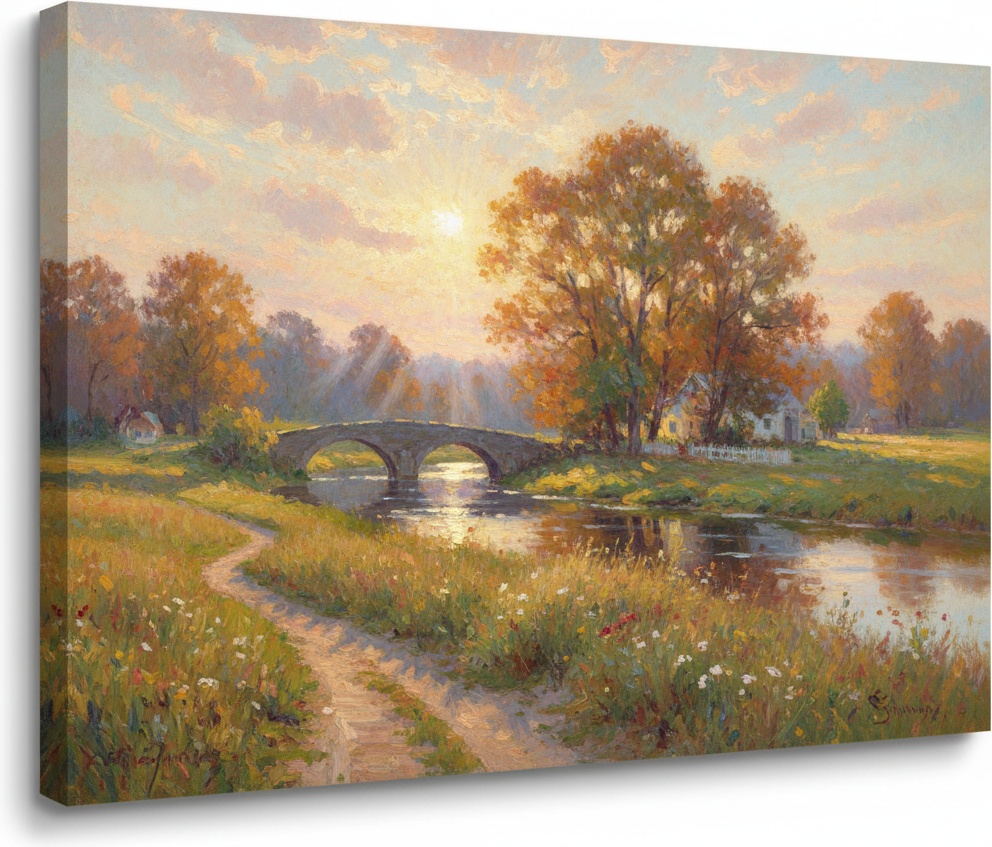
 Wikipedia: American Impressionism
American Impressionism was a style of painting related to European Impressionism and practiced by American artists in the United States from the mid-nineteenth century through the beginning of the twentieth. The style is characterized by loose brushw...
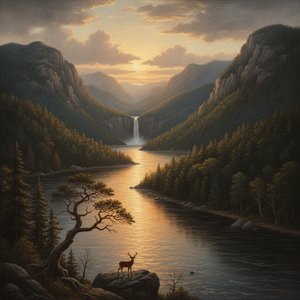
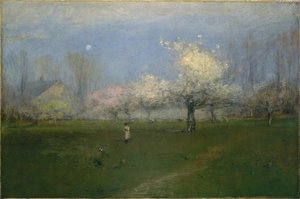
While his ‘Atmospherical Landscapes’ may not have achieved widespread commercial success during his lifetime, George Harvey’s work foreshadowed key developments in American painting. His meticulous attention to light, subtle color gradations, and emphasis on atmospheric effects align him with the Luminist movement – a style characterized by its serene depictions of natural light and tranquil scenes. Artists like Frederic Edwin Church and Sanford Robinson Gifford, prominent figures of the second generation Hudson River School, shared Harvey’s fascination with capturing the ethereal qualities of light.
Harvey's influence, though often indirect, can be seen in the broader shift towards a more nuanced and atmospheric approach to landscape painting. He wasn’t simply replicating scenes; he was interpreting them through a lens of personal observation and poetic sensibility. His work embodies a sense of quiet contemplation, inviting viewers to immerse themselves in the beauty of the natural world and reflect on its spiritual significance. His legacy lies not just in the paintings he created but also in the pioneering spirit that drove his artistic exploration.
Rediscovering George Harvey: Provenance, Attribution & Modern Appreciation
For many years, George Harvey remained a relatively obscure figure in art history, often overshadowed by more prominent contemporaries and plagued by issues of attribution. Confusion arose from the existence of other artists named George Harvey – one Scottish and another his own American nephew – leading to misidentified works and inaccurate biographical details. Recent scholarship, however, has begun to clarify his artistic trajectory and establish a more accurate understanding of his oeuvre.
The rediscovery of paintings like *The Terrace of the Artist’s at Hastings, NY*, coupled with meticulous research into archival documents and property records, is shedding new light on Harvey's life and work. Understanding the provenance – the history of ownership – is crucial in authenticating his paintings and appreciating their significance. Today, George Harvey is increasingly recognized as a pivotal figure in American Impressionism and Luminism, an artist whose dedication to capturing the essence of the Hudson River Valley continues to resonate with audiences seeking beauty, tranquility, and a deeper connection to the natural world. At ArtsDot.com, we are proud to offer high-quality reproductions of Harvey’s stunning landscapes, allowing you to experience the magic of his art firsthand.