The Camden Town Vanguard: Lamb’s Early Influences & Artistic Formation
 Wikipedia: Henry Lamb
Henry Taylor Lamb (21 June 1883 – 8 October 1960) was an Australian-born British painter. A follower of Augustus John, Lamb was a founder member of the Camden Town Group in 1911 and of the London Group in 1913. == Early life == Henry Lamb was born...
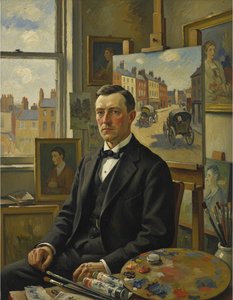
Henry Lamb, a name often whispered with a curious blend of admiration and unease, occupies a fascinatingly liminal space within the narrative of early 20th-century British art. Born in Adelaide, Australia, in 1883, his journey to becoming a pivotal figure in the Camden Town Group wasn’t one of immediate artistic revelation but rather a circuitous path marked by medical studies and a restless search for expressive form. The initial pull towards medicine at Manchester University proved ultimately unsustainable; Lamb found himself increasingly drawn to the burgeoning art scene, particularly the magnetic force of Augustus John. John, with his bohemian lifestyle and emphasis on direct observation – a rejection of academic polish in favor of raw vitality – became an early mentor, instilling in Lamb a commitment to capturing the essence of his subjects rather than merely their likenesses. This pursuit led him to Paris, a crucible of artistic innovation where he absorbed the lessons of Post-Impressionism and Fauvism, though never fully aligning himself with any single school.
The Parisian experience was transformative. While not embracing the full chromatic intensity of Matisse or Derain, Lamb began experimenting with bolder palettes and looser brushwork, a departure from the more restrained tones he’d previously employed. He frequented studios like the Académie de La Palette, engaging with artists who were actively dismantling traditional conventions. However, it was upon his return to England that Lamb truly found his voice, coalescing these influences into a distinctly personal style – one characterized by an unsettling psychological depth and a willingness to confront uncomfortable truths.
Primitivism, Pathology & the ‘Unconscious’: Exploring Lamb's Unique Aesthetic Vision
In the arts of the Western world, Primitivism is a mode of aesthetic idealization that means to recreate the experience of the primitive time, place, and person, either by emulation or by re-creation. In Western philosophy, Primitivism proposes that ...
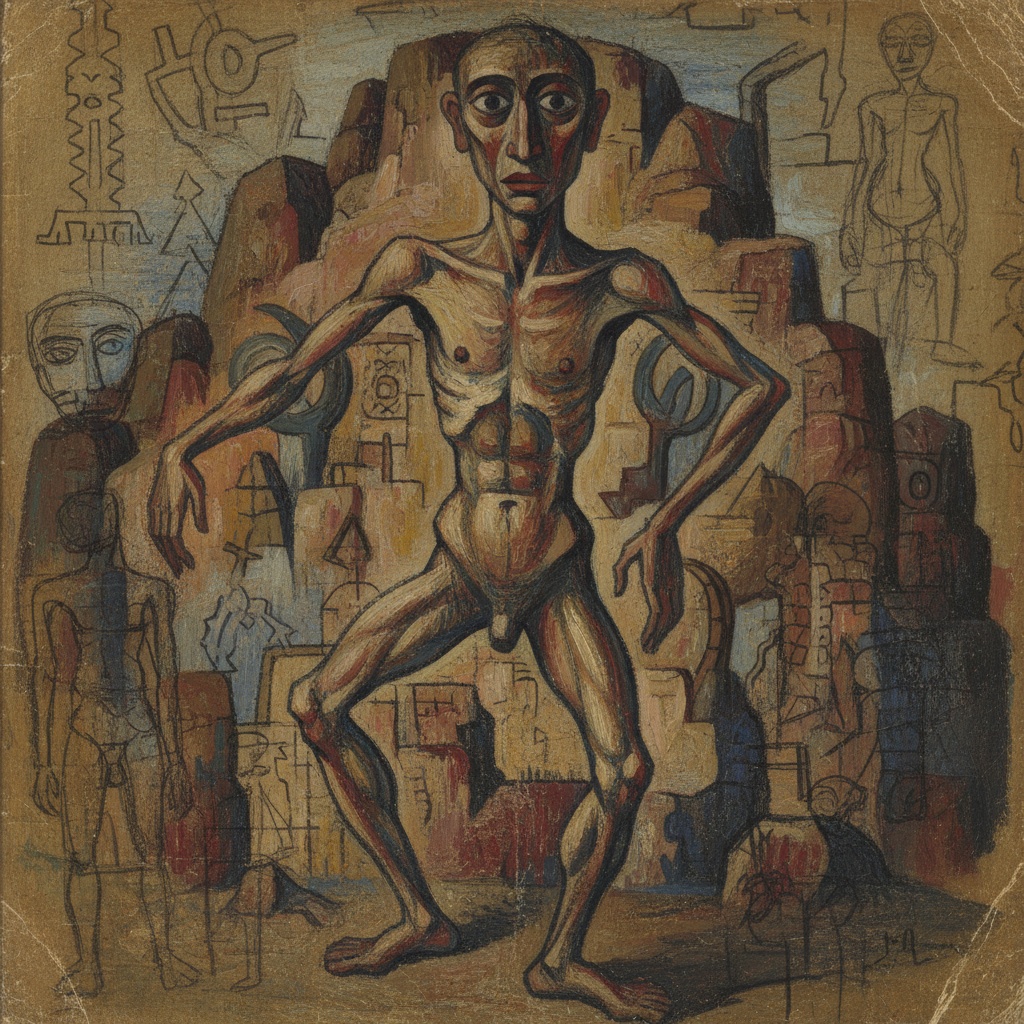
Lamb’s work is inextricably linked to the broader European fascination with Primitivism that unfolded in the early decades of the 20th century. However, his engagement with this concept wasn’t simply a matter of borrowing stylistic elements from non-Western art forms – though echoes of African sculpture and other ‘primitive’ sources can be detected. Instead, Lamb delved into a more profound exploration of what lay beneath the veneer of civilized society, seeking to expose the raw, often disturbing realities of human existence. This pursuit led him towards an interest in psychology, particularly the emerging field of psychoanalysis, and its investigation of the unconscious mind.
His paintings frequently depict subjects with a haunting intensity, their faces rendered with a deliberate distortion that hints at inner turmoil. This isn’t merely caricature; it's an attempt to visualize psychological states, to capture something beyond surface appearances. The influence of artists like Henri Matisse – particularly works such as Grand Intérieur rouge, with its bold colors and flattened perspective – can be seen in Lamb’s compositional choices, but he uses these techniques not for decorative effect but to create a sense of claustrophobia and unease. L'Algérienne by Matisse, similarly, demonstrates an innovative approach to form that likely resonated with Lamb as he sought new ways to represent the human figure. La Blouse roumaine, too, exemplifies a vibrant exploration of color and tradition, perhaps inspiring Lamb’s own focus on capturing cultural identity – albeit often filtered through a lens of psychological scrutiny.
Portraits as Psychological Studies: Unveiling Character and Disquiet in Lamb’s Work
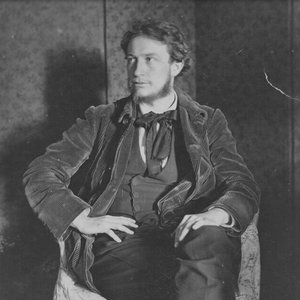 Henry Lamb
Discover Henry Lamb (1883-1960), an Australian-born British painter renowned for expressive portraits, poignant war art & Post-Impressionist landscapes. Explore his unique style and iconic works.
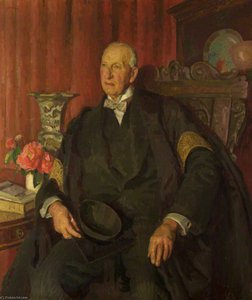
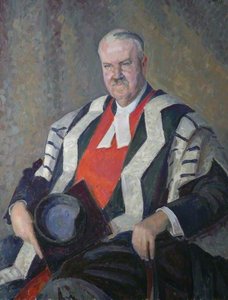
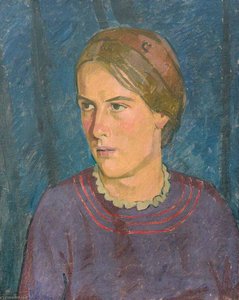
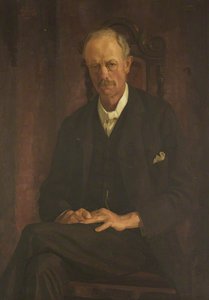
Lamb is arguably best known for his portraits, which transcend the conventions of the genre to become penetrating studies of character. He wasn't interested in flattering representations or celebrating social status; instead, he sought to capture the essence – often the darker aspects – of his sitters. His portrait of Lytton Strachey, with its elongated features and almost skeletal frame, is a prime example. It’s not a conventionally handsome image, but it's undeniably compelling, revealing a sense of intellectual intensity and underlying fragility.
This willingness to depict subjects unflinchingly – even at the expense of aesthetic appeal – was both admired and criticized during his lifetime. He often focused on the eyes, imbuing them with an unsettling gaze that seems to penetrate the viewer’s own psyche. The brushwork is deliberately loose and expressive, contributing to a sense of immediacy and psychological tension. Lamb's portraits aren’t simply likenesses; they are explorations of identity, mortality, and the hidden complexities of the human condition.
War Art & the Body: Trauma, Representation, and the Irish Troops Painting
The outbreak of World War One profoundly impacted Lamb’s artistic trajectory. He returned to his medical training, serving as a doctor on the Western Front and in Palestine. This experience irrevocably altered his perspective, exposing him to the brutal realities of conflict and the physical and psychological toll it exacted on soldiers. His commission from the British War Memorials Committee – to create a large-scale painting depicting Irish troops – became a deeply personal undertaking.
Irish Troops in the Judaean Hills Surprised by a Turkish Bombardment, now housed in the Imperial War Museum, is a stark departure from traditional depictions of heroic warfare. It’s not a glorification of battle but rather a harrowing portrayal of vulnerability and chaos. The bodies are contorted in pain and fear, their faces etched with anguish. Lamb's medical background informs his depiction of injury, rendering it with unflinching realism. The painting is unsettling precisely because it refuses to romanticize war; it presents it as a brutal, dehumanizing experience.
Beyond Representation: Lamb’s Post-Impressionist Landscapes and Late Style
While primarily remembered for his portraits and war art, Lamb also produced a significant body of landscapes that deserve greater attention. These works, often painted in Dorset where he settled after the First World War, demonstrate a continued exploration of form and color, albeit with a more contemplative tone. He moved away from the overt psychological intensity of his earlier work, embracing a looser, more expressive style influenced by Post-Impressionism.
His late landscapes are characterized by a sense of melancholy and isolation, reflecting perhaps a disillusionment with the aftermath of war and a growing awareness of mortality. They aren’t idyllic depictions of nature but rather explorations of its inherent power and indifference. Lamb's legacy is complex and multifaceted. He was an artist who dared to confront uncomfortable truths, challenging conventional notions of beauty and representation. His work continues to resonate today because it speaks to the enduring complexities of the human condition – our vulnerabilities, our anxieties, and our search for meaning in a chaotic world.
Explore the captivating collection of ArtsDot.com and discover masterpieces from Henry Lamb and other influential artists. From handmade oil paintings to museum-quality prints, ArtsDot offers a unique opportunity to bring art history into your home.