Early Life & Influences: From Quaker Roots to Parisian Studies
Post-Impressionism (also spelled Postimpressionism) was a predominantly French art movement which developed roughly between 1886 and 1905, from the last Impressionist exhibition to the birth of Fauvism. Post-Impressionism emerged as a reaction agains...
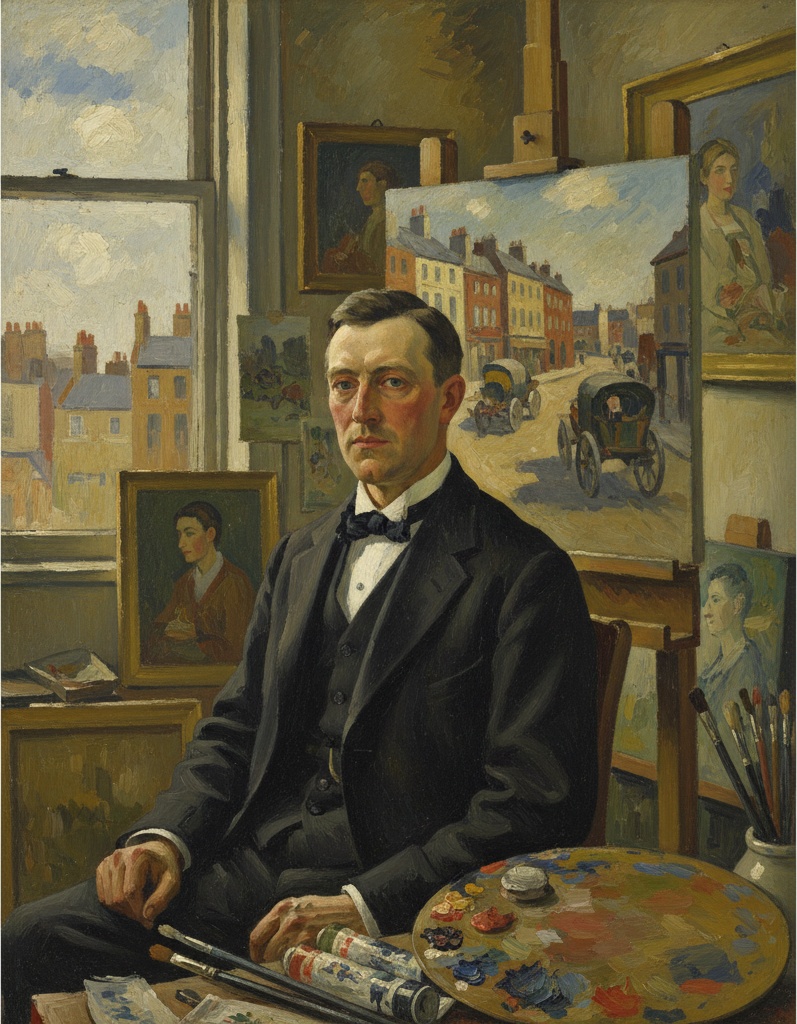
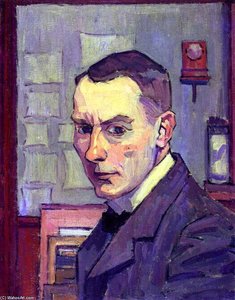
Robert Polhill Bevan, born in 1865 into a comfortably established Quaker family in Hove, presented an intriguing contrast to the artistic path he would ultimately forge. His lineage traced back through generations of Barclays Bank associates – a world of meticulous record-keeping and financial stability. Yet, even within this pragmatic environment, a seed of creative inclination was sown; Bevan received early drawing lessons, hinting at a sensibility that lay beyond the realm of ledgers and balance sheets. This initial exposure proved pivotal, though it wasn’t until his studies at Westminster School of Art under Frederick Brown that Bevan truly began to immerse himself in the possibilities of visual expression. However, the true catalyst for his artistic awakening arrived with his journey to Paris in 1888. The Académie Julian became a crucible where he encountered not merely technique, but an entirely new aesthetic philosophy. Surrounded by emerging talents like Paul Sérusier, Pierre Bonnard, and Édouard Vuillard, Bevan absorbed the currents of Post-Impressionism, a movement that would fundamentally reshape his artistic vision.
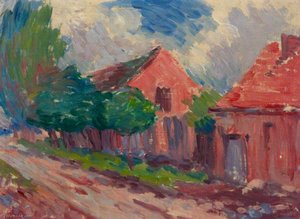
His subsequent travels to Brittany in 1890, alongside Eric Forbes-Robertson, brought him into direct contact with the artists of the Pont-Aven School. This experience was transformative; Bevan encountered Paul Gauguin himself, receiving prints and absorbing the school’s emphasis on symbolic content and flattened forms. The landscapes he sketched during this period, now held in the Ashmolean Museum's collection, reveal a nascent exploration of color and composition that would become hallmarks of his mature style. These early years weren’t simply about acquiring skills; they were about forging connections – intellectual and artistic – that would define Bevan’s trajectory as a pioneer of modern British art.
Embracing Fauvism & The Pont-Aven School: A Shift in Palette and Perspective
Bevan's initial financial independence, afforded by his family’s resources, allowed him the freedom to pursue his artistic passions without immediate commercial constraints. This period saw a fascinating duality – a continued engagement with traditional pursuits like hunting alongside an increasingly fervent exploration of avant-garde painting. His travels to Spain and Morocco in 1891, though primarily focused on sporting activities, nonetheless exposed him to new visual stimuli. However, it was his return visits to Pont-Aven in 1893 and 1894 that proved most consequential. The influence of Gauguin is palpable in the work from this time – a bold use of color, simplified forms, and an emphasis on subjective experience rather than strict naturalism. Bevan wasn’t merely copying; he was internalizing a new approach to representation.
This experimentation culminated in what Philip Hendy famously described as “the first exercises in the expressive use of pure colour in this century.” While his early paintings and lithographs of hunting scenes gradually gave way to more abstract explorations, it was during these years that Bevan began to lay the groundwork for a distinctly personal style. He wasn’t simply adopting Fauvism wholesale; he was adapting its principles to his own sensibilities, infusing them with a uniquely British perspective. The landscapes produced during this period demonstrate a growing confidence in color as an independent element – a departure from the Impressionist concern with capturing fleeting light effects and a move towards a more structured, emotionally resonant approach.
The Founding of the Camden Town Group: A Collective Spirit of Modernity
 Wikipedia: Robert Bevan (artist)
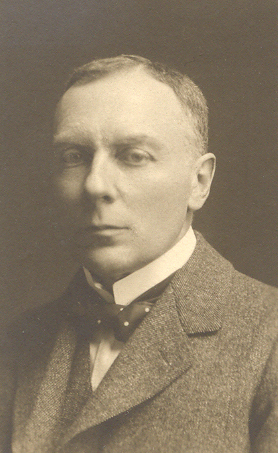
Robert Polhill Bevan (5 August 1865 – 8 July 1925) was a British painter, draughtsman and lithographer who was married to the Polish-born artist Stanisława de Karłowska. He was a founding member of the Camden Town Group, the London Group, and the Cum...
By 1900, Bevan had settled in London at Adamson Road, Swiss Cottage. This marked a turning point – a shift from relative isolation to active engagement with a burgeoning artistic community. The nucleus of this group formed around Walter Sickert, who upon his return from Venice in 1905, began hosting weekly gatherings in his studio. These meetings weren’t merely social; they were intellectual ferment, where artists like Harold Gilman, Spencer Frederick Gore, Lucien Pissarro, and others debated the latest developments in French art and sought to establish a distinctly modern British aesthetic. The formation of the Allied Artists Association (AAA) in 1908, modeled on the Salon des Indépendants, provided a platform for these ideas.
However, it was in 1911 that this collective spirit coalesced into the Camden Town Group – a consciously radical undertaking. The group’s exhibitions at the Carfax Gallery were pivotal moments, introducing early French Fauve and Cubist paintings to a British audience largely unfamiliar with these movements. Bevan played a central role in this endeavor, not simply as an exhibiting artist but as a driving force behind its commitment to innovation. The Camden Town Group wasn't just about showcasing new art; it was about challenging established norms and forging a new path for British painting – one that embraced subjectivity, expressive color, and the realities of modern life.
Bevan's Distinctive Style: Landscapes, Everyday Life, and Expressive Brushwork
Robert Bevan’s artistic voice, though shaped by his encounters with Impressionism, Fauvism, and the Pont-Aven School, ultimately transcended simple categorization. His landscapes, particularly those painted in Sussex and Poland during the summers of 1901–1904, are characterized by a vibrant palette and an expressive use of brushwork. He wasn’t interested in meticulous detail; instead, he sought to capture the *feeling* of a place – its light, atmosphere, and emotional resonance. This is evident in works like ‘Devonshire Valley, No. 2’ (1913), where the serene landscape is rendered with bold strokes of color that convey a sense of immediacy and vitality.
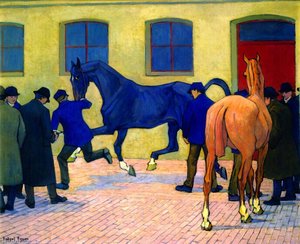
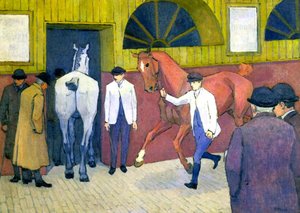
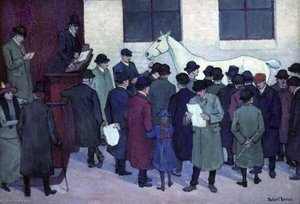
Beyond landscapes, Bevan also turned his attention to scenes of everyday life – interiors, pubs, and working-class subjects. These paintings are notable for their honesty and lack of sentimentality; he depicted the world as he saw it, without idealization or romanticism. His technique was equally distinctive – a combination of impasto, broken color, and a deliberate disregard for conventional perspective. Bevan’s work wasn't about creating illusions; it was about exploring the materiality of paint itself and conveying his subjective experience of reality. This commitment to expressive brushwork and vibrant color set him apart from many of his contemporaries and established him as a truly original voice in British art.
Legacy and Impact: Bevan’s Role in Shaping Early 20th-Century British Art
Robert Bevan's career, though cut short by his untimely death in 1925, left an indelible mark on the landscape of early 20th-century British art. While he didn’t achieve widespread commercial success during his lifetime, his influence on subsequent generations of artists is undeniable. His pioneering use of pure color and expressive brushwork paved the way for a more radical approach to painting in Britain. He was instrumental in introducing French modernism to a wider audience through his involvement with the Camden Town Group, challenging established norms and fostering a spirit of experimentation.
Bevan’s legacy extends beyond his paintings; he also played a significant role as a teacher and mentor, encouraging younger artists to embrace their own unique voices. His work continues to be celebrated for its honesty, vitality, and emotional depth – qualities that resonate with audiences today. As Nicola Moorby notes in her Tate publication on Bevan, he was “the real pioneer” of the modern English school. Through ArtsDot.com, you can experience the power and beauty of Robert Bevan’s art firsthand, exploring his vibrant landscapes and intimate scenes of everyday life – a testament to his enduring contribution to British artistic heritage. Explore our collection of reproductions and discover the captivating world of this remarkable artist.