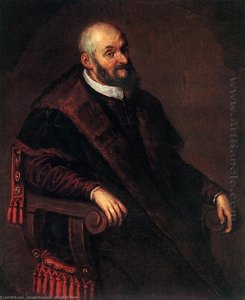
Early Life & Training: The Foundations of a Bassano Style
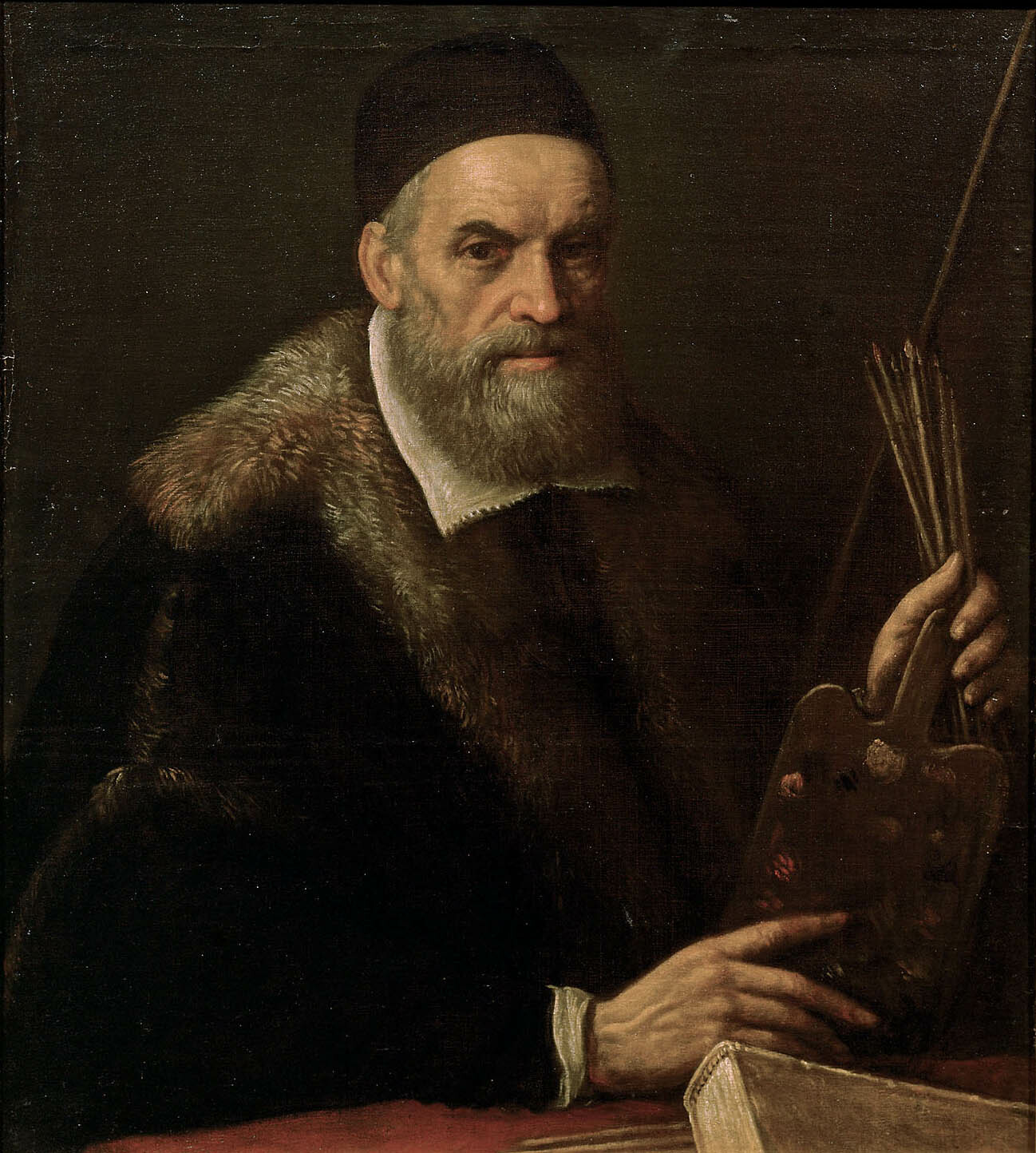 Wikipedia: Jacopo Bassano
Jacopo Bassano (c. 1510 – 14 February 1592), known also as Jacopo dal Ponte, was an Italian painter who was born and died in Bassano del Grappa near Venice, and took the village as his surname. Having trained in the workshop of his father, Francesco ...
Jacopo Bassano, born around 1510 in the picturesque town of Bassano del Grappa near Venice – hence his adopted surname – emerged from a lineage deeply rooted in artistic practice. His father, Francesco the Elder, was a respected local painter who established a thriving workshop, and it was within these familial walls that Jacopo’s journey began. This early training wasn't solely focused on brushwork and composition; Francesco also imparted skills in surveying and mapmaking, disciplines that would subtly yet profoundly influence his son’s later work. While the precise details of Jacopo’s formal education remain somewhat elusive, it is clear he absorbed not only technical proficiency but a pragmatic approach to art-making – an understanding of space, light, and the tangible world around him.
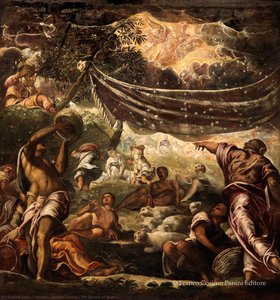
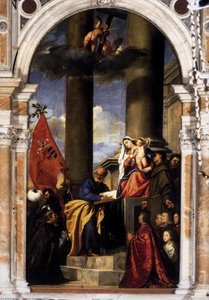
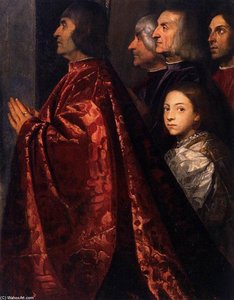
By the 1530s, Bassano ventured into Venice itself, a city pulsating with artistic innovation. Here, he encountered the towering figures of Titian and Pordenone, whose influence would become palpable in his evolving style. However, Bassano wasn’t merely an imitator; he synthesized these lessons with his own innate sensibilities, forging a path that distinguished him from his contemporaries. His early works reveal a fascination with Titian's luminous color palettes and dynamic compositions, yet they also hint at a burgeoning desire to move beyond the established conventions of Venetian painting.
Venetian Colorism & Influences: Titian, Pordenone, and a Unique Palette
 jacopo dal ponte
Discover Jacopo dal Ponte (Bassano), Venetian painter known for animal & nocturnal scenes, blending Titian & Pordenone styles. Explore his legacy at ArtsDot.com!
The hallmark of Venetian painting during the Renaissance was undoubtedly its embrace of color. Unlike Florentine artists who prioritized line and form, Venetians reveled in the sensual richness of pigment, employing layers of glaze to create depth, luminosity, and an almost tactile quality. Jacopo Bassano inherited this tradition wholeheartedly, but he infused it with a distinctive character all his own. He possessed an extraordinary sensitivity to tonal variations, capable of rendering flesh tones with remarkable warmth and vibrancy. This mastery of color wasn’t simply aesthetic; it was integral to conveying emotion and narrative depth.
The influence of Titian is readily apparent in Bassano's early works, particularly in the use of rich, saturated hues and a fluid brushstroke. However, Pordenone’s dramatic compositions and expressive figures also left an indelible mark. Bassano skillfully blended these influences, creating a style that was both elegant and emotionally charged. He wasn’t afraid to experiment with unconventional color combinations, often employing bold contrasts to heighten the impact of his scenes. This willingness to push boundaries, coupled with his innate talent for capturing light and atmosphere, set him apart from many of his peers.
Biblical Scenes in Rural Settings: A Revolutionary Approach to Religious Painting
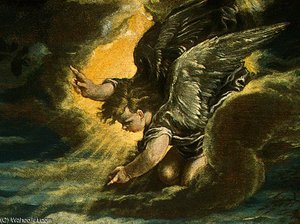 The Annunciation to the Shepherds )
Admire "The Annunciation to the Shepherds" by Jacopo Bassano! A stunning 1551 Renaissance masterpiece showcasing angelic beauty & Venetian style. Explore this iconic artwork's rich details.
Perhaps the most striking aspect of Bassano’s oeuvre is his unconventional treatment of biblical themes. Rather than depicting sacred events within grand architectural settings or idealized landscapes, he situated them in the humble surroundings of the Venetian countryside – amongst peasants, animals, and the everyday rhythms of agrarian life. This wasn't merely a stylistic choice; it was a deliberate attempt to make religious narratives more accessible and relatable to a wider audience. In works like “The Annunciation to the Shepherds” (1551), we see angelic figures descending upon a rustic scene, populated by shepherds tending their flocks – a far cry from the opulent depictions favored by other Renaissance masters.
This innovative approach wasn’t without its critics; some questioned the propriety of portraying sacred subjects in such commonplace settings. However, Bassano's intention was not to diminish the sanctity of these events but rather to emphasize their universal relevance. By grounding them in the tangible world, he invited viewers to connect with the narratives on a more personal level. His meticulous attention to detail – the textures of clothing, the anatomy of animals, the play of light across the landscape – further enhanced this sense of realism and immediacy.
The Bassano Workshop: A Family Legacy of Artistic Production
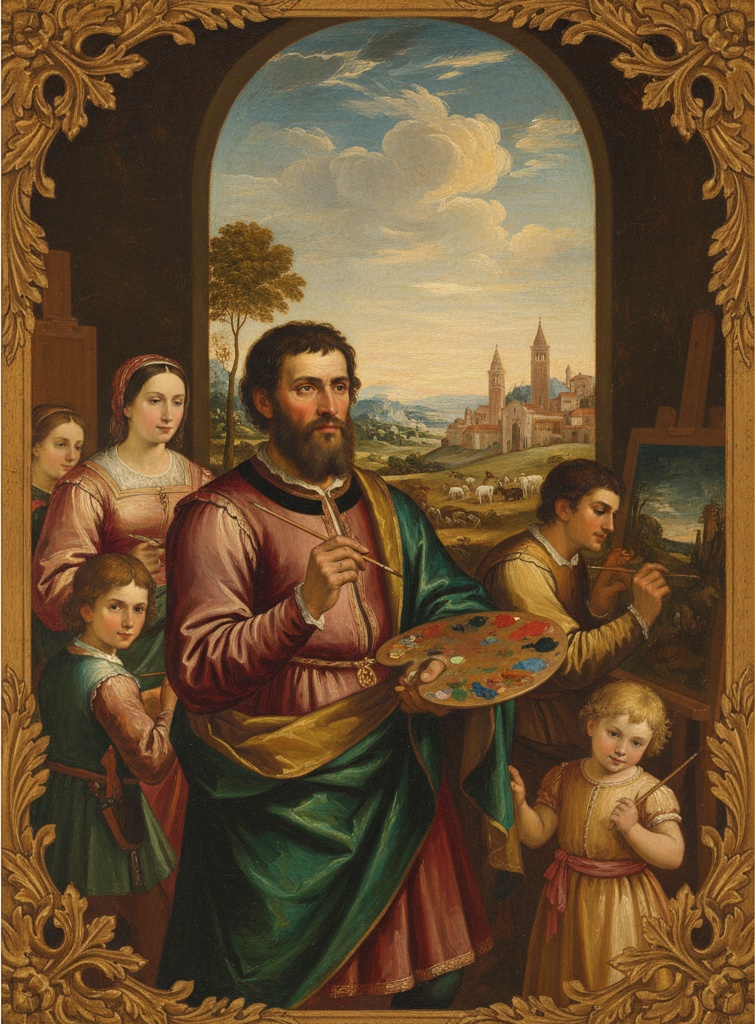
Jacopo Bassano wasn’t a solitary genius; he was the head of a prolific workshop that involved his four sons – Francesco the Younger, Giovanni Battista da Ponte, Leandro Bassano, and Girolamo da Ponte. This familial collaboration played a crucial role in shaping his artistic legacy. After his father's death in 1539, Jacopo returned to Bassano del Grappa and established himself as the leading painter in the region. He married Elisabetta Merzari in 1546, further solidifying his ties to the local community.
The Bassano workshop operated like a well-oiled machine, with each son specializing in different aspects of production. While Jacopo oversaw the overall composition and execution of key elements, his sons were responsible for backgrounds, figures, and other details. This division of labor allowed them to fulfill a high volume of commissions, catering to the growing demand for Bassano’s distinctive style. However, it also presents challenges for art historians attempting to attribute specific works definitively to Jacopo himself versus his progeny. The stylistic consistency across their oeuvre is undeniable, yet discerning individual authorship remains a complex undertaking.
Beyond Religion: Landscapes, Genre Scenes, and the Depiction of Daily Life
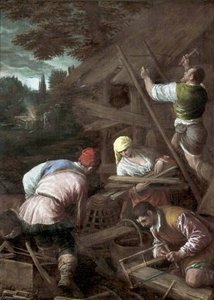
While religious paintings constituted a significant portion of Bassano’s output, he also excelled in landscapes and genre scenes. These works reveal his keen observation skills and his ability to capture the beauty and tranquility of the Venetian countryside. He often treated biblical themes as opportunities to showcase these elements, seamlessly integrating them into pastoral settings. However, he also produced independent landscape paintings that stand on their own merit – evocative depictions of forests, rivers, and mountains bathed in golden light.
His genre scenes offer a fascinating glimpse into the daily lives of 16th-century Venetians. He depicted peasants engaged in agricultural labor, merchants conducting business, and families sharing meals – capturing moments of both hardship and joy. These paintings weren’t merely ethnographic studies; they were imbued with a sense of empathy and respect for the working class. Bassano's ability to elevate these commonplace subjects to the level of artistic significance is a testament to his unique vision.
Bassano’s Enduring Influence: From Dutch Masters to Modern Appreciation
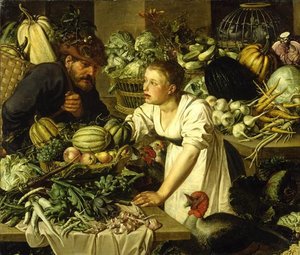 Pieter Cornelisz van Rijck
Pieter Cornelisz van Rijck (1567-c. 1637) was a Dutch Golden Age Baroque painter known for detailed kitchen scenes, still lifes & market life. A pioneer of genre painting influenced by Italian masters like Bassano.
Jacopo Bassano’s influence extended far beyond the borders of Venice, reaching as far afield as the Netherlands and Germany. His innovative approach to religious painting – particularly his use of rural settings and everyday figures – resonated with artists seeking to break away from established conventions. Pieter Cornelisz van Rijck, a Dutch Golden Age painter known for detailed kitchen scenes, was profoundly influenced by Bassano’s work, adopting his techniques and subject matter.
Today, Jacopo Bassano is recognized as one of the most important Venetian Renaissance masters. His paintings are celebrated for their vibrant colorism, emotional depth, and innovative compositions. Works like “St Roche among the Plague Victims” demonstrate his ability to convey both suffering and hope with remarkable poignancy. Whether you admire his religious scenes, landscapes, or genre paintings, Bassano’s art offers a captivating glimpse into the world of 16th-century Venice – a world brought to life through the masterful brushstrokes of a true artistic visionary. At ArtsDot, we are proud to offer high-quality reproductions of Jacopo Bassano's masterpieces, allowing you to experience the beauty and artistry of this remarkable painter in your own home.