
The Rise of Pre-Raphaelitism: A Rejection of Academic Convention
Victorian painting refers to the distinctive styles of painting in the United Kingdom during the reign of Queen Victoria (1837–1901). Victoria's early reign was characterised by rapid industrial development and social and political change, which made...
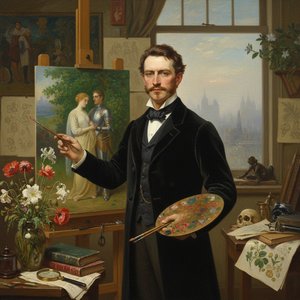
The mid-19th century art world was largely dominated by the rigid conventions of the Royal Academy, an institution steeped in tradition and a reverence for Renaissance masters like Raphael. Yet, beneath this polished surface simmered discontent. A group of young artists, feeling stifled by what they perceived as artificiality and a lack of genuine emotion, dared to challenge the status quo. This rebellion culminated in 1848 with the formation of the Pre-Raphaelite Brotherhood (PRB), a collective that sought to return painting to a purity of form and subject matter found before the influence of Raphael – hence their name. They weren’t simply advocating for a stylistic shift; they were pursuing a fundamental change in artistic philosophy, prioritizing truth to nature, intense color, and detailed observation over idealized representations. This movement wasn't merely about *what* was painted but *how* it was approached, emphasizing sincerity and direct engagement with the world around them.
Waterhouse’s Early Influences & Artistic Development
 Wikipedia: John William Waterhouse
John William Waterhouse (baptised 6 April 1849 – 10 February 1917) was an English painter known for working first in the Academic style and for then embracing the Pre-Raphaelite Brotherhood's style and subject matter. His paintings are known for the...
John William Waterhouse, born in 1849 – a year already resonant with Pre-Raphaelite fervor – initially followed a more conventional academic path. His parents were both artists, and he enrolled at the Royal Academy Schools, focusing on classical themes reminiscent of Alma-Tadema and Frederic Leighton. Early works displayed a proficiency in technique but lacked the distinctive emotional depth that would later define his style. However, the seeds of his future direction were sown during this period. He meticulously studied artworks in the British Museum, absorbing the details of historical costumes and settings. A pivotal shift occurred as Waterhouse began to embrace the Pre-Raphaelite ethos, drawn to its romanticism and narrative power. While he didn’t immediately align with the Brotherhood's most radical tenets, his work gradually absorbed their principles – a commitment to realism, vibrant color palettes, and a fascination with literary subjects.
Myth, Legend, and the Poetic Muse: Recurring Themes in Waterhouse's Work
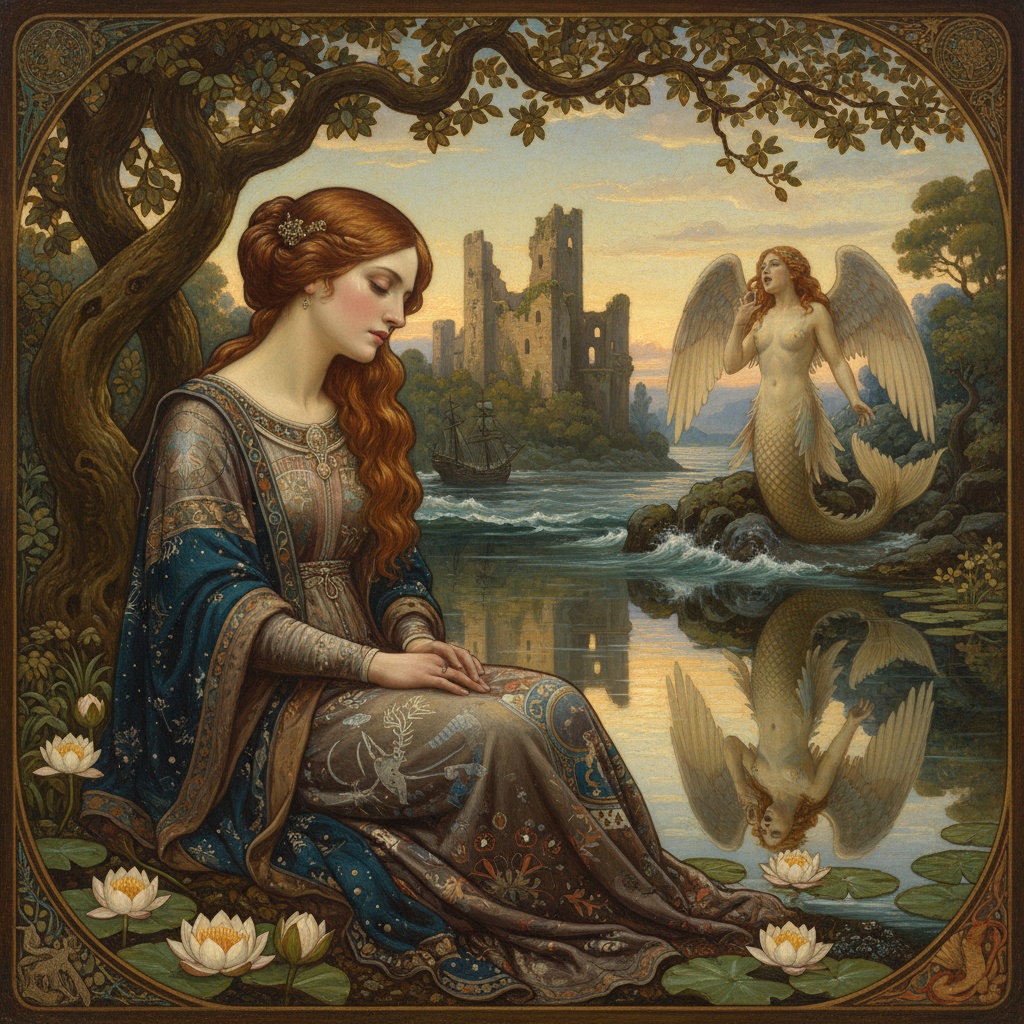
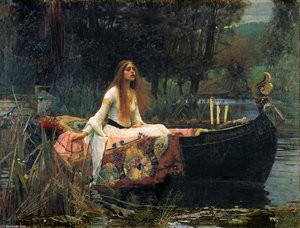
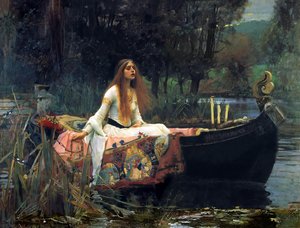
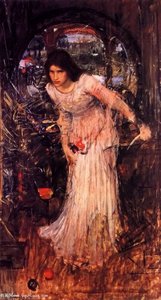
Waterhouse’s artistic vision found its fullest expression in depictions of mythology and Arthurian legend. He wasn’t interested in grand historical narratives or allegorical statements; instead, he focused on intimate moments within these stories, often centering around the experiences of women. Authors like Homer, Ovid, Tennyson, and Keats provided a rich source of inspiration, offering tales ripe with emotional resonance and visual potential. His paintings weren't simply illustrations of literature but rather poetic interpretations that captured the *feeling* of the text. This is particularly evident in his frequent returns to specific narratives – The Lady of Shalott, for example, became a lifelong obsession, revisited in multiple canvases throughout his career. He wasn’t merely retelling stories; he was exploring universal themes of love, loss, isolation, and fate through the lens of these timeless myths.
Iconic Heroines: Ophelia, The Lady of Shalott, and Ariadne – Studies in Female Identity
 Ophelia 1
Discover John William Waterhouse’s ‘Ophelia 1’. A serene Pre-Raphaelite masterpiece depicting Shakespeare's tragic heroine. Explore its rich detail & timeless beauty.
Waterhouse's heroines are arguably his most enduring legacy. Figures like Ophelia, The Lady of Shalott, and Ariadne aren’t portrayed as passive victims but rather as complex individuals grappling with profound emotional turmoil. His Ophelia 1, for instance, captures Shakespeare's tragic character in a moment of serene resignation, her fate sealed yet imbued with a haunting beauty. Similarly, his multiple depictions of The Lady of Shalott explore the consequences of artistic confinement and the yearning for freedom. Ariadne, abandoned on Naxos, embodies both vulnerability and defiance. Waterhouse’s skill lies in conveying their inner lives through subtle gestures, expressive faces, and symbolic details – a wilting flower representing lost innocence, a flowing gown suggesting emotional fluidity, or a distant gaze hinting at unspoken desires. These paintings aren't simply beautiful images; they are psychological portraits that resonate with viewers on a deeply personal level.
Technical Mastery & Aesthetic Qualities: Detail, Color, and Composition
Waterhouse’s artistic skill was undeniable. He possessed an exceptional ability to render detail – the intricate folds of fabric, the delicate texture of skin, the lushness of foliage. His color palettes were rich and evocative, often employing a luminous quality that enhanced the emotional impact of his scenes. He masterfully used light and shadow to create depth and atmosphere, drawing the viewer into the world of his paintings. Compositionally, Waterhouse favored intimate settings and carefully arranged figures, creating a sense of stillness and contemplation. His brushwork, while refined, wasn’t overly polished; visible strokes added texture and vitality to his work. He blended academic precision with Pre-Raphaelite attention to detail, resulting in paintings that were both technically impressive and emotionally resonant.
Waterhouse’s Enduring Legacy and Continued Appeal
Despite facing criticism during his lifetime for perceived sentimentality, John William Waterhouse achieved widespread recognition as a leading Victorian painter. His work continues to captivate audiences today, inspiring countless artists and art lovers. The enduring appeal of his paintings lies in their timeless themes – the power of love, the tragedy of loss, the search for identity – and their exquisite beauty. Waterhouse’s ability to blend mythology, poetry, and psychological insight creates a unique artistic experience that transcends generations. His heroines remain compelling figures, embodying both strength and vulnerability, and his paintings offer a glimpse into a world where beauty and sorrow coexist in perfect harmony. Discover the captivating masterpieces of John William Waterhouse at ArtsDot.com, where you can explore high-quality reproductions and bring these iconic works into your own home.