Early Life and Artistic Formation: Seville Roots and Academic Training
 Wikipedia: José Villegas (painter)
José Villegas Cordero (26 August 1844, Seville – 9 November 1921, Madrid) was a Spanish painter of historical, genre and costumbrista scenes. == Early life == His father ran a barbershop, and his family had their doubts about an artistic career. Bu...
José Villegas Cordero, born in the vibrant city of Seville in 1844, emerged from a family initially skeptical of his artistic ambitions. His father’s profession as a barber represented practicality, yet the young Villegas demonstrated an undeniable talent that soon shifted familial perspectives. A pivotal moment arrived in 1860 when, at just sixteen years old, he sold a work for 2,000 Reales at the “Exposición Sevillana,” a transaction that not only validated his burgeoning career but also secured his apprenticeship with José María Romero López. This formative period of two years laid the groundwork for his subsequent enrollment in the Escuela de Bellas Artes de Sevilla, where he studied under Eduardo Cano. These early experiences instilled within him a dedication to meticulous technique and a deep appreciation for the traditions of Spanish painting—a foundation that would be both challenged and refined throughout his artistic journey.
The Influence of Rome and Orientalism on Villegas’s Style
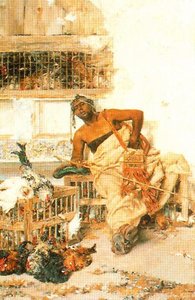
Villegas's trajectory took a significant turn with his move to Madrid in 1867, where he honed his skills within the studios of Federico de Madrazo. However, it was his sojourn to Rome, undertaken with financial support from his family around 1868, that proved truly transformative. He established himself within Eduardo Rosales’s workshop, and began creating costumbrista works—scenes depicting everyday life in Spain—that quickly gained popularity. Simultaneously, inspired by the allure of Marià Fortuny's Orientalist paintings, Villegas embarked on an excursion to Morocco, gathering sketches that would fuel a series of captivating compositions. This embrace of Orientalism, fashionable at the time, introduced exotic elements and vibrant color palettes into his repertoire, broadening his artistic vocabulary and appealing to a growing market eager for depictions of distant lands.
Costumbrismo and Historical Genre Painting: Capturing Spanish Life
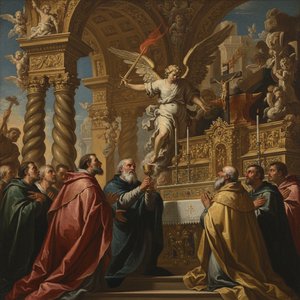
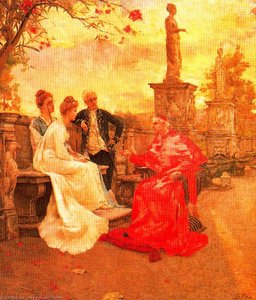 Cardinal Reception In The Gardens Of Villa Borghese
Admire 'Cardinal Reception' by José Villegas Cordero! A stunning 19th-century oil painting of aristocratic figures in a lavish Villa Borghese garden. Romantic style, rich colors & historical detail – perfect for art lovers.
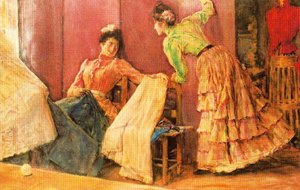
Villegas Cordero masterfully balanced two distinct yet interconnected strands in his oeuvre: costumbrismo and historical genre painting. His costumbrista scenes, often intimate glimpses into the lives of ordinary Spaniards, reveal a keen eye for detail and a sensitivity to social nuances. These works weren’t merely depictions; they were carefully constructed narratives that offered insights into the customs, traditions, and character of his nation. Alongside these everyday portrayals, Villegas excelled in historical genre painting, tackling grand themes with a Romantic sensibility. Paintings like “Cardinal Reception In The Gardens Of Villa Borghese” exemplify this approach—a lavish scene brimming with aristocratic figures, rich colors, and meticulous attention to period detail. This ability to seamlessly blend realism with romantic idealism cemented his reputation as a leading painter of his generation.
Villegas as Director of the Prado Museum: A Legacy of Preservation and Patronage
The culmination of Villegas’s distinguished career arrived in 1901 with his appointment as Director of the Museo del Prado. This prestigious position afforded him the opportunity to shape one of the world's most renowned art collections, undertaking a major reorganization that enhanced its accessibility and scholarly value. He wasn’t simply an administrator; he was a passionate advocate for Spanish artistic heritage, dedicated to preserving and promoting the masterpieces within his care. His tenure, lasting until 1918, saw significant improvements in display methods and a renewed focus on research and conservation. While controversies occasionally arose—notably surrounding a jewelry theft by a museum guard—his overall impact was profoundly positive, leaving an enduring legacy of stewardship and patronage.
Introspective Portraits: Exploring Age, Dignity, and the Artist's Self-Reflection
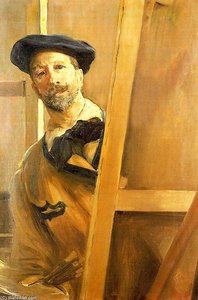
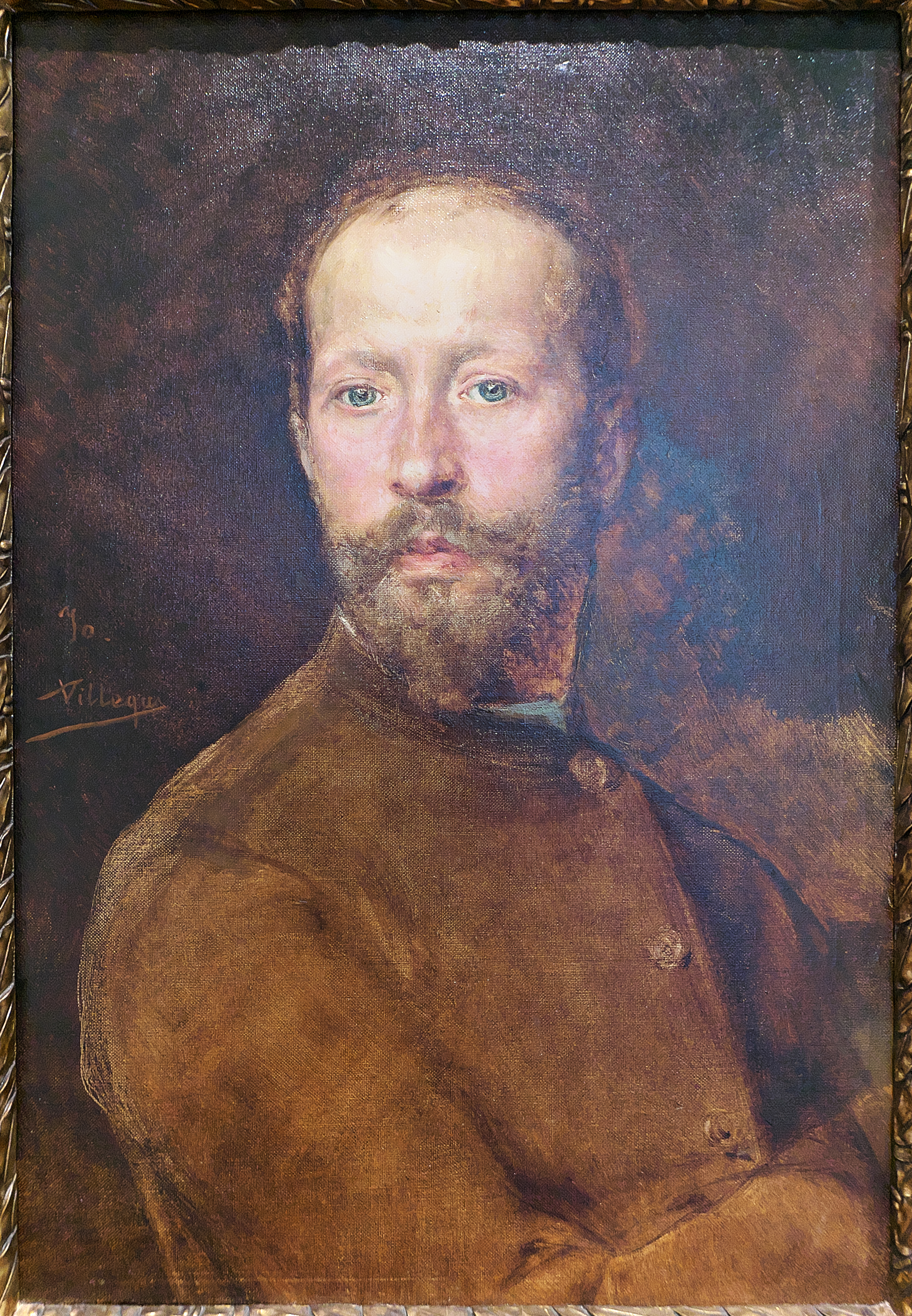
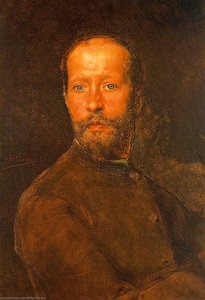 Me, Villegas
Introspective portrait by José Villegas Cordero, capturing age and dignity with expressive impasto technique. A study in light, shadow, and character from 19th-century Spain.
Beyond his historical and genre scenes, Villegas Cordero’s portraits offer a particularly compelling window into his artistic sensibilities. Works like “Me, Villegas” (1890) are not merely likenesses; they are profound studies in character, capturing the weight of experience and the dignity of age with expressive impasto technique. The visible brushstrokes and warm tones evoke a sense of nostalgia and introspection, inviting viewers to contemplate the passage of time and the inner life of the subject. His “Self-Portrait” further exemplifies this introspective mood, revealing an artist deeply engaged in self-reflection—a testament to his lifelong pursuit of artistic truth and emotional resonance. These portraits stand as poignant reminders of Villegas’s ability to imbue even the most traditional forms with a sense of profound humanity.