Early Life & Artistic Foundations: From Fashion Illustration to Independent Vision
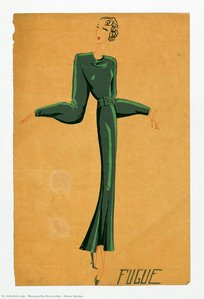
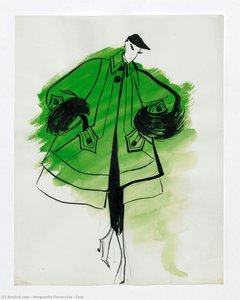 Coat
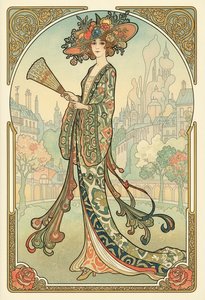
CoatDiscover Marguerite Porracchia’s ‘Coat’ – a vibrant Art Deco illustration of a green figure in a swirl background. Explore this stylized fashion study, showcasing bold lines & watercolor textures.
Marguerite Porracchia’s artistic journey, though perhaps less widely celebrated than some of her contemporaries, represents a fascinating intersection of early 20th-century aesthetics – a graceful evolution from the applied arts of fashion illustration into a deeply personal exploration of abstract form. Born in Italy in 1891, Porracchia initially found expression within the vibrant world of Parisian design. This formative period wasn’t merely a vocational stepping stone; it instilled in her a keen eye for line, color, and composition – qualities that would later define her unique artistic voice. The early 1900s Paris fashion scene was undergoing a dramatic transformation, shedding the constraints of Victorian formality for a more streamlined, modern sensibility. Porracchia’s work from this era, exemplified by pieces like ‘Coat’ (a striking Art Deco illustration showcasing a green figure enveloped in swirling patterns), reveals an immediate aptitude for capturing the energy and elegance of the *garçonne* aesthetic. However, even within these commercially driven commissions, hints of her burgeoning artistic independence begin to emerge – a subtle experimentation with form that foreshadows her later abstract endeavors.
The Art Deco Influence: Stylization, Geometry, and the Modern Woman
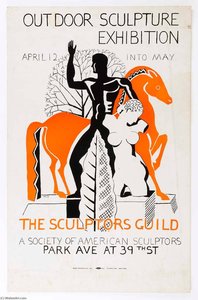 Poster for Outdoor Sculpture Exhibition, the Sculptors Guild
Discover Marguerite Zorach’s striking poster for a 1930s sculpture exhibition! Bold graphics, mythological figures & Art Deco style – a unique piece of American art history.
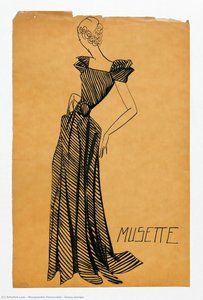
The allure of Art Deco permeated Parisian culture during Porracchia’s most active years, and its influence is undeniably present in her work. More than just a stylistic preference, Art Deco represented a broader cultural shift – an embrace of modernity, technology, and a new vision of femininity. Geometric patterns, bold lines, and luxurious materials characterized the movement, and Porracchia skillfully integrated these elements into her illustrations. Consider her poster for the Sculptors Guild exhibition; it’s not simply advertising an event but embodies the spirit of the age – mythological figures rendered with sleek, stylized forms, a testament to the era's fascination with both classical antiquity and forward-looking design. This period saw women increasingly asserting their independence, and Porracchia’s depictions often reflect this newfound confidence. Her subjects are not passive muses but dynamic individuals, radiating strength and sophistication through posture and attire. The Art Deco aesthetic provided a visual language perfectly suited to express this evolving role of women in society.
Exploring Abstraction Through Watercolor & Graphite: A Study in Form and Texture
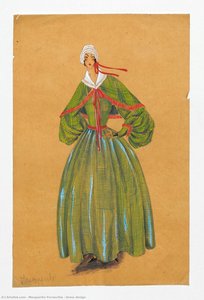
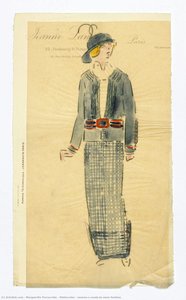 Watercolor — women’s ready-to-wear fashion
Explore Marguerite Porracchia’s 1914 watercolor of women’s fashion – a charming Art Nouveau illustration showcasing tweed & style. Vintage charm awaits!
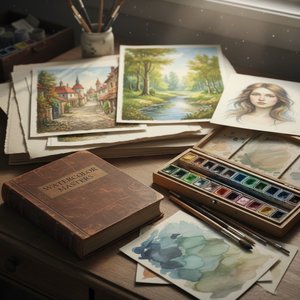
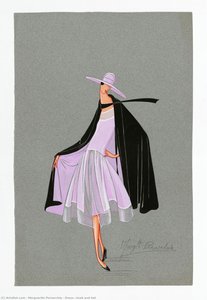
While initially recognized for her fashion work, Porracchia’s true artistic breakthrough came with her exploration of abstraction. This wasn't a sudden departure but rather a gradual refinement of the formal elements she had honed through years of illustration. Her watercolors from the 1910s demonstrate this transition beautifully – delicate washes of color and fluid lines gradually giving way to more complex compositions that prioritize form over representation. The use of watercolor, with its inherent transparency and fluidity, allowed Porracchia to create a sense of depth and luminosity in her abstract works. Graphite sketches, too, played a crucial role in her process, serving as preliminary studies for larger paintings and revealing the underlying structure of her compositions. These weren’t merely preparatory drawings; they stand as compelling artworks in their own right, showcasing her mastery of line and texture. The shift towards abstraction wasn't about abandoning realism entirely but rather about exploring the fundamental building blocks of visual language – shape, color, and form – independent of any recognizable subject matter.
Porracchia's Research Sketches: Unveiling the Creative Process Behind the Designs
A deeper understanding of Porracchia’s artistic process is revealed through her extensive research sketches. These sketchbooks, dating from around 1955, offer a rare glimpse into the mind of a working artist – a collection of ideas, experiments, and preliminary studies that illuminate the evolution of her abstract style. The sketches themselves are often delicate and intimate, filled with graphite pencil touches and subtle watercolor washes. They demonstrate a meticulous attention to detail and a willingness to explore multiple variations before arriving at a final composition. These aren’t polished finished works but rather raw explorations – fragments of ideas, studies of form, and investigations into the interplay of light and shadow. The fact that these sketches remained largely unpublished for many years adds to their allure, offering a unique insight into the private world of an artist grappling with complex aesthetic questions. They underscore her dedication to craft and her commitment to pushing the boundaries of abstract expression.
Materiality and Light as Subject: The Essence of Porracchia’s Abstract Compositions
 Wikipedia: Abstract art
Abstract art uses visual language of shape, form, color and line to create a composition which may exist with a degree of independence from visual references in the world. Abstract art, non-figurative art, non-objective art, and non-representational ...
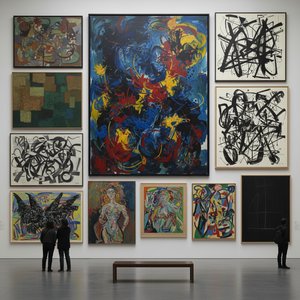
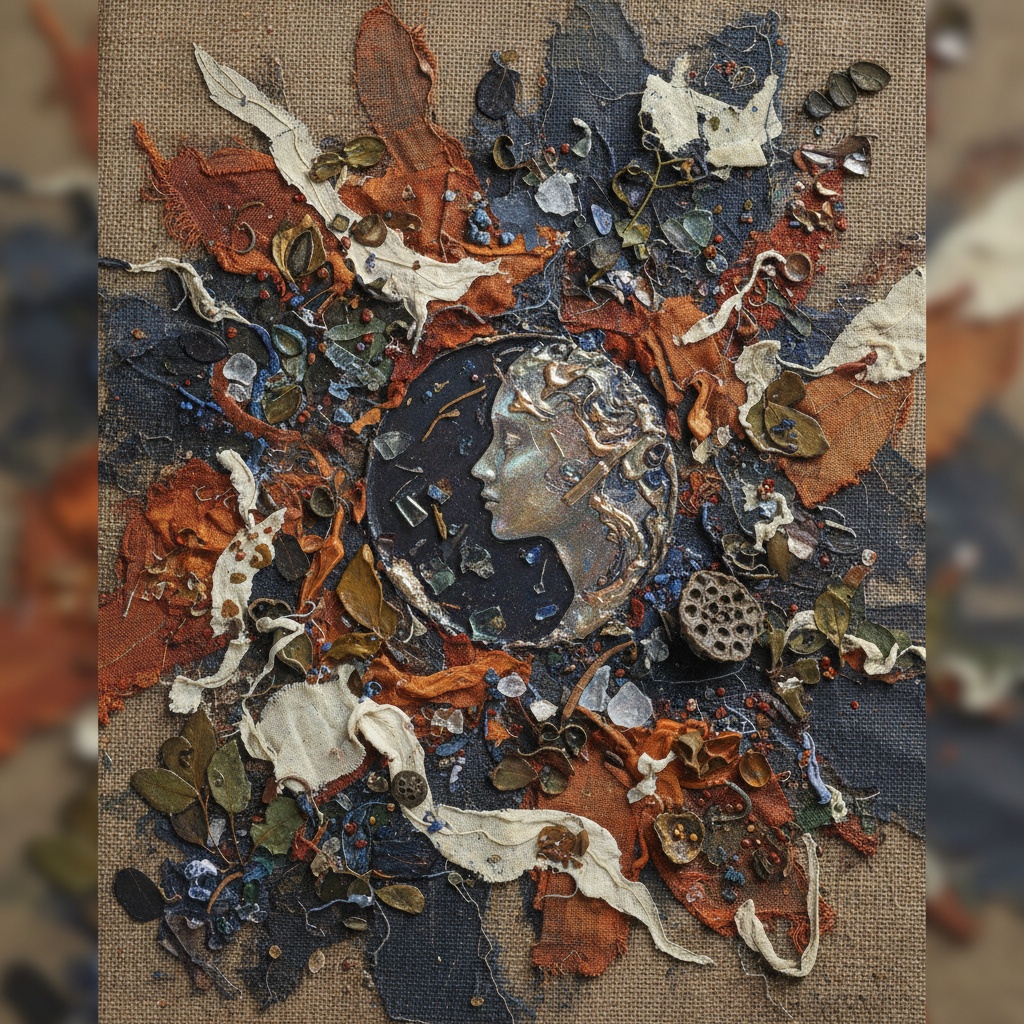
At the heart of Porracchia’s abstract work lies a profound fascination with materiality and light. She wasn't simply interested in creating visually appealing compositions; she sought to explore the inherent qualities of her chosen materials – the texture of watercolor paper, the fluidity of paint, the subtle gradations of tone created by graphite pencil. Her compositions often evoke a sense of depth and luminosity, as if emanating from within. This emphasis on materiality aligns with broader trends in early 20th-century art, where artists began to question traditional notions of representation and explore the inherent properties of their mediums. Abstract art, as a movement, sought to liberate itself from the constraints of depicting recognizable objects, focusing instead on the visual language of form, color, and line. Porracchia’s work exemplifies this shift – her abstract compositions aren't about *what* they represent but rather about *how* they are constructed, inviting viewers to engage with the artwork on a purely sensory level.
Marguerite Porracchia's Legacy: Bridging Fashion, Art, and a Visionary Aesthetic
While perhaps not a household name, Marguerite Porracchia’s contribution to early 20th-century art is significant. She represents a fascinating bridge between the applied arts of fashion illustration and the independent world of abstract expression. Her work demonstrates a keen understanding of both form and function – a sensitivity to the elegance of design combined with a willingness to push the boundaries of artistic convention. Her legacy lies in her ability to seamlessly integrate these seemingly disparate worlds, creating artworks that are both visually captivating and intellectually stimulating. Today, Porracchia’s paintings and sketches offer a valuable glimpse into the creative process of a visionary artist – a testament to the power of experimentation, the allure of materiality, and the enduring beauty of abstract form. Explore her work further at ArtsDot.com, where high-quality reproductions allow you to experience the elegance and sophistication of Porracchia’s art firsthand.