Early Life & Artistic Beginnings: A Montmartre Childhood
 Wikipedia: Maurice Utrillo
Maurice Utrillo (French: [mɔʁis ytʁijo, moʁ-]; born Maurice Valadon; 26 December 1883 – 5 November 1955) was a French painter of the School of Paris who specialized in cityscapes. From the Montmartre quarter of Paris, France, Utrillo is one of the fe...
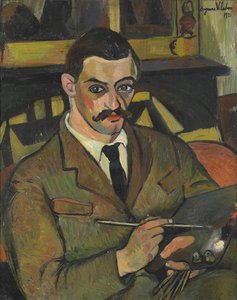
Maurice Utrillo, born Maurice Valadon in 1883, was inextricably linked to the bohemian heart of Montmartre. Unlike many artists who *came* to Paris seeking inspiration, Utrillo *was* Paris – specifically, that vibrant, often tumultuous quarter perched atop a hill overlooking the city. His mother, Suzanne Valadon, a former circus acrobat turned artist’s model and eventually a celebrated painter in her own right, shaped his early world. Valadon's life was unconventional; she never revealed the identity of Utrillo’s father, fueling speculation that ranged from Renoir to Degas, even Puvis de Chavannes. This ambiguity cast a subtle shadow over young Maurice’s upbringing, yet it also fostered an independent spirit and a keen observational eye. He grew up amidst artists, writers, and performers, absorbing the atmosphere of Montmartre like ink on blotting paper. His initial artistic endeavors weren't driven by ambition but rather as a form of therapy, encouraged by his mother to combat bouts of illness and a growing sense of isolation.
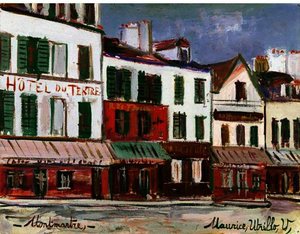
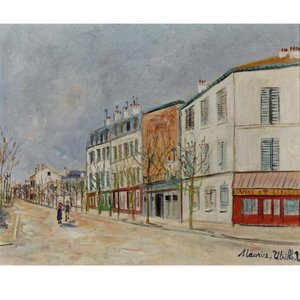
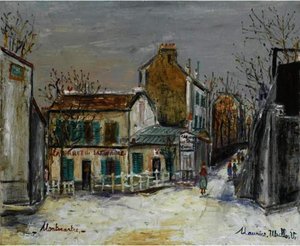
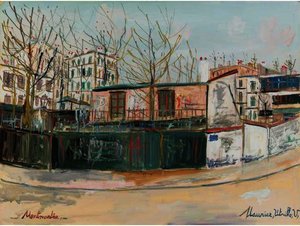
The streets themselves became Utrillo’s first teachers. He didn’t attend formal art schools; instead, he learned through direct observation, sketching the buildings, cafes, and windmills that defined his immediate surroundings. These early works were characterized by a raw honesty, devoid of academic polish but brimming with an authentic sense of place. He wasn't interested in capturing the bustling energy of Montmartre’s nightlife – rather, he focused on its quiet corners, its weathered facades, and the melancholic beauty of everyday life.
The 'White Period' and Utrillo’s Distinctive Style
 Maurice Utrillo
Explore the captivating Parisian cityscapes of Maurice Utrillo (1883-1955). Discover his Post-Impressionist style & find stunning, hand-painted reproductions.
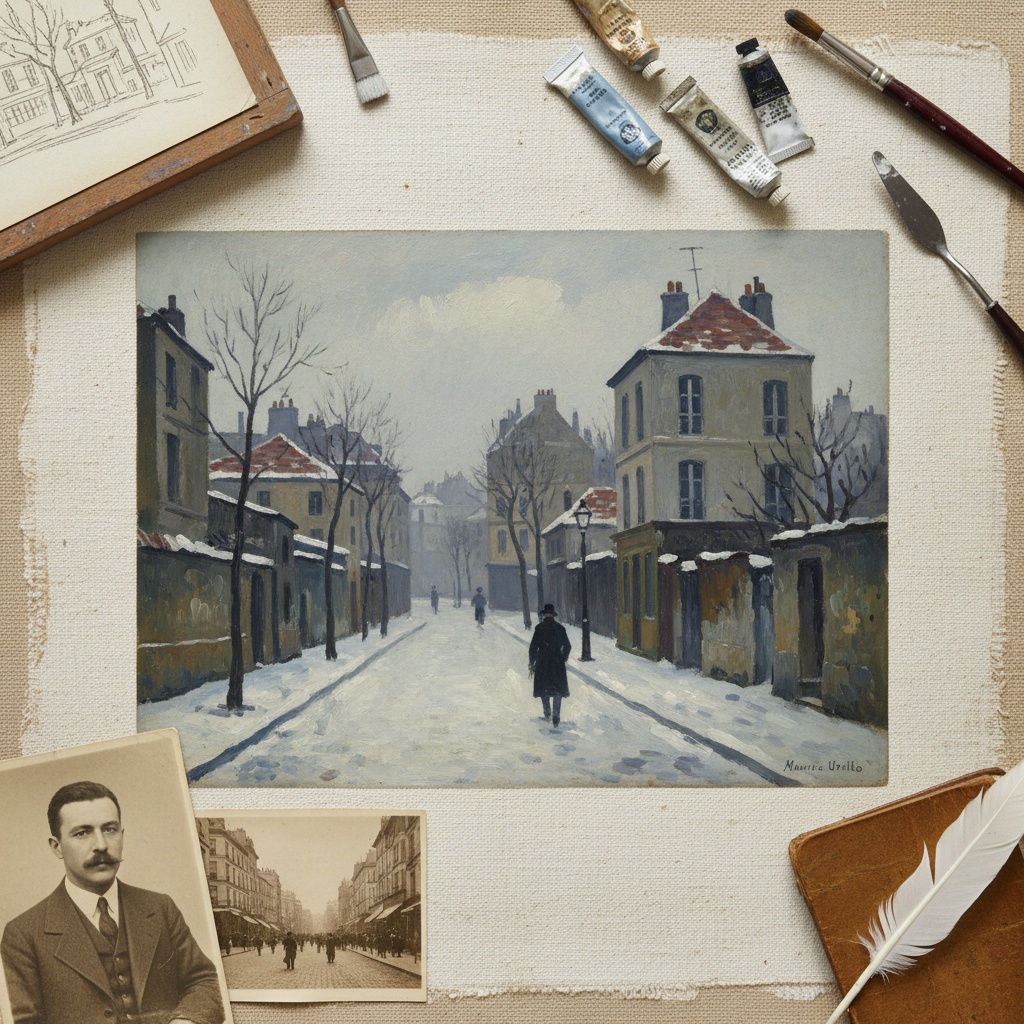
Around 1909, Utrillo entered a particularly distinctive phase known as his “White Period.” This wasn’t merely a stylistic choice; it was an exploration of texture, light, and the very essence of decay. He began incorporating materials like plaster and zinc white directly into his paint, creating thick impasto surfaces that mimicked the crumbling walls and aged stone of Montmartre buildings. The effect is strikingly tactile – one can almost feel the rough surface of the walls beneath their fingertips when viewing these paintings. This period wasn’t simply about replicating what he saw; it was about conveying a *feeling*—a sense of time, history, and quiet desperation.
His palette became deliberately muted, dominated by whites, grays, ochres, and browns. This limited range of colors heightened the focus on form and texture, emphasizing the architectural structure of his subjects. While some critics initially dismissed this style as crude or naive, others recognized its unique power—its ability to evoke a profound sense of loneliness and introspection. The use of glue alongside paint further contributed to the textured surfaces, creating an almost sculptural quality in his canvases.
Themes of Isolation and the Parisian Landscape
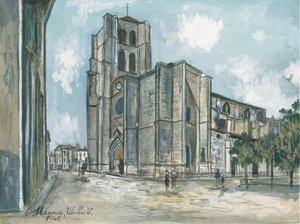 Church of Notre-Dame de Bonne-Espérance
Experience Utrillo's poignant 'Church of Notre-Dame de Bonne-Espérance.' A captivating post-impressionist view of Parisian faith & architecture, now available as a hand-painted reproduction.
Recurring themes of isolation and solitude permeate Utrillo’s work. His paintings are rarely populated with figures; when they do appear, they are often small, distant, and seemingly lost within the urban landscape. This absence of human connection reflects a personal struggle—Utrillo battled mental illness throughout his life, leading to periods of hospitalization and social withdrawal. The streets of Montmartre, therefore, became not just subjects for artistic representation but also metaphors for his own internal state.
He wasn’t interested in grand narratives or historical events; instead, he focused on the mundane—a quiet street corner, a dilapidated building, a simple church. These seemingly insignificant scenes were imbued with a profound sense of poetry and emotional resonance. The Church of Notre-Dame de Bonne-Espérance, for example, is not merely a depiction of a religious structure; it’s a symbol of faith, resilience, and the enduring spirit of Paris. His paintings offer a glimpse into the soul of the city—a city that is both beautiful and broken, vibrant and melancholic.
Critical Recognition and Later Years: Evolution of His Palette
By 1920, Utrillo had achieved international acclaim. His work was exhibited in galleries across Europe and America, attracting a devoted following of collectors and critics. Paul Guillaume, a prominent art dealer, played a crucial role in his success, recognizing the unique power of his paintings and championing his cause. However, despite this recognition, Utrillo remained a deeply private and introspective figure.
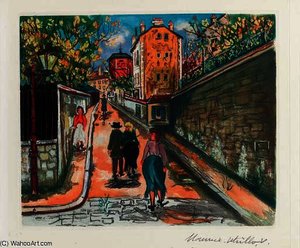
In the latter part of his career, Utrillo’s artistic style underwent a subtle evolution. While he continued to depict Parisian cityscapes, his palette expanded, incorporating richer colors and a more nuanced use of light and shadow. He began experimenting with different perspectives and compositions, adding greater depth and complexity to his work. Although his core themes remained consistent—isolation, solitude, the beauty of decay—his paintings became increasingly sophisticated and refined. The influence of postcards is also notable during this period; often using them as reference points when illness prevented him from painting *en plein air*.
Utrillo’s Enduring Influence & Legacy in Modern Art
Maurice Utrillo died in 1955, leaving behind a remarkable body of work that continues to captivate and inspire. His paintings are celebrated for their emotional restraint, architectural skill, and unique sense of place. He stands as one of the few truly iconic painters of Montmartre—a figure who not only captured the spirit of the quarter but also embodied its bohemian ethos.
His influence can be seen in the work of numerous subsequent artists, particularly those interested in urban landscapes and themes of isolation. Utrillo’s ability to transform ordinary scenes into poetic meditations on time, memory, and the human condition remains profoundly relevant today. At ArtsDot.com, we are proud to offer stunning, handmade oil reproductions of his masterpieces, allowing you to experience the beauty and emotional power of Utrillo’s vision firsthand. Explore our collection and discover the enduring legacy of this remarkable artist—a true poet of Parisian solitude.