

The Psychology of Dopamine Decor: Curating Joy Through Color and Form
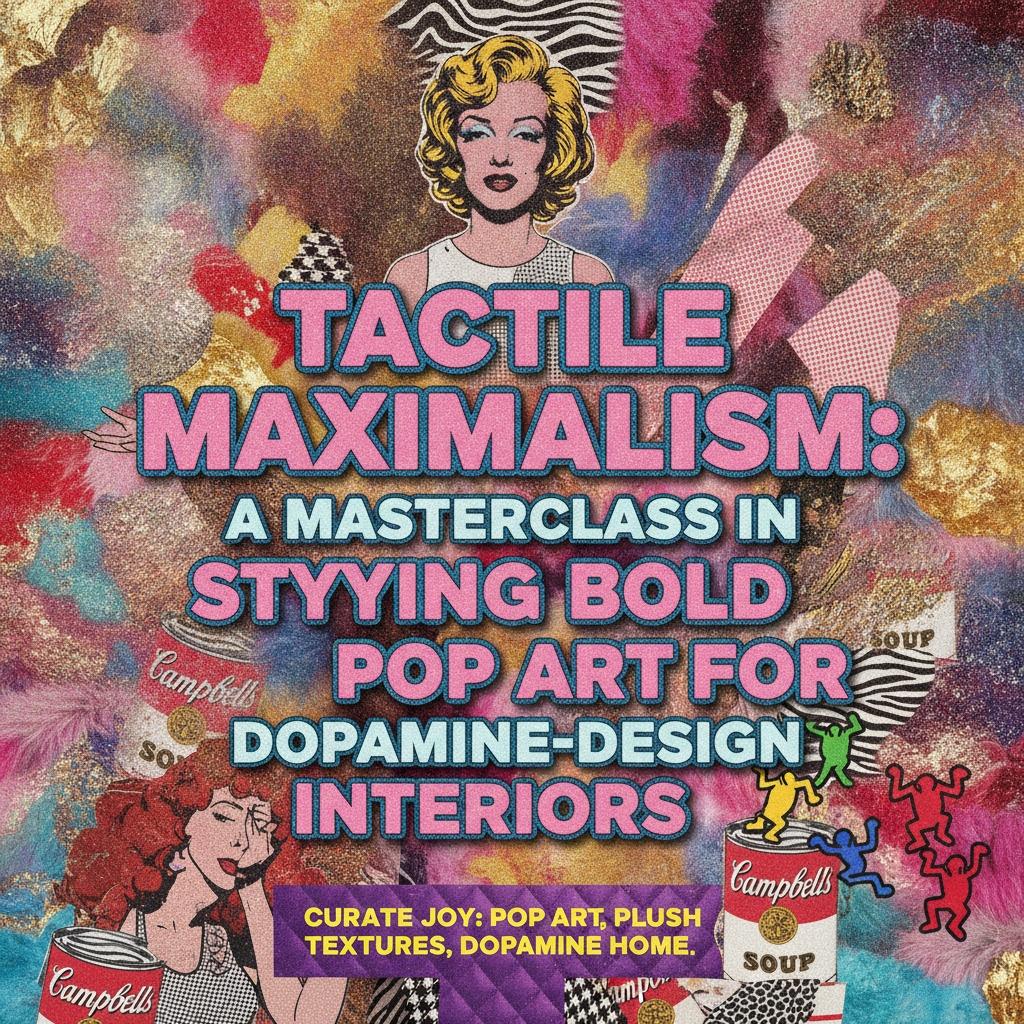
 Tactile Maximalism: A Designer's Guide to Styling Bold Pop Art for Dopamine Decor Interiors
The Psychology of Dopamine Decor: Curating Joy Through Color and Form In the contemporary landscape of high-end hospitality, a profound shift is occurring within the psyche of the traveler. We are moving away from the sterile, monochromatic minimalis...
In the quiet corners of our modern lives, a profound psychological shift is taking place within the very walls we inhabit. For too long, the design world has been held captive by a sterile, monochromatic minimalism—a trend that, while clean, often lacks the emotional resonance required to truly nourish the human spirit. We are now witnessing the rise of Dopamine Decor, a design philosophy rooted in the deliberate pursuit of joy. This is not merely about the accumulation of bright objects; it is a curated attempt to stimulate the brain's reward centers through visual splendor and intentional color.
When we surround ourselves with vibrant hues—electric yellows, deep magentas, and energetic reds—we engage in a form of sensory therapy. These colors act as visual stimulants, breaking the monotony of neutral palettes and inviting an immediate sense of vitality into a room. The magic lies in its ability to transform a standard living space into a sanctuary of inspiration. By selecting art that evokes nostalgia, excitement, or even playful irony, we create environments that do more than provide rest; they provide a continuous, uplifting dialogue with our own emotions.
However, the true sophistication of this movement lies in restraint. The challenge for the discerning decorator is preventing this vibrancy from descending into chaos. It requires a sophisticated understanding of how light interacts with pigment and how saturated tones can be anchored by structural elements, ensuring that the dopamine hit remains a refined experience rather than an overwhelming one.
The Pop Art Legacy: From Mass Culture to High-End Interior Statements
Pop art is an art movement that emerged in the United Kingdom and the United States during the mid-to late 1950s. The movement presented a challenge to traditions of fine art by including imagery from popular and mass culture—including advertising, c...
To understand the power of bold imagery in contemporary interiors, one must look back to the mid-to-late 1950s, when the Pop Art movement emerged as a radical challenge to the traditions of fine art. By incorporating imagery from popular and mass culture—including advertising, comic strips, product packaging, and celebrities—artists blurred the boundaries between high and low culture. This movement elevated the banal, the kitsch, and the mass-produced to the status of high art, creating a visual language that is both instantly recognizable and deeply layered with meaning.
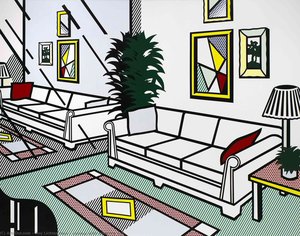
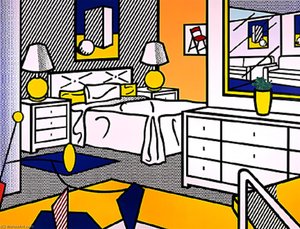
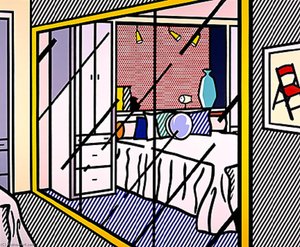
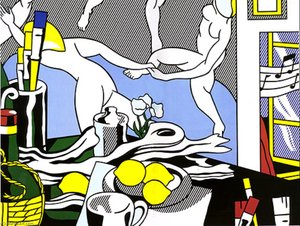
Consider the electric energy of Roy Lichtenstein. To stand before a piece channeling the spirit of his work, such as Studio the Dance, is to be enveloped in a vibrant, almost comic-book explosion of color and narrative energy. Lichtenstein masterfully took what might otherwise be considered a fleeting scene and transformed it into a monumental artistic statement through his signature use of Ben-Day dots—a technique that simulates commercial printing processes. This meticulous application of dots lends a graphic punch to the composition, forcing the viewer to acknowledge the mechanical origins of the image while simultaneously appreciating its artistic transcendence.
Similarly, the evolution of Neo-Pop Art brought even more complex layers of cultural commentary. Keith Haring’s Andy Mouse serves as a brilliant collision of icons, merging the universally recognized imagery of Disney’s Mickey Mouse with the groundbreaking aesthetic pioneered by Andy Warhol. Such works resonate with both playful nostalgia and critical observation, making them perfect focal points for an interior that seeks to tell a story of cultural interconnectedness.
Tactile Maximalism: Elevating Bold Graphics with Texture and Depth
 Tactile Maximalism: The Expert Guide to Styling Bold Pop Art for Dopamine Decor Interiors
The Psychology of Dopamine Decor: Why Vibrant Art Boosts Mood Tactile Maximalism: A Designer's Guide to Styling Bold Pop Art for Dopamine Decor Interiors The Psychology of Dopamine Decor: Curating Joy Through Color and Form In the contemporary landsc...
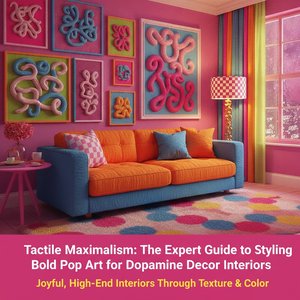
While the impulse to embrace color is the heartbeat of dopamine decor, there is a sophisticated challenge in preventing bold aesthetics from feeling flat or ephemeral. This is where Tactile Maximalism enters the conversation. To prevent vibrant Pop Art from appearing purely two-dimensional, the designer must embrace texture and depth. While the original movement often utilized the smooth, mechanical look of screen printing, a luxury interior demands more sensory richness.
The introduction of texture allows the eye to linger, providing a tactile dimension that digital prints simply cannot replicate. By layering smooth, saturated color fields with heavy impasto brushstrokes or rich, woven fabrics, one creates a multidimensional landscape. This approach prevents the "flatness" often associated with mass-produced graphics and instead invites a sense of permanence and weight. When we move beyond flat surfaces, the artwork becomes an architectural element rather than just a decoration.
This tactile depth works in harmony with the visual energy of Pop Art. Imagine a room where the bold, unapologetic palette of a Lichtenstein-inspired piece is balanced by the heavy, visible texture of a hand-painted oil reproduction on cotton canvas. The interplay between the graphic precision of the subject matter and the physical presence of the paint creates a sophisticated tension that defines modern luxury.
Curating the Collision: Balancing Vibrant Iconography with Luxury Finishes
 miser Brothers by shag
Vibrant Pop Surrealism with Playful Expression This captivating artwork exemplifies the distinctive style of renowned artist Josh Agle, also known as Shag, blending pop surrealism with a whimsical, cartoonish aesthetic. Featuring two expressive chara...
The art of styling Pop Art within a high-end interior lies in the delicate balance of opposites. The goal is to create a "collision" where the playful, often ironic nature of Pop imagery meets the dignified weight of luxury finishes. This requires a curated approach to furniture, lighting, and structural elements to ensure that the room feels intentional rather than accidental.
One effective strategy is to use neutral, high-quality anchors—such as dark wood, marble, or velvet—to provide a stage for the vibrant artwork. A deep espresso frame or a rich, textured rug can ground an energetic painting, preventing it from "floating" aimlessly in the room. Furthermore, the use of light is critical; how light interacts with pigment determines whether a color appears as a soft glow or a piercing strike. In high-end hospitality and residential design, we see this mastery in spaces where saturated tones are anchored by structural elements, ensuring the aesthetic remains refined.
Furthermore, incorporating elements of Pop Surrealism, such as the works of Shag, can add a layer of whimsical humor. Shag’s ability to fuse popular culture with dreamlike imagery—using exaggerated gestures and simplified shapes—can be integrated into a room through carefully selected accessories that echo his palette of pinks, purples, and golds, creating a cohesive narrative of playful luxury.
The Designer’s Toolkit: Integrating Masterpiece Reproductions into Modern Spaces
 Studio the dance
The Electric Energy of Pop Iconography To stand before a piece channeling the spirit of Roy Lichtenstein’s "Studio the dance" is to be enveloped in a vibrant, almost comic-book explosion of color and narrative energy. This work is not merely a depict...
For the collector or the enthusiast, the challenge is often finding pieces that possess the historical gravity of a masterpiece but fit the scale and energy of a contemporary home. This is where the role of high-quality reproductions becomes essential. A true reproduction is not merely a copy; it is an opportunity to bring the soul of art history into the modern era through craftsmanship.
When selecting pieces for a dopamine-driven interior, one should look for works that offer physical depth. Unlike standard prints, which can have a computer-printed, flat appearance, hand-painted oil reproductions on cotton canvas provide visible brushstrokes and a deeper tonal range. This allows the artwork to participate in the tactile maximalism of the room, offering the same sensory richness as an original work.
At ArtsDot.com, we believe in making this level of artistry accessible. Our mission is to preserve human creativity for a modern audience by providing masterfully executed reproductions that allow you to "remix" art history. Whether it is the bold lines of a Neo-Pop icon or the transformative ability to have a personal photo reimagined in a classical style, our artists use academic excellence to ensure every piece is a testament to craftsmanship. From custom multi-panel layouts for grand staircases to bespoke color matching through our Professional Digital Mockup Service, we provide the tools to turn your interior into a curated museum of joy.