The Twilight of Medieval Vision: Defining the Late Gothic Aesthetic
 The Beauty of Late Gothic Art: Elegance, Intricate Detail, and the Dawn of the Renaissance
The Twilight of the Middle Ages: Defining the Late Gothic Aesthetic As the sun began to set on the medieval era, a profound transformation took hold of the European consciousness, manifesting in an artistic movement that was as much about grace as it...
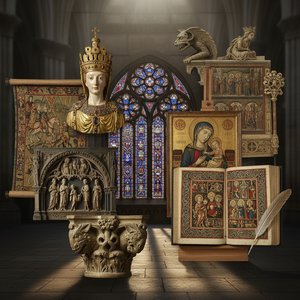
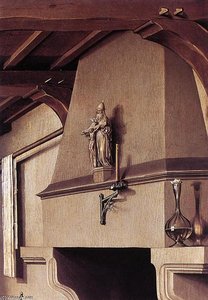
As the sun began to set on the medieval era, a profound transformation took hold of the European consciousness, manifesting in an artistic movement that was as much about grace as it was about gravity. The Late Gothic period, spanning roughly from 1300 to 1500, represents a delicate equilibrium—a moment in time where the heavy, monumental structures and somber shadows of the Romanesque period began to yield to a newfound sense of fluidity and light. This era was not a sudden rupture with the past but rather an evolution, a refinement of existing forms imbued with a new sense of naturalism and psychological depth. It was a radiant dusk of medieval vision, where the soaring spiritual ambitions of earlier Gothic styles began to subtly yield to a more humanistic and emotionally nuanced aesthetic.
To understand this period, one must look beyond the Hollywood clichés of darkness and instead observe the structural bones of history. The Late Gothic aesthetic moved away from the rigid, often intimidating iconography of the early Middle Ages toward an art that embraced elegance and intricate detail. This shift reflected a fundamental change in how humanity perceived the divine and the earthly; the heavens were no longer just a distant, terrifying realm, but a space capable of being depicted with breathtaking luminosity and soft, lyrical beauty. It was a period defined by a synthesis of faith, form, and emotionality, setting the stage for the monumental shifts that would soon follow in the Renaissance.
International Gothic: A Convergence of European Courts and Cultures
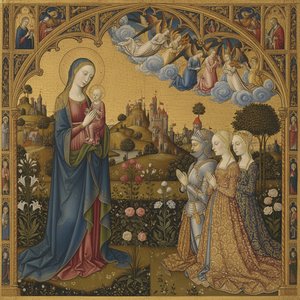 Beyond Borders: The Spiritual & Stylistic Innovations of International Gothic Art
The Dawn of an International Style: Origins & Influences The late fourteenth century witnessed a remarkable shift in European art, one that moved beyond the regional variations of earlier Gothic styles and blossomed into what we now recognize as Inte...
The late fourteenth century witnessed a remarkable shift in European art, moving beyond regional variations to blossom into what we now recognize as International Gothic. This was not a unified style imposed from a single center, but rather a gradual convergence of artistic ideas fueled by increased trade, royal patronage, and the unprecedented mobility of artists themselves. The seeds of this new aesthetic were sown in the wealthy, sophisticated courts of Burgundy, France, and northern Italy. Through a growing network of diplomatic marriages, religious pilgrimages, and merchant routes, an unprecedented exchange of artistic techniques and motifs began to bridge once-isolated territories.
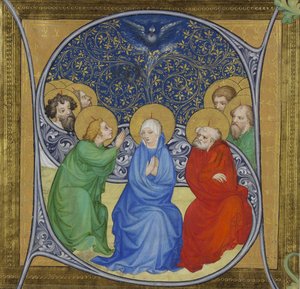
The spread of ideas was facilitated by portable works, such as exquisitely illuminated manuscripts, which allowed for a consensus among artists and patrons that significantly reduced variation in national styles. Royal marriages, such as that between Richard II of England and Anne of Bohemia, acted as conduits for this cultural pollination. The courts of the Valois dukes in Burgundy and the wealthy Italian city-states became vital hubs where the Italian emphasis on grace and emotional depth met the Northern European focus on meticulous realism and narrative complexity. This fusion created a uniquely compelling visual language that spoke to an emerging European identity, one that was increasingly interconnected and cosmopolitan.
From Symbolism to Naturalism: The Evolution of Emotional Depth
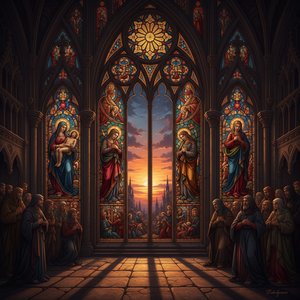 The Radiant Dusk of Medieval Vision: Exploring Late Gothic Art's Synthesis of Faith, Form & Emotionality (c. 1300-1500)
Introduction: The Twilight of Gothic – A New Aesthetic Sensibility The Late Gothic period, spanning roughly from 1300 to 1500, represents a fascinating transition in the history of art—a moment where the soaring spiritual ambitions of earlier Gothic ...
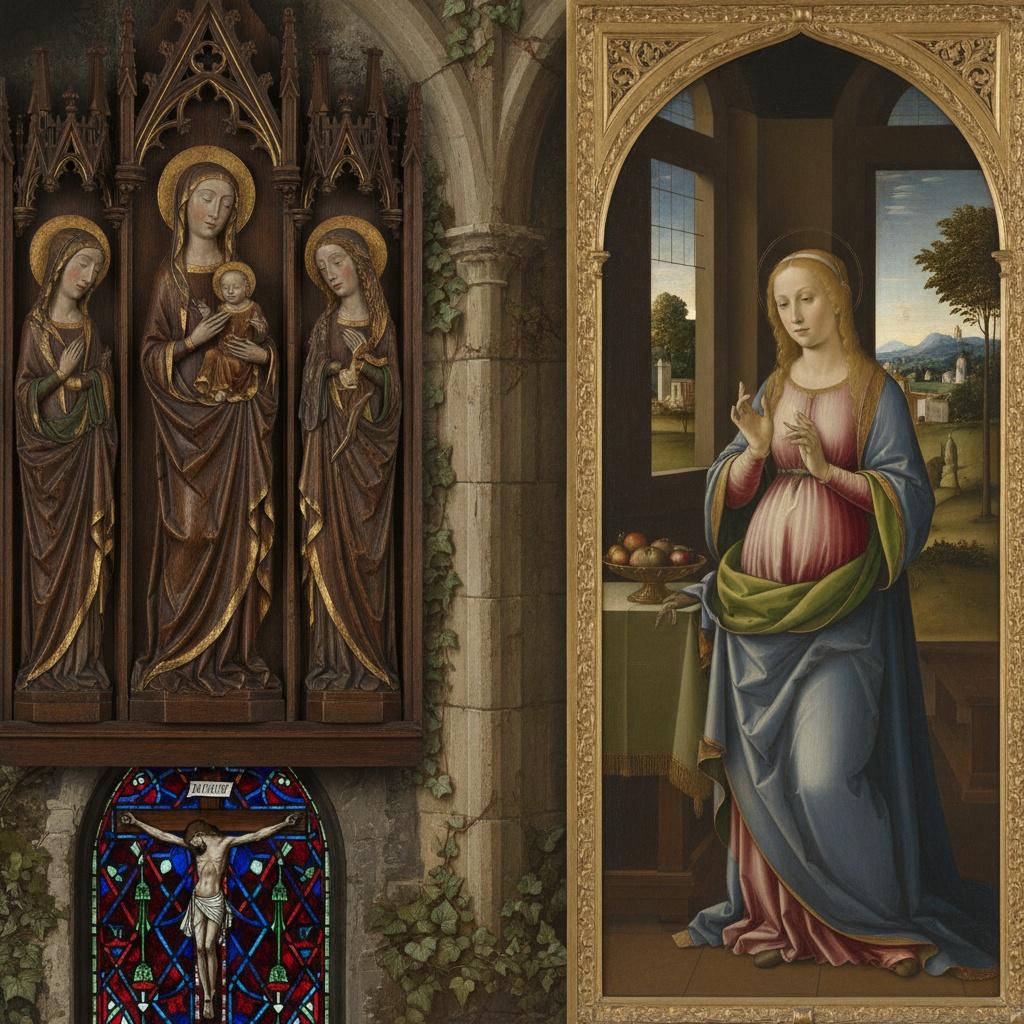
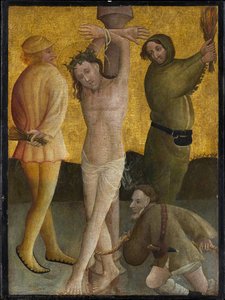
As the Late Gothic period progressed, the art produced—whether in paintings, sculptures, or manuscripts—began to reflect more than just religious devotion; it captured a growing fascination with earthly beauty and the complexities of human experience. We see a transition from the purely symbolic, where figures served as icons of theological truths, toward a style that embraced a new sense of naturalism. This was not merely about anatomical accuracy, but about an infusion of psychological depth into the sacred subjects. The faces of saints began to carry more individualized expressions, and the environments they inhabited became more textured and tangible.
This evolution was driven by a shift in patronage, moving beyond solely ecclesiastical commissions toward the courts of burgeoning European powers. These new patrons sought artworks that reflected their status, taste, and piety, fostering a desire for luxury and increasingly individualized representation. The art of this era began to embody courtly refinement, characterized by delicate figures, rich colors, and elaborate ornamentation. This period of transition allowed for a more humanistic approach to the divine, where the spiritual could be experienced through the lens of the beautiful and the tangible, paving the way for the profound naturalism that would define the Renaissance masters.
Masterpieces of the Era: From Master Theodoric to the Aachen Altarpiece
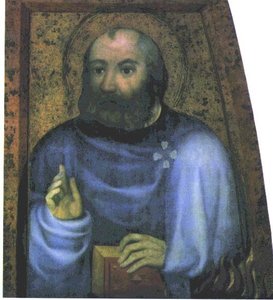 master theodoric
A Courtly Vision: The Life and Art of Master Theodoric Master Theodoric, or Magister Theodoricus as he was known in Latin inscriptions, stands as the most thoroughly documented painter of Bohemian Gothic art. Born sometime before 1328 – his precise o...
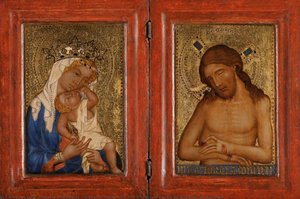
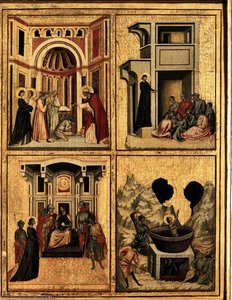
Within this era of transition, certain names and works stand as pillars of the Late Gothic achievement. In Bohemia, the art of the court of Charles IV, Holy Roman Emperor, became a leading force in European development. Master Theodoric, or Magister Theodoricus, stands as the most thoroughly documented painter of this Bohemian Gothic style. As the favored court artist to Charles IV, Theodoric helped shape a visual language of refined elegance and spiritual depth. His work in the Chapel of the Holy Cross at Karlštejn Castle, featuring over one hundred wooden panel paintings, remains a breathtaking ensemble of saints and prophets that exemplifies the "Soft Style" of International Gothic.
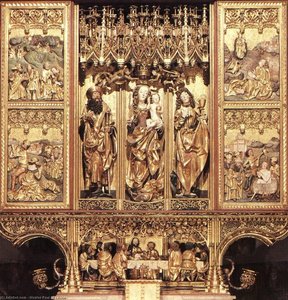
Further north, in Germany, the identity of the “Master of the Aachen Altarpiece” remains one of art history’s most enduring mysteries. Active primarily in Cologne between 1495 and 1520, this enigmatic artist produced a monumental triptych that serves as arguably the last bastion of late Gothic painting in Germany. Influenced by the luminous techniques of Stefan Lochner, the Master's work showcases breathtaking luminosity through innovative glazing techniques. Similarly, the works of Stefan Lochner himself, synonymous with the 15th-century German landscape, brought a sense of exquisite beauty and meticulous detail to biblical narratives. These masters, though often anonymous or shrouded in mystery, provided the technical foundation upon which the Renaissance would later build.
The Architectural Echo: Gothic Grandeur and the Dawn of Humanism
 Gothic architecture
Gothic architecture is an architectural style prevalent in Europe from the late 12th to the 16th century, during the High and Late Middle Ages, surviving into the 17th and 18th centuries in some areas. It evolved from Romanesque architecture and was ...
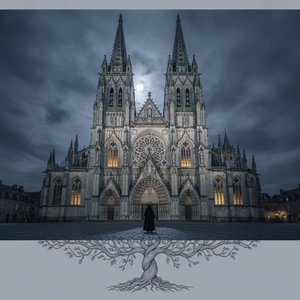
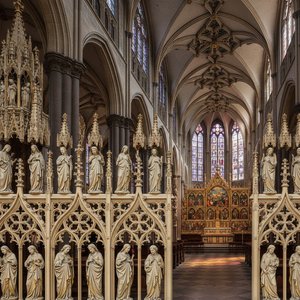
The artistic shifts of the Late Gothic period were inextricably linked to the architectural marvels of the age. The era was defined by a race to conquer height, with architects in northern France and across Europe competing to create soaring, light-filled cathedrals that seemed to touch the heavens. This architectural ambition—characterized by pointed arches, ribbed vaults, and flying buttresses—mirrored the artistic movement's move toward lightness and grace. The heavy, somber shadows of the Romanesque era were replaced by vast expanses of stained glass, which transformed sunlight into a divine, colored medium, much like the luminous glazes used by painters of the period.
As we look at the legacy of this era, we see it as a bridge between the medieval and the modern. The architectural grandeur of the Gothic style provided the stage upon which the first tremors of Renaissance humanism could be felt. Even in places like Krakow, where the International Cultural Centre sits within the magnificent Ravens House—a jewel blending Gothic and Renaissance elegance—we see how history does not simply sit behind glass but actively converses with the present. The Late Gothic period was a time of profound synthesis, where the spiritual weight of the Middle Ages met the burgeoning curiosity of the human spirit, creating a lasting legacy of beauty that continues to inspire collectors and historians alike.