The Gothic Dawn: Transitioning from Romanesque Rigidity to Emotional Depth
To understand the profound impact of the Gothic era, one must first look back at the heavy, somber shadows of the Romanesque period. For centuries, European art was defined by a sense of fortress-like stability; figures were often static, stylized, and somewhat detached from the human experience, serving primarily as symbolic icons of divine authority. However, as the medieval world began to shift, a new sensibility emerged—a movement toward light, height, and an unprecedented emotional resonance. This transition was not merely a change in architectural scale but a fundamental reimagining of how the divine could be felt through the visual arts.
The dawn of Gothic art brought with it a softening of lines and a deepening of narrative complexity. Where Romanesque art commanded awe through sheer weight and monumentalism, Gothic art invited contemplation through grace and movement. This era began to bridge the gap between the celestial and the terrestrial, allowing the viewer to find a reflection of their own humanity within the sacred subjects. It was a period where the rigid boundaries of iconography began to dissolve, making way for a more fluid, expressive, and ultimately more dramatic approach to storytelling that would forever alter the course of Western art history.
Sacred Splendor: Gold Leaf, Intricate Details, and the Divine in Religious Art
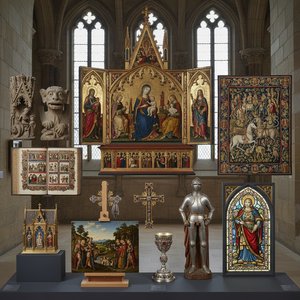
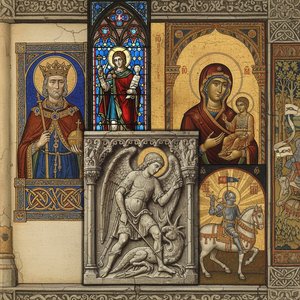
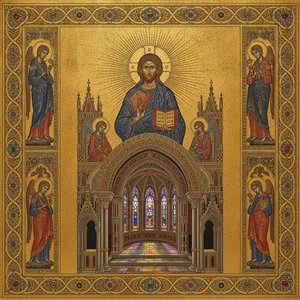
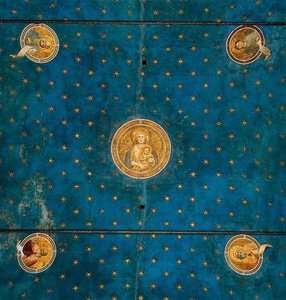
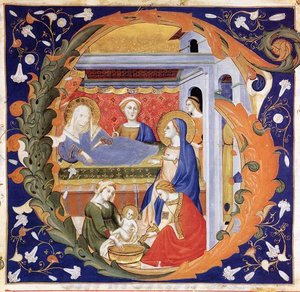
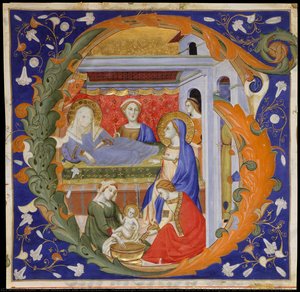
At the heart of Gothic devotion lay an obsession with light—not merely as a physical phenomenon, but as a theological metaphor for the presence of God. This pursuit of the divine was most tangibly expressed through the masterful use of gold leaf and intricate ornamentation. In works such as Lorenzo Monaco’s The Nativity, the application of precious metals serves to create an ethereal glow, transforming a painted surface into a window of celestial radiance. The shimmering textures did more than decorate; they functioned as a spiritual conduit, lifting the viewer's gaze from the mundane world toward the infinite.
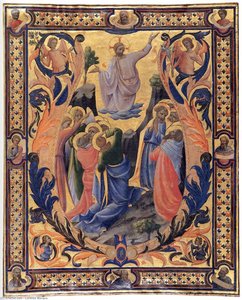
This era’s mastery was characterized by an almost breathless attention to detail. Every fold of a saint's robe and every delicate petal in a floral motif was rendered with meticulous precision. Consider the breathtaking complexity found in Léonard Limosin’s Crucifixion, where enamel work and gold leaf converge to create a scene of profound intensity. Such works utilized high-contrast brilliance to emphasize the drama of the narrative, ensuring that every glint of light served to highlight the sanctity of the subject. Through this marriage of precious materials and technical virtuosity, Gothic artists achieved a sense of sacred splendor that remains unparalleled in its ability to evoke wonder.
Illuminated Narratives: The Mastery of Medieval Manuscripts and Miniature Painting
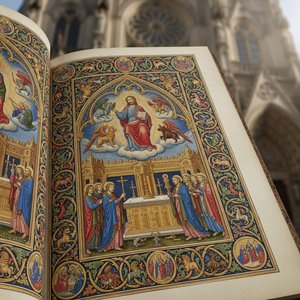
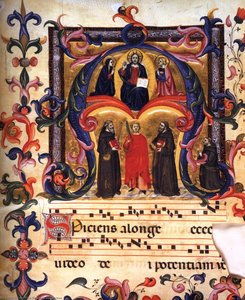
While grand cathedrals provided the stage for public worship, the intimate world of the manuscript offered a private sanctuary for contemplation. The art of illumination represents perhaps the most delicate pinnacle of Gothic craftsmanship. Within the vellum pages of prayer books and antiphonaries, artists like Belbello da Pavia breathed life into text through vibrant pigments and intricate miniature paintings. These manuscripts were not merely books; they were portable masterpieces, where every letter was an opportunity for artistic expression and every margin a canvas for narrative expansion.
The skill required for such work was immense, demanding a level of control that allowed for microscopic detail within a confined space. The 15th-century Italian Gothic illuminators, including masters like Neri da Rimini, utilized rich, saturated colors to create miniature worlds that felt both expansive and deeply personal. These illuminated narratives allowed the clergy and the nobility to engage with scripture through a sensory experience, where the beauty of the art complemented the gravity of the word. The legacy of these manuscripts survives as a testament to an era when the boundary between literature and visual fine art was beautifully indistantly blurred.
Architectural Echoes: How Gothic Grandeur Influenced Visual Composition
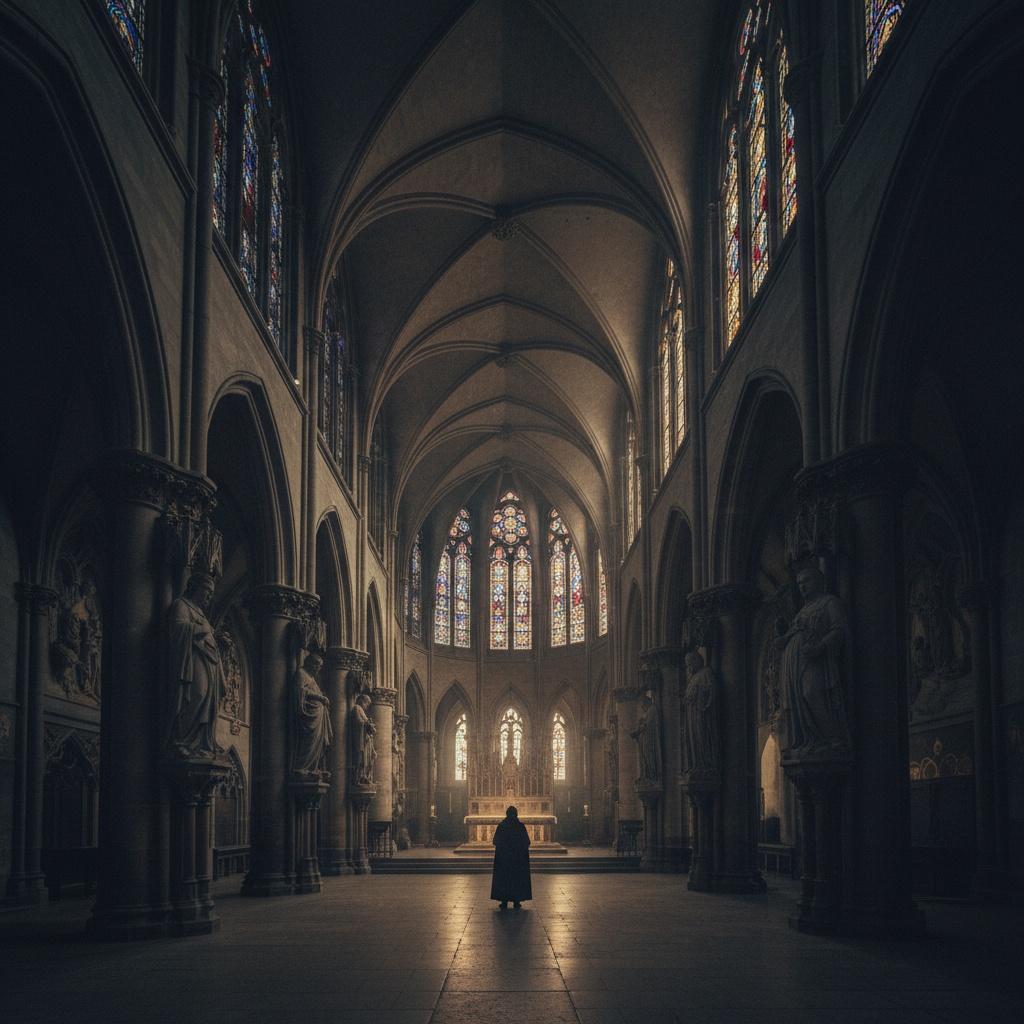
The evolution of Gothic painting cannot be divorced from the soaring heights of Gothic architecture. The structural innovations of the period—the pointed arch, the ribbed vault, and the flying buttress—did more than just support heavier stone ceilings; they fundamentally altered the visual logic of composition. As churches grew taller and walls became thinner to accommodate vast expanses of stained glass, painters were forced to adapt their spatial reasoning. The verticality of the cathedral began to manifest in the elongated proportions of human figures within paintings, creating a sense of upward aspiration.
This architectural influence created a unique compositional rhythm characterized by elegance and vertical tension. Artists began to utilize space in a way that mirrored the skeletal grace of the Gothic nave, arranging figures in hierarchical tiers that guided the eye upward toward the heavens. The interplay between light and shadow, filtered through massive rose windows, provided a naturalistic lighting scheme that painters sought to replicate on canvas. This synergy between the built environment and the painted image ensured that the entire Gothic experience was one of cohesive, immersive drama.
The Human Element: Emerging Naturalism and the Drama of Late Gothic Expression
As the Gothic era progressed toward its twilight, a remarkable shift occurred: the emergence of naturalism. The stylized, symbolic figures of the early period began to acquire weight, volume, and recognizable human emotion. This movement toward realism is beautifully captured in the works of the Flemish Primitives, such as Hans Memling. In his St Ursula Shrine, we see a profound devotion to detail that serves not just to decorate, but to ground the holy figures in a palpable, physical reality. The faces became more expressive, the landscapes more recognizable, and the drapery more responsive to the underlying anatomy.
This period also saw the rise of regional masters like Pere Serra, whose refined Catalan style helped bridge the gap between late medieval traditions and the burgeoning Renaissance. The drama of the era was no longer found solely in the scale of the work, but in the psychological depth of the subjects. The tension between the divine and the human became more acute as artists mastered the ability to depict suffering, tenderness, and awe with unprecedented accuracy. This infusion of humanity into the sacred narrative laid the essential groundwork for the Renaissance, marking the moment when art truly began to mirror the complexity of the human soul.
Preserving the Shadows: Bringing the Gothic Era into Modern Collections
The enduring allure of Gothic art lies in its ability to evoke a sense of mystery and profound emotion that transcends time. For the modern collector and history enthusiast, these works offer a connection to an era of unparalleled spiritual and artistic intensity. Whether through the study of original manuscripts or the appreciation of high-quality reproductions, the drama of the Gothic period continues to inspire awe in the contemporary heart.
At ArtsDot.com, we are dedicated to preserving this legacy for a modern audience. We specialize in bringing the grandeur of the Old Masters into the homes of collectors worldwide through our exquisite handmade oil reproductions and museum-quality Giclée prints. Our artists, trained in the highest academic traditions, utilize meticulous techniques—from multi-layered oil applications to the use of premium pigments—to ensure that every piece retains the tactile depth and spiritual essence of the original Gothic masterpieces. Through our commitment to quality and authenticity, we invite you to experience the dark beauty and timeless drama of the Gothic era in your own space.