 Preview
 Send
Send Share
Share
 Details

 Download
 Similars
 X-Ray
X-Ray Diaporama
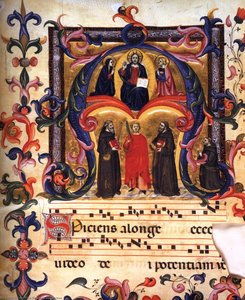
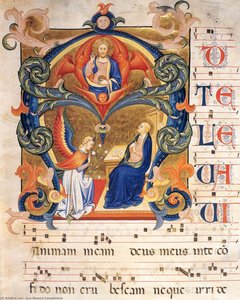
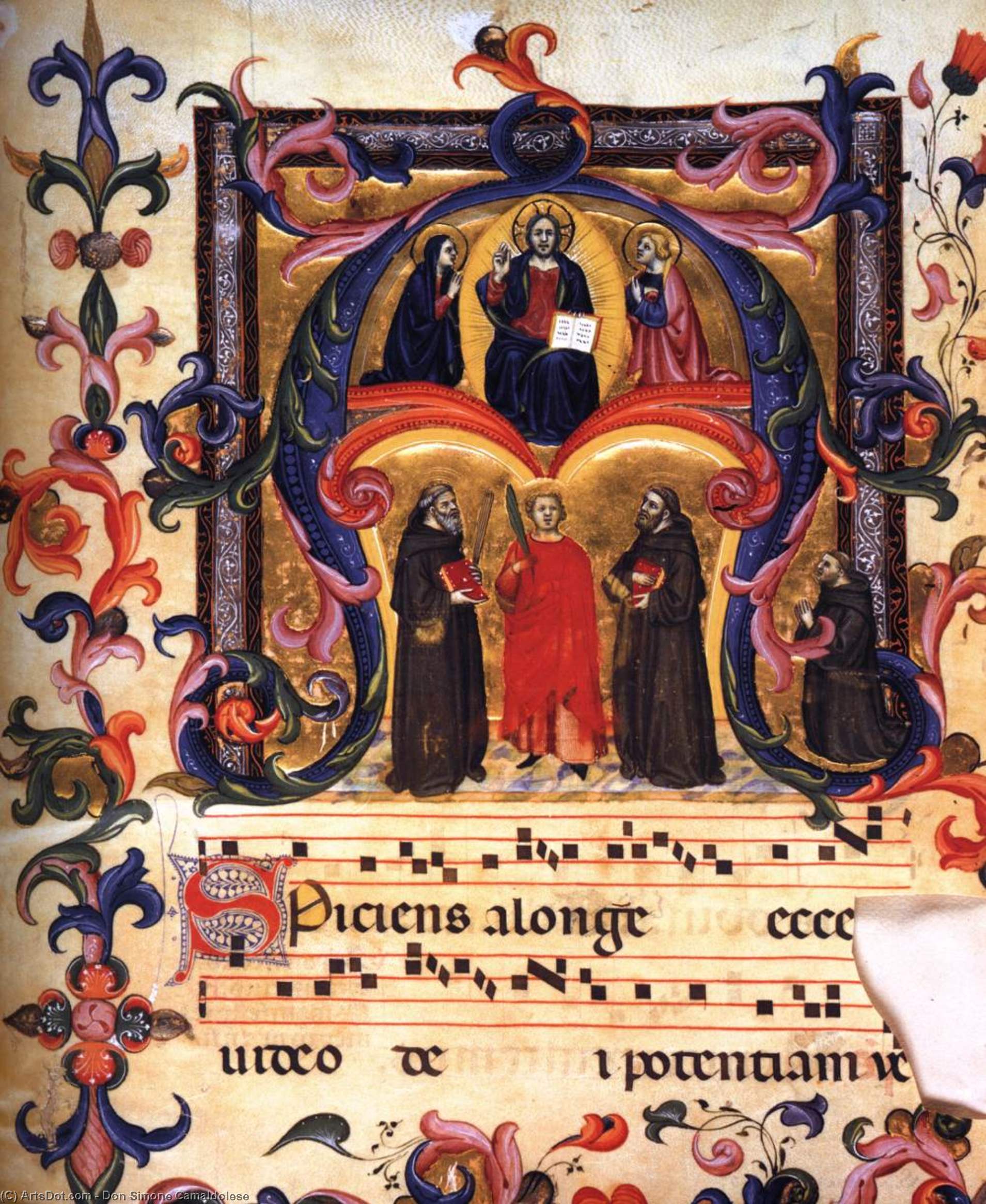
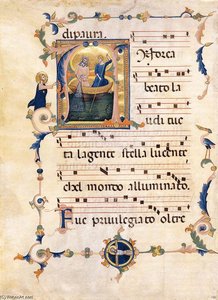
Initial ''A'' from the Antiphonary (Choir Book 39)


 Read More
Hand Made Oil Reproduction
Hand-painted oil on canvas in your size and frame, made to order by our artists. ( Buy Print Buy Image)




P118B $10

P118H $10

P118W $10

P438Z $10

P508JH $12

P508YH $12

P805H $10

P805Z $10

P919BZ $10

P919G $10

P919XJ $10

P959ZH $10

P968JZ $12

W106C $8

W218G $10

W218JH $8

W218Y $10

W307PJ $10

W316G $10

W316PJ $8

W316Y $10

W398PJ $8

W4111J $10

W500HY $15

W500JH $15

W692G $12

W849H $8

W940BG $15

W953PJ $8




Pick from our preset sizes that match the artwork's original proportions.

You may enter your own dimensions to fit a specific frame or space. If your selected size does not match the original image's proportions, we will either crop the artwork or extend the painting with additional hand-painted elements. A digital mockup will be sent for your approval before production begins.
Please note that the on-screen preview does not reflect the actual cropping or extension. Only the mockup will accurately show the final composition.
While custom sizes are available, we recommend selecting a dimension from the predefined list to preserve the original proportions.
After order, ArtsDot.com team will email client for instructions and provide a mockup preview
Worldwide Delivery () in 3/4 weeks instead of standard 5 weeks. (17 August). No compromise on quality.

Free Worldwide Express Shipping

High-Quality Linen Canvas

Full Shipping Insurance

Customs Tax Refund Guarantee

True Color Matching Guarantee

60-Day Return Policy (Defects Only)

100% Money-Back Guarantee

Bulk Discount Offer
 Glass option is only available in size under 110 CM

Initial ''A'' from the Antiphonary (Choir Book 39)
Reproduction Medium
Reproduction Size
-


Total Price
$ 263
Artwork Description
A Window Into Medieval Liturgy: Examining Don Simone Camaldolese’s Initial ‘A’ from the Antiphonary Choir Book 39
The Initial ‘A’ from the Antiphonary Choir Book 39 by Don Simone Camaldolese, created in 1381, transcends mere calligraphy; it embodies the spirit of Gothic art and serves as a tangible link to the solemn rituals of medieval Christendom. This exquisite manuscript illumination hails from Florence, specifically housed within the Biblioteca Medicea-Laurenziana, where its preservation allows us to appreciate not only its visual splendor but also the profound cultural significance embedded within its intricate design.The Context of Faith: Medieval Liturgy and Monastic Patronage
Medieval liturgical practice revolved around chanting hymns and prayers—the Divine Office—performed by monks and canons in churches throughout Europe. The Antiphonary Choir Book 39, like countless others produced during this era, was a crucial instrument for facilitating these sacred ceremonies. Its purpose wasn’t simply functional; it aimed to elevate the soul and foster contemplation amidst the daily rhythm of monastic life. Don Simone Camaldolese's work reflects this devotion, commissioned by Santa Maria degli Angeli monastery—a testament to the influence of religious patronage on artistic endeavors during the period.A Symphony of Color and Ornamentation: Artistic Technique and Style
Camaldolese’s mastery lies in his masterful application of tempera paint and gold leaf onto parchment – techniques that ensured remarkable longevity for this artwork. Tempera, derived from pigment mixed with egg yolk, provided vibrant hues capable of capturing the subtleties of light and shadow, while gold leaf imparted an aura of majesty and holiness—a deliberate choice mirroring the importance of the liturgical text it adorned. The artist’s meticulous attention to detail is evident in every flourish of foliage, petal, and animal motif that embellishes the letter ‘A’. This style aligns closely with broader Gothic artistic trends prevalent across Europe, notably exemplified by masterpieces like Duccio Di Buoninsegna's MaestÓ and Giotto Di Bondone’s Legend of St Francis.Symbolism Rooted in Tradition: Flora, Fauna, and Divine Representation
The decorative elements surrounding the Initial ‘A’ are laden with symbolic meaning. Foliage and flowers—particularly lilies—represent purity and divine grace – concepts central to Christian theology. Animals, such as birds and insects, symbolize humility and contemplation, mirroring the contemplative nature of monastic prayer. The overall composition speaks to a desire for transcendence, inviting viewers to contemplate the sacredness of scripture and the beauty of God’s creation.Emotional Resonance: Capturing the Spirit of Medieval Art
More than just aesthetically pleasing, this Initial ‘A’ evokes a powerful emotional response—a feeling of reverence and wonder at the artistry of a bygone era. It transports us back to a time when faith permeated every aspect of daily life, inspiring artists like Don Simone Camaldolese to create works that not only documented religious beliefs but also sought to embody their essence. A reproduction captures this spirit, offering an opportunity to bring a piece of medieval art history into the modern home—a celebration of craftsmanship and devotion.Related Artworks
Artist Biography
Don Simone Camaldolese: A Florentine Master of Illuminated Manuscripts
Don Simone Camaldolese (c. 1378-1405) stands as a pivotal figure in the artistic landscape of late fourteenth-century Florence, primarily recognized for his exceptional contribution to illuminated manuscripts—specifically the Antiphonary and Gradual—works that exemplify the pinnacle of Florentine book illumination during this period. While biographical details remain scarce, scholars believe he was born in Siena, establishing him firmly within a rich artistic tradition rooted in his hometown’s heritage. His career flourished under the patronage of influential monastic orders, notably Santa Maria degli Angeli, where he honed his skills and developed a distinctive style that would solidify his reputation as one of the most prolific illuminators of his time.- Early Influences & Artistic Training: Camaldolese’s artistic sensibilities were undoubtedly shaped by the prevailing stylistic trends of Siena and broader Tuscan art circles. Evidence suggests he received training within established workshops, absorbing techniques and aesthetic principles characteristic of the era—a period marked by a fervent revival of Byzantine iconography and a growing fascination with naturalistic representation.
- The Camaldolese School & Style: Don Simone’s association with Santa Maria degli Angeli fostered the development of what is known as the Camaldolese school, characterized by its meticulous attention to detail and its masterful execution. His style distinguishes itself through a harmonious blend of Byzantine elegance and Florentine realism—a stylistic fusion that reflects the intellectual currents of his time.
- Notable Works: The Antiphonary & Gradual: Camaldolese’s legacy rests primarily on his monumental illumination projects, most notably the Antiphonary and Gradual. These manuscripts showcase his unparalleled skill in creating intricate initial capitals adorned with elaborate floral motifs and symbolic imagery—a testament to his artistic prowess. Furthermore, his book illustrations are imbued with a profound sense of narrative depth and visual splendor, capturing the spirit of Dante Alighieri’s Divine Comedy.
Technique & Artistic Innovation
Camaldolese's approach to illumination was marked by an unwavering commitment to craftsmanship and innovation. He skillfully employed tempera paint on parchment—a technique favored during the fourteenth century—allowing for vibrant colors and remarkable luminosity. His meticulous attention to detail extended beyond mere pigment application; he painstakingly rendered textures, drapery folds, and facial expressions with astonishing accuracy. Moreover, Camaldolese pushed boundaries in stylistic experimentation, incorporating elements of Byzantine iconography alongside Florentine naturalism—a daring fusion that elevated his work to the highest levels of artistic achievement. The Initial “A” from the Antiphonary (Getty Museum), exemplifies this masterful blend of styles.Historical Significance & Legacy
Don Simone Camaldolese’s contribution to Florentine art transcends mere stylistic innovation; he embodies the spirit of a transformative period in European culture—the Renaissance Proto-Renaissance. His illuminated manuscripts serve as invaluable windows into the intellectual and artistic sensibilities of fourteenth-century Florence, reflecting the humanist ideals that would eventually blossom into the full flowering of the Renaissance. As one of the most prolific illuminators of his time, Camaldolese’s work continues to inspire admiration for its beauty, sophistication, and technical mastery—a testament to his enduring legacy as a Florentine artistic genius.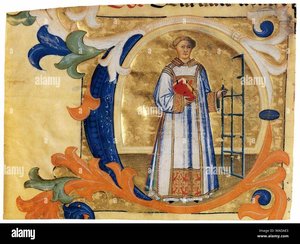
don simone camaldolese
1378 - 1405 , Italy
Quick Facts
- Artistic Movement Or Style: Late Fourteenth Century Art
- Artists Or Movements Influenced By This Artist: ['Camaldolese School']
- Artists Who Influenced This Artist: ['Gherarducci']
- Date Of Birth: c. 1378
- Date Of Death: 1405
- Full Name: Don Simone Camaldolese
- Nationality: Italian
- Notable Artworks:
- Initial "A" from the Antiphonary (Choir Book 39)
- Gradual (fragment)
- Antiphonary
- Place Of Birth: Florence, Italy
Related Articles
Beyond Borders: The Spiritual & Stylistic Innovations of International Gothic Art
Explore the exquisite beauty & spiritual depth of International Gothic art. Discover key artists like Simone Martini & Pol de Limbourg, its origins, symbolism, and lasting influence on European painting. Expert insights at ArtsDot.
The Radiant Dusk of Medieval Vision: Exploring Late Gothic Art's Synthesis of Faith, Form & Emotionality (c. 1300-1500)
Explore the exquisite beauty & spiritual depth of Late Gothic art (c. 1300-1500). Discover key artists, symbolism, and its lasting influence on the Renaissance. Expert insights at ArtsDot.
Illuminating the Fourteenth Century: Art, Innovation & Enduring Legacies (1300-1400)
Explore the transformative art of the 14th century! Discover Gothic masterpieces, International Style innovations, and the precursors to the Renaissance. Expert insights & historical context at ArtsDot.
The Shadow of Faith: Exploring Gothic Art's Spiritual Intensity & Architectural Innovation
Explore the spiritual intensity & architectural innovation of Gothic art! Discover the symbolism behind cathedrals, stained glass & master artists like Giotto and Monet. A deep dive into medieval history & artistic expression.
Illuminating Faith & Power: A Journey Through Medieval Art (c. 500 – c. 1500)
Explore the rich history of Medieval Art (c. 500 – c. 1500) with ArtsDot. Discover Byzantine mosaics, Gothic cathedrals & Renaissance masterpieces. Expert insights & museum-quality reproductions.