The Art of Absolute Power: Symbolism and Grandeur in Baroque Royal Portraits
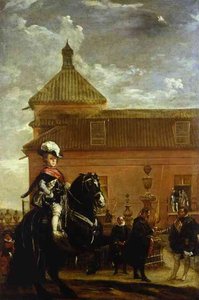 Prince Baltasar Carlos with the Count-Duke of Olivares at the Royal Mews
Introduction Diego Velázquez, a renowned Spanish painter and one of the most important figures in the history of art, created the masterpiece 'Prince Baltasar Carlos with the Count-Duke of Olivares at the Royal Mews' in 1634. This painting is an exce...
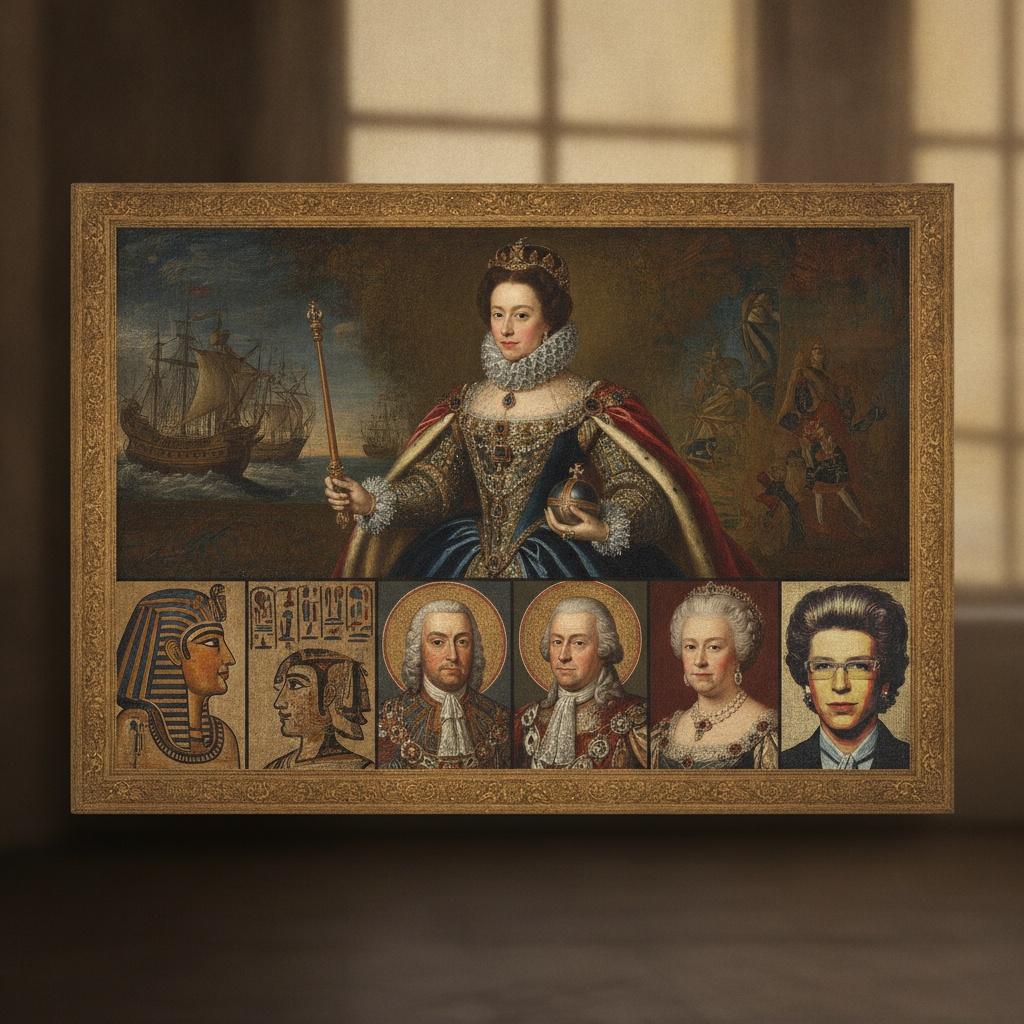
To stand before a monumental depiction of the Baroque era is to be enveloped in an atmosphere of unparalleled grandeur. In this period, a portrait was never merely a likeness; it was a meticulously constructed testament to absolute power, dynastically anchored by the rigid elegance of the court. The composition of such works often feels breathtakingly dense, a veritable gathering of nobility where every figure is placed with deliberate, symbolic weight. Consider the way light interacts with the subjects—the dramatic chiaroscuro characteristic of the Baroque style allows deep shadows to carve out the three-dimensionality of velvet draperies and polished jewels. This interplay of light and shadow does more than create depth; it creates drama, elevating the monarch from a mere human being to a figure of divine right.
The artistry lies in the controlled spectacle. Every element, from the opulent clothing to the carefully arranged poses, contributes to an overarching narrative of status. The artist employs dramatic lighting to catch the gold embroidery or illuminate the smooth planes of skin, creating moments of triumph for the painter's craft. In these works, even the background—often a sweeping landscape of rolling hills and distant foliage—functions less as a naturalistic vista and more as a decorative stage set, providing an airy counterpoint to the heavy formality of the royal figures within. Through this lens, we see that the portrait was the primary medium for political propaganda, designed to command attention and demand reverence from all who gazed upon it.
Dynastic Continuity: Tracing Lineage Through the Masterpieces of the French Court
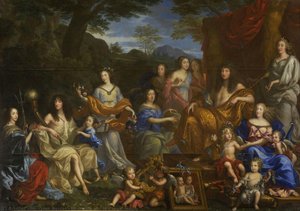 Louis XIV and the royal family
A Grand Tapestry of Lineage and Power To stand before this monumental depiction of Louis XIV and his royal family is to be enveloped in an atmosphere of unparalleled grandeur. This painting is not merely a portrait; it is a meticulously constructed t...
Within the annals of art history, few themes are as potent as the preservation of lineage. In the late Baroque period of the French court, painting served as a grand tapestry of power and continuity. A single monumental work could encompass an entire royal family, functioning as a visual record of bloodlines intended to suggest not just survival, and even flourishing, but an eternal reign. The inclusion of numerous children and extended family members within a single frame was a potent symbol of enduring legitimacy. This density of figures created a palpable weight of expectation and inherited status, where the central couple anchored the scene with a regal bearing that spoke of stability amidst a changing world.
This era of painting demanded an extraordinary level of academic skill. The sheer scale of these works—sometimes exceeding four meters in width—required a mastery of composition to ensure that the vast number of subjects did not descend into chaos. Instead, artists achieved a sense of organized majesty, where each person was a piece in a larger political puzzle. By capturing the intricate details of courtly life, from the lace collars to the heraldic symbols, these painters ensured that the glory of the French monarchy would be etched into the collective memory of history, long after the physical structures of the court had faded.
The Painter as Witness: Capturing the Elegance of the British Monarchy
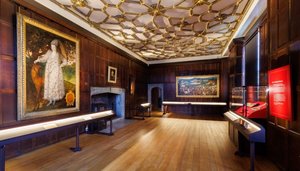 Royal Collection
A Tapestry of Tudor Splendor and Baroque Grace Hampton Court Palace stands as a breathtaking palimpsest of English history, its stones whispering tales of power, passion, and artistic patronage spanning centuries. More than just a magnificent buildin...
As we move through the corridors of history, the focus shifts toward the evolving tastes of the English monarchy, where art became a vessel for both Tudor splendor and Baroque grace. To wander through spaces like Hampton Court Palace is to journey through a palimpsest of power and artistic patronage. The collection held within such royal residences offers an intimate glimpse into the shifting sensibilities of monarchs, moving from the imposing, heavy grandeur favored by Henry VIII to the more refined elegance cultivated under later sovereigns. Here, the painter acted as a vital witness to the changing face of a nation.
The British Royal Collection serves as one of the most significant repositories of this visual history. It encompasses everything from the dramatic mythological tensions found in the works of Thomas Gainsborough to the sophisticated acquisitions of Charles I, whose passion for Italian Renaissance masters signaled a profound understanding of art as a tool of cultural prestige. These portraits do not merely sit behind velvet ropes; they inhabit the architecture of the palace itself, breathing alongside the history of the stones. Through the eyes of these court painters, we witness the transition from the rugged strength of the Tudor era to the sophisticated, light-drenched elegance of the later centuries, capturing a nation in constant flux.
Technique and Texture: The Role of Oil on Canvas in Defining Royal Majesty
 Oil on Canvas: A Historical & Technical Exploration of a Timeless Artistic Medium
The Origins of Oil Painting: From Ancient Murals to Early European Masters The allure of oil painting—its capacity for luminous depth, its forgiving nature, and the sheer richness of color it allows—has captivated artists for millennia. Yet, tracing ...
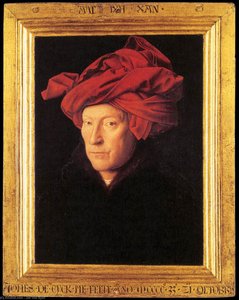
The enduring legacy of royal portraiture is inextricably linked to the technical evolution of the medium itself. While the roots of oil painting can be traced back to ancient Buddhist murals in the Bamiyan caves, it was the innovations of the Northern European masters that truly revolutionized the art form. The transition from the faster-drying, more brittle egg tempera to the flexible, luminous medium of oil allowed for a level of realism previously unimaginable. Artists like Jan van Eyck perfected the technique of building up translucent glazes, a process that enabled them to render the subtle sheen of silk, the sparkle in an eye, and the heavy weight of velvet with breathtaking precision.
This technical mastery is what gives royal portraits their "soul." The ability to manipulate pigment suspended in drying oils—such as linseed or poppy seed oil—allowed for a richness of color and a depth of field that defines the era. When we observe the meticulous layering of paint, we are seeing more than just skill; we are seeing the pursuit of an ideal. This method allowed for the creation of textures that felt tactile to the viewer, reinforcing the physical reality of the monarch's wealth. It is this very texture—the visible brushstrokes and the depth of tonal range—that distinguishes a true masterpiece from a mere reproduction, providing a window into the profound depth of human emotion and royal dignity.
From Tudor Splendor to Victorian Grace: The Evolution of Royal Portraiture Styles
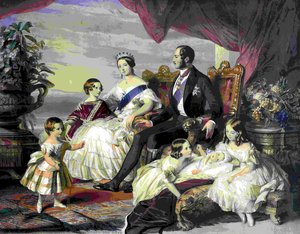 The Royal Family in 1846
A Window into Victorian Grandeur: Winterhalter's "The Royal Family in 1846" Franz Xaver Winterhalter’s “The Royal Family in 1846” is more than just a portrait; it’s a meticulously crafted snapshot of an era, a testament to the burgeoning power and re...
The trajectory of royal portraiture is a study in the refinement of the human image. By the mid-19th century, the era of Franz Xaver Winterhalter arrived, offering a window into the burgeoning power and refined sensibilities of Victorian Britain. Unlike the dense, symbolic compositions of the Baroque, Winterhalter’s work, such as his 1846 depiction of the Royal Family, offered a meticulously crafted snapshot of an era characterized by orchestrated formality. His style was marked by an almost obsessive attention to detail combined with a masterful ability to imbated his subjects with a sense of grace and dignity that felt both modern and timeless.
This evolution represents a shift from the overt propaganda of absolute monarchs to a more intimate, though no less grand, portrayal of familial stability. While the Baroque masters used shadow and scale to intimidate, the Victorian portraitists used light and texture to enchant. The palette became more controlled, yet the technical execution remained rigorous, utilizing meticulous layering to create an illusion of three-dimensionality. This progression shows that while the political structures of monarchies might change, the fundamental desire to use art as a mirror for majesty remains constant, adapting its style to reflect the cultural zeitgeist of each passing age.
Preserving the Crown: Bringing Historical Masterpieces into the Modern Home
 Help bring them back to you!\nMake yours a victory home!
A powerful WWII propaganda painting by Francis Criss featuring a patriotic home with stars and stripes invites you to experience the emotional depth of this historic 1943 masterpiece in your own collection.
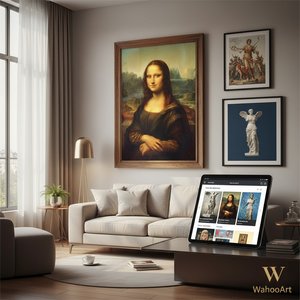
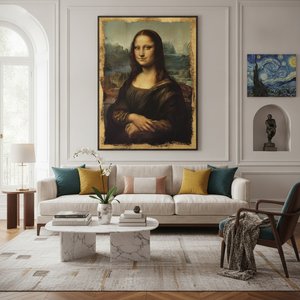
In our contemporary era, the grandeur of these historical moments is no longer confined to the halls of palaces or the galleries of great museums. The passion for art history allows us to bring the essence of this majesty into our own living spaces. Whether through the acquisition of museum-quality prints or the commissioning of a bespoke, hand-painted oil reproduction, the connection to the past remains vibrant. A true oil reproduction, painted by hand on cotton canvas, captures the very textures and light that defined the original masters, offering a tactile depth that digital prints simply cannot replicate.
For those looking to honor this legacy, the possibilities for customization allow us to "remix" history itself. One might choose to have a personal milestone reimagined in the impasto style of a great master, or even transform a modern image into a 17th-century masterpiece. By integrating these works into modern interiors—perhaps as part of a multi-panel set for a grand staircase—we ensure that the stories of power, lineage, and artistic brilliance continue to inspire future generations. To preserve these masterpieces is to keep the flame of human creativity and historical reverence alive in the modern world.