



The Evolution of Minimalism: From Industrial Austerity to Soft Serenity
 The Power of Less: A Curated Guide to Minimalist Masterpieces and Modern Interior Design
The Aesthetic of Silence: Defining Minimalism through Art History Minimalism | Tate --- title: Minimalism | Tate url: https://www.tate.org.uk/art/art-terms/m/minimalism hostname: tate.org.uk description: Tate glossary definition for minimalism: Extre...
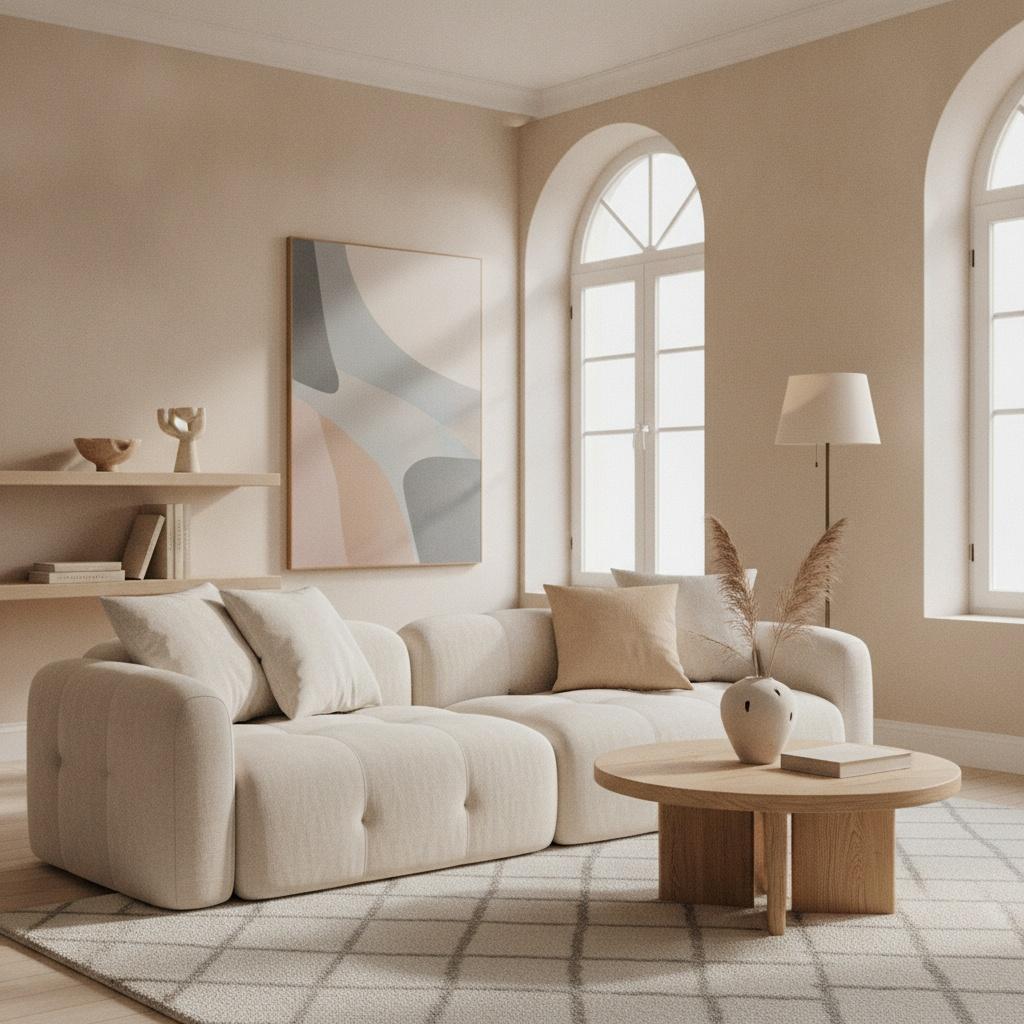
For decades, the term minimalism was often synonymous with a certain clinical coldness—a sterile, almost monastic rejection of the soul that left many feeling adrift in a sea of stark white voids and sharp, unforgiving edges. This era of industrial austerity, characterized by an uncompromising reductionism, sought to erase presence rather than curate it. However, as we navigate an age defined by digital saturation and relentless sensory overload, a profound shift is occurring within the landscape of high-end design. We are witnessing the emergence of Soft Minimalism, a movement that trades the hollow echo of emptiness for the warm resonance of intentionality.
This evolution represents a rebellion against the cluttered chaos of modern life, offering instead a sanctuary that feels breathable yet deeply inhabited. It is not merely about having less; it is about ensuring that what remains carries profound meaning. Where traditional minimalism sought to strip away the superfluous to reach a state of nothingness, Soft Minimalism seeks to find the enough—a nuanced philosophy where every object and every line serves to anchor the spirit rather than distract it. It is a transition from the "less is more" mantra toward a more soulful "enough is everything," creating spaces that act as a deliberate orchestration of vision and peace.
The Aesthetics of Quiet Luxury: Texture, Tone, and Intentionality
 Soft Minimalism: The Definitive Guide to Curating Serene and Elegant Luxury Interiors
The Essence of Soft Minimalism: Defining Quiet Luxury through Texture and Tone In the contemporary landscape of high-end residential design, a profound shift is occurring—a movement away from the ostentatious displays of wealth toward a more whispere...
At the heart of this movement lies the concept of Quiet Luxury. In contemporary high-end residential design, prestige is no longer shouted through ostentatious displays of gold leaf or heavy ornamentation; instead, it is whispered through the perfect balance of light and shadow. This aesthetic values the exquisite quality of textures over the sheer quantity of ornaments. In a Soft Minimalist space, the eye does not wander aimlessly across cluttered surfaces but rests upon carefully selected elements that possess enough character to stand alone while contributing to a cohesive, tranquil whole.
The true mastery of this aesthetic is found in the interplay of tactile sensations. It is the way light interacts with the grain of weathered wood, the subtle weight of heavy linen, or the soft matte finish of stone. This approach demands a rejection of the superficial in favor of the exceptional, inviting an immersive experience of peace. By focusing on intentionality, the designer—and the collector—transforms a room from a mere physical enclosure into a curated sanctuary where every element is chosen with surgical precision to foster emotional resonance and stillness.
Mastering the Palette: Neutrality and Organic Warmth in Modern Interiors
 Soft Minimalism Trend Forecast: Elevating Modern Interiors with High-Impact, Serene Design
The Soft Minimalism Manifesto: Beyond Stark White Walls Soft Minimalism: The Definitive Guide to Curating Serene and Elegant Luxury Interiors The Essence of Soft Minimalism: Defining Quiet Luxury through Texture and Tone In the contemporary landscape...
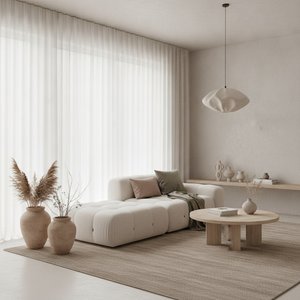
The foundation of any Soft Minimalist sanctuary lies in its chromatic restraint. To achieve this, one must master a sophisticated spectrum of neutrals—creams, sands, warm greys, and muted taupes—that serve to soften the architectural boundaries of a room. However, a common misconception is that such a palette leads to monotony. On the contrary, when executed with expertise, a monochromatic or neutral scheme avoids flatness through the introduction of organic warmth.
The palette draws inspiration from the natural world: the soft glow of dawn, the weathered texture of limestone, or the gentle shade of sun-bleached linen. The true artistry is found in the subtle gradients and tonal variations that emerge as light shifts throughout the day. By utilizing hues that evoke the earth and sky, the space gains a luminous depth. This chromatic harmony ensures that even a room with minimal furniture feels rich and layered, providing a sense of calm that transcends mere decoration to become an atmospheric experience.
Artistic Lineage: The Influence of the Copenhagen Interior School and Masters of Light
 Interior, Bredgade
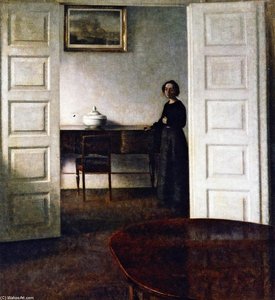
The Silent Poetry of Domesticity To encounter Vilhelm Hammershøi’s 'Interior, Bredgade' is to step into a realm where time seems to hold its breath. Painted in 1911, this exquisite oil on panel serves as a profound meditation on the beauty found with...
To understand the soul of Soft Minimalism, one must look back to the masters of light and domesticity. The movement finds its historical echoes in the Copenhagen Interior School, a pivotal group of artists including Peter Ilsted and Vilhelm Hammershøi. These artists specialized in portraying domestic interiors bathed in soft, diffused light—a deliberate reaction against the industrializing forces of their time. Their work was not about narrative action but about the silent poetry of domesticity.
Consider the works of Vilhelm Hammershøi, such as 'Interior, Bredgade'. In his paintings, time seems to hold its breath. Through a muted palette of greys, soft blues, and earthy browns, he created realms of deep, rhythmic stillness. His technique, involving the meticulous layering of oil paints, allowed light to appear as if it were vibrating softly against the surfaces of wood and cloth. Similarly, Peter Ilsted explored the quietude of domestic space with a profound appreciation for tonal gradations. These historical precedents provide the blueprint for modern Soft Minimalism: the idea that a sparsely furnished room, when treated with reverence for light and shadow, can become a profound meditation on beauty and existence.
Curating a Sanctuary: Integrating Masterpiece Reproductions into Soft Minimalist Spaces
 Soft Minimalism: A Newlywed's Guide to Creating a Serene, Art-Filled Sanctuary with Quiet Luxury
Defining Soft Minimalism: Moving Beyond Starkness to Create a Warm, Intentional Home Soft Minimalism: The Definitive Guide to Curating Serene and Elegant Luxury Interiors The Essence of Soft Minimalism: Defining Quiet Luxury through Texture and Tone ...
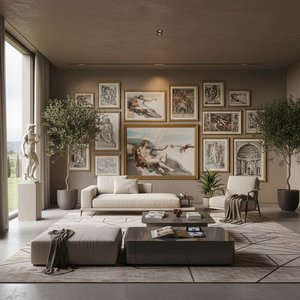
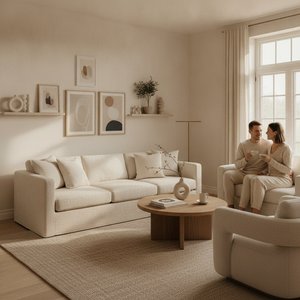
Integrating art into a Soft Minimalist interior requires a delicate touch; the artwork must not overwhelm the space but rather serve as its emotional anchor. For the discerning collector, the choice of a Handmade Oil Reproduction offers an unparalleled opportunity to bring historical depth into a modern setting. Unlike mass-produced prints, a hand-painted oil on canvas possesses visible brushstrokes and a deeper tonal range that resonates with the textures of a minimalist room. The physical presence of the paint—the impasto and the subtle variations in pigment—adds the necessary "soul" to an otherwise restrained environment.
Whether it is a large-format reproduction of a Flemish master or a multi-panel arrangement designed to span a wide, tranquil wall, the goal is to create a dialogue between the historical masterpiece and the contemporary space. At ArtsDot.com, we specialize in this intersection of history and modern living. Our artists, holding degrees from prestigious academies, meticulously recreate the essence of the Old Masters, ensuring that every reproduction preserves the luminous depth and emotional warmth of the original. By selecting a piece that echoes the textures and tones of your home, you do more than decorate; you curate a lasting legacy of serenity and timeless elegance.