Defining Giclée: Beyond Digital Printing to High-Fidelity Artistry
 Giclée Prints Explained: The Ultimate Guide to Museum-Quality Art Reproductions
Defining Giclée: The Science and Artistry Behind High-Fidelity Reproductions The term Giclée —pronounced zhee-KLAY—carries an air of French sophistication that belies its technical origins. Emerging in the 1990s from a period of rapid innovation in i...
To the uninitiated, the term
Giclée—pronounced zhee-KLAY—might evoke nothing more than a sense of French sophistication, a linguistic flourish designed to elevate a simple print. However, for the student of art history and the serious collector alike, it represents a profound technological milestone in the pursuit of aesthetic resurrection. Emerging in the early 1990s, specifically through the innovations of printmaker Jack Duganne, the term was born from the French word
gicler, meaning to spray or squirt. This etymology serves as a humble nod to the very essence of the process: the precise, microscopic deposition of ink onto a surface. Unlike the mass-produced, commercial reproductions that populate the modern market, a true Giclée is not merely a copy; it is an attempt to capture the very soul of a masterpiece. It stands as a bridge between the inaccessible original—the untouchable oil on canvas held in the Louvre or the Uffizi—and a high-fidelity medium that honors the artist's original intent through unparalleled technical mastery.
The Chemistry of Permanence: Pigment-Based Inks vs. Traditional Dyes
 ArtsDot.com F.A.Q.: Premium Giclée Canvas Prints Guide for the Discerning Collector
Defining Giclée Excellence: The Science of Archival Pigment and Precision To the discerning eye, the acquisition of art is far more than a mere decorative endeavor; it is a profound connection to the lineage of human creativity and an investment in c...
Understanding the distinction between a standard digital print and a museum-quality Giclée requires one to look beneath the surface, into the very chemistry of color. In the realm of everyday printing, one often encounters dye-based inks. While these dyes can produce vibrant, striking hues, they possess an inherent vulnerability; they are susceptible to the ravages of UV exposure, leading to a gradual fading that strips a work of its vitality over time. The Giclée process transcends this limitation by utilizing archival pigment-based inks. These consist of tiny, solid particles of color suspended in a liquid carrier. When applied to a substrate, these pigments bond more deeply and endure much longer. This technical choice ensures that the dramatic shadows of a Rembrandt or the luminous, sun-drenched yellows of a Van Gogh remain as striking in a century as they are today. It is this commitment to chemical stability that allows a reproduction to transition from a mere decorative object to an investment in cultural permanence.
Precision Engineering: The Role of Large-Format Inkjet Technology and 12-Color Fidelity
 Inkjet printing
Inkjet printing is a type of computer printing that recreates a digital image by propelling very fine droplets of ink onto various substrates such as paper, plastic, wood and metal. The concept of inkjet printing originated in the 20th century, and t...
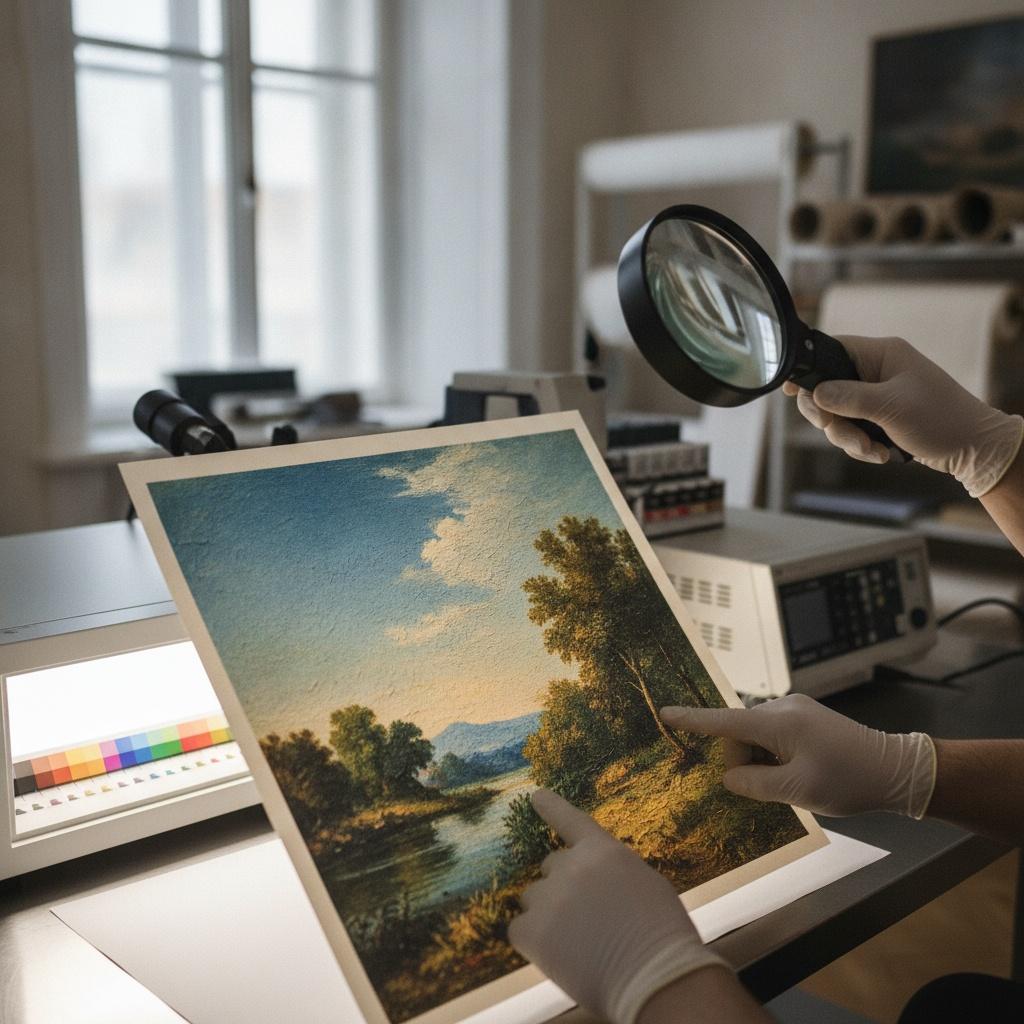
The magic of the Giclée lies in its surgical accuracy, achieved through the deployment of professional large-format inkjet printers. These are not the consumer-grade machines found in a home office, but highly sophisticated instruments capable of delivering millions of microscopic droplets with incredible precision. One of the most remarkable feats of this technology is the use of expanded color gamuts, often involving twelve distinct pigment layers. This complex layering process allows for a level of tonal range and color depth that mimics the subtle gradations found in original oil paintings or delicate watercolor washes. By utilizing more colors than the standard four-color (CMYK) process, these printers can achieve seamless transitions between highlights and deep shadows, capturing the nuanced light of a Renaissance portrait or the atmospheric complexity of a Turner seascape with breathtaking fidelity.
Substrate Selection: The Importance of Acid-Free, Museum-Grade Papers and Canvases
 Giclée Prints: Archival Quality & Aesthetic Nuances for the Discerning Collector
Introduction: The Rise of Giclée Printing in Fine Art Wikipedia: Giclée Giclée ( zhee-KLAY) describes digital prints intended as fine art and produced by inkjet printers. The term is a neologism, ultimately derived from the French word gicleur, coine...
A masterpiece is only as enduring as the surface upon which it rests. In the creation of Giclée prints, the choice of substrate is as critical as the ink itself. To achieve museum-grade excellence, artists and printmakers utilize specialized, heavy-duty materials such as acid-free, pH-neutral papers and premium cotton canvases. Standard papers often contain acids that, over time, lead to the yellowing and brittleness characteristic of aging documents. In contrast, the archival substrates used in high-end Giclée production are engineered to resist degradation. Whether it is a heavy-weight rag paper that provides a matte, velvety texture or a robust cotton canvas that offers a surface reminiscent of an original oil painting, these materials provide the necessary foundation for longevity. This meticulous attention to the physical medium ensures that the artwork remains a stable and vibrant presence in any collection.
Preserving the Masterpiece: Archival Standards for Longevity and Lightfastness
 The Connoisseur's Guide to High-End Giclée and Fine Art Reproductions: Achieving Museum-Quality Excellence
The Essence of Giclée: Defining High-Fidelity Artistry for the Discerning Collector Giclée Prints Explained: The Ultimate Guide to Museum-Quality Art Reproductions Defining Giclée: The Science and Artistry Behind High-Fidelity Reproductions The term ...
The ultimate goal of the Giclée process is the preservation of beauty across generations. This pursuit is governed by strict archival standards, focusing on lightfastness—the ability of a pigment to resist fading when exposed to light—and environmental stability. For the connoisseur, acquiring such a print is an act of stewardship. When the combination of pigment-based inks, acid-free substrates, and professional-grade printing technology converges, the result is a work that possesses a 75 to 100-year rating for longevity. To further protect these investments, experts recommend avoiding direct sunlight and utilizing acid-free matting to create an essential air gap between the print and the glass, preventing moisture-related damage. In this way, the science of Giclée printing serves the art of history, allowing the grandeur of the Old Masters to be brought into the intimate sanctuary of the modern home, preserved with the same reverence as the originals themselves.
For those seeking to bring these historical wonders into their own collections, ArtsDot.com offers a curated selection of the world's most iconic masterpieces. From high-fidelity Giclée prints to breathtaking, hand-painted oil reproductions, our mission is to make the sublime accessible to all. Explore our library of canonical works and discover the intersection of historical legacy and modern archival excellence.