![Scrovegni - [04] - Joachim's Sacrificial Offering — Giotto Di Bondone](/media/artworks/images-thumb/85/cb/85cba77879acc746c1bc3d282e1153fe.jpg)

Introduction
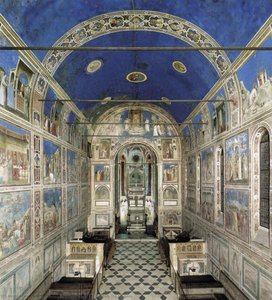
To step into the world of Giotto di Bondone is to witness the very moment art learned to breathe. Before Giotto, the heavens were depicted through the rigid, golden abstractions of the Byzantine tradition—figures that were ethereal, flat, and distant from the human experience. But as you wander through this curated selection of his greatest achievements, you will feel a profound shift in the atmosphere of Western art. You are no longer looking at mere icons; you are witnessing the birth of naturalism .
Born in the rolling hills near Florence around 1267, Giotto—the legendary shepherd boy who reportedly captured the likeness of sheep on stones—brought a revolutionary weight to the canvas and the fresco. He possessed an uncanny ability to imbue sacred figures with palpable volume, recognizable anatomy, and, most importantly, a deeply human emotional resonance. In his hands, the divine became grounded in the earthly; grief became heavy, joy became radiant, and space itself began to possess depth and dimension.
These twenty-five masterpieces serve as more than just historical milestones; they are the foundational stones of the Renaissance. From the breathtaking narrative cycles of the Scrovegni Chapel to his transformative influence on Florentine fresco painting, Giotto’s work remains vital today because it speaks a universal language of human feeling. He taught us that art could reflect our own faces, our own sorrows, and our own physical reality.
As we guide you through this collection, prepare to encounter the works that broke the boundaries of the medieval world. We invite you to observe the subtle interplay of light and shadow, the sculptural solidity of his figures, and the enduring legacy of a master who dared to bring the heavens down to earth. This journey through Giotto’s top works is an exploration of the moment humanity rediscovered itself through the brush.
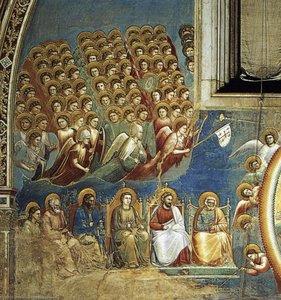
Last Judgment (detail 3) (Cappella Scrovegni (Arena Chapel), Padua) - Giotto di Bondone
In the profound stillness of Last Judgment (detail 3) , one is immediately struck by the weight of divine gravity and the solemnity etched into every celestial countenance. Within this fragment of the Scrovegni Chapel, Giotto di Bondone transcends mere religious iconography to capture a moment of cosmic reckoning. The figures, draped in heavy, sculptural folds of deep blue and earthy pigments, possess a startling physical presence that breaks away from the flat Byzantine tradition. As your eyes trace the luminous gold halos and the rhythmic arrangement of angels, you feel the palpable tension between heavenly order and human vulnerability.
This detail serves as a universal mirror of the human experience—reflecting our shared search for justice and spiritual clarity. Bringing such a powerful piece into your home through a hand-painted oil reproduction can transform a private study or sanctuary into a space for profound reflection. The visible brushstrokes and rich, tactile textures of a master-level oil painting allow the emotional resonance of Giotto’s proto-Renaissance vision to breathe within a modern setting, offering a quiet prestige that invites daily contemplation.
Stigmatization of St Francis - Giotto di Bondone
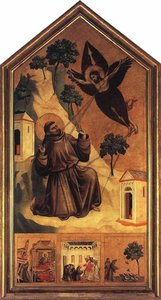 Stigmatization of St Francis - Giotto di Bondone
A profound silence descends upon the viewer when encountering the Stigmatization of St Francis by Giotto di Bondone, a work that breathes with the weight of divine encounter and earthly devotion. This masterpiece earns its place among the top 25 artworks of Giotto due to its revolutionary departure from the flat, golden rigidity of Byzantine tradition, introducing instead a palpable sense of human vulnerability and physical presence. Through the delicate application of tempera, Giotto captures the moment the sacred wounds manifest, using light and shadow to sculpt the saint's form and imbue the scene with an unprecedented emotional gravity.
The painting’s ability to evoke such quiet prestige and spiritual depth makes it a timeless cornerstone of Western art history. Just as Giotto transformed religious narrative into a tangible human experience, you can bring this same transformative presence into your own home or private gallery. Through our high-fidelity, hand-painted oil reproductions, the luminous textures and profound emotional resonance of this Proto-Renaissance treasure are made accessible, allowing you to curate a space defined by historical significance and enduring beauty.
No. 19 Scenes from the Life of Christ: 3. Presentation of Christ at the Temple - Giotto di Bondone
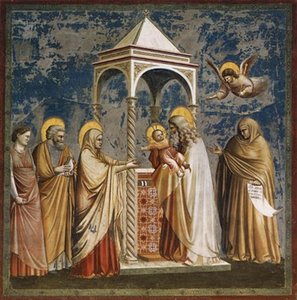 No. 19 Scenes from the Life of Christ: 3. Presentation of Christ at the Temple - Giotto di Bondone
In the quiet sanctity of the Scrovegni Chapel, Giotto di Bondone captures a moment where the divine meets the earthly. In Presentation of Christ at the Temple , we do not merely witness a biblical ritual; we feel the heavy, solemn weight of devotion. The figures possess a newfound physical presence, their draped garments and expressive gestures breaking away from the flat, golden abstractions of the Byzantine era to reveal a profound, human vulnerability.
This work stands as a cornerstone of the top 25 artworks of Giotto di Bondone because it marks the very heartbeat of the Proto-Renaissance. Through masterful use of light and shadow, Giotto breathes life into stone and plaster, creating a sense of three-dimensional space that was revolutionary for 1304. To hold such history in your own space is to invite that same sense of reverence into your home. At ArtsDot.com, our artists meticulously recreate this emotional depth through hand-painted oil reproductions on cotton canvas. Every visible brushstroke and tonal shift is designed to preserve the tactile soul of Giotto’s masterpiece, allowing the timeless beauty of the Italian Renaissance to reside permanently within your walls.
The Stefaneschi Triptych (recto) - Giotto di Bondone
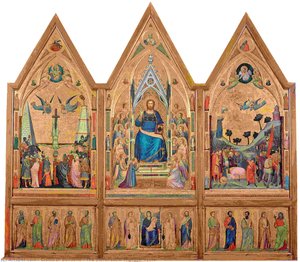 The Stefaneschi Triptych (recto) - Giotto di Bondone
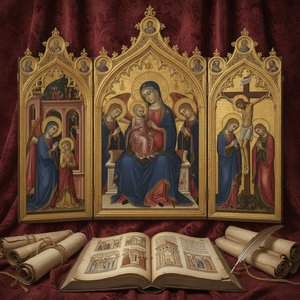
In the hallowed halls of the Pinacoteca Vaticana, The Stefaneschi Triptych (recto) stands as a profound manifesto of Giotto di Bondone’s revolutionary vision. This masterpiece captures the precise moment the medieval world began to breathe with human life, moving away from the flat, golden abstractions of the Byzantine tradition toward a tangible, sculptural reality. Through the masterful use of chiaroscuro , Giotto grants his figures a weight and volume that invite the viewer into a three-dimensional sacred space.
The triptych is a symphony of divine hierarchy; the shimmering gold leaf represents the eternal light of heaven, while the heavy folds of fabric and expressive gestures ground the celestial scene in earthly emotion. For the modern collector, this work remains a powerful cultural touchstone, embodying the timeless tension between opulence and intimacy. Whether you are admiring the intricate details of his brushwork or seeking to bring this sense of historical gravity into a contemporary interior, this piece serves as an essential pillar among the top 25 artworks of Giotto di Bondone . At ArtsDot.com, we invite you to experience this dawn of naturalism through our museum-quality oil reproductions.
Ognissanti Madonna (detail) - Giotto di Bondone
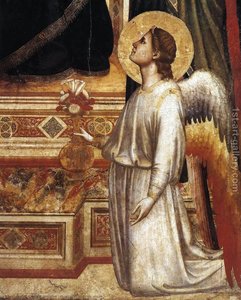 Ognissanti Madonna (detail) - Giotto di Bondone
In the Ognissanti Madonna (detail) , Giotto di Bondone does not merely depict a sacred scene; he breathes life into the divine. As you stand before this 1310 masterpiece, notice how the light does not simply rest upon the figures—it seems to emerge from within them. Giotto composed light as if it were a silent melody, using the rich, egg-based tempera to sculpt the weight of Mary’s robes and the tender, palpable humanity in her expression. The vibrant red background acts as a dramatic stage, pushing the figures forward into our physical reality, breaking the flat, golden illusions of the Byzantine era.
Every fold of drapery and every subtle shadow serves to invent a sense of three-dimensional space, turning a religious icon into a living presence. This is why this work remains a cornerstone of his top 25 legacy: it invites you to witness the dawn of naturalism. To bring this revolutionary spirit into your own space, consider a hand-painted oil reproduction , where our artists use visible brushstrokes to capture the same emotional depth and luminous texture found in the Uffizi’s halls.
Descent into Limbo - Giotto di Bondone
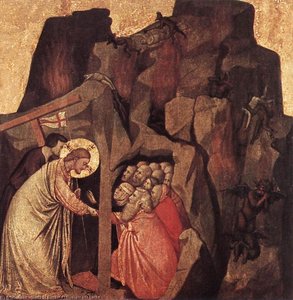 Descent into Limbo - Giotto di Bondone
To witness the moment of divine liberation is to stand at the precipice of a new era in human expression. In Descent into Limbo by Giotto di Bondone, we move beyond the static, golden icons of the Byzantine tradition and enter a world where gravity, grief, and grace coexist. Created around 1320, this profound tempera on panel captures Christ being lowered from the cross by celestial beings to rescue the righteous souls awaiting him in the shadows of Limbo.
Giotto’s revolutionary hand is visible in the weight of the figures and the solemnity of their gazes. The composition breathes with a nascent naturalism; notice how the rocky landscape provides a tangible stage for this spiritual transition, while the delicate presence of birds adds an ethereal lightness to the heavy theological narrative. As one of the top 25 artworks of Giotto di Bondone, this piece serves as a masterclass in emotional depth and volumetric form. Bringing such a masterpiece into your collection through a hand-painted oil reproduction allows you to preserve this profound sense of historical weight and sacred beauty within your own home.
St. Paul - Giotto di Bondone
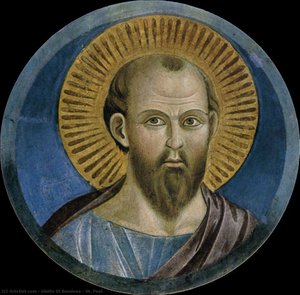 St. Paul - Giotto di Bondone
In St. Paul , Giotto di Bondone achieves a profound structural harmony that anchors this piece within the top 25 artworks of Giotto di Bondone. The composition is defined by a striking central axis, where the weight of the Apostle’s gaze creates a vertical stability that feels both monumental and serene. This geometric balance—the way the soft, rounded contours of the face are framed by the celestial blue backdrop and delicate gold accents—establishes a sense of timeless perfection. The arrangement of the flanking figures provides a rhythmic symmetry, guiding the eye toward the saint's expressive features with a controlled, intentional grace.
This mastery of balance finds an unexpected resonance in modern minimalist design; much like contemporary aesthetics that rely on clean lines and purposeful negative space to evoke calm, Giotto uses simplified forms to ground the viewer in a moment of spiritual clarity. For those seeking to bring this historical gravity into a modern home, our hand-made oil reproductions capture every subtle shadow and brushstroke, allowing the profound emotional depth of this proto-Renaissance masterpiece to breathe within a contemporary setting.
Navicella (mosaic fragment) - Giotto di Bondone
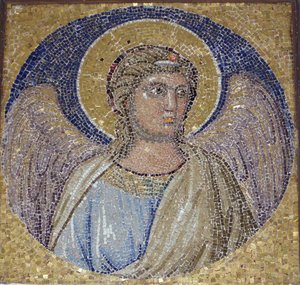 Navicella (mosaic fragment) - Giotto di Bondone
There is a gaze in the Navicella (mosaic fragment) by Giotto di Bondone that follows you—not with judgment, but with a profound, ancient understanding . Though only a fragment remains of this 1305 masterpiece from the Vatican Grotto, its presence is overwhelming. The figure, often interpreted as the Virgin Mary, stares through the centuries with a resolute, serene authority, her blue and gold attire shimmering with the remnants of Giotto's revolutionary naturalism.
This isn't merely a relic of Byzantine tradition; it is a mirror . As you observe the intricate detail of the wings and the subtle symbol of the small bird in the periphery, you are reminded of Giotto’s gift for making the divine feel tangible and human. Now, imagine that piercing, soulful gaze in your own space—not watching you, but reminding you that you are seen, and that you are part of this eternal story. For those seeking to bring the weight of history into their homes, our hand-painted oil reproductions capture the very texture and emotional depth of Giotto's transformative vision.
Badia Polyptych - Giotto di Bondone
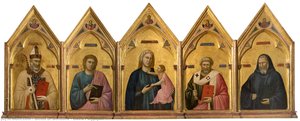 Badia Polyptych - Giotto di Bondone
In the Badia Polyptych , a profound sense of celestial gold and deep, meditative ultramarine dominates the viewer's perception, establishing an atmosphere of quiet, sacred reverence. This mastery of color—moving away from the flat, decorative gilding of the Byzantine era toward a more weighted, sculptural use of pigment—is precisely why this work remains a cornerstone among the top 25 artworks of Giotto di Bondone . By utilizing light to define the heavy drapery and anatomical volume of the Virgin and saints, Giotto creates a palpable sense of presence that feels almost physical.
For the modern collector, integrating a high-quality reproduction of this polyptych can transform a dining room or study into a space of intellectual and emotional depth. The rich, warm tones and the structured, triangular composition offer an ideal anchor for sophisticated interior design, providing a focal point that balances historical gravity with a serene, luminous energy. Whether you are admiring the meticulous tempera details or seeking to evoke the solemnity of the Proto-Renaissance, this piece serves as a timeless window into the dawn of humanism.
Saints John the Evangelist and Mary Magdalene - Giotto di Bondone
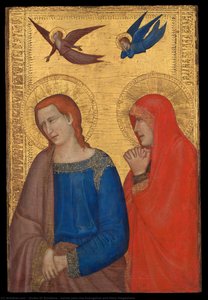 Saints John the Evangelist and Mary Magdalene - Giotto di Bondone
In the presence of Saints John the Evangelist and Mary Magdalene , one does not merely observe a religious icon; one witnesses the dawn of human emotion in Western art. Created by the workshop of Giotto di Bondone around 1335, this Neapolitan diptych stands as a profound testament to the transition from the rigid, golden abstractions of the Byzantine era toward a breathtaking naturalism. The figures, draped in vibrant blues and deep reds, possess a palpable weight and psychological depth that were revolutionary for the 14th century.
This work earns its place among the top 25 artworks of Giotto di Bondone through its masterful use of light and symbolic grandeur. The shimmering gold leaf and celestial angels create an atmosphere of divine opulence, yet it is the sorrowful, humanized postures of the saints that truly captivate the soul. Such a masterpiece invites us to reflect on the enduring beauty of vulnerability and faith. For the discerning collector, bringing a high-quality oil reproduction of this Giotto treasure into a modern space creates a timeless dialogue between historical reverence and contemporary elegance, anchoring a room with profound spiritual gravity.
Daedalus - Giotto di Bondone
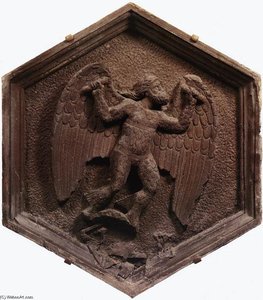 Daedalus - Giotto di Bondone
Imagine standing before a heavy, ancient weight, feeling the palpable tension of a soul caught between the earth and the heavens. In Giotto di Bondone’s Daedalus , we do not merely observe a myth; we witness the raw, muscular struggle of human ambition. This exquisite relief captures the legendary inventor at a moment of profound vulnerability, his wings poised for an escape that carries both the promise of freedom and the shadow of tragedy.
As one of the most significant works in our collection of the top 25 artworks of Giotto di Bondone , this piece marks the dawn of naturalism. Giotto moves away from static Byzantine icons to sculpt movement, anxiety, and the very texture of cloth and feather into the medium. The way light catches the deep carvings evokes a sense of historical gravity that can transform a modern room into a space of contemplation. Bringing such a masterpiece into your home—perhaps as a hand-painted oil reproduction —allows this timeless narrative of resilience and human spirit to serve as a daily reminder of our own capacity to transcend boundaries.
Crucifixion - Giotto di Bondone
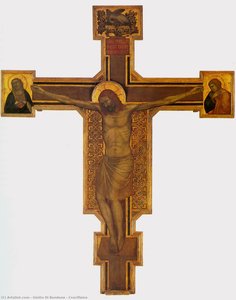 Crucifixion - Giotto di Bondone
In the Crucifixion (circa 1315), Giotto di Bondone delivers a visceral masterclass in human empathy, stripping away the gilded, detached icons of the Byzantine era to reveal the raw, heavy reality of mortality. As one of the most profound entries in our collection of the top 2 Es artworks of Giotto di Bondone , this fresco from the Scrovegni Chapel functions as a bridge between the celestial and the terrestrial. The composition is anchored by a monumental cross, yet it is the weight of the figures—the palpable sorrow etched into Christ’s face and the slumped, grieving forms around him—that commands the viewer's soul.
Giotto utilizes a revolutionary sense of volume and aerial perspective to create a stage where grief feels physically present. In contemporary interior curation, this work remains a powerful talking point; its ability to ground a space with dramatic light and somber, earthy tones offers a profound sense of historical gravity. For collectors seeking to bring this era of proto-Renaissance naturalism into a modern home, our hand-made oil reproductions capture the very texture of this divine suffering, preserving the artist's original emotional depth on canvas.
Campanile - Giotto di Bondone
 Campanile - Giotto di Bondone
What story does the architectural grandeur of the Campanile by Giotto di Bondone tell about the rising soul of Florence? This monumental depiction captures more than just a brick tower; it embodies the precise moment when medieval abstraction began to yield to the weight, volume, and naturalism of the early Renaissance. Emerging from a period of intense civic pride and religious devotion, Giotto’s work broke ground by replacing flattened Byzantine icons with a palpable sense of physical presence and atmospheric depth.
The tower stands as a symbol of spiritual ascent, its verticality reaching toward the heavens, much like the ambitions of the Florentine people. For the modern collector, bringing a reproduction of this masterpiece into a home offers a profound sense of historical escape, inviting the solemn majesty of the Piazza del Duomo into a contemporary living space. Whether you are admiring the textured masonry or the way Giotto captures light and shadow, this piece serves as a cornerstone in any collection of the top 25 artworks of Giotto di Bondone , grounding your interior with the enduring strength of Italian history.
The Entombment of Mary - Giotto di Bondone
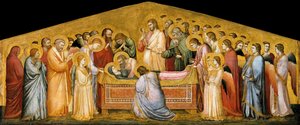 The Entombment of Mary - Giotto di Bondone
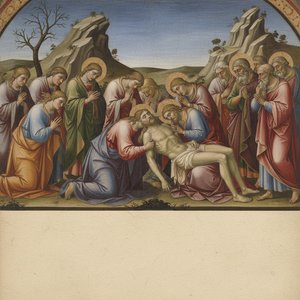
In The Entombment of Mary , Giotto di Bondone orchestrates a profound geometric harmony that anchors this work within the top 25 artworks of Giotto di Bondone. The composition is structured around a heavy, downward-pulling diagonal formed by the slumped weight of Christ’s body, which directs the viewer's eye through a rhythmic arrangement of mourning figures. This structural balance creates a sense of timeless perfection; the stability of the pyramidal grouping provides a monumental stillness that contrasts sharply with the raw, human grief unfolding within the frame.
There is a striking parallel to be found between Giotto’s use of essential forms and the principles of modern minimalist design. By stripping away Byzantine ornamentation in favor of clear silhouettes and purposeful spatial depth, he achieves a clean, grounded aesthetic that resonates in contemporary interiors. The subtle interplay of light and shadow—a precursor to chiaroscuro —imbues the tempera pigments with a sculptural presence. For those seeking to bring this historical gravity into a modern home, our museum-quality handmade oil reproductions capture these very brushstrokes, preserving the emotional weight and structural elegance of Giotto’s revolutionary vision.
Scrovegni - [11] - Marriage of the Virgin - Giotto di Bondone
![Scrovegni - [11] - Marriage of the Virgin](/media/artworks/images-thumb/09/93/0993bcf27eb6693be09506b28bfe6988.jpg) Scrovegni - [11] - Marriage of the Virgin - Giotto di Bondone
Scrovegni - [11] - Marriage of the Virgin - Giotto di BondoneIn the hallowed expanse of the Scrovegni Chapel, Giotto di Bondone’s Marriage of the Virgin emerges not merely as a fresco, but as a profound moment of spiritual and artistic awakening. Completed around 1305, this masterpiece captures the sacred union of Mary and Joseph with a revolutionary sense of weight and human presence. As you observe the scene, notice how Giotto breaks from the flat, golden abstractions of the Byzantine tradition; instead, he invites you into a tangible world where figures possess volume, and light sculpts real anatomy.
The composition breathes with narrative life: Joseph’s staff blossoms with miraculous flowers, signaling divine selection, while a descending dove sanctifies the air. The architectural backdrop provides a stage for a communal celebration, rendered with an unprecedented emotional depth that makes the biblical event feel immediate and intimate. To possess a hand-painted oil reproduction of this work is to invite this very dawn of the Renaissance into your home—transforming a private space into a gallery of the soul where history and human emotion reside eternally.
View of the choir of towards the west - Giotto di Bondone
 View of the choir of towards the west - Giotto di Bondone
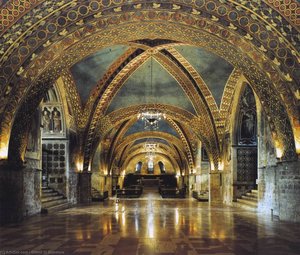
In the View of the Choir Towards the West , Giotto di Bondone invites us into a sacred architectural rhythm that transcends mere stone and mortar. Executed around 1320 within the Upper Basilica of San Francesco in Assisi, this fresco is far more than a structural study; it is a profound window into the dawn of humanism. As you gaze upon the towering columns and the sweeping majesty of the vaulted ceiling, you feel the weight of history shifting away from the flat, gilded abstractions of the Byzantine era toward a world defined by volume, light, and tangible space.
There is a presence in this work that follows you—not with judgment, but with understanding . It does not merely depict a cathedral; it acts as a mirror to our own desire for permanence and awe. The way Giotto manipulates shadow to sculpt the arches reminds us that even in the most monumental structures, there is room for the human soul. To bring this piece into your collection through a handmade oil reproduction is to invite that same sense of architectural reverence and historical depth into your own sanctuary.
Allegory of Chastity (detail)2 - Giotto di Bondone
 Allegory of Chastity (detail)2 - Giotto di Bondone
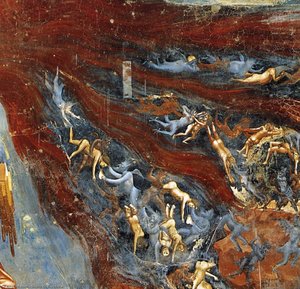
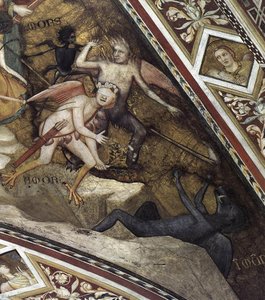
In the Allegory of Chastity (detail) by Giotto di Bondone, we witness a profound masterclass in structural tension and geometric drama. The composition is anchored by a striking interplay of diagonal lines—the downward plunge of the winged youth contrasted against the vertical stability of the gilded panel representing chastity. This arrangement creates a rhythmic, swirling energy that guides the eye through a chaotic struggle between angelic grace and demonic temptation. Giotto utilizes sharp, defined edges and muscular forms to establish a sense of weight and volume, moving far beyond the flat silhouettes of the Byzantine era.
The internal balance achieved here—the way heavy, dark shadows of the horned demon are offset by the luminous, gold-leafed highlights—creates a timeless perfection that remains captivating centuries later. Much like the principles of modern minimalist design, which rely on essential forms and purposeful negative space to ground a room, Giotto’s ability to find order within a tumultuous scene offers a sophisticated aesthetic for the contemporary collector. For those seeking to honor the top 25 artworks of Giotto di Bondone in their own homes, this piece serves as a powerful testament to the dawn of Renaissance naturalism.
Dream of Innocent III - Giotto di Bondone
 Dream of Innocent III - Giotto di Bondone
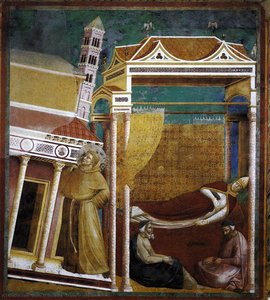
In the Dream of Innocent III , Giotto di Bondone does not merely paint a scene; he choreographs a moment where the divine intersects with the earthly. Located within the Basilica of Saint Francis of Assisi, this fresco captures Pope Innocent III in a state of profound reverie. The lines of the composition are not simply drawn; they are choreographed , guiding the viewer from the resting figure toward the animated presence of advisors and the delicate movement of birds scattered throughout the frame.
This work is a masterclass in proto-Renaissance naturalism, breaking away from Byzantine flatness to introduce weight, volume, and a palpable sense of human emotion. The rich reds and golds evoke papal authority, while the interplay of light and shadow creates a dreamscape that feels both intimate and monumental. It is a dance frozen in time, making the chaos of a vision feel like perfect harmony. If you wish to bring this same rhythmic balance and historical gravity into your own space, consider a hand-painted oil reproduction of this masterpiece, meticulously crafted to preserve every expressive gesture and textured brushstroke for generations.
Políptico Baroncelli - Giotto di Bondone
 Políptico Baroncelli - Giotto di Bondone
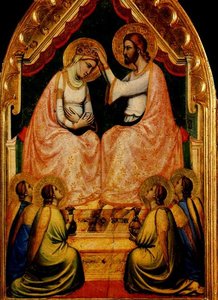
Imagine standing in the quiet sanctity of Florence's San Felice Church, where the air feels heavy with the weight of centuries. Before you, the Políptico Baroncelli unfolds not as a mere relic, but as a living, breathing encounter with the divine. As you gaze upon the central scene of the Coronation, you do not see flat, golden icons; instead, you feel the palpable tenderness between Mary, Jesus, and Joseph. Giotto breathes life into the Gothic tradition, replacing rigid Byzantine symbolism with the soft folds of drapery and the profound, human vulnerability of a kneeling figure.
This masterpiece earns its place among the top 25 artworks of Giotto di Bondone because it captures the exact moment humanity rediscovered its own reflection in sacred art. The muted hues and solemn compositions evoke a sense of deep, meditative peace. Bringing such a revolutionary vision into a modern home—perhaps through a hand-painted oil reproduction —allows this ancient serenity to anchor your space, transforming a contemporary room into a sanctuary of historical depth and emotional resonance.
Frescoes in the fourth bay of the nave - Giotto di Bondone
 Frescoes in the fourth bay of the nave - Giotto di Bondone
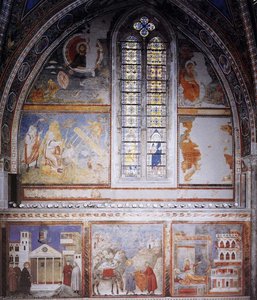
Within the hallowed, soaring expanse of the Florence Cathedral , the Frescoes in the fourth bay of the nave stand as a profound testament to Giotto di Bondone’s revolutionary spirit. Created around 1290, these works represent a pivotal moment where the rigid, golden stylization of the Byzantine era began to dissolve into a new, breathing naturalism. As you stand before these bays, you witness the birth of human emotion in art; Giotto moves beyond mere iconography to depict scenes from the life of Saint Francis with an unprecedented sense of weight, volume, and anatomical truth.
The mastery lies in the subtle interplay of light and shadow that sculpts figures out of the flat plaster, creating a window into a tangible, sacred world. To possess a reproduction of such a work is not merely to decorate a room, but to claim an inheritance of Western civilization. At ArtsDot.com, we honor this lineage by offering meticulous, hand-painted oil reproductions that capture the very texture and soulful depth of Giotto’s brushwork, allowing his proto-Renaissance vision to reside permanently within your own collection.
No. 46 The Seven Virtues: Hope - Giotto di Bondone
 No. 46 The Seven Virtues: Hope - Giotto di Bondone
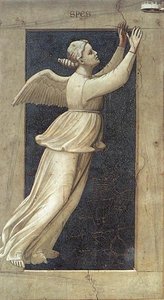
In the grand lineage of Giotto di Bondone’s most profound achievements, The Seven Virtues: Hope stands as a hauntingly beautiful testament to the resilience of the human spirit. Created in 1306 for the Scrovegni Chapel, this fresco marks a seismic shift in Western art, moving away from the rigid, gilded icons of the Byzantine era toward a profound, tactile naturalism. The figure does not merely float; she struggles, her wings unfurled against a somber, dark blue-grey void, reaching upward with an intensity that captures the very essence of aspiration.
As one of the top 25 artworks by Giotto, this piece exemplifies his revolutionary use of chiaroscuro to sculpt form from shadow, imbuing a flat surface with unprecedented emotional weight. The muted palette and dramatic, angular drapery invite us to contemplate our own perseverance amidst life's uncertainties. For the discerning collector, bringing a high-quality oil reproduction of this masterpiece into a modern space creates a timeless dialogue between historical gravity and contemporary elegance, serving as a permanent beacon of light and strength within any curated interior.
joachim's dream - Giotto di Bondone
 joachim's dream - Giotto di Bondone
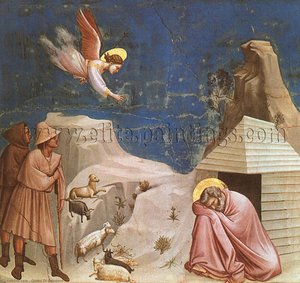
Acquiring a piece inspired by Joachim’s Dream by Giotto di Bondone is more than an aesthetic choice; it is an investment in the very dawn of Western humanism and a testament to a collector's refined historical literacy. As a cornerstone of the Scrovegni Chapel cycle, this fresco stands within the top 25 artworks of Giotto due to its revolutionary departure from Byzantine rigidity. The scene breathes with a quiet prestige, where the soft, diffused light illuminates Joachim in his pink robe, capturing a moment of profound spiritual vulnerability. Giotto’s mastery is felt in the tactile reality of the setting—the rough texture of the shelter, the presence of a watchful dog, and the gentle movement of sheep and birds that ground this divine prophecy in the earthly realm.
For the modern connoisseur, this work offers an unparalleled sense of tranquility and weight. A high-quality, hand-painted oil reproduction of this masterpiece brings the same emotional depth and sculptural volume into a luxury interior, providing a focal point of profound historical authority and timeless elegance.
The Last Judgement, detail of Jesus, 1305-13, Fresco, - Giotto di Bondone
 The Last Judgement, detail of Jesus, 1305-13, Fresco, - Giotto di Bondone
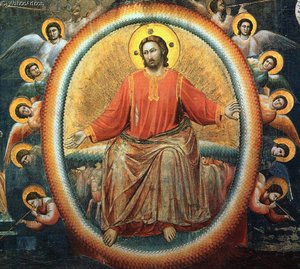
To gaze upon the detail of Jesus within Giotto di Bondone’s The Last Judgement is to stand at the precipice of a cosmic revolution. One does not merely observe this fresco; one feels the weight of eternity. As the centerpiece of the Scrovegni Chapel, this work captures the terrifying majesty of the divine encounter, where Christ sits enthroned within a celestial circle, radiating a power that is simultaneously daunting and profoundly compassionate.
This masterpiece earns its place among the top 25 artworks of Giotto because it marks the precise moment Western art began to breathe. By abandoning the flat, golden rigidity of Byzantine icons for a proto-Renaissance naturalism, Giotto introduced volume, light, and human emotion into the divine narrative. The vibrant colors and swirling angelic forms create an immersive drama that transcends the 14th century. Bringing such a profound sense of historical gravity into a modern home allows one to surround themselves with the enduring strength of human spirit and the timeless beauty of classical storytelling.
Alegoría de la Pobreza - Giotto di Bondone
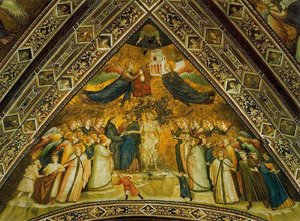 Alegoría de la Pobreza - Giotto di Bondone
In the Alegoría de la Pobreza , Giotto di Bondone achieves a profound transcendence of the medieval era, offering a window into the soul of Franciscan spirituality. As one of the most significant entries in our collection of the top 25 artworks of Giotto di Bondone, this fresco serves as a masterclass in early naturalism. Moving away from the rigid, golden abstractions of Byzantine tradition, Giotto utilizes a muted palette of ochre, umber, and deep crimson to ground his figures in a tangible, earthly reality.
The composition breathes with life; fourteen figures are arranged in a solemn yet interactive tableau, their heavy drapery and sculptural forms creating a sense of physical weight and presence. For the modern collector, this work offers an unparalleled sense of understated dignity and monastic calm. The way Giotto uses light to define musculature and emotion provides a timeless inspiration for sophisticated interior design, where earth tones and textured depth create a sanctuary of peace. To possess a hand-painted reproduction of such a pivotal masterpiece is to bring the very dawn of the Renaissance into your own home.
Ascension of Christ (Upper Church, San Francesco, Assisi) - Giotto di Bondone
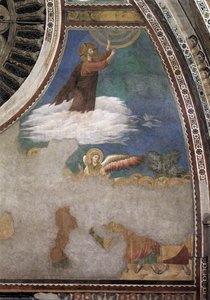 Ascension of Christ (Upper Church, San Francesco, Assisi) - Giotto di Bondone
In the Ascension of Christ , located within the Upper Church of San Francesco in Assisi, the lines of Giotto di Bondone are not merely drawn; they are choreographed . This fresco is far more than a religious depiction; it is a dance frozen in time, where the heavy, earthly weight of the apostles meets the ethereal ascent of the divine. Giotto breaks from the flat, golden rigidity of the Byzantine tradition to introduce a profound sense of volume and atmospheric depth.
The composition breathes with a rhythmic movement, guiding the eye upward through layers of cool blues and radiant whites toward the celestial light. Earthy ochres and muted greens ground the figures, creating a palpable reality that makes the miracle feel physically present. As you contemplate this masterpiece, imagine your own space capturing this same monumental balance. Whether through a museum-quality oil reproduction or a large-scale mural, bringing the rhythmic soul of Giotto’s naturalism into your home allows your walls to breathe rhythm and timeless grace.
Conclusion
As the light fades on our journey through Giotto’s transformative world, we are left with more than just a catalog of historical milestones; we carry away the profound realization that these works are not mere relics of a distant Florentine past. To stand before his frescoes is to witness the very moment humanity rediscovered its own reflection in art—to see weight, sorrow, and joy rendered with a newfound, breathing reality. Giotto did not simply paint figures; he breathed life into stone and pigment, creating a visual language of emotion that continues to resonate within our modern souls.
These masterpieces remain living presences, far from the silent halls of museums. They possess a quiet power to transform the spaces we inhabit, offering a window into an era where every gesture told a story of profound human connection. Whether through the monumental scale of a fresco or the intimate gaze of a painted saint, Giotto’s legacy invites us to slow down, to observe, and to find beauty in the tangible depth of our own existence. His revolution of naturalism continues to inspire contemporary creativity, reminding us that true art is an eternal dialogue between the artist's vision and the viewer's heart.
If you feel moved by this enduring legacy and wish to bring a piece of this historical dawn into your own home, we invite you to explore our full collection . Each of our hand-painted oil reproductions is meticulously crafted by master artists to preserve the texture, emotion, and revolutionary spirit of Giotto’s original vision, allowing these timeless whispers of beauty to find a permanent place in your personal sanctuary.