![Scrovegni - Last Judgment (detail) [04] — Giotto Di Bondone](/media/artworks/images-thumb/2c/cc/2cccbf5d66de604df5c3cc5658637344.jpg)
Introduction
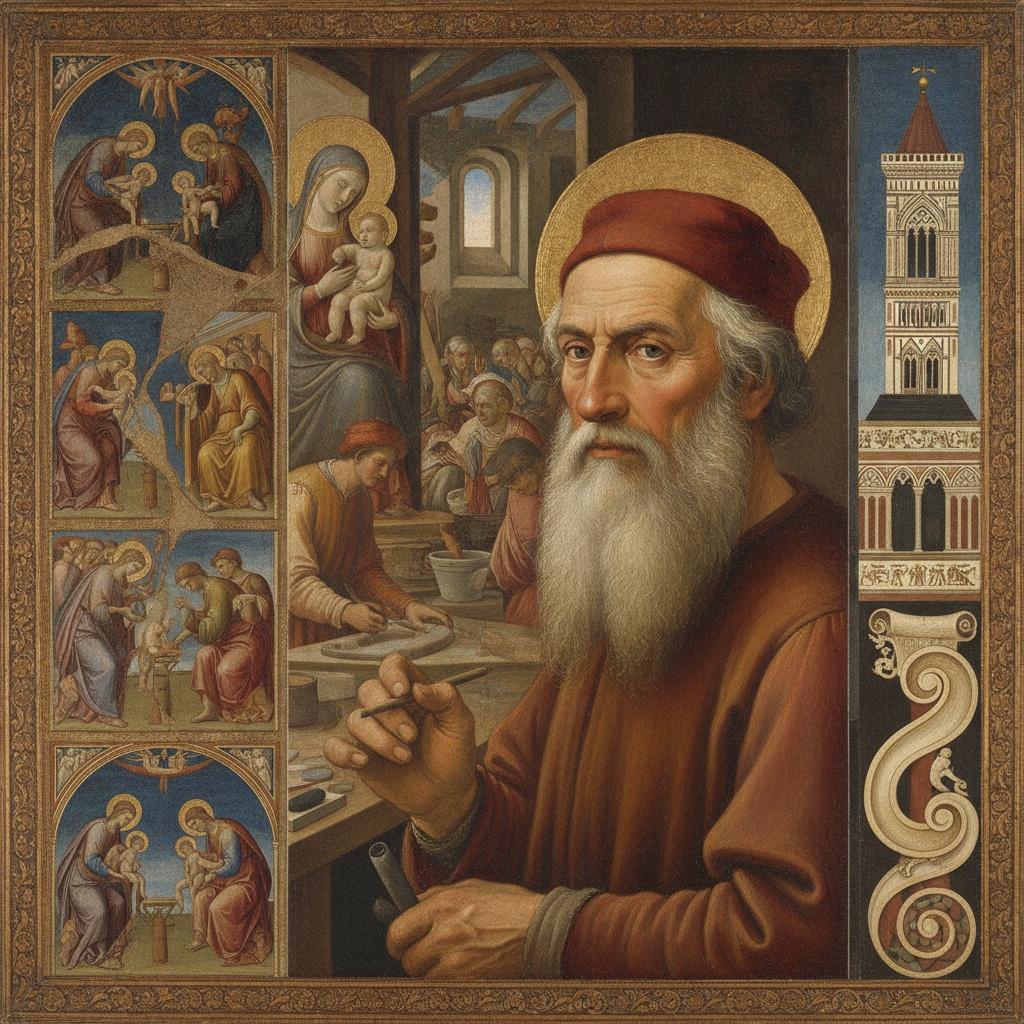
Imagine, if you will, a world of gilded icons and flattened, ethereal figures, where the divine felt distant, frozen in a golden, unchanging sky. Now, imagine a single soul who looked upon that stillness and breathed into it the warmth of human breath, the weight of heavy drapery, and the profound ache of real emotion. This was the gift of Giotto di Bondone . To wander through his works is to witness the very moment art learned to weep, to smile, and to occupy the same three-dimensional world that we inhabit.
Born in the rolling, sun-drenched hills near Florence around 1267, Giotto’s journey from a legendary shepherd boy sketching sheep on stone to the master of a new era is nothing short of poetic. He stood at the threshold of history, acting as the vital bridge between the rigid, symbolic traditions of the Byzantine era and the burgeoning humanism of the Renaissance. While his predecessors sought to depict the spiritual through abstraction, Giotto sought it through naturalism . He understood that by capturing the way light falls upon a cheek or how two figures might lean toward one another in grief, he could make the sacred feel intimately, undeniably human.
Today, these works remain deeply moving because they represent the birth of empathy in visual storytelling. When we gaze upon his frescoes, we are not merely looking at religious iconography; we are witnessing the dawn of psychological depth. His ability to sculpt form with light and shadow—a precursor to the techniques that would later define the masters of the Renaissance—continues to resonate with our own desire to see ourselves reflected in the beauty of the world.
In the following curation, we invite you to walk alongside Giotto through his most transformative moments. From the breathtaking narrative cycles of the Scrovegni Chapel to his foundational works that reshaped the Florentine landscape, this collection of twenty-five masterpieces serves as a guided tour through the evolution of human feeling on canvas and stone. Prepare to rediscover the moment art found its soul.
Last Judgment (detail 3) (Cappella Scrovegni (Arena Chapel), Padua) - Giotto di Bondone
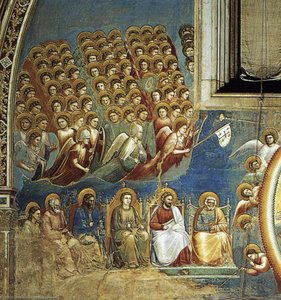 Last Judgment (detail 3) (Cappella Scrovegni (Arena Chapel), Padua) - Giotto di Bondone
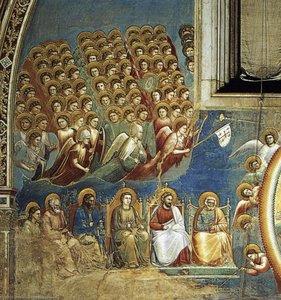
To gaze upon the Last Judgment (detail 3) from the Scrovegni Chapel is to witness the very moment art began to breathe. In this breathtaking fragment of Giotto di Bondone’s 1305 masterpiece, one can almost feel the weight of the frescoed plaster and the deliberate, rhythmic application of pigment. Giotto moves away from the flat, golden abstractions of the Byzantine era, instead using light and shadow to sculpt the heavy drapery of saints and the celestial forms of angels. The cool blues and earthy tones are not merely colors; they are vessels for a new, profound human emotion.
This detail captures the revolutionary transition toward naturalism that defines Giotto's place among the top 25 artworks of his era. At ArtsDot.com, we strive to honor this tactile legacy. Our hand-painted oil reproductions seek to capture that same three-dimensional soul, recreating the visible brushstrokes and the luminous depth of the original fresco. We invite you to bring this profound moment of divine reckoning into your own sanctuary, preserving the textured, emotional essence of the Proto-Renaissance for generations to come.
Stigmatization of St Francis - Giotto di Bondone
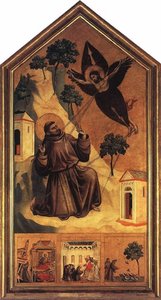 Stigmatization of St Francis - Giotto di Bondone
To possess a study of the Stigmatization of St Francis by Giotto di Bondone is to invest in a profound legacy of human emotion and spiritual grace. As one of the most significant works within the top 25 artworks of Giotto di Bondone, this masterpiece serves as a cornerstone for any discerning collector seeking to anchor their space with historical weight. The painting captures a breathtakingly intimate moment on Mount La Verna, where the textures of the saint's humble habit and the ethereal glow surrounding the divine wounds create a sensory experience of quiet prestige. Giotto’s revolutionary use of light and volume breaks through the flat Byzantine tradition, offering a depth that feels remarkably alive.
The provenance of such imagery is unmatched, influencing centuries of Western art with its raw, naturalistic power. In a modern luxury interior, a high-quality oil reproduction of this work acts as a soulful focal point; its ability to command attention through soft shadows and sacred symbolism brings an air of timeless authority and cultured sophistication to any curated home.
No. 19 Scenes from the Life of Christ: 3. Presentation of Christ at the Temple - Giotto di Bondone
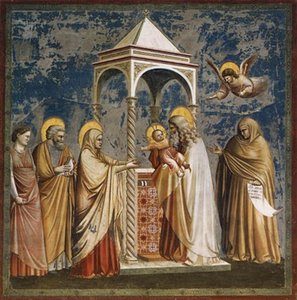 No. 19 Scenes from the Life of Christ: 3. Presentation of Christ at the Temple - Giotto di Bondone
Step into the quiet, hallowed atmosphere of the Scrovegni Chapel, where the air seems to hold its breath before the Presentation of Christ at the Temple . In this breathtaking moment from 1304, Giotto di Bondone invites us to witness a sacred encounter, not as distant icons, but as living, breathing souls. You can almost feel the weight of the heavy, earth-toned drapery and the solemnity in the gestures of Mary and Joseph as they present the infant Christ.
Giotto breaks away from the flat, golden rigidity of the Byzantine era, using soft chiaroscuro to sculpt figures that possess real volume and human tenderness. The warm ochres and muted shadows create a sense of profound intimacy, making the biblical narrative feel deeply personal. Bringing a reproduction of this masterpiece into your home offers more than mere decoration; it introduces a window into the dawn of naturalism. Its presence serves as a meditative anchor, infusing a room with a timeless sense of reverence, historical depth, and a quiet, luminous grace that inspires reflection.
The Stefaneschi Triptych (recto) - Giotto di Bondone
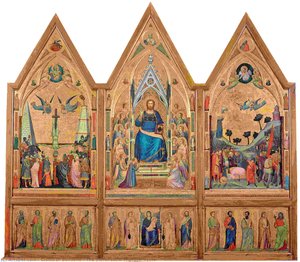 The Stefaneschi Triptych (recto) - Giotto di Bondone
What story does the shimmering, celestial atmosphere of The Stefaneschi Triptych (recto) by Giotto di Bondone tell us about the dawn of a new era? Within the hallowed halls of the Pinacoteca Vaticana, this masterpiece emerges from a time when the rigid, golden abstractions of the Byzantine tradition were first beginning to yield to the warmth of human emotion. As one of the most significant works in our collection of the top 25 artworks of Giotto di Bondone , this triptych captures the profound moment when sacred figures gained weight, volume, and a tangible, breathing presence.
Giotto uses the subtle play of light and shadow to sculpt his saints, transforming flat icons into three-dimensional beings that inhabit a real, spiritual space. The luminous gold leaf background offers an eternal, heavenly glow, yet the heavy folds of fabric and the solemn gestures of the cardinals ground the divine in our earthly reality. For the discerning collector, bringing such a piece into a home offers more than mere decoration; it provides a curated escape into a period of profound transformation, inviting a sense of historical depth and quiet, meditative grace into your personal sanctuary.
Ognissanti Madonna (detail) - Giotto di Bondone
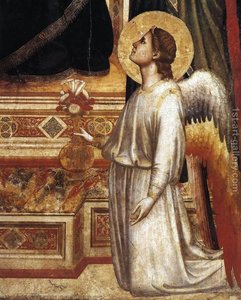 Ognissanti Madonna (detail) - Giotto di Bondone
To gaze upon the Ognissanti Madonna (detail) is to witness the very moment the heavy, gilded veil of the Byzantine era began to lift, revealing the soft, breathing humanity beneath. In this breathtaking fragment from 1310, Giotto di Bondone does not merely paint a religious icon; he breathes life into the divine. The vibrant, crimson backdrop acts as a dramatic stage for the luminous flesh tones of the Virgin and Child, creating a sense of weight and volume that was revolutionary for its time.
Notice the delicate way the light catches the folds of the drapery, a testament to Giotto’s mastery of tempera. The presence of the flanking angels and the tender interaction between the figures evoke a profound emotional resonance, transforming a formal enthronement into an intimate, maternal moment. Owning a piece inspired by this masterpiece is more than a decorative choice; it is an inheritance of history . It brings the dawn of the Renaissance into your private sanctuary, allowing you to carry a lineage of taste that honors the profound naturalism and emotional depth of Giotto’s eternal vision.
Descent into Limbo - Giotto di Bondone
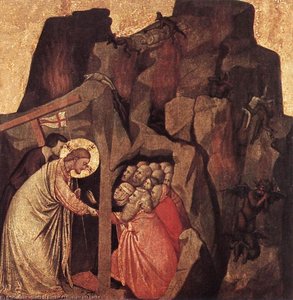 Descent into Limbo - Giotto di Bondone
In Descent into Limbo , Giotto di Bondone orchestrates a profound geometric harmony that anchors this masterpiece within the top 25 artworks of Giotto di Bondone. The composition is anchored by the verticality of the cross, which acts as a spiritual axis, balanced beautifully by the soft, rhythmic placement of angels and figures. There is a breathtaking structural equilibrium here; the weight of the descending Christ is countered by the ethereal lightness of the soaring bird, creating a sense of timeless perfection that draws the eye into a sacred dance of light and shadow.
This internal balance possesses a striking resonance with modern minimalist design. Much like a contemporary clean aesthetic, Giotto strips away the overwhelming ornamentation of the Byzantine era to focus on essential forms and emotive clarity. The rocky landscape and the solemn, sculptural figures provide a grounded, stable foundation that feels remarkably fresh even today. To witness this work is to feel the pulse of a revolution—a moment where heavy divinity meets the delicate grace of human emotion, captured forever in a state of perfect, quiet poise.
St. Paul - Giotto di Bondone
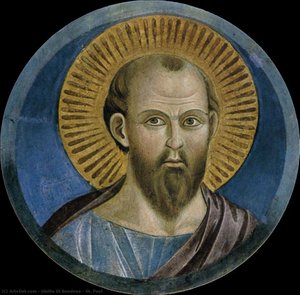 St. Paul - Giotto di Bondone
What story does the celestial blue and shimmering gold of St. Paul by Giotto di Bondone tell us about the dawn of a new era? Created around 1300, this profound fresco fragment emerges from a time when art was transitioning from the rigid, symbolic flatness of Byzantine icons toward a breathtaking humanism. As one of the most significant pieces in our collection of the top 25 artworks of Giotto di Bondone , St. Paul captures a pivotal moment in history where divinity began to take on weight, volume, and a recognizable human soul.
Giotto breaks away from tradition by using subtle shading to sculpt the Apostle's face, inviting us into a direct, soulful communion through his gaze. The deep blue backdrop and delicate gold accents create an atmosphere of sacred stillness, offering a sense of timelessness that serves as a perfect, meditative escape for the modern home. To possess such a work is to bring a piece of the proto-Renaissance into your space, evoking a profound connection to the very foundations of Western emotional depth and naturalism.
Navicella (mosaic fragment) - Giotto di Bondone
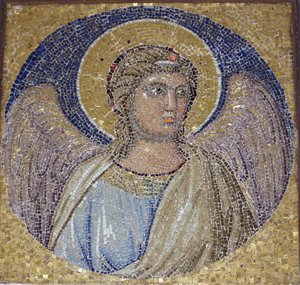 Navicella (mosaic fragment) - Giotto di Bondone
To gaze upon the Navicella (mosaic fragment) is to witness the very moment light began to breathe life into the static icons of the medieval world. Even in this delicate fragment, one can sense the profound texture of Giotto’s revolutionary vision; the interplay of deep, celestial blues and shimmering gold creates a luminous weight that transcends mere decoration. The figure—perhaps the Virgin Mary—possesses a resolute, direct gaze, her presence anchored by the intricate, three-dimensional rendering of wings that seems to defy the flatness of traditional Byzantine mosaic work.
This fragment is a cornerstone of Giotto’s legacy, marking the transition toward the profound naturalism and emotional depth that would eventually define the Renaissance. At ArtsDot.com, we strive to honor this tactile, sculptural quality. Through our meticulous Handmade Oil Reproductions , we capture the soul of such masterpieces, ensuring that the palpable emotion and rich, light-drenched textures of Giotto’s era are preserved with visible brushstrokes and depth, bringing the profound weight of history into the intimate sanctuary of your own home.
Badia Polyptych - Giotto di Bondone
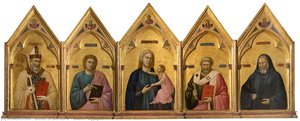 Badia Polyptych - Giotto di Bondone
In the Badia Polyptych by Giotto di Bondone, we witness the dawn of a new light. While the Byzantine tradition relied on flat, golden abstractions, Giotto began to use light as a sculptor’s tool, introducing a nascent form of chiaroscuro that breathes life into the Virgin Mary and her attendant saints. The way illumination softly grazes the heavy folds of their drapery creates a sense of weight and physical presence, pulling these divine figures out of the ethereal plane and into our tangible world. This mastery of light and shadow is precisely what secures this work's place among the top 25 artworks of Giotto di Bondone; it marks the moment art began to truly inhabit space.
When brought into a modern home through a hand-painted oil reproduction, this interplay of light offers more than mere decoration. The subtle transitions from highlight to shadow add a profound architectural depth and a sense of quiet luxury to any wall, inviting a contemplative, soulful atmosphere that transcends the centuries.
Saints John the Evangelist and Mary Magdalene - Giotto di Bondone
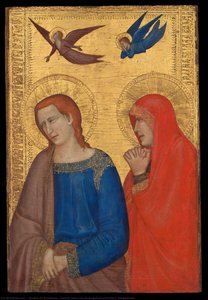 Saints John the Evangelist and Mary Magdalene - Giotto di Bondone
To stand before Saints John the Evangelist and Mary Magdalene is to witness a profound moment of transition, where the rigid gold of the Byzantine era begins to soften into the warmth of human feeling. Created around 1335 by a workshop deeply influenced by Giotto’s Neapolitan years, this magnificent diptych breathes life into sacred figures through an unprecedented psychological depth. One does not merely see Saint John in his blue robe or Mary Magdalene in her crimson cloak; one feels their palpable grief, captured through expressive gestures that broke the stylistic shackles of their time.
The artwork is a sensory marvel, where vibrant pigments and meticulous gold leaf create a shimmering, celestial atmosphere. Above the saints, angelic messengers in mirroring hues of blue and red hover against an opulent, patterned background, symbolizing divine guardianship. This piece is more than a relic of the Florentine Gothic; it is a testament to Giotto’s revolutionary vision—a movement away from abstract symbolism toward a naturalism that invites the viewer into a shared experience of faith and sorrow. It is a true masterpiece for those seeking to surround themselves with the dawn of human emotion.
Daedalus - Giotto di Bondone
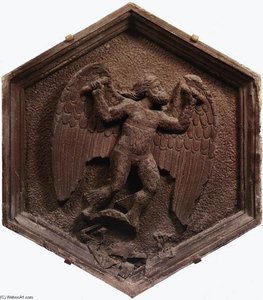 Daedalus - Giotto di Bondone
In the profound lineage of Giotto di Bondone’s greatest achievements, Daedalus stands as a breathtaking testament to the dawn of humanism. This exquisite marble relief, housed in Florence, captures the very moment where the rigid, gilded traditions of the Byzantine era began to dissolve into the palpable reality of the Renaissance. As we trace the artist's journey through his top works, Daedalus emerges as a vital milestone; it is here that Giotto breathes life into stone, transforming a mythological figure into a vessel of raw, human vulnerability.
The sculpture portrays the legendary inventor with wings affixed to his back, yet the true mastery lies in the subtle tension of his posture and the heavy, textured folds of his garments. One can almost feel the weight of his anxiety and the desperate yearning for flight. This piece invites us to reflect on our own human struggles between ambition and consequence. For the discerning collector, bringing the essence of such a masterpiece into a modern space offers more than mere decoration; it introduces a timeless conversation about strength, transcendence, and the enduring beauty of the natural world.
Crucifixion - Giotto di Bondone
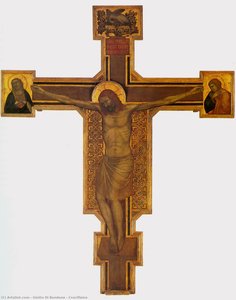 Crucifixion - Giotto di Bondone
To behold the Crucifixion by Giotto di Bondone is to witness the very moment art learned to breathe with human sorrow. At ArtsDot.com, we believe in democratizing this profound beauty, ensuring that the transformative power of history's greatest visions is never confined to a distant chapel wall.
This masterpiece earns its place in our Top 25 through its seismic departure from the flat, golden abstractions of the Byzantine era. Giotto introduced a visceral, heavy realism; he sculpted Christ’s agony with anatomical weight and used atmospheric perspective to create a tangible sense of space. The composition—a poignant arrangement of mourning figures around the central cross—replaces divine detachment with raw, empathetic human emotion. It is a profound study of light, shadow, and the gravity of grief.
Just as Giotto’s revolutionary naturalism once redefined the visual culture of Italy, his work continues to inspire modern interiors seeking depth and contemplative stillness. Through our high-fidelity, hand-painted oil reproductions, you can bring this monumental presence into your own home or personal gallery, inviting a piece of the Renaissance spirit to reside within your daily life.
Campanile - Giotto di Bondone
 Campanile - Giotto di Bondone
In the Campanile by Giotto di Bondone, a deep, earthy terracotta hue dominates the composition, casting a mood of grounded permanence and ancient warmth. This warm, clay-like palette does more than merely depict stone; it breathes life into the architectural grandeur of Florence, marking this work as a vital entry in our collection of the top 25 artworks of Giotto di Bondone . Giotto’s mastery lies in how these sun-drenched ochres and muted shadows create a sense of volume and weight, breaking away from the flat, golden abstractions of the Byzantine era to embrace a tactile, human reality.
For the discerning collector, integrating the atmosphere of this piece into a modern interior offers a profound opportunity for soulful curation. The tower's commanding verticality and its palette of warm, weathered tones can serve as an anchor in a dining room or study, providing a sense of historical depth and stability. By echoing these naturalistic, earthen shades through soft ambient lighting, one can recreate the solemn grandeur and spiritual aspiration that Giotto so beautifully captured centuries ago.
The Entombment of Mary - Giotto di Bondone
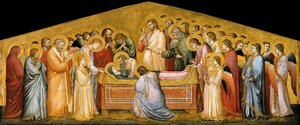 The Entombment of Mary - Giotto di Bondone
To stand before The Entombment of Mary by Giotto di Bondone is to witness the very moment art learned to breathe. As one of the most profound entries in our collection of the top 25 artworks of Giotto di Bondone, this fresco transcends its 1310 origins to offer a raw, visceral encounter with human sorrow. It is not merely a religious scene; it is a masterclass in the transition from the rigid, golden abstractions of the Byzantine era to a new, soulful naturalism.
Giotto directs our gaze through a landscape of profound grief, where the slumped, heavy form of Christ meets the tender, weighted movements of Mary Magdalene and Nicodemus. The light, cascading softly across the figures, creates a primitive yet powerful chiaroscuro that lends a sculptural depth to the composition. For the discerning collector, this work represents the ultimate legacy of emotional intelligence—a timeless piece where anatomical truth meets spiritual weight. Its ability to anchor a room with its somber, dignified beauty makes it an eternal inspiration for those who seek art that speaks directly to the human condition.
Scrovegni - [11] - Marriage of the Virgin - Giotto di Bondone
![Scrovegni - [11] - Marriage of the Virgin](/media/artworks/images/thumbnails/e2/a8/e2a8050d63304601be6f83525f8938a1.jpg) Scrovegni - [11] - Marriage of the Virgin - Giotto di Bondone
Scrovegni - [11] - Marriage of the Virgin - Giotto di BondoneStep into the warmth of the Scrovegni Chapel, where Giotto di Bondone invites us to witness a moment of profound, quiet divinity. In Marriage of the Virgin , light does not merely illuminate the scene; it breathes life into the very fabric of the sacred ceremony. As you gaze upon the clasped hands of Mary and Joseph, you can almost feel the weight of the divine intention settling over the assembly.
Giotto composes this masterpiece with a revolutionary sense of volume, moving away from the flat, golden abstractions of the Byzantine era to embrace a tangible, human reality. Notice how the light sculpts the heavy folds of the drapery and catches the miraculous bloom upon Joseph’s staff, symbolizing God's grace. The soft, architectural shadows create a stage where figures possess true weight and presence. It is this tender intersection of the celestial and the earthly—the way a single dove or a subtle facial expression can stir the soul—that secures this fresco's place among the top 25 artworks of Giotto di Bondone. To behold this work is to witness the dawn of naturalism, a portal of light waiting to grace your own collection.
View of the choir of towards the west - Giotto di Bondone
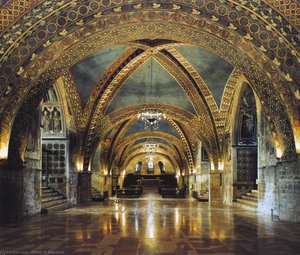 View of the choir of towards the west - Giotto di Bondone
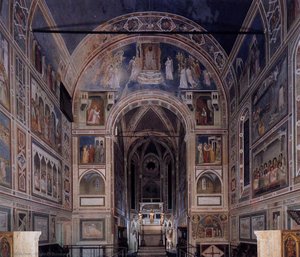
To stand before Giotto di Bondone’s View of the Choir Towards the West is to witness the very moment art began to breathe. There is a profound, quiet majesty in this fresco; it captures not just the architectural grandeur of the Basilica of San Francesco, but the hushed, reverent atmosphere of a sacred space caught in a moment of eternal stillness. As your eyes trace the soaring arches and the weight of the columns, you feel the transition from the flat, golden icons of the Byzantine era to a world imbued with volume, light, and human presence.
This work earns its place among the top 25 artworks of Giotto di Bondone because it serves as the architectural heartbeat of the proto-Renaissance, proving that stone and pigment can evoke the soul of humanity. At ArtsDot.com, we strive to honor this legacy of texture and depth. Through our hand-painted oil reproductions , we bring the luminous spirit and structural weight of Giotto’s mastery into your private sanctuary, ensuring the emotional resonance of his revolutionary vision remains a living part of your home.
Allegory of Chastity (detail)2 - Giotto di Bondone
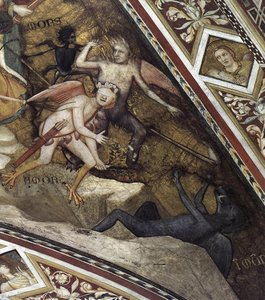 Allegory of Chastity (detail)2 - Giotto di Bondone
In the Allegory of Chastity (detail)2 , we encounter a fragment of Giotto di Bondone’s profound ability to breathe life into the divine struggle. This fresco detail is not merely a depiction of conflict; it is a visceral experience of movement and tension. As you gaze upon the winged youth caught in a dramatic descent, you feel the weight of spiritual peril. The composition vibrates with a chaotic energy, where the dark, horned presence of a demon clashes against the resolute strength of a spear-wielding warrior.
There is a profound depth in the way Giotto uses light and shadow to sculpt these figures, moving away from flat Byzantine icons toward a tangible, human reality. The gilded panel housing the female figure offers a luminous contrast, a sanctuary of purity amidst the surrounding tumult. To possess such a piece is to invite a reminder of the eternal dance between virtue and temptation into your home. It does not just decorate a wall; it serves as a window into the very soul of the proto-Renaissance, making the invisible battle for grace visible through every textured brushstroke.
Dream of Innocent III - Giotto di Bondone
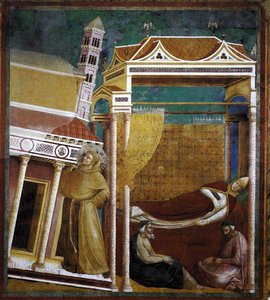 Dream of Innocent III - Giotto di Bondone
In the Dream of Innocent III , Giotto di Bondone does not merely paint a scene; he choreographs a moment where the veil between the earthly and the divine becomes translucent. Within the hallowed walls of the Basilica of Saint Francis of Assisi, this fresco breathes with a quiet, rhythmic life. The lines are not simply drawn; they are a dance frozen in time , capturing the Pope in a state of profound reverie, his head resting upon a pillow as the boundaries of sleep dissolve.
Giotto invites us into an intimate tableau where vibrant reds and regal golds pulse against cooler, atmospheric tones. Around the reclining figure, advisors and monks move with a weight and volume that feels startlingly human, breaking away from the flat, gilded traditions of the Byzantine era. Even the scattered birds throughout the composition add a delicate, fluttering movement to the stillness. To possess such a work is to invite a sense of rhythmic balance into your own sanctuary—a way for your walls to breathe with the same historical soul and emotional depth found in these top 25 artworks of Giotto di Bondone.
Políptico Baroncelli - Giotto di Bondone
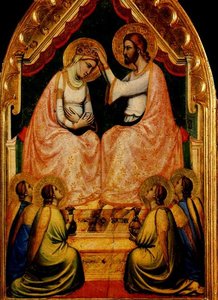 Políptico Baroncelli - Giotto di Bondone
In the Políptico Baroncelli , we witness the very moment the divine began to breathe with human warmth. Attributed to the visionary Giotto di Bondone, this monumental altarpiece serves as a profound bridge between the rigid, golden abstractions of the Byzantine era and the tender naturalism of the Renaissance. It earns its place among the top 25 artworks of Giotto di Bondone not merely for its scale, but for its soul; here, the Coronation of the Virgin is stripped of cold formality and replaced with palpable reverence and soft, sculptural weight.
Giotto’s mastery lies in the subtle interplay of light upon heavy drapery and the quiet, psychological depth found in the faces of Mary and Joseph. To gaze upon this work is to see humanity reflected in the sacred—a timeless reminder that beauty resides in emotional truth. For the modern collector, the Baroncelli Polyptych offers more than historical prestige; its muted hues and dignified composition provide a sense of quiet, ancestral grace, perfect for creating a sanctuary of contemplation within a contemporary home.
Frescoes in the fourth bay of the nave - Giotto di Bondone
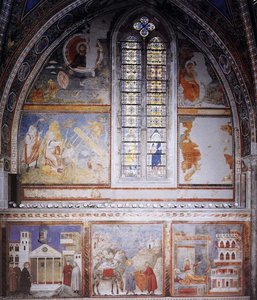 Frescoes in the fourth bay of the nave - Giotto di Bondone
Stepping into the presence of the Frescoes in the fourth bay of the nave is like witnessing a quiet, sacred dance frozen in time. Within the hallowed, soaring reaches of the Florence Cathedral , Giotto di Bondone breathed life into cold stone, replacing the flat, gilded stillness of the Byzantine era with a profound, rhythmic humanity. These frescoes do not merely sit upon the wall; they breathe with a soft, architectural pulse, where light and shadow begin to sculpt the very weight of the figures.
In this breathtaking cycle, Giotto choreographs scenes from the life of Saint Francis, using a palette that feels both earthy and divine. You can almost feel the texture of the heavy drapery and the solemn gravity in each expressive gesture. It is a masterpiece of proto-Renaissance naturalism, where every arch and column creates a window into a tangible, emotional world. To possess a handmade oil reproduction of such a work is to invite that same sense of historical harmony and quiet prestige into your own sanctuary, allowing your walls to hold the enduring rhythm of Giotto’s revolutionary vision.
No. 46 The Seven Virtues: Hope - Giotto di Bondone
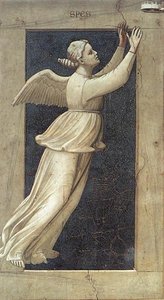 No. 46 The Seven Virtues: Hope - Giotto di Bondone
To possess a reproduction of The Seven Virtues: Hope by Giotto di Bondone is to invite a profound legacy of human resilience into one's private collection. As a cornerstone of the Scrovegni Chapel, this 1306 masterpiece represents a pivotal moment in art history where the flat, gilded traditions of Byzantium dissolved into a new, breathing naturalism. For the discerning collector, this work is not merely an image but a testament to the dawn of the Renaissance, possessing an incomparable influence that continues to shape our understanding of emotional depth and sculptural form.
Giotto’s genius unfolds through the somber, atmospheric palette of blues and earthy grays, where light and shadow—the early whispers of chiaroscuro —sculpt the angelic figure as she reaches upward in a poignant struggle. The texture of the fresco, with its visible weight and movement, offers a sensory experience that transcends time. In a modern luxury interior, such a piece serves as an anchor of intellectual and aesthetic authority; a high-quality, hand-painted oil reproduction carries this same monumental status, bringing the soulful, transformative power of Giotto’s vision into the contemporary home.
joachim's dream - Giotto di Bondone
 joachim's dream - Giotto di Bondone
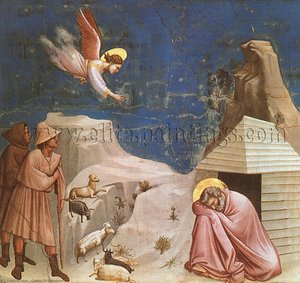
What story does the quiet, pastoral landscape surrounding Joachim’s Dream by Giotto di Bondone tell us about the dawn of a new era? Within the sacred walls of the Scrovegni Chapel, this fresco emerges not as a rigid icon, but as a breathing moment of spiritual intimacy. As we wander through this masterpiece, we see Joachim kneeling in humble prayer, his pink robe catching a soft, diffused light that seems to bridge the gap between the earthly and the divine. Giotto breaks away from the flat, golden traditions of Byzantine art, introducing a revolutionary naturalism where sheep graze nearby and a faithful dog rests at the center of the composition.
For the modern collector seeking an escape, this work offers more than mere decoration; it provides a window into a world of profound emotional depth and weight. The way Giotto uses light to sculpt the folds of fabric and the weary lines of a human face creates a sense of presence that transforms any room into a sanctuary of contemplation. It remains a cornerstone of the top 25 artworks of Giotto di Bondone , inviting us to find peace in its timeless, rhythmic beauty.
The Last Judgement, detail of Jesus, 1305-13, Fresco, - Giotto di Bondone
 The Last Judgement, detail of Jesus, 1305-13, Fresco, - Giotto di Bondone
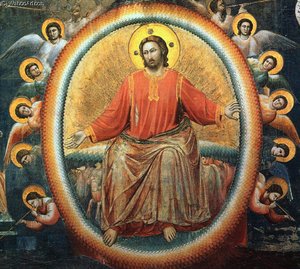
To gaze upon the detail of The Last Judgement by Giotto di Bondone is to witness the very moment Western art began to breathe with human life. This profound fragment from the Scrovegni Chapel stands as a cornerstone in our collection of Giotto’s top 25 artworks, representing the breathtaking transition from static Byzantine icons to a world imbued with weight, volume, and soul. At its heart, the figure of Christ radiates a celestial authority, surrounded by a swirling dance of angelic attendants whose forms possess a newfound, sculptural presence.
Giotto’s mastery of fresco allows for a luminous depth, where subtle gradations of color suggest anatomy and movement, making the divine feel tangibly real. The symbolism—from the heraldic trumpets to the promise of grace—creates an emotional resonance that has captivated viewers for centuries. This masterpiece does more than recount scripture; it captures the weight of human existence. Today, through our high-fidelity oil reproductions, you can bring this transformative, monumental presence into your own home or gallery, allowing Giotto’s revolutionary vision to inspire your personal sanctuary with its timeless, sacred light.
Alegoría de la Pobreza - Giotto di Bondone
 Alegoría de la Pobreza - Giotto di Bondone
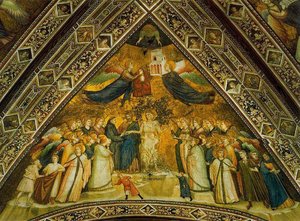
Long before the Renaissance bloomed, a young Giotto di Bondone was said to be sketching the very sheep he tended in the Florentine hills, possessing an innate eye for the soul of the living. This profound connection to reality reaches a breathtaking crescendo in Alegoría de la Pobreza . Within the hallowed walls of the Basilica of Saint Francis of Assisi, Giotto achieved a monumental conceptual leap, moving away from the flat, golden abstractions of the Byzantine era toward a world of weight, breath, and human emotion.
The fresco breathes with muted earth tones—ochre, umber, and deep crimson—as Giotto uses masterful sculptural modeling to give form to fourteen figures. Through his revolutionary use of light and shadow, he transforms a gathering of monks into a tangible, sacred moment of spiritual simplicity. There is a quiet prestige in this work, a sense of grounded divinity that transcends centuries. Much like the focused energy required to compose such a masterpiece, surrounding yourself with art of such depth can cultivate an atmosphere of profound contemplation and sophisticated productivity within a modern study or home office.
Ascension of Christ (Upper Church, San Francesco, Assisi) - Giotto di Bondone
 Ascension of Christ (Upper Church, San Francesco, Assisi) - Giotto di Bondone
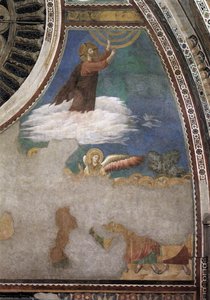
To stand beneath the vaulted ceilings of the Upper Church in Assisi is to witness the very moment art learned to breathe. In the Ascension of Christ (Upper Church, San Francesco, Assisi) by Giotto di Bondone , we move away from the rigid, golden stillness of the Byzantine era and into a world of weight, light, and human longing. This fresco is a cornerstone of Giotto’s revolutionary vision, where the divine does not merely hover in a flat void but ascends through a palpable, layered atmosphere.
Giotto guides our gaze upward using a masterful interplay of cool blues and ethereal whites that evoke the heavens, contrasted by the grounded, earthy ochres of the figures below. One can almost feel the textured lime plaster beneath the pigment, where light seems to emanate from behind Christ’s halo, casting soft shadows that grant his form a sculptural, three-dimensional presence. It is a profound narrative of triumph and grace, reminding us that even centuries later, great art possesses the power to transform a quiet space into a gateway for the soul.
Conclusion
As the light fades on our journey through Giotto’s transformative world, we are left with more than just a memory of pigment and plaster; we carry with us the profound realization that these works are living presance. To stand before a Giotto—even through the faithful medium of a hand-painted reproduction—is to participate in a conversation that has spanned seven centuries. He taught us how to see weight, how to feel grief, and how to recognize the divine within the human form. His brushstrokes did not merely decorate walls; they breathed life into stone, bridging the gap between the ethereal heavens and our own earthly experiences.
These masterpieces are far more than historic treasures locked behind museum glass; they are enduring echoes of the human spirit that continue to shape our modern interiors and stir our creative souls. When we bring these images into our homes, we invite that same revolutionary naturalism and emotional depth into our daily lives, allowing the quiet strength of the Florentine master to anchor our spaces with grace and timelessness. Every texture, every shadow, and every expressive gesture serves as a reminder that art is a bridge across time, connecting the shepherd boy of Florence to the modern admirer in a shared moment of wonder.
We invite you to continue this intimate exploration and find the piece that speaks to your own story within our full collection . May these works of art always remind you that beauty, once captured with such profound humanity, never truly fades.