Introduction
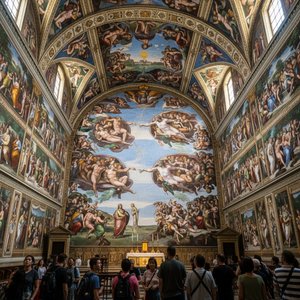
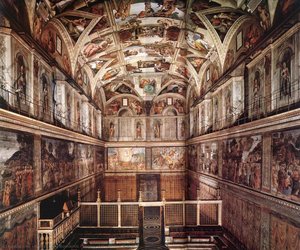
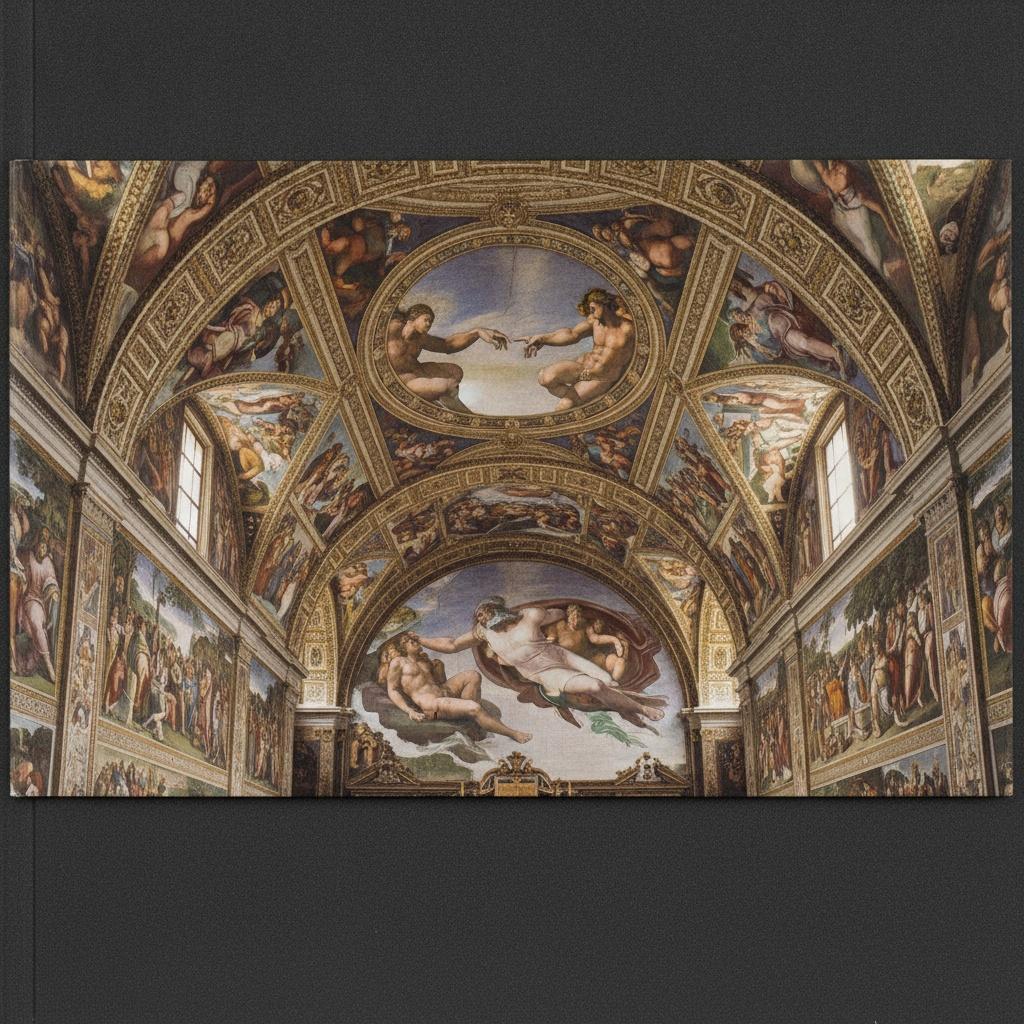
To step into the Cappella Sistina is to leave the bustling streets of Rome behind and enter a realm where the boundary between heaven and earth seems to dissolve. There is a profound, heavy stillness in the air, a sacred hush that invites you to look upward, drawn by the sheer weight of divine intention etched into every inch of plaster and pigment. As we wander through this celestial sanctuary, we are not merely observing art; we are participating in a silent, centuries-old dialogue about the very essence of the human soul and its relationship with the infinite.
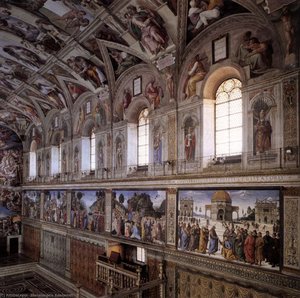
The history of this space is a beautiful, complex tapestry of devotion and ambition. Originally envisioned as a private papal mausoleum under Pope Sixtus IV, the chapel evolved into a monumental stage for the greatest masters of the Renaissance. While the walls themselves whisper stories from earlier hands—the delicate strokes of Botticelli , Perugino , and Ghirlandaio —it is the transformative genius of Michelangelo Buonarroti that breathes a cosmic fire into the architecture. His Herculean effort to adorn the ceiling with the narratives of Genesis has redefined the limits of what the human hand can achieve, turning a structural expanse into a breathtaking panorama of creation, fall, and redemption.
Why do these works continue to stir our hearts so deeply, even in our modern, fast-paced world? Perhaps it is because they capture the eternal tensions of our existence: the struggle between strength and vulnerability, the light of grace against the shadows of mortality, and the awe of witnessing something much larger than ourselves. The influence of classical antiquity, sparked by the discovery of works like the Laocoön , breathes a muscular naturalism into these frescoes that still resonates with every viewer who seeks truth in beauty.
In the pages that follow, we shall embark on a curated journey through this sacred space. We have selected twenty-five pivotal works and details within the Sistine Chapel—ranging from the monumental ceiling frescoes to the intricate wall panels—that together compose this unparalleled masterpiece of human spirit. Prepare to lose yourself in the light, the color, and the divine drama of the Vatican’s most treasured treasure.
The Creation of Adam - Michelangelo Buonarroti
 The Creation of Adam - Michelangelo Buonarroti
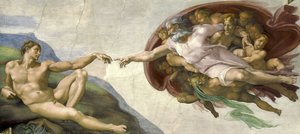
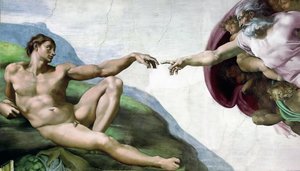
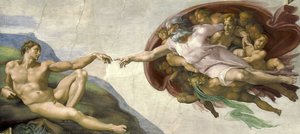
In the breathless moment where heaven meets earth, we find the very heartbeat of human existence within The Creation of Adam by Michelangelo Buonarroti. To gaze upon this fresco is to witness a divine spark suspended in time, an eternal pause between the fingers of the Creator and the longing of man. This masterpiece earns its place among the top 25 artworks in the Sistine Chapel not merely through its scale, but through its profound emotional resonance; it captures the precise instant where consciousness is ignited by grace.
Michelangelo’s mastery of anatomical precision and the dramatic interplay of light and shadow—the chiaroscuro that defines Adam’s muscular form—creates a sense of sculptural depth that feels almost tangible. The swirling, celestial energy surrounding God serves as a breathtaking contrast to the terrestrial stillness of Adam, symbolizing the infinite connection between the mortal and the divine. This profound narrative of potential and spirit continues to inspire the modern soul, offering a timeless aesthetic of strength and reverence. Through our high-fidelity oil reproductions, you can bring this transformative presence and the monumental power of the High Renaissance into your own home or personal gallery, allowing this sacred dialogue to breathe within your private sanctuary.
Last Judgment - Michelangelo Buonarroti
 Last Judgment - Michelangelo Buonarroti
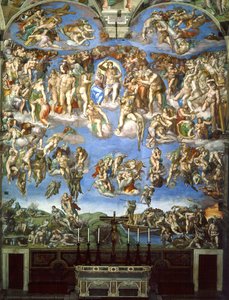
To stand before the Last Judgment is to witness the very moment where the serenity of the High Renaissance dissolves into a turbulent, breathtaking storm of human emotion. Completed in 1537, Michelangelo’s monumental fresco on the altar wall of the Sistine Chapel transcends mere religious iconography; it is a visceral encounter with the divine and the mortal. Unlike the luminous, balanced narratives of his earlier ceiling works, this masterpiece embraces the Mannerist aesthetic , utilizing elongated, muscular figures that swirl in a complex, celestial vortex.
The composition is a masterclass in dramatic tension. At its heart, Christ stands as a powerful Judge, His gestures commanding both salvation and condemnation. Below, a sea of souls—stripped of earthly status through their profound nudity—rises from the depths, caught in a swirling dance of resurrection and despair. One cannot help but feel the weight of Saint Bartholomew’s flayed skin, a haunting reflection on mortality. This is not merely paint on plaster; it is a gallery of the soul , inviting you to contemplate the eternal struggle between light and shadow, grace and judgment.
Ignudo (15) - Michelangelo Buonarroti
 Ignudo (15) - Michelangelo Buonarroti
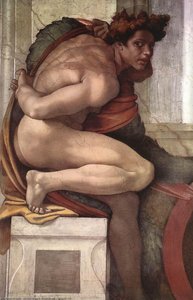
To behold one of the Ignudi by Michelangelo Buonarroti is to witness the very breath of the Renaissance captured in muscle and light. These figures, part of the monumental fresco cycle within the Sistine Chapel, transcend mere decoration; they are embodiments of divine energy and human potential. Each Ignudo stands as a testament to Michelangelo's unparalleled ability to render the sculptural weight of the human form through the delicate medium of fresco.
Included in our selection of the top 25 artworks in 'Cappella Sistina, Vatican City', these figures are irreplaceable due to their profound influence on Western anatomy and the expressive power of the nude. They bridge the gap between the earthly and the celestial, using torsion and tension to evoke a sense of spiritual movement. The interplay of light across the painted sinews creates a rhythmic vitality that has captivated souls for centuries. Just as these masterpieces once transformed the Vatican's sacred space, their enduring aesthetic can be brought into your own sanctuary. Through our high-fidelity oil reproductions, you can invite this transformative, classical presence into your home or personal gallery, allowing the grandeur of Michelangelo to illuminate your modern life.
The Delphic Sibyl - Michelangelo Buonarroti
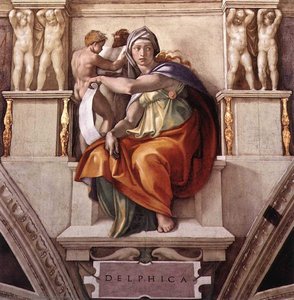 The Delphic Sibyl - Michelangelo Buonarroti
To gaze upon The Delphic Sibyl by Michelangelo is to witness the very breath of the High Renaissance captured in pigment. As you trace the surface, the eye is drawn to the profound materiality of the fresco; one can almost sense the tension in the wet plaster where Michelangelo layered colors to create that iconic, muscular contrapposto . The texture of the Sibyl’s drapery, heavy with sculpted folds, and the soft, luminous glow of her skin against the muted ochre background, evoke a sense of divine weight and earthly presence.
This masterpiece stands within our top 25 artworks in the Cappella Sistina, Vatican City because it transcends mere painting to become a sculptural experience of light and shadow. At ArtsDot.com, we strive to honor this tactile, three-dimensional soul. Our hand-painted oil reproductions are meticulously crafted to capture every vigorous brushstroke and tonal depth, ensuring that the spiritual majesty and physical texture of Michelangelo’s vision find a permanent, breathing home in your own collection.
Medallion (12) - Michelangelo Buonarroti
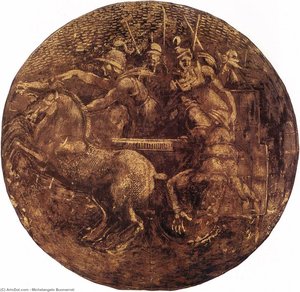 Medallion (12) - Michelangelo Buonarroti
To stand beneath the vaulted heavens of the Vatican is to witness a divine struggle between stillness and motion. While many gaze upward at the central biblical narratives, there is a concentrated, swirling energy found in the spandrels that captures the very pulse of human ambition. In Medallion (12) by Michelangelo Buonarroti , we encounter a breathtaking fragment of this celestial drama.
Created around 1511, this circular fresco serves as a masterclass in anatomical precision and kinetic force. Within its tight, round frame, Michelangelo orchestrates a chaotic equestrian battle where the rearing muscles of horses and the glint of polished armor create a rhythmic, almost musical intensity. The artist uses masterful hatching and light to define every sinew, foreshadowing the dramatic tension of Mannerism . It is a whirlwind of power, far removed from the quietude of prayer, reminding us of the earthly conflicts that mirror our own struggles for glory. This medallion remains essential among the top 25 artworks in 'Cappella Sistina, Vatican City' because it embodies the raw, tactile vitality that continues to inspire collectors and dreamers to bring such profound emotional depth into their own sacred spaces.
Exterior of the Sistine Chapel - Michelangelo Buonarroti
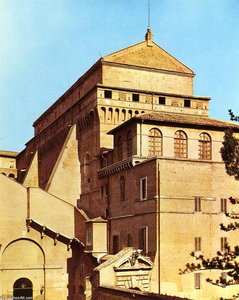 Exterior of the Sistine Chapel - Michelangelo Buonarroti
In the Exterior of the Sistine Chapel by Michelangelo Buonarroti, we encounter a profound study of architectural weight meeting the ephemeral softness of light. While Michelangelo is celebrated for his muscular frescoes, this depiction captures the chapel's structural grandeur through a delicate interplay of shadow and illumination. The way the light grazes the rugged brickwork and the central tower creates a rhythmic chiaroscuro , pulling the viewer’s eye toward the subtle textures of the Vatican’s historic silhouette.
This mastery of light—capturing the transition of day into dusk—is precisely what secures this view among the top 25 artworks in the Cappella Sistina collection. The soft, atmospheric glow lends a sense of timelessness to the stone, transforming a mere building into a living monument. For the discerning collector, bringing a faithful oil reproduction of such a scene into a contemporary home offers more than decoration; it introduces a layer of luminous depth and quiet luxury. The play of light and shadow on canvas can anchor a room, providing a sophisticated focal point that evokes both historical reverence and a serene, meditative atmosphere.
Expulsion from Garden of Eden - Michelangelo Buonarroti
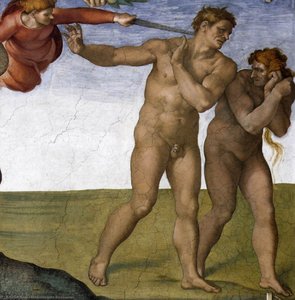 Expulsion from Garden of Eden - Michelangelo Buonarroti
In Expulsion from Garden of Eden by Michelangelo Buonarroti, a heavy, somber ochre dominates the composition, casting a mood of profound, earth-bound sorrow over the figures. This muted, clay-like palette does not merely depict a biblical moment; it anchors the tragedy in a visceral, tactile reality. The masterful use of these earthy tones, contrasted against the dramatic chiaroscuro that defines Adam and Eve’s muscular forms, is precisely why this fresco remains a cornerstone among the top 25 artworks in Cappella Sistina, Vatican City . Michelangelo uses light to sculpt grief, making the skin appear almost as weathered as the very ground they are being cast upon.
For the discerning collector looking to curate a sophisticated atmosphere, this specific color scheme offers incredible inspiration. Integrating these deep browns and warm, sun-drenched tans into a modern dining room or study can evoke a sense of historical weight and quiet introspection. By mirroring this Renaissance palette through textured linens or dark wood accents, one can recreate the emotional depth and dramatic lighting of the High Renaissance, bringing a piece of the Vatican's timeless majesty into the intimacy of a contemporary home.
The Punishment of Korah and the Stoning of Moses and Aaron (detail) (12) - Sandro Botticelli
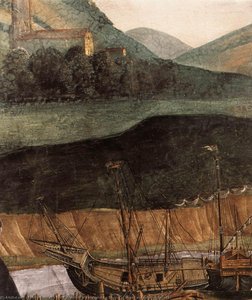 The Punishment of Korah and the Stoning of Moses and Aaron (detail) (12) - Sandro Botticelli
To stand before The Punishment of Korah and the Stoning of Moses and Aaron is to witness a moment where Renaissance elegance meets divine gravity. In this breathtaking detail from Sandro Botticelli’s 1481 fresco, we are not merely observing a biblical rebellion; we are enveloped by the artist's extraordinary command of narrative tension. Botticelli, the master of fluid lines and ethereal grace, brings a startling intensity to the walls of the Cappella Sistina, transforming stone into a stage for cosmic justice.
The composition breathes with a dramatic landscape, where a formidable castle perches atop rugged mountains, grounding the spiritual upheaval in a tangible, architectural grandeur. One cannot help but be moved by the meticulous textures—the heavy drape of garments and the poignant, anguished expressions that flicker like candlelight across the faces of the figures. It is a profound sensory experience; the light seems to catch the very weight of the stones being cast, reminding us that art of this caliber does not just decorate a space—it transforms it into a gallery of the soul, where every brushstroke echoes the eternal struggle between earthly dissent and divine law.
Three Temptations of Christ (detail) (24) - Sandro Botticelli
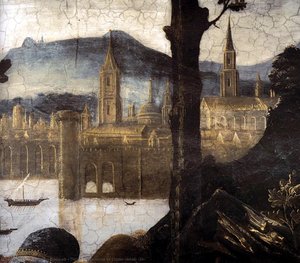 Three Temptations of Christ (detail) (24) - Sandro Botticelli
To stand before the detail of Sandro Botticelli’s “Three Temptations of Christ” is to step into a quiet, contemplative dream of the Early Renaissance. While the Sistine Chapel is often defined by Michelangelo’s muscular drama, this fresco fragment offers a moment of profound, hushed grace. One can almost feel the cool, damp air of the Roman morning reflected in Botticelli's muted palette of earthy greys, soft beiges, and delicate, atmospheric blues.
The composition draws the soul toward a stylized cityscape, where a formidable castle stands as a symbol of divine and civic order amidst the spiritual struggle. There is a rhythmic beauty in the way the light falls softly upon the stone spires and the gentle ripples of the water, creating a sense of serene permanence. The texture of the fresco, with its visible traces of pigment bonded to wet plaster, lends an organic intimacy to the scene. Bringing such a piece into your home does more than decorate a wall; it introduces a window of stillness, inviting a sense of historical depth and poetic reflection into your daily sanctuary.
Daniel - Michelangelo Buonarroti
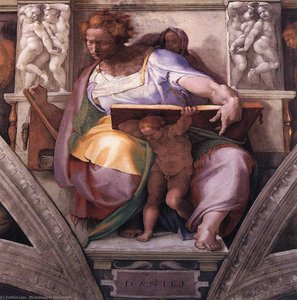 Daniel - Michelangelo Buonarroti
There is a profound, quiet strength in Daniel by Michelangelo Buonarroti that lingers long after you have turned away from the ceiling of the Cappella Sistina . In this breathtaking fresco, completed in 1511, we do not find the frantic terror of the lions' den, but rather the luminous stillness of faith. Michelangelo directs our eyes to a moment of divine protection; as Daniel is lowered into the shadows, he holds his book with an unwavering, serene grace.
The palette is a masterclass in Renaissance warmth—rich ochres, deep earths, and soft creams that seem to glow from within the wet plaster. Through masterful chiaroscuro , Michelangelo sculpts the figures, making the heavy drapery and muscular forms feel almost tactile, as if they might step from the architecture itself. There is a gaze in this work that follows you—not with judgment, but with understanding . It is a mirror reflecting our own moments of vulnerability and the hope of being rescued. To possess such an image in your collection is to invite a constant reminder that even in the darkest depths, we are never truly alone.
Jacob - Joseph (detail) - Michelangelo Buonarroti
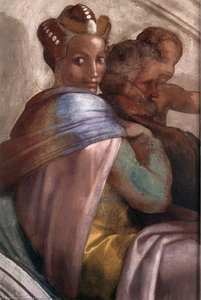 Jacob - Joseph (detail) - Michelangelo Buonarroti
To stand beneath the vaulted heavens of the Vatican is to witness a silent, painted drama unfolding through the centuries. Within this celestial narrative, Jacob - Joseph (detail) by Michelangelo Buonarroti emerges as a profound study of human tension and divine lineage. As part of the monumental Genesis cycle, this fresco captures a fleeting, heavy moment: a woman draped in a blue scarf wears an expression of palpable displeasure, her gaze contrasting with the downward, contemplative posture of the man beside her.
Michelangelo’s mastery of chiaroscuro breathes life into the scene, using dramatic light and shadow to sculpt anatomical precision directly onto the wet plaster. The subtle interplay of figures—one observing, one mourning, one reacting—creates a psychological depth that transcends the biblical era. This detail is essential among the top 25 artworks in Cappella Sistina, Vatican City, because it reminds us that even within grand cosmic histories, the most profound truths are found in the quiet, textured emotions of the human soul. Such works continue to transform our modern spaces, inviting a sense of timeless reverence into our homes.
Ancestors of Christ: figures (11) - Michelangelo Buonarroti
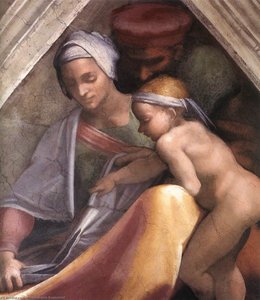 Ancestors of Christ: figures (11) - Michelangelo Buonarroti
To possess a study of Ancestors of Christ: figures (11) by Michelangelo Buonarroti is to invest in a profound legacy of human emotion and divine lineage. As one of the most significant works within the top 25 artworks in 'Cappella Sistina, Vatican City', this fresco serves as a cornerstone of Renaissance mastery, where the weight of history meets the delicate grace of biblical genealogy.
Michelangelo’s 1511 masterpiece captures a tender, complex tableau; through his unparalleled anatomical precision, we witness patriarchs and matriarchs rendered with muscular vitality and soulful contemplation. The play of light across the drapery and the intimate connection between the figures—most notably the Virgin Mother cradling her infant—create a rhythmic, sculptural depth that transcends time. Its position in the pantheon of art history is indisputable, offering a profound study of form and theological narrative. For the discerning collector, bringing a high-quality reproduction of this fresco into a modern luxury interior provides an immediate sense of aesthetic authority, infusing contemporary spaces with the timeless grandeur and monumental status of the High Renaissance.
Jeremiah - Michelangelo Buonarroti
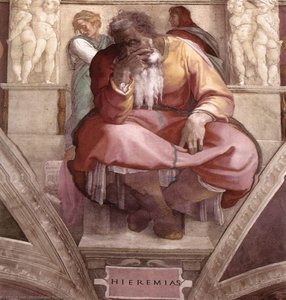 Jeremiah - Michelangelo Buonarroti
What story does the heavy, contemplative silence within Jeremiah by Michelangelo Buonarroti tell to those who linger beneath the Sistine Chapel’s vaulted heavens? As you stand before this profound fresco, you are not merely viewing a biblical figure, but witnessing the very weight of prophecy. Created between 1508 and 1511, this work emerged from the height of the High Renaissance, a period where Michelangelo transitioned from sculptor to master painter, redefining the human form through muscular precision and emotional depth.
The prophet sits enveloped in warm earth tones—deep reds and weathered browns—his head resting heavily upon his hand in a gesture of eternal lamentation. Through the masterful use of chiaroscuro , Michelangelo carves Jeremiah out of the shadows, creating a sense of physical presence that feels almost tactile. In our modern homes, bringing such an atmosphere into your space offers a curated escape; it invites a sense of solemnity and intellectual introspection. To possess a reproduction of this masterpiece is to invite the quiet, dignified beauty of the Vatican into your daily life, turning a wall into a window toward spiritual history.
Joel - Michelangelo Buonarroti
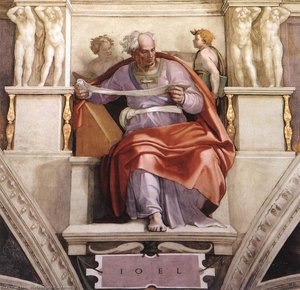 Joel - Michelangelo Buonarroti
In the quiet, hallowed air of the Sistine Chapel, there exists a moment of profound stillness found within Joel by Michelangelo Buonarroti. To gaze upon this fresco is to witness the very breath of the High Renaissance; it is a study in sacred contemplation, where the weight of prophecy meets the delicate grace of human intellect.
As one of our most cherished selections among the top 25 artworks in 'Cappella Sistina, Vatican City', Joel earns its place through Michelangelo’s unparalleled ability to sculpt with light and pigment. The prophet sits enveloped in a warm glow of ochre and deep crimson, his focused gaze anchored by the weight of the sacred scroll. This masterpiece transcends mere religious iconography, offering a masterclass in anatomical tension and the emotional depth of the human spirit. It is an essential pillar of visual history, representing the divine intersection of physical strength and spiritual wisdom.
Just as this fresco once transformed the papal chapel into a celestial stage, its luminous energy can be invited into your own sanctuary. Through our high-fidelity, hand-painted oil reproductions, you can bring the transformative presence and quiet prestige of Michelangelo’s genius into your home or personal gallery, allowing this timeless light to illuminate your modern life.
Putti - Michelangelo Buonarroti
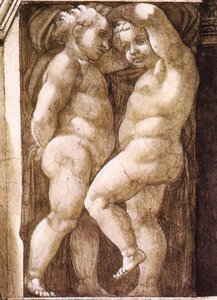 Putti - Michelangelo Buonarroti
In the hallowed expanse of the Sistine Chapel, amidst the monumental narratives of salvation, there exist moments of profound, intimate grace that capture the very essence of Renaissance idealism. Michelangelo Buonarroti’s “Putti” is one such masterpiece. Rather than a grand theological struggle, this fresco presents a tender, animated exchange between two cherubic figures—embodiments of youthful energy and spiritual purity. As one boy playfully raises his arm above the other, we are invited into a private world where the boundaries between the earthly and the celestial dissolve in a single, breathless gesture.
The technical mastery here reflects Michelangelo’s sculptural approach to painting; through delicate modeling and subtle shading, the flesh of the boys appears supple and alive. Beyond this surface beauty, these figures serve as messengers of prophecy, representing innocence and the purity of the soul . To bring such a piece into your home is not merely to decorate, but to invite a moment of divine playfulness into your sanctuary, transforming your space into a true gallery of the soul.
Ezekiel - Michelangelo Buonarroti
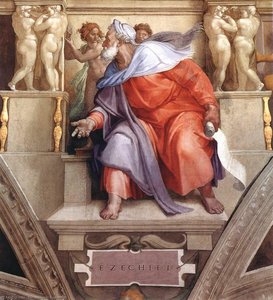 Ezekiel - Michelangelo Buonarroti
In the breathtaking expanse of the Sistine Chapel ceiling, Ezekiel by Michelangelo Buonarroti emerges as a profound meditation on the weight of divine revelation. To gaze upon this fresco is to witness the very moment where human intellect meets spiritual ecstasy. Michelangelo captures the prophet seated in quiet, prayerful intensity, surrounded by a celestial assembly that breathes with anatomical life and sculptural depth. The mastery of chiaroscuro —the dramatic interplay of light and shadow—creates a sense of monumental presence that feels almost tactile, as if the figures might step from the plaster into our own reality.
As one of the most significant works within the top 25 artworks in 'Cappella Sistina, Vatican City', Ezekiel represents the pinnacle of High Renaissance innovation. Its powerful composition and muted, earthy tones offer a timeless inspiration for modern interiors; much like the soft, luminous palettes we adore in Impressionist works, this piece brings a sense of dignified, historical grandeur to any curated space. It is not merely a depiction of scripture, but an enduring study of contemplation and the sublime power of the human spirit.
Separation of the Earth from the Waters (with ignudi and medallions) - Michelangelo Buonarroti
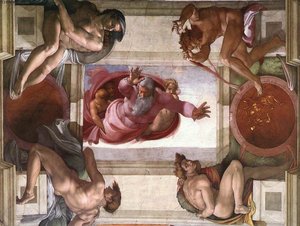 Separation of the Earth from the Waters (with ignudi and medallions) - Michelangelo Buonarroti
In Michelangelo’s Separation of the Earth from the Waters , a profound sense of celestial dawn is captured through a palette of luminous, ethereal whites and deep, primordial blues. This striking contrast creates a mood of divine emergence, where light physically pushes back the shadows of the void. The masterful use of chiaroscuro —the dramatic interplay of light and shadow—is precisely why this fresco remains one of the top 25 artworks in the Cappella Sistina, Vatican City; it does not merely depict a scene, but sculpts form out of pure atmosphere.
For the discerning collector looking to curate a modern living space, the cool, atmospheric tones of this masterpiece offer an exquisite way to introduce a sense of calm and cosmic grandeur. Integrating the soft, light-drenched blues and sculptural highlights into a room’s aesthetic can transform a dining area into a sanctuary of reflection. Much like the ignudi figures that embody spiritual ascension, bringing these classical, light-filled textures into your home allows for an emotional lighting scheme that feels both timeless and profoundly peaceful.
Zechariah - Michelangelo Buonarroti
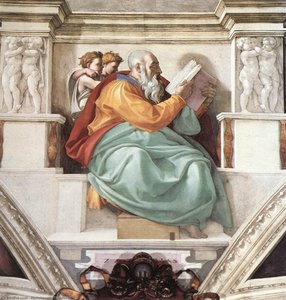 Zechariah - Michelangelo Buonarroti
To gaze upon Zechariah by Michelangelo Buonarroti is to witness the very breath of the High Renaissance captured in pigment and plaster. If you lean closer to this fresco, you can almost feel the muscular tension and the sculptural weight of the prophet’s form. Michelangelo’s mastery of chiaroscuro creates a profound sense of volume, where light dances across the heavy folds of drapery and illuminates the intense, scholarly focus in Zechariah's eyes as he contemplates the Book of Isaiah. The texture is not merely painted; it is sculpted, utilizing the figura serpentinata technique to imbue the figures with a spiraling, kinetic energy that defies the flatness of the wall.
This profound interplay of light and anatomical precision is why this work stands as a cornerstone among the top 25 artworks in Cappella Sistina, Vatican City . At ArtsDot.com, we strive to honor this tactile, three-dimensional legacy. Our hand-painted oil reproductions are meticulously crafted to capture that same visible brushwork and deep tonal range, allowing the soul of Michelangelo’s divine narrative to reside within your own cherished space.
Isaiah - Michelangelo Buonarroti
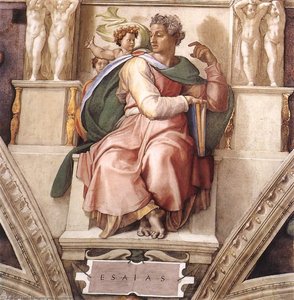 Isaiah - Michelangelo Buonarroti
In the hallowed expanse of the Sistine Chapel, Michelangelo’s Isaiah stands as a profound meditation on the weight of divine revelation. This monumental fresco is far more than a religious depiction; it is a masterclass in terribilità , capturing that breathtaking emotional intensity and muscular grandeur that defines the High Renaissance. As you gaze upon the prophet seated with contemplative grace, you witness the seamless marriage of anatomical precision and spiritual depth, where the soft, warm pinks of the background meet the dramatic chiaroscuro of Isaiah’s powerful form.
The painting’s placement among the top artworks in the Vatican is earned through its ability to evoke a sense of timelessness. The way the light dances across the heavy drapery and the delicate presence of the cherub invites us to reflect on the intersection of human struggle and celestial peace. For the modern collector, the essence of Isaiah —its balance of strength and vulnerability—offers a sophisticated inspiration, bringing a sense of historical soul and quiet, monumental beauty into any curated space.
St Sixtus II - Sandro Botticelli
 St Sixtus II - Sandro Botticelli
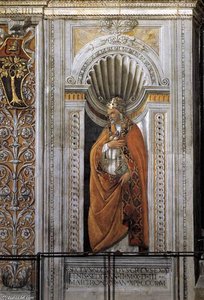
In the quiet corners of the Sistine Chapel, St Sixtus II by Sandro Botticelli emerges like a soft, luminous prayer whispered through the centuries. This fresco holds its place among the top 25 artworks in the Cappella Sistina, Vatican City, not through overwhelming scale, but through an exquisite, delicate grace that captures the very essence of Early Renaissance humanism. Botticelli’s hand is visible in the ethereal palette and the gentle, flowing lines of the saint's drapery, where light seems to rest softly upon the plaster.
The composition breathes with a profound stillness; the subtle use of sfumato softens the edges of the papal crown and the sacred orb, creating an atmospheric depth that invites deep contemplation. The architectural motifs and the symbolic cross serve as anchors of divine order, reminding us of a time when art was a bridge between the earthly and the celestial. For the modern collector, bringing the spirit of such a masterpiece into a home offers more than mere decoration; it introduces a sense of timeless sophistication and a serene, meditative harmony that transcends the chaos of contemporary life.
Hezekiah - Manasseh - Amon - Michelangelo Buonarroti
 Hezekiah - Manasseh - Amon - Michelangelo Buonarroti
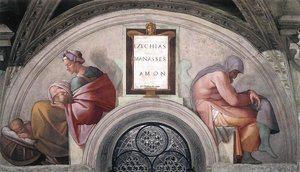
To gaze upon Hezekiah - Manasseh - Amon is to witness the very pulse of the High Renaissance. In this breathtaking segment of the Sistine Chapel ceiling, Michelangelo’s mastery is felt through the sculptural weight of the figures; one can almost sense the grit of the lime plaster and the deliberate, rhythmic application of pigment that breathes life into the Judean kings. The way light dances across the muscular anatomy—rendered with a profound chiaroscuro —creates a sense of three-dimensional movement that transcends the flat surface of the fresco.
This work stands as a cornerstone of the top 25 artworks in Cappella Sistina, Vatican City because it captures the heavy, emotional lineage of faith and time. At ArtsDot.com, we believe such profound textures should not be confined to Rome. Our mission is to bring this tactile, three-dimensional soul into your private collection. Through our meticulous hand-painted oil reproductions, we recreate every subtle brushstroke and tonal depth, ensuring the monumental spirit of Michelangelo’s genius finds a permanent, luminous home within your own walls.
Perez - Hezron - Ram - Michelangelo Buonarroti
 Perez - Hezron - Ram - Michelangelo Buonarroti
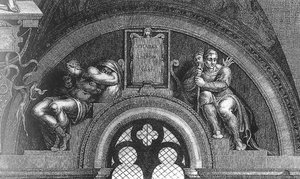
In the quiet, hallowed corners of the Sistine Chapel, Perez - Hezron - Ram by Michelangelo Buonarroti exists as a profound meditation on stillness and the weight of lineage. While much of the chapel erupts in celestial color, this fresco captures a moment of monochromatic grace, where light and shadow dance across the muscular forms of these biblical patriarchs with the precision of carved marble.
This work is immortalized among the top 25 artworks in the Cappella Sistina because it reveals Michelangelo’s unparalleled ability to breathe life into stone-like figures through the delicate medium of fresco. The subtle interplay of grayscale tones creates a sculptural depth, inviting the viewer to feel the textured permanence of the architectural niche that frames them. There is a rhythmic, structural harmony here—a balance of organic human strength and geometric classical order. For the modern collector, such a piece brings an air of timeless sophistication and intellectual calm, serving as a window into the Renaissance soul that transcends the centuries.
Rehoboam - Abijah - Michelangelo Buonarroti
 Rehoboam - Abijah - Michelangelo Buonarroti
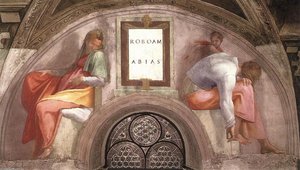
What story does the quiet, architectural stillness within Rehoboam - Abijah by Michelangelo Buonarroti tell? Tucked within the breathtaking expanse of the Sistine Chapel ceiling, this fresco serves as a profound, contemplative link in the divine genealogy of Christ. Emerging from the height of the High Renaissance, Michelangelo moved beyond mere decoration to weave a complex theological tapestry, using these two Old Testament kings to anchor the sacred lineage of the Gospel of Matthew.
As you gaze upon the figures, you feel the weight of history through the palpable musculature and the soft, luminous sfumato that blurs their edges into the surrounding niche. The palette—a warm, resonant harmony of ochre, muted red, and earthy gold—creates an atmosphere of solemnity and intellectual grace. For those seeking to bring a sense of timeless prestige into a modern home, this work offers more than just beauty; it provides a curated escape into a world of spiritual depth and classical grandeur, where light seems to emanate from the very soul of the painted form.
Bronze nudes - Michelangelo Buonarroti
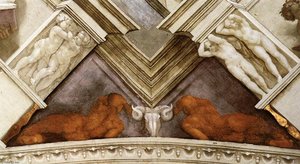 Bronze nudes - Michelangelo Buonarroti
To gaze upon the Bronze Nudes by Michelangelo Buonarroti is to witness a profound dialogue between the earthly and the divine. There is an arresting, quiet intensity in the way these figures are rendered; even in their stillness, one feels the pulse of life beneath the pigment. Michelangelo captures not just the anatomical perfection of the human form, but a psychological depth that resonates with our own vulnerabilities and triumphs. The interplay of chiaroscuro —that delicate dance of light and shadow—sculpts each muscle with such grace that the figures seem to breathe within the sacred walls of the Sistine Chapel.
As one of the top 25 artworks in the Cappella Sistina, Vatican City, these figures serve as a universal mirror of human experience. The way the light catches the simulated bronze texture evokes a sense of timelessness and strength. Bringing the emotional resonance of such a masterpiece into your own home can transform a personal sanctuary into a space for profound reflection. Much like the soft, luminous light of an Impressionist landscape, these figures invite a moment of calm, turning any room into a gallery of quiet contemplation.
Frescoes above the entrance wall - Michelangelo Buonarroti
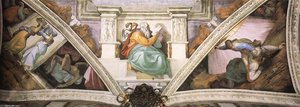 Frescoes above the entrance wall - Michelangelo Buonarroti
To step beneath the Frescoes above the entrance wall is to encounter the very threshold of the divine. Michelangelo Buonarroti does not merely decorate this entry; he orchestrates a profound spiritual transition. As you approach, the eye is immediately captured by the rhythmic energy of thirteen figures, their bodies caught in the breathtaking figura serpentinata —a twisting, spiraling grace that feels as though it might leap from the damp plaster.
The palette, rich with warm ochres, deep golds, and earthy reds, creates a luminous glow that prepares the soul for the celestial narratives above. There is a palpable tension in the way light and shadow, or chiaroscuro , define the muscular anatomy of Moses and the Israelites, grounding the biblical weight of divine law in raw, human emotion. In our modern era, where we often seek meaning amidst chaos, this masterpiece remains a vital cultural touchstone. It reminds us that even within rigid structures of law and architecture, there exists an irrepressible, swirling vitality—a testament to the enduring power of the human spirit navigating its place within the cosmos.
Conclusion
As the golden light of dusk settles over the marble floors of the Vatican, one cannot help but feel that these frescoes are more than mere pigment on plaster; they are the breathing pulse of human history. To stand beneath Michelangelo’s celestial narratives is to witness a profound dialogue between the earthly and the divine, a conversation that has echoed through the centuries to touch the souls of every pilgrim and dreamer who wanders these hallowed halls. These masterpieces do not belong solely to the past; they remain living presences, casting long shadows of inspiration across our modern world and continuing to shape the very essence of how we perceive beauty, struggle, and transcendence.
At ArtsDot.com , we believe that such profound beauty should not be confined to a single corner of Rome, but should be allowed to dwell within our own intimate spaces. We strive to bridge the gap between the monumental and the personal, ensuring that the soul of these timeless works can be reborn in your home. Each of our hand-painted reproductions is a labor of devotion, meticulously crafted by skilled artists who honor the original's profound depth, texture, and emotional weight. Through every deliberate brushstroke on canvas, we seek to capture not just a likeness, but the very spirit that makes these works eternal.
We invite you to continue this journey of discovery and bring a piece of this celestial grandeur into your daily life by exploring our full collection . May the wonder of the Sistine Chapel forever inspire the walls you call home.